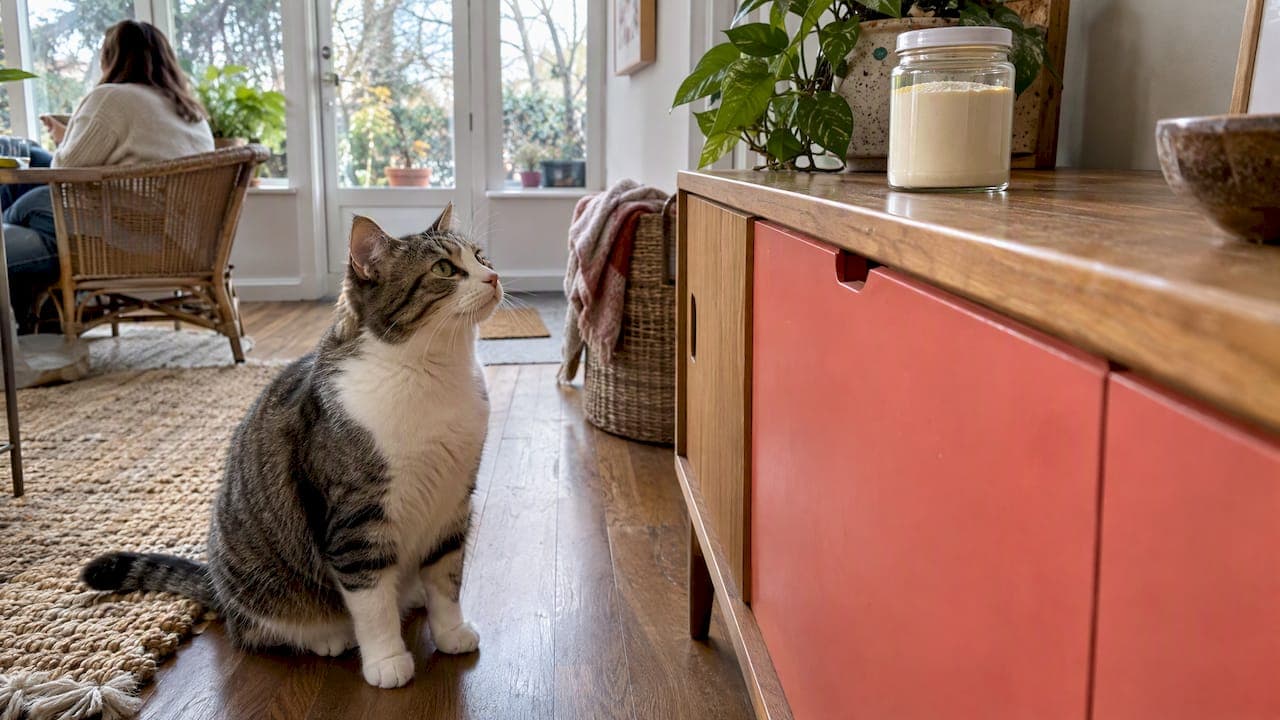
Colostrum for cats is a supplement made from the first milk of cows, and the honest answer is that it is a modest, gut-focused product, not an immune "booster" for the whole body. The best evidence is in growing kittens. For healthy adult cats the data is thin. A queen's own colostrum is a different thing altogether, and no powder replaces it. Below we explain what the research shows, where the marketing runs ahead of it, and how to choose a product if your vet agrees it makes sense.
TL;DR
- Real colostrum is the queen's first milk, and kittens must get it within hours of birth. A bovine supplement cannot stand in for it.
- A 2021 study found a small amount of bovine colostrum in kitten food raised gut antibody levels. That is local gut support, not proof of disease protection.
- There is no robust clinical evidence that oral colostrum boosts whole-body immunity in adult cats.
- Supplements contain milk proteins and lactose, so watch for gas, loose stools or allergy signs, and talk to your vet first, especially if your cat has liver or kidney disease.
- Treat any label that claims to cure or treat disease as a red flag.
Table of Contents
- What colostrum actually is
- Why a newborn kitten's first hours matter
- What the research says about supplements
- Who might consider colostrum, and who should skip it
- Risks and side effects
- How to choose a product if your vet agrees
- Our perspective
- Colostrum versus other gut and joint supplements
- Bringing home a new kitten
- Find vet-informed picks at Kiblco
- FAQ
- Sources
What colostrum actually is
Colostrum is the thick, antibody-rich fluid a mother's mammary glands make in the first days after giving birth. VCA Animal Hospitals describes it as packed with antibodies plus growth hormones and other compounds that help the newborn. In cats, a review of canine and feline colostrum explains that it is produced during roughly the first 48 hours after birth and delivers maternal immunoglobulins, mainly IgG, to the kittens. Its IgG concentration is far higher than mature milk (about 40 to 50 g/L versus under 1 g/L), and that concentration falls by half within 24 hours of birth.

That last detail matters for anyone shopping. The product on the shelf is not feline colostrum. It is nearly always bovine, collected from cows, then dried and sold as powder, gel or chews. It shares a name and some properties with what a queen makes, but it does a different job.
Why a newborn kitten's first hours matter
Kittens are born with very little protection of their own. They depend on antibodies from the queen's first milk, and the gut can only absorb those large proteins for a short time. According to the Merck Veterinary Manual, the window for intestinal absorption is extremely narrow. VCA's guidance on raising kittens says that in most cases owners should not interfere with the mother's care, and that kittens should get her first milk within a few hours of birth.
There is also a risk hiding inside normal colostrum. The Merck Manual explains that neonatal isoerythrolysis can occur when a type B queen's colostrum, which carries high levels of anti-A antibodies, reaches type A or AB kittens. It is a severe, immune-mediated anemia in newborns. If you breed or foster, this is a conversation for your veterinarian before the litter arrives, not something to solve with a supplement.
Orphaned or struggling kittens
If a litter has no mother, or a newborn is weak and not nursing, the situation is an emergency for a vet, not a shopping decision. The window for absorbing antibodies closes fast, and a store-bought bovine powder given days later does not recreate that transfer. Bovine antibodies also do not bind to feline-specific pathogens, according to the IVC Journal, so they should not be counted on for the same passive immunity a mother cat provides. Call a veterinarian the same day for feeding, warmth and any possible plasma or serum options they offer.
What the research says about supplements
Growing kittens: the best evidence we have
The most useful study we found looked at growing kittens fed a diet with 0.1% spray-dried bovine colostrum. In that 2021 study, the colostrum group had 48% higher average fecal secretory IgA than the control group, a marker of local gut immune activity. The supplement also appeared to help keep gut bacteria stable during a stressful event, relocation.
Read that carefully. It shows a change in a gut marker and some stability under stress. It does not show fewer infections, fewer vet visits or protection from a specific disease. It is encouraging, and it is a reason to ask your vet about it for a stressed or newly adopted kitten, nothing more.
Adult cats: mostly hypotheses
For grown cats the picture is weaker. VCA's colostrum page notes there is no robust clinical evidence that oral bovine colostrum boosts systemic immunity in adult cats. The reasoning is simple: adult cats digest dietary immunoglobulins in the gut, so absorption into the bloodstream is unlikely. Any benefit is hypothesized to be local, such as anti-inflammatory support in the intestines, and the data behind even that is largely anecdotal or limited.
A 2025 review of colostrum for dogs and cats takes the same evidence-based approach, separating its biological roles from the therapeutic claims made for it. That is the right frame for a shopper: biology is interesting, claims need proof.
What the top search results promise
Pages ranking for this topic talk about immunity, digestion, skin, IBD, colitis and protection from anti-inflammatory drugs. Most come from companies selling a product. We could not find strong feline trials behind most of those claims, so we do not repeat them as facts. If a product page lists several diseases it "helps," be skeptical.
Who might consider colostrum, and who should skip it
| Situation | Reasonable view |
|---|---|
| Newborn kitten with a healthy, nursing queen | No supplement needed. Let the mother nurse. |
| Orphaned or weak newborn | Veterinary emergency, not a pantry product. |
| Weaned kitten, newly adopted, stressed | The best-supported use. Ask your vet about a low-dose gut supplement. |
| Healthy adult cat | Limited evidence. Optional at best, never a replacement for good food. |
| Adult cat with chronic diarrhea or IBD | See the vet for diagnosis first. Do not self-treat. |
| Cat with liver or kidney disease | Ask your vet before any new supplement. |
| Cat with a known milk or dairy sensitivity | Probably a poor fit, since the products contain milk proteins. |
Risks and side effects
Bovine colostrum contains lactose and cow's milk proteins, so some cats react. Per VCA, owners should watch for gastrointestinal upset such as flatulence or loose stools, and not only in the first days. Sensitivities can develop with repeated exposure. Stop the product and call your vet if you see vomiting, persistent diarrhea, itching, facial swelling or lethargy.
Veterinarians also stress that colostrum is not a cure-all. It should be a supplement on top of complete, balanced nutrition, and you should consult a vet before starting, particularly for pets with existing liver or kidney conditions. If your cat has a chronic condition and you are not sure who should weigh in, this guide to choosing the right veterinarian can help you decide what to look for in a practice that does nutritional counseling.
How to choose a product if your vet agrees
Supplement regulation in the US is looser than most owners assume. Colostrum products are not drugs and are not reviewed by the FDA for safety or efficacy before they sell. The AAFCO explanation of food versus drugs notes that animal "supplements" are generally handled as food, which means labels should not claim to prevent, treat or cure disease. A brand that promises to cure anything is telling you something about itself.
Use this checklist:
- Species and source. Check that it is made for cats and says where the colostrum comes from (bovine is typical).
- Processing disclosure. High heat and some drying methods can damage the delicate proteins and growth factors that give colostrum its potential value, as the IVC Journal points out. Prefer brands that explain how they process and test, not ones that rely on slogans.
- A short ingredient list. Skip products stacked with flavorings, sweeteners or preservatives you cannot explain.
- Dose in plain numbers. The label should give a cat-specific amount. If it only gives a dog dose, ask your vet to translate, and do not guess.
- Independent testing. The veterinary supplement review in PMC notes that consumers can request independent analysis of a supplement before buying and should consult their veterinarian.
- Modest claims. "Supports gut health" is plausible. "Cures IBD" is not allowed.
How to start
Introduce one new product at a time, at the lowest labeled amount your vet approves, and keep the rest of the diet steady for a couple of weeks. That way, if your cat gets gassy or loose stools, you know why. Changing food at the same time muddies everything. If you are moving to a new diet as well, our guide on switching cat food safely explains how to do it without upsetting the gut or risking fatty liver.
Our perspective
We review pet products for a living, and colostrum is a category where the gap between marketing and evidence is wide. Our approach is the one we use everywhere: buy the product, use it in a real home, state the downsides plainly, and cross-check health picks with veterinary input.

Here is where we land on colostrum for cats. For a stressed or newly weaned kitten, a low-dose, transparent, well-processed product is a reasonable thing to discuss with your vet, because that is where the study data points. For a healthy adult cat, we would put money into the basics first: a complete diet, clean water, a good litter setup and regular vet visits. If you still want a gut-support extra, treat it as an experiment with a clear start date, a single change at a time, and an honest check on whether stools and appetite actually improved.
We also would not recommend any product whose page leans on disease claims, hides its processing, or implies it replaces a queen's first milk. We do not accept payment for coverage, and we earn commissions only when readers buy through our links, so a product that fails our checks does not make the list, whatever it pays.
— Chris
Colostrum versus other gut and joint supplements
Colostrum is one of several cat supplements that get lumped together. They work differently, and the evidence differs too. Lactoferrin for cats is a single milk protein with its own trial data. Collagen for cats is aimed at joints and skin. Slippery elm is a plant fiber some owners use for digestive comfort, and bone broth is a topper more than a treatment. Each deserves the same question: what exactly is it supposed to do, and what is the proof in cats, not in people or mice?
If you have a dog too, colostrum is covered separately in our piece on colostrum for dogs, because dosing and the evidence differ by species. Do not share a dog product with your cat.
Bringing home a new kitten
Most kitten gut trouble comes from stress, sudden food changes or parasites, and not from a missing supplement. Before you buy anything exotic, get the basics right: a vet check within the first days, the diet the breeder or shelter was using, a quiet space, and a clean litter box. Our kitten essentials list covers what we would buy before pickup. If your kitten has diarrhea, is not eating or seems weak, skip supplements and call your vet, because young kittens can get dehydrated quickly.
Find vet-informed picks at Kiblco
If you are shopping for gut and immune support, start with our Cat Health reviews. Each review lists pros and cons, how the product held up at home, and what to ask your vet before you buy. You can also browse the rest of Kiblco for litter, toys and gear tested by real pet parents.
FAQ
Is colostrum safe for cats?
For many cats it is tolerated, but safety is not guaranteed. The products contain lactose and cow's milk proteins, which can cause gas, loose stools or allergic reactions. Ask your vet first, especially if your cat has liver or kidney disease.
Can I give my newborn kitten colostrum powder instead of the mother's milk?
No. A queen's colostrum delivers antibodies during a very short window after birth, and bovine antibodies do not bind to feline-specific pathogens. A newborn that cannot nurse needs a veterinarian right away.
Does colostrum boost an adult cat's immune system?
There is no robust clinical evidence that it does. Adult cats digest the antibodies in the gut, so any effect is likely local to the intestines, and even that evidence is limited.
What are the negative side effects of colostrum?
The most common are digestive: gas, loose stools or vomiting. Milk allergies and sensitivities that build up over time are also possible. Stop the product and contact your vet if symptoms persist or your cat seems unwell.
How do I know if a colostrum supplement is good quality?
Look for a cat-specific label, clear sourcing, disclosed processing and testing, and modest claims. Avoid any brand that says its product treats or cures disease, since that goes beyond what animal food labels may claim.
Sources
- Canine and feline colostrum (PubMed)
- Colostrum | VCA Animal Hospitals
- Raising Kittens | VCA Animal Hospitals
- Anemia in Cats | Merck Veterinary Manual
- Blood Transfusions in Dogs and Cats | Merck Veterinary Manual
- Bovine colostrum in kittens, 2021 study (PMC)
- Colostrum for Dogs and Cats: Revisiting Its Biological Roles
- Colostrum overview | IVC Journal
- Definition of food and drugs | AAFCO
- Veterinary Pet Supplements and Nutraceuticals (PMC)