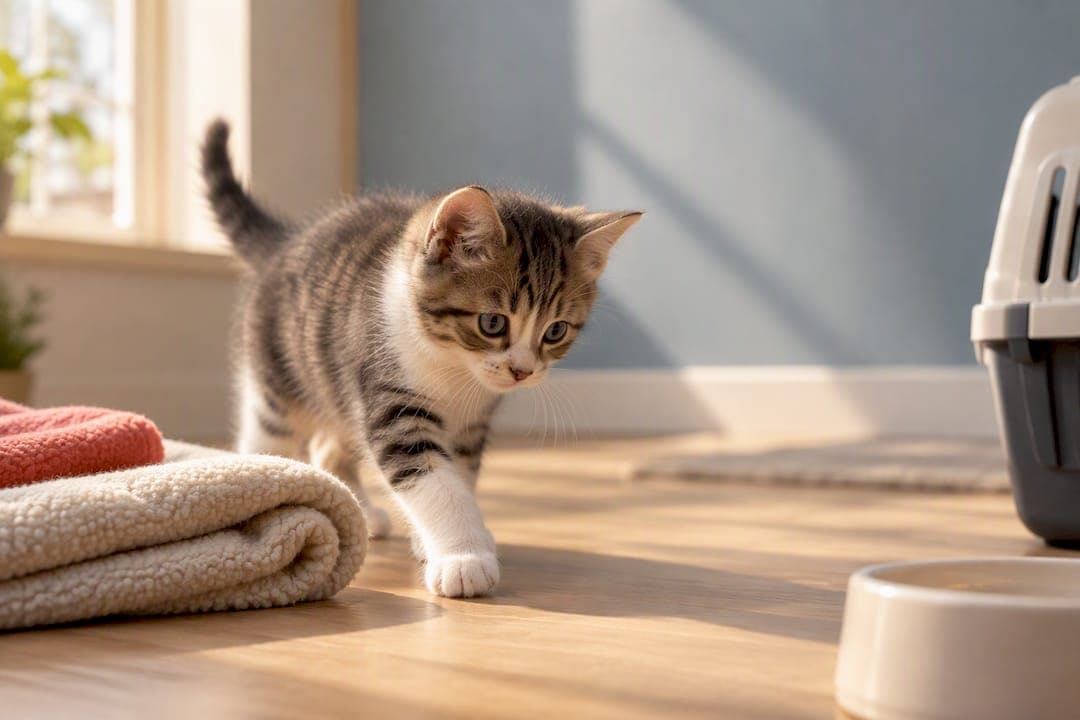
Every new kitten needs nine things before it walks through your door: kitten formula food, sturdy food and water bowls, a low-entry litter box with unscented litter, a secure carrier, a warm bed or blanket, a scratching surface, a few safe interactive toys, basic grooming tools, and an enzymatic cleaner for the inevitable accidents. The one immediate next step matters more than any purchase: call your vet and book the first exam within a week of bringing your kitten home. Set up one litter box per cat plus one extra, and give your new arrival a small starter room instead of the run of the house.
TL;DR:
- Providing multiple litter boxes in different areas minimizes accidents and encourages proper use, especially when spread across floors and rooms.
- Feeding should focus on a complete kitten formula with three to four small meals daily, avoiding sudden diet changes to prevent gastrointestinal issues.
- The first vet visit within the kitten’s first week is crucial for vaccinations, deworming, microchipping, and establishing a health baseline.
- Kitten-proofing involves removing toxic plants, securing cords, and eliminating small-item hazards to reduce emergency vet visits and safety risks.
- Keeping a starter room with designated zones and proper safety measures lowers stress, helps develop litter habits, and eases the transition into home life.
Table of Contents
- Kitten Supplies Checklist: What to Buy Before Pickup Day
- Setting Up a Starter Room and Kitten-Proofing Your Home
- Feeding a Kitten: Portions, Frequency, and What to Watch
- The Vet Visit Timeline Every New Kitten Owner Needs
- Litter Box Setup That Actually Prevents Accidents
- Toys and Play That Keep a Kitten Busy and Safe
- Introducing a New Kitten to Other Pets and Family
- How to Socialize and Handle a Kitten the Right Way
- Why Kiblco Tests Kitten Gear in Real Homes, Not Labs
- Find Vetted Kitten Gear Before You Buy
- Where This Checklist's Medical and Safety Guidance Comes From
- Sources
- FAQ
Kitten Supplies Checklist: What to Buy Before Pickup Day
You don't need everything the pet store recommends. You need several key categories of supplies, bought with thoughtfulness to suit kitten needs.
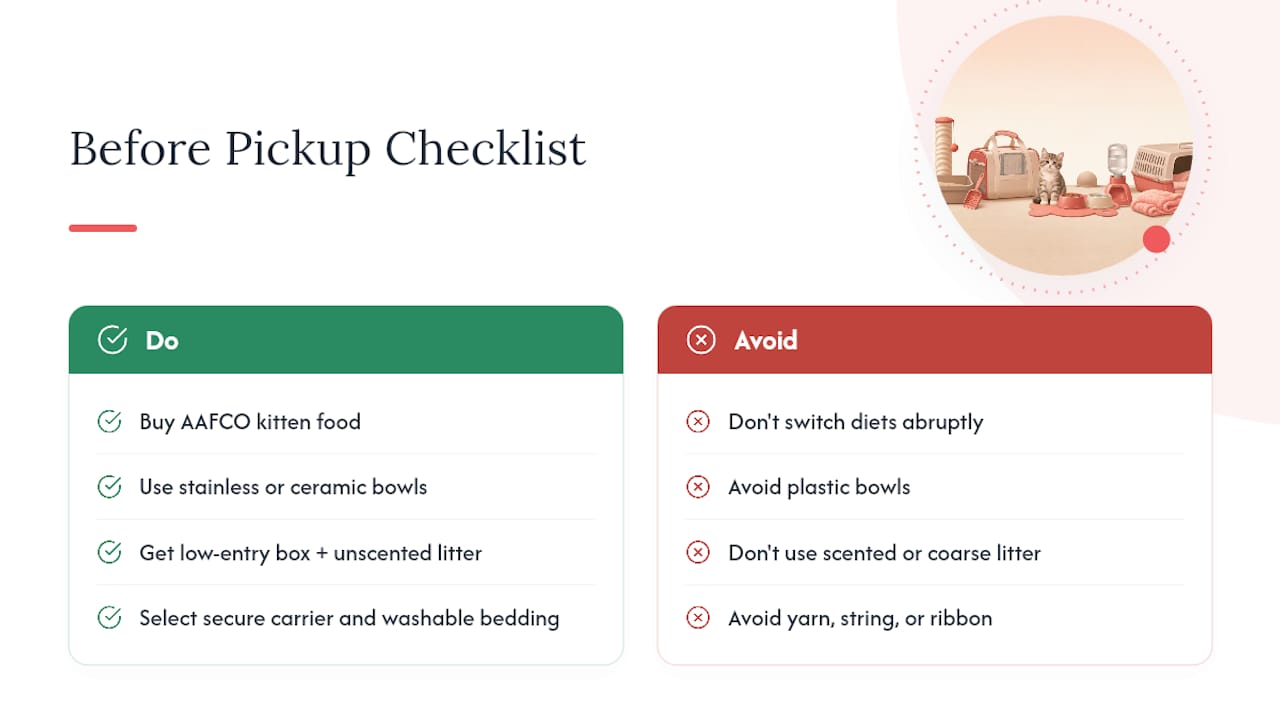
Food and treats. Choose a kitten formula labeled complete and balanced by AAFCO, or continue feeding the kitten's current diet initially to avoid stomach upset.
Bowls. Stainless steel or ceramic are preferable to plastic for cleanliness and safety. Choose shallow bowls to accommodate small kittens.
Litter box and litter. Use a low-entry box suitable for kittens and unscented, fine-grain litter; a mat under the box can catch litter tracking.
Carrier. Select a size appropriate for the kitten's current size with a secure door; keep it accessible at home so the kitten becomes comfortable.
Bedding. Provide washable blankets and a small cozy bed for resting.
Scratching surfaces. A stable vertical post wrapped in sisal or rope is better than flat cardboard scratchers.
Toys. Safe wand toys, small balls, and puzzle feeders support play; avoid yarn, string, or ribbon.
Grooming and health kit. Include a soft brush, kitten-sized nail trimmers, cat-specific toothpaste, grooming wipes, and an enzymatic cleaner.
Home safety supplies. Secure trash bins, cover cords, lock medications, and remove toxic plants to protect your kitten.
Setting Up a Starter Room and Kitten-Proofing Your Home
Give your kitten one contained room for the first several days rather than the whole house. It's the single fastest way to build litter-box habits and cut down on stress-driven hiding.
- Pick a quiet, accessible room. A spare bedroom or bathroom works well. Set up three distinct zones inside it: litter box in one corner, food and water in another, bed and carrier in a third, kept well apart from the litter box.
- Clear the hazards first. Remove toxic plants, especially lilies, which can cause kidney failure in cats, lock away medications and cleaning products, and tuck away or cover blind cords and electrical cords.
- Check for small-item risks. Loose elastics, hair ties, jewelry, and coins under furniture are common causes of emergency vet visits, so do a floor-level sweep before the kitten arrives.
- Use renter-friendly fixes if you don't own the space. Temporary gates, adhesive window screen restrictors, and clip-on cable covers handle most hazards without a single hole drilled in the wall. A renter-focused cat-proofing guide covers this in more depth.
Pro Tip: Leave the carrier in the starter room with a blanket inside instead of putting it away in a closet. A kitten that naps in its carrier voluntarily won't panic when that same carrier shows up for the next vet visit.
Feeding a Kitten: Portions, Frequency, and What to Watch
Choose a kitten formula that lists AAFCO's complete and balanced statement, and keep your new kitten on whatever food it already knows for the first week or two. A sudden switch is one of the more avoidable causes of diarrhea in a kitten's first days home.
Kittens burn through calories fast and need noticeably more protein per pound than an adult cat, and most do best on three to four small meals a day for the first several months, tapering down as they approach adulthood, according to guidance from the Merck Veterinary Manual. After spay or neuter, metabolism slows, so it's worth watching the scale and cutting portions slightly if weight starts creeping up.
- Keep treats to a small share of daily calories, reserving some for training rewards.
- Offer water in a stainless steel or ceramic bowl and refresh it daily.
- A puzzle feeder slows down fast eaters and turns mealtime into a bit of mental exercise instead of a thirty-second event.
The Vet Visit Timeline Every New Kitten Owner Needs
Book the first exam within the kitten's first week home. The vet will run a full physical, check for parasites, and map out a vaccine schedule, and this is also the visit to bring up microchipping and to hand over any paperwork from the shelter or breeder.
- Vaccines: Typically start around 6 to 8 weeks old with boosters every 3 to 4 weeks until roughly 16 weeks, covering FVRCP and rabies, plus FeLV when a vet recommends it based on lifestyle and exposure risk, per the Merck Veterinary Manual.
- Deworming: Routine pyrantel is usually given alongside early vaccine visits, with praziquantel added if a tapeworm infection is suspected.
- Flea and tick prevention: Only use a product your vet approves for the kitten's exact age and weight. Many adult-cat formulas are unsafe for very young kittens.
- Spay or neuter: Most vets schedule this between 4 and 6 months old.
- Microchip: Many clinics implant it during an early visit, and registering the chip with your contact information the same day matters, since a microchip does nothing for a lost cat until it's registered.
One box, plus one, is the standard that vets recommend for every household with a cat, and it applies even to a single kitten in a one-bedroom apartment, according to Texas A&M's College of Veterinary Medicine. Multiple boxes reduce the odds of accidents when one gets dirty or a kitten simply prefers a different spot.
Litter Box Setup That Actually Prevents Accidents
Follow the one-per-cat-plus-one rule from day one, even with a single kitten, and spread the boxes across different rooms or floors rather than lining them up side by side. A box crowded next to another box does little to satisfy that rule's real purpose, which is giving a cat options.
- Choose a box at least 1.5 times the kitten's body length, with a low entry side young kittens can climb over easily.
- Stick with unscented, fine-grain litter, since strong scents can discourage a kitten from using the box at all.
- Scoop once a day minimum, and do a full litter change and box scrub on a regular schedule, skipping harsh scented soaps.
- Keep a mat under the box and store the scoop nearby. Liners are optional. Some kittens tolerate them fine; others get their claws caught and avoid the box entirely.
- If accidents start happening, work through this order: box size, box location, litter type, recent stress at home, then a vet visit to rule out a urinary issue.
Toys and Play That Keep a Kitten Busy and Safe
Wand toys, small balls, and puzzle feeders cover most of what a kitten needs, and rotating two or three toys in and out keeps them from going stale. Skip anything made of yarn, string, ribbon, or with small parts that can come loose, since long strings pose a real risk of intestinal blockage if swallowed.
- Run two or three short play sessions a day, 5 to 15 minutes each, using a wand toy you control.
- Leave a couple of solo-play toys and a climbing perch out for independent activity between sessions.
- If you want to try a laser pointer, end every session by letting the kitten catch a physical toy. A laser without a real "catch" moment can build frustration over time.
- Save leash and harness introductions for once the kitten is confident indoors, and always supervise directly.
Introducing a New Kitten to Other Pets and Family
Slow beats fast every time with a new introduction. Keep the kitten in its starter room for the first several days so the resident cat or dog can smell and hear it before any face-to-face meeting happens.
Swap bedding between the animals after a day or two, letting each one get used to the other's scent without any pressure. A cracked door or a baby gate lets them see each other without direct contact, and that half-step usually smooths out the eventual first meeting.
When you do the actual introduction, keep it short and end it before anyone gets tense. A five-minute supervised session that ends calmly beats a thirty-minute session that ends in a hiss. Resident dogs need the same gradual approach, on a leash for the first few meetings, with plenty of praise for calm behavior around the kitten.
Kids need a quick briefing too. Teach them to let the kitten approach first, to keep voices low, and to avoid picking it up until it's comfortable being handled. Kittens that get grabbed or chased in the first week often turn skittish around that person for months. Give every family member, two-legged or four-legged, a chance to earn the kitten's trust at its own pace rather than forcing contact on day one.
How to Socialize and Handle a Kitten the Right Way
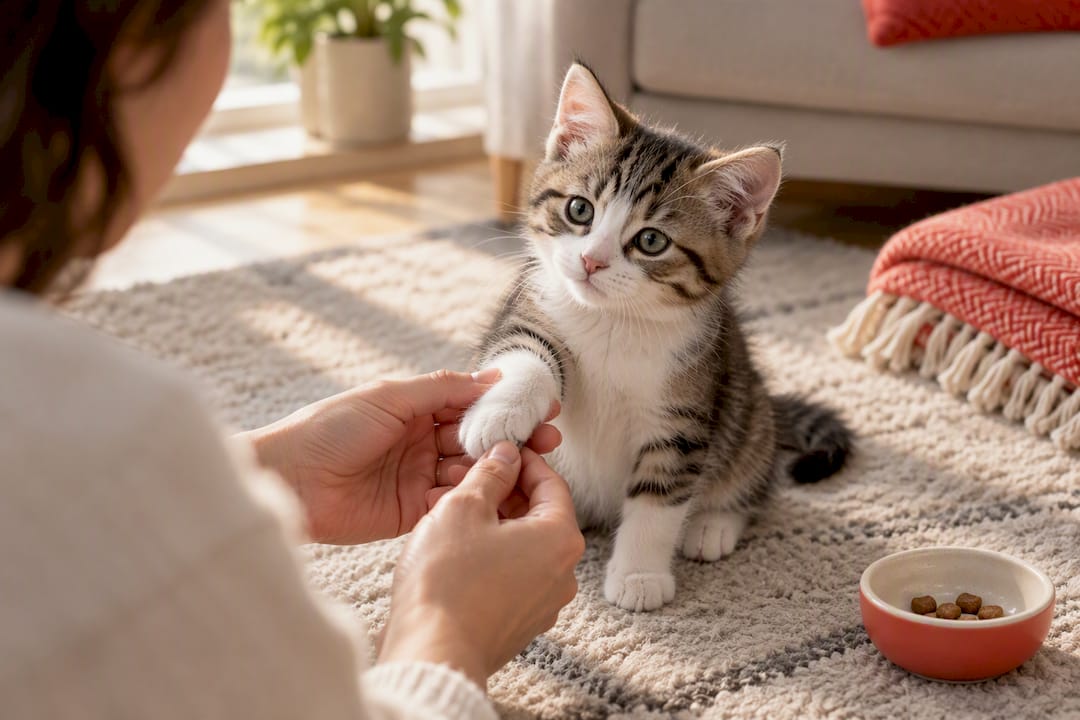
The first few months shape how a cat behaves for the rest of its life, which makes early handling worth doing deliberately rather than leaving it to chance. Handle your kitten daily. Pick it up gently, touch its paws and ears and mouth briefly, and pair all of it with a calm voice or a small treat.
Expose the kitten to a range of ordinary sounds and situations early: a vacuum running in another room, the doorbell, a car ride in the carrier, different family members holding it. A kitten that meets a handful of new experiences a week during this window tends to grow into a more confident, adaptable adult cat than one kept in a single quiet room the whole time.
Watch its body language rather than pushing through discomfort. Flattened ears, a swishing tail, or a kitten trying to retreat means it's had enough for now. End the session on a good note, and try again later instead of forcing it. Reward calm behavior with a treat or gentle praise every time, and never use your hands as a toy during play. That habit teaches a kitten that biting hands is part of the game, and it's a hard one to undo later.
Why Kiblco Tests Kitten Gear in Real Homes, Not Labs
The gap between a product's marketing photo and how it holds up with an actual kitten is where most bad purchases happen. Gear is tested in real homes and health-related picks checked against veterinary guidance, because a scratching post that looks sturdy in a listing photo sometimes tips over the first week a kitten uses it.
Prioritize safety and fit over flashy features when you shop, and treat a vet-approved puppy checklist as proof that the same rigor applies across species at Kiblco.
— Chris
Find Vetted Kitten Gear Before You Buy
Building this list is one thing. Picking the actual product off a shelf of forty near-identical litter boxes is a different problem. Every review on the site comes from a product tested in a real home, with health-related picks checked against veterinary guidance and every downside stated plainly instead of buried.

If you're stocking up now, start with Cat Litter for box and litter comparisons, Cat Gear for carriers and scratching posts, and Cat Health for supplements and grooming products a vet would actually sign off on. Browse the cats hub for the full catalog of tested picks, and check pros and cons side by side before anything goes in your cart.
Where This Checklist's Medical and Safety Guidance Comes From
This checklist draws on established veterinary sources rather than guesswork.
- AAHA for first-visit and vaccine-scheduling guidance.
- Merck Veterinary Manual for feeding and deworming practices.
- Cornell Feline Health Center and ASPCA for toy and plant safety.
- PetMD and Texas A&M Veterinary Medicine for starter-room and litter-box setup.
Sources
- New kitten checklist — AAHA
- Kitten care — Merck Veterinary Manual
- Litter box etiquette — Texas A&M Veterinary Medicine
- Safe toys and gifts — Cornell Feline Health Center
FAQ
What Is the 3-3-3 Rule for Kittens?
The 3-3-3 rule is a rough timeline for adjustment: expect three days of feeling overwhelmed and hiding, three weeks of settling into a routine, and three months of fully bonding with your household. It's a guideline, not a guarantee, and shy or older kittens may take longer at each stage.
What Supplies Do I Need for a Kitten?
At minimum, you need kitten food, food and water bowls, a low-entry litter box with unscented litter, a secure carrier, a bed or blanket, a scratching post, a few safe toys, basic grooming tools, and an enzymatic cleaner. Add a puzzle feeder and a climbing perch once the basics are covered.
Can I Leave My 4-Month-Old Kitten Alone for 8 Hours?
A healthy 4-month-old kitten can usually manage 8 hours alone if it has fresh water, food appropriate to its feeding schedule, and a clean litter box available. Kittens under about 4 months generally need more frequent check-ins and feeding, so shorter stretches are safer at that younger age.
Where Should a Kitten Sleep at Night?
Most kittens do best sleeping in their starter room for the first week or two, with a cozy bed near their food and litter box, rather than loose in a large bedroom right away. Once litter-box habits are solid and the kitten is comfortable, many owners move the bed into a bedroom or let the kitten choose its own spot.