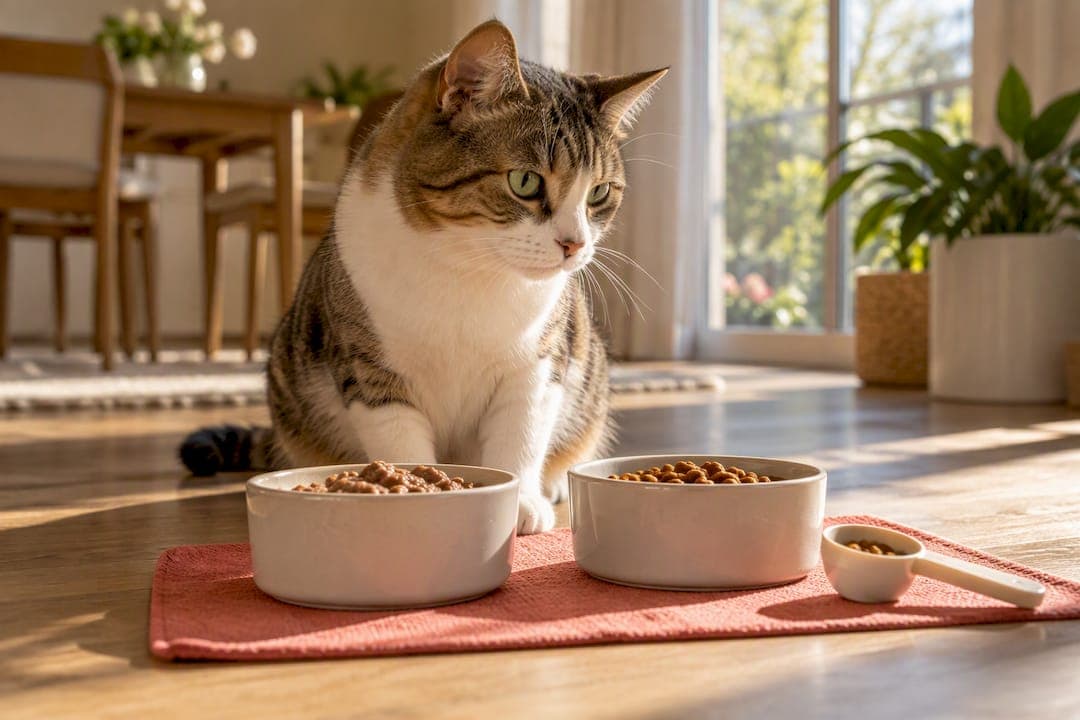
The safest way to switch your cat's food is a gradual mix over at least 7 to 10 days, with your veterinarian looped in if your cat has a health condition. Rushing it risks vomiting, diarrhea, or worse: a cat that stops eating for more than a day or two can develop a serious liver condition called hepatic lipidosis. Kittens, picky eaters, and cats on prescription diets need their own adjusted timelines, covered below.
TL;DR:
- Most healthy adult cats can safely switch foods over 7 to 10 days using a gradual ratio-based plan, with adjustments up to 40 days for texture-sensitive or picky cats.
- When switching between wet and dry foods, carefully monitor calorie content to prevent overfeeding or underfeeding, as dry kibble is much more calorie-dense.
- Cats on prescription or special diets require slower, smaller increments and veterinary approval before changing foods; abrupt changes risk health complications.
- Signs of serious issues include loss of appetite beyond 24 hours, vomiting, blood in stool or vomit, and lethargy, requiring immediate veterinary attention to prevent hepatic lipidosis.
- Reintroduce new foods gradually, using presentation tweaks like warming or toppings, and avoid multiple flavor changes during the transition to maintain acceptance.
Table of Contents
- Step-by-step mixing plan for switching your cat's food
- When to slow down: sensitive cats, kittens, and prescription diets
- Recognizing mild upset versus a real emergency
- Getting a picky cat to accept new food without spoiling future meals
- How a veterinarian-supervised food trial actually works
- Why we built this guide around real feeding routines
- Where to turn once your cat is eating the new food
- Sources
- FAQ
Step-by-step mixing plan for switching your cat's food
Most healthy adult cats do fine with a simple ratio-based swap. The Purina Institute recommends replacing about a quarter of the current food with new food every other day, which lands most cats on a full switch by day 7 to 10.
A typical plan looks like this:
- Days 1 to 2: mostly old food with a small portion of new food.
- Days 3 to 4: equal parts old and new food.
- Days 5 to 6: mostly new food with a smaller portion of old food.
- Day 7 onwards: 100% new food, watching for any leftover food or loose stool.
For cats who tend to get an upset stomach from change, stretch the same four stages across 10 days instead of 7, giving each ratio an extra day or two to settle.
You have two ways to serve the mix:
- Combined bowl: blend both foods together in one dish, which works well for cats that are not fussy about texture.
- Separate bowls: offer old and new food side by side so the cat can choose, an approach the Purina Institute suggests for cats prone to stress or food aversion.
Separate bowls take more cleanup but tend to reduce pressure on picky cats, since nothing is hidden or forced together.
If you are switching between wet and dry food, watch calories, not just volume. Dry kibble is far more calorie-dense than canned food, so a cup-for-cup swap can quietly overfeed or underfeed your cat. Check the calorie content on both labels and adjust portions so daily intake stays roughly the same, rather than matching container measurements.

When to slow down: sensitive cats, kittens, and prescription diets
Not every cat fits the 7 to 10 day timeline. According to AAHA, cats switching between very different textures, such as dry to wet or vice versa, may need up to 40 days to fully accept the new food, since cats learn texture and smell preferences early in life and can be stubborn about changing them.
For sensitive stomachs, kittens, or cats coming off a prescription diet, adjust the standard plan:
- Move in smaller 10% to 15% increments instead of 25% jumps.
- Hold each stage for 3 to 7 days before advancing, rather than 1 to 2 days.
- Watch kittens closely, since young cats have less fat reserve and can be harmed by even short fasting periods.
- Never switch a prescription or therapeutic diet without your veterinarian's input, since some conditions require a strict, unmixed food trial to work.
If your cat is on a veterinary diet for kidney disease, allergies, or urinary issues, ask your vet before introducing anything new, including treats.
Recognizing mild upset versus a real emergency
A little softness in the stool or one skipped meal during a transition is common and usually not urgent. Slow down the mix, offer a smaller, more palatable meal, and keep fresh water available. If things settle within a day, continue the plan at a slower pace.
Some signs mean stop and call your veterinarian:
- No food eaten at all for more than 24 hours, or reduced eating for more than 48 hours.
- Repeated vomiting, not just an occasional hairball-style episode.
- Blood in the stool or vomit.
- Severe lethargy or hiding more than usual.
A cat that goes without food for more than 24 to 48 hours is at risk of hepatic lipidosis, a fatty liver condition that can become life-threatening, especially in overweight cats. This is why owners are told never to just wait it out with a cat that has stopped eating.
If symptoms appear, pause the transition entirely and go back to the old food while you sort things out, rather than pushing forward. Bring a simple log to your vet visit: what was eaten, how much, stool consistency, and timing of any vomiting. Short-term, you can warm food slightly, offer a small amount of a high-value canned food, or try a mild option like pumpkin for mild constipation, but never force-feed a cat, as Cornell's feline health guidance warns this can cause aspiration and added stress.

Getting a picky cat to accept new food without spoiling future meals
Small tweaks in presentation often matter more than the food itself. Warming food to near body temperature, adding a splash of low-sodium broth, or breaking one large meal into several small ones can all improve intake without changing the diet's nutrition.
A few rules keep these tricks from backfiring:
- Use toppers or high-value wet food sparingly, since WSAVA guidance recommends keeping treats and toppers under 10% of daily calories.
- Stick to one new food at a time rather than rotating several flavors, which can teach a cat to hold out for something better.
- In multi-cat households, feed from separate bowls so one cat's pickiness does not disrupt another's transition.
- Avoid constant flavor-hopping once the switch is done, since cats often form lasting texture and flavor preferences early on.
Pro Tip: If your cat is turning up its nose at every bowl, a tested topper or a probiotic made for sensitive stomachs, like the ones covered in our probiotics for sensitive stomachs guide, can ease both palatability and digestion during the switch. For picky eaters specifically, a rotation of freeze-dried treats used as a topper, and a fresh water source if you are moving toward drier food, can both help.
How a veterinarian-supervised food trial actually works
When a cat is being evaluated for a food allergy or inflammatory bowel disease, a casual mix will not give your vet reliable answers. A formal food trial means feeding a single, restricted diet with no treats, flavored medications, or table scraps for a set period, so any change in symptoms can be traced to the diet alone.
According to Cornell's guidance on inflammatory bowel disease, owners need to commit to several weeks of strict compliance for the trial to mean anything diagnostically. During that window, your vet will likely ask you to track:
- Stool consistency and frequency, ideally with daily notes.
- Appetite and any food refusal.
- Body weight, checked periodically.
If symptoms persist despite a clean trial, the next step is usually a referral to a veterinary nutritionist rather than more trial and error at home.
Why we built this guide around real feeding routines
Pet products on this site are tested in real homes, with health-related picks reviewed against veterinary sources rather than marketing claims. This piece leans on that same standard, but it does not replace a veterinary exam.
If your cat has an existing health condition, talk to your veterinarian before changing anything.
— Chris
Where to turn once your cat is eating the new food
Once your cat has settled into a new diet, the next hurdle is often digestion or pickiness, not the food itself.
 The Cat Health category includes vet-informed reviews of probiotics, toppers, and feeding tools tested in real settings, not just spec sheets. Every review lists the downsides along with what worked, and affiliate relationships are disclosed upfront: commissions are earned if purchases are made through provided links, but no payment is accepted for coverage.
| Need | Where to look |
|---|---|
| Digestive support during a switch | Cat Health |
| Litter box changes tied to diet | Cat Litter |
| Enrichment to reduce food-related stress | Cat Toys |
- Start with your veterinarian for anything medical.
- Browse Kiblco's Cat Health picks if you need a topper or probiotic once the medical basics are covered.
This article is general information, not a substitute for advice from a qualified doctor. Consult a qualified healthcare professional about your own circumstances before acting on anything here.
Sources
- Tips and Timelines for Transitioning Your Pet to a New Food (AAHA)
- Hepatic lipidosis in cats (VCA Animal Hospitals)
- Anorexia in cats (Cornell Feline Health Center)
- WSAVA guide to treats for cats (WSAVA)
- Switching Pet Foods - Cats (Purina Institute)
FAQ
Is it okay to switch cat food often?
Frequent switching is not recommended, since cats do best with stable routines and repeated diet changes raise the odds of digestive upset. If you need to switch for health or availability reasons, use the same gradual approach each time rather than swapping abruptly.
What is the 3-3-3 rule for cats?
The 3-3-3 rule is a general adjustment timeline sometimes used for cats settling into a new home or routine, not a formal veterinary standard for food transitions. For diet changes specifically, the gradual mixing approach over 7 to 10 days, extended for sensitive cats, is the guidance backed by veterinary sources.
How long does it take to switch over cat food?
Most healthy adult cats transition fully in 7 to 10 days using a gradual mix. Cats with sensitive stomachs or those switching textures, such as dry to wet, may need up to 40 days to fully accept the new food.
What happens if I suddenly change my cat's food?
A sudden switch can cause vomiting, diarrhea, or refusal to eat as the cat's digestive system and preferences adjust. If a cat goes without food for more than 24 to 48 hours after a sudden change, contact your veterinarian promptly, since prolonged fasting can lead to a serious liver condition.