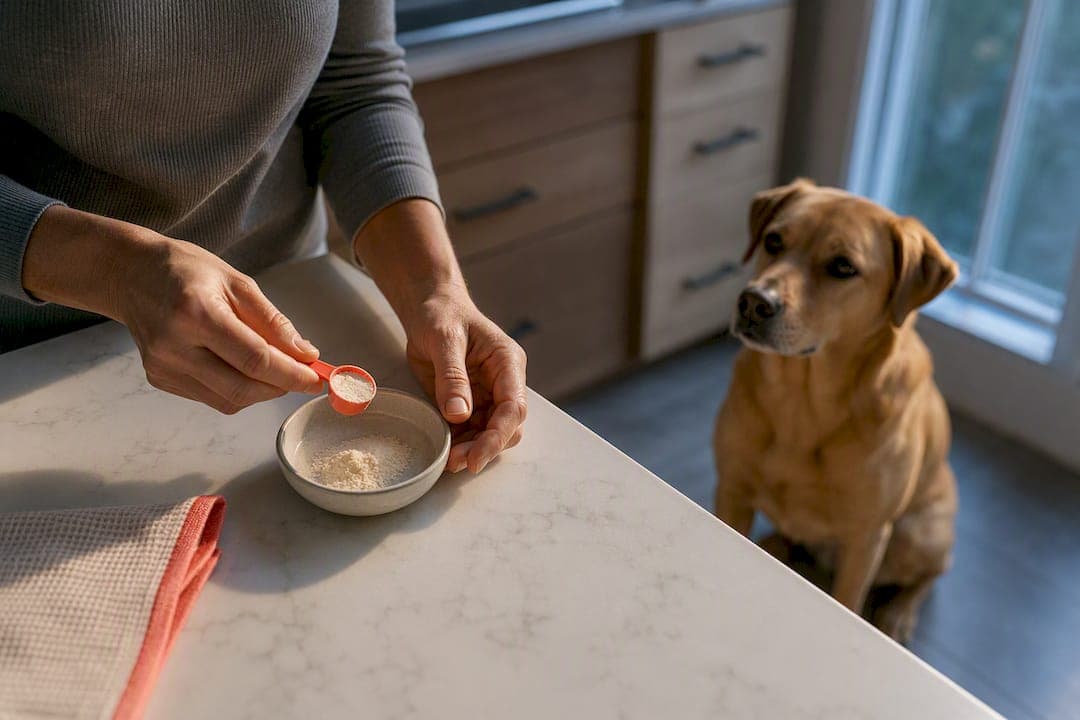
Bovine colostrum can support a dog's gut and immune health when it's used the right way and sourced from a quality product. It helps most in two situations: puppies who missed out on their mother's first milk, and adult dogs whose owners want extra digestive or immune support alongside regular care. Before you buy anything, talk to your veterinarian and check the label for real bioactive content, not just marketing claims.
TL;DR:
- Bovine colostrum can support immune and gut health mainly for puppies who missed maternal milk or dogs recovering from gastrointestinal issues.
- The strongest evidence shows it improves fecal IgA levels and vaccine response, with most benefits occurring within two to four weeks of consistent use.
- Most dogs tolerate colostrum well, but minor side effects like mild gastrointestinal upset or allergic reactions can occur, especially in dairy-sensitive dogs.
- Proper product selection involves checking for bovine origin, adequate bioactive content, third-party testing, and appropriate form and dosing instructions.
- Dosing generally starts at around 500 mg per 25 pounds of weight daily and should be given on an empty stomach, under veterinary guidance, with careful monitoring over several weeks.
Table of Contents
- What Colostrum Is and What's Inside It
- Colostrum Benefits for Dogs: What's Actually Backed by Evidence
- Is Colostrum Safe for Dogs? Side Effects and Interactions
- How to Give Colostrum to Dogs: Dosing and Timing
- Choosing a Colostrum Supplement: What to Look for on the Label
- What the Research Says: Key Studies and Their Limits
- Storage and Dosing Consistency Tips
- Should You Try Colostrum for Your Dog?
- Why Kiblco Tests Colostrum Products Before Recommending Them
- Find a Colostrum Supplement Worth Trusting
- Sources
- FAQ
What Colostrum Is and What's Inside It
Colostrum is the thick, antibody-loaded fluid a mother produces in the first day or two after giving birth, before her milk comes in. It's packed with immune and repair compounds that a newborn's own body hasn't started making yet. According to VCA Animal Hospitals, the main components include:
- IgG, IgA, and IgM immunoglobulins that fight off pathogens
- Lactoferrin, which binds iron and helps limit bacterial growth
- Growth factors and proline-rich polypeptides that support tissue repair and immune regulation
The biology shifts fast with age. A newborn puppy's gut can absorb whole antibody proteins directly into the bloodstream for roughly the first 24 to 48 hours, a window called passive immunity transfer. Adult dogs can't do this. Their digestive systems break large proteins down before absorption, so supplementation mainly works locally in the gut rather than boosting circulating antibodies. Bovine colostrum, taken from dairy cows, is the standard commercial source since it's abundant and structurally close enough to canine colostrum to be biologically active.
Colostrum Benefits for Dogs: What's Actually Backed by Evidence
The strongest data point involves immune priming. A 40-week placebo-controlled trial found that bovine colostrum supplementation raised fecal IgA and improved antibody response after vaccination in adult dogs, with no adverse safety signals over the study period.
Beyond that, here's what the evidence and clinical guidance point to:
- Gut health: elevated mucosal IgA and better microbiome stability, which may translate to firmer stools and fewer digestive flare-ups
- Immune support: reported improvements in vaccine response, likely tied to gut immune cell activity rather than a systemic antibody boost
- Inflammation and skin comfort: some clinical reports suggest colostrum's growth factors help calm irritated tissue, though this evidence is thinner than the gut-immune data
- Tissue and periodontal support: proline-rich polypeptides are theorized to aid healing, but this remains more anecdotal than proven
The 40-week study is the single most cited data point in this space — it's one of the few controlled trials measuring real biological markers instead of owner-reported outcomes.
Where colostrum tends to earn its keep in real households: orphaned or underserved puppies who need an immune boost, dogs bouncing back from a bout of GI upset, and dogs going through a vaccine series or antibiotic course where a vet wants extra gut support. Purina Institute research frames this as colostrum bioactives interacting directly with gut immune cells, which is why it can help "bridge" immune gaps in young or recovering dogs.
Is Colostrum Safe for Dogs? Side Effects and Interactions
Most dogs tolerate bovine colostrum without any issue. VCA Animal Hospitals notes there are no widely documented side effects under standard use, though a small share of dogs react to it.
- Mild GI upset: loose stool or gas, usually resolving once the dose is lowered
- Milk-protein allergy: shows up as vomiting, diarrhea, or hives, most likely in dogs with a known dairy sensitivity
- Drug interactions: caution is warranted with immune-modulating medications; ask your vet whether timing needs adjusting around vaccines or procedures
- Monitoring: track stool quality, appetite, and energy during the first two weeks
Pro Tip: If you're introducing colostrum around the same time as a vaccine or surgery, tell your vet first. Timing rarely needs to change, but it's a five-minute question that avoids guesswork.
Stop the supplement and call your veterinarian if you see repeated vomiting, hives, lethargy, or diarrhea that doesn't clear up within a day or two of stopping.
How to Give Colostrum to Dogs: Dosing and Timing
Dosing isn't standardized across brands, so label instructions matter more than any single "rule of thumb." Retail products like Native Pet's colostrum powder typically dose by body weight, around 500 mg per 25 pounds as a daily starting point. For newborn puppies who missed maternal colostrum entirely, emergency products like NurseMate ASAP are formulated for immediate neonatal use, a very different situation from adult maintenance dosing.
- Check the label's weight-based dosing and start at the low end for the first few days.
- Give it on an empty stomach when possible. Colostrum works locally in the gut, and an empty stomach maximizes contact time with the intestinal lining.
- Mix with food or bone broth if vomiting occurs. A small meal buffer usually resolves tolerability issues without dropping the supplement entirely.
- Give it consistently for two to four weeks before judging whether it's working. Gut and immune markers shift gradually, not overnight.
- Stop and reassess if you see no change after a month or any sign of an adverse reaction.
Choosing a Colostrum Supplement: What to Look for on the Label
Not every colostrum powder for pets lists what actually matters. Look for these flags before buying:
- Bovine source clearly stated, ideally with the immunoglobulin (IgG) content listed in milligrams, not just "colostrum" as a vague ingredient
- Third-party testing and batch numbers, which signal the manufacturer checks potency instead of guessing
- Form factor fit: powder mixes easily into food and is easiest to dose by weight; chews are more palatable for picky eaters but harder to split into precise doses; liquid formulas absorb fast but have shorter shelf stability once opened
- Serving size versus bioactive content: a large scoop size means nothing if the actual IgG or lactoferrin content per serving is low or unlisted
If you're already comparing gut-support products, it's worth looking at how prebiotic supplements and colostrum can work as complementary, not competing, additions to a dog's routine.
What the Research Says: Key Studies and Their Limits
The controlled trial referenced earlier remains the best evidence available: 40 weeks of bovine colostrum supplementation raised fecal IgA, improved antibody response to vaccination, and supported microbiome diversity, all without observed adverse effects.
That said, the research base has real gaps:
- Small sample sizes are common across canine colostrum trials, limiting how confidently results generalize
- Dosing varies widely between studies, making it hard to compare outcomes directly
- Neonatal and adult effects are fundamentally different, so findings from one group rarely apply cleanly to the other
- Large-scale, multi-site trials are still missing, which is the standard veterinary researchers want before calling any benefit conclusive
One well-designed 40-week trial is currently doing most of the heavy lifting for the "colostrum helps adult dog immunity" claim — a coherent signal, but not yet a mountain of proof. Most veterinarians treat colostrum as a reasonable supportive add-on rather than a guaranteed fix, which is the same conservative stance worth taking at home.
Storage and Dosing Consistency Tips
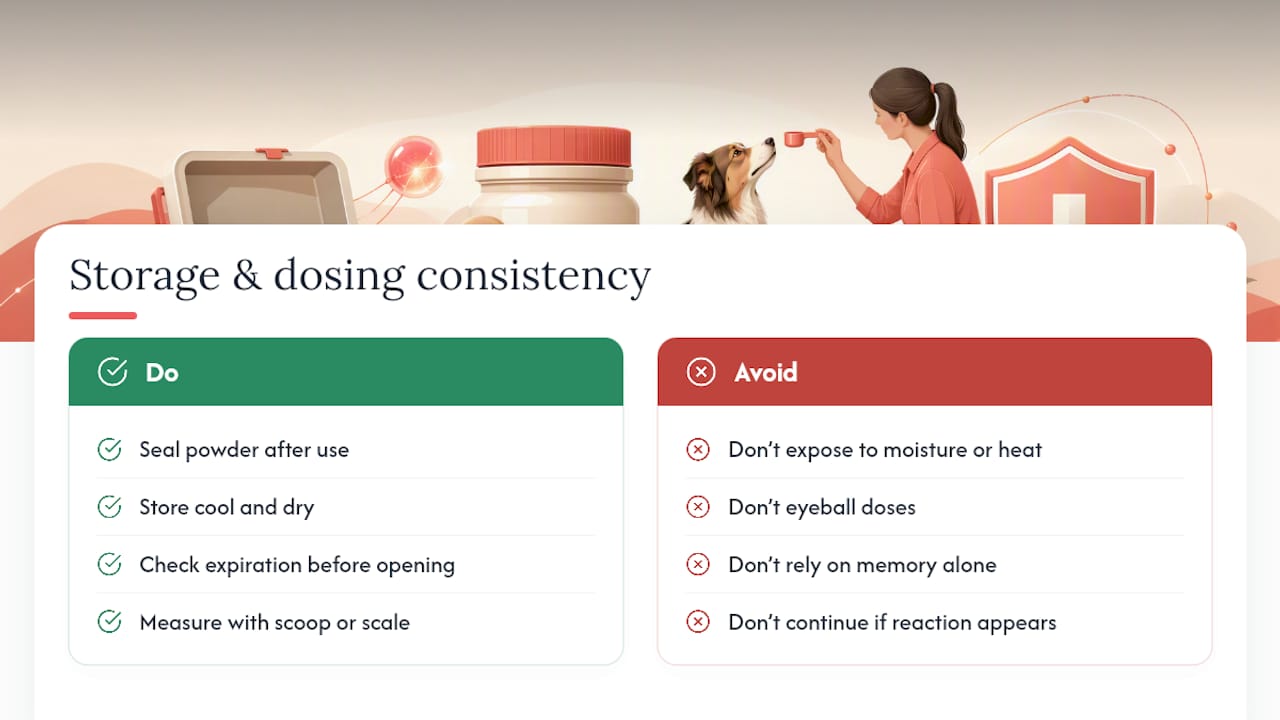
Keep colostrum powder sealed, cool, and dry. Moisture exposure degrades the bioactive proteins faster than most owners expect, and heat does the same over time. Check the expiration date before every new container, since potency drops well before visible spoilage.
Measure doses with an actual scoop or scale rather than eyeballing it, and keep a short daily log during any trial period. Two lines a day (dose given, any stool or appetite change) tells you more after three weeks than memory ever will. If nothing improves or a reaction shows up, stop and loop in your vet.
Should You Try Colostrum for Your Dog?
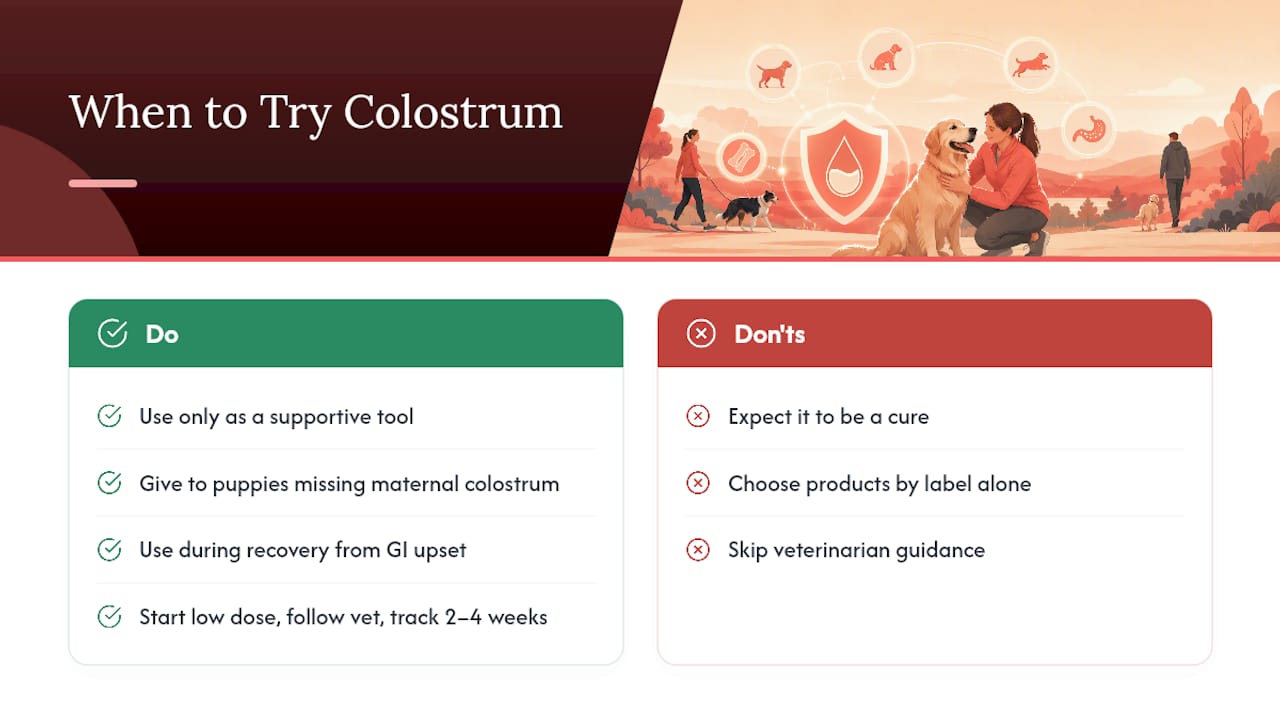
Colostrum works best as a supportive tool, not a cure. It suits puppies who missed maternal colostrum, dogs recovering from GI upset, and adults getting extra immune support around vaccines. Start with a low dose, follow your vet's guidance, and track tolerance for two to four weeks. For product selection, lean on tested reviews or a direct conversation with your veterinarian rather than guessing from a label alone.
Why Kiblco Tests Colostrum Products Before Recommending Them
Some reviewers run vet-informed testing on gut and immune supplements, tracking real-world tolerability alongside label claims. One recent prebiotic trial saw a 94% acceptance rate among test dogs. Every review lists pros and cons plainly. Pair that with your vet's advice, not instead of it.
— Chris
Find a Colostrum Supplement Worth Trusting
Guessing at a supplement aisle is where most owners waste money, buying whatever has the loudest packaging instead of the strongest formula. Some testers evaluate gut and immune supplements with real dogs and veterinary input, then publish tolerability notes and dosing quirks that labels leave out.
That hands-on approach helps flag which prebiotic formulas dogs actually finish versus leave in the bowl, and it can be applied similarly to colostrum powders, chews, and liquids. If you're also weighing broader gut support, the probiotic picks for sensitive stomachs round out a full digestive-support routine alongside colostrum. Head to Kiblco to browse current supplement reviews and buying guides before you commit to a bottle.
This article is general information, not a substitute for advice from a qualified doctor. Consult a qualified healthcare professional about your own circumstances before acting on anything here.
Sources
- Colostrum | VCA Animal Hospitals
- Effect of Bovine Colostrum on Canine Immune Health (MDPI Animals)
- Immunity and colostrum | Purina Institute
FAQ
Is colostrum beneficial for dogs?
Yes, for most dogs it supports gut health and immune function, particularly in puppies who missed maternal colostrum and adult dogs recovering from GI upset or going through a vaccine series.
Are there any negative side effects to colostrum?
Most dogs tolerate it well, but a small number experience mild GI upset or a milk-protein allergic reaction with vomiting, diarrhea, or hives.
Can you give a dog human colostrum?
Bovine colostrum, not human colostrum, is the standard and studied supplement source for dogs; stick with products formulated specifically for canine use.
How much colostrum should I give my dog?
Dosing varies by brand, but a common reference point is around 500 mg per 25 pounds of body weight daily, adjusted based on your veterinarian's advice and the specific product's label.