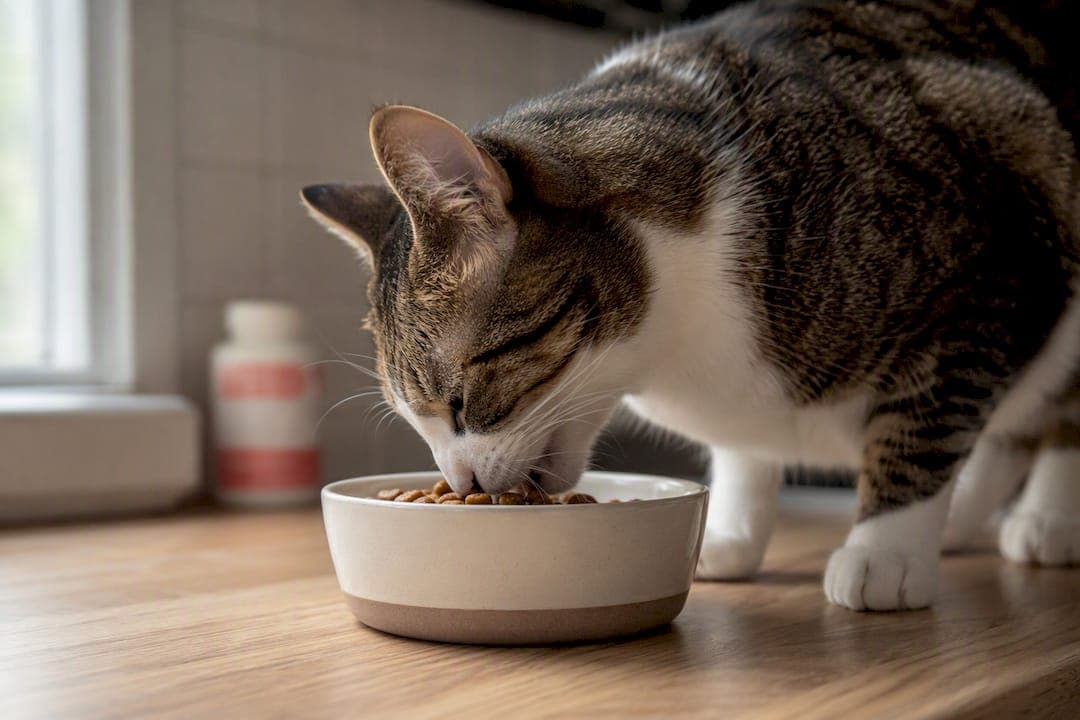
Yes, taurine is essential for cats, and most healthy cats eating a complete commercial diet don't need extra supplements. Cats can't make enough taurine on their own, so deficiency can cause permanent damage. Two quick actions protect your cat:
- Check the food label for an AAFCO nutritional adequacy statement and the right life stage.
- Call your vet if your cat has heart disease, eye changes, or eats a restrictive or homemade diet, and discuss the best diet for senior cats if age-related nutrition adjustments are needed.
The stakes are real: untreated deficiency can lead to dilated cardiomyopathy and irreversible retinal degeneration.
Key Takeaways
Taurine is essential for feline heart, eye, digestive, and reproductive health, and most healthy cats on complete commercial diets don't need extra supplements beyond their food.
| Point | Details |
|---|---|
| Diet first, supplements second | Check for an AAFCO adequacy statement before considering any taurine supplement. |
| Whole-blood testing is preferred | Ask your vet for whole-blood taurine testing over plasma for a reliable diagnosis. |
| Retinal damage can be permanent | Early detection matters because vision loss from deficiency often can't be reversed. |
| Canned food needs more taurine | Processing losses mean canned diets require higher taurine levels than dry food. |
| Kiblco vets product claims | Kiblco's reviews cross-check supplement and food claims against veterinary sources before recommending them. |
Table of Contents
- What Is Taurine, and Why Can't Cats Make Enough?
- Why Cats Need Taurine for Heart, Eyes, and More
- Signs and Symptoms of Taurine Deficiency in Cats
- Which Cats Are Most at Risk for Deficiency?
- How Vets Test for Taurine Deficiency
- Taurine in Cat Food: What Labels Actually Tell You
- When Supplements Help, and How to Use Them Safely
- What to Expect After Diagnosis and Treatment
- Quick Checklist: Is Your Cat's Diet Taurine-Safe?
- How Kiblco Evaluates Taurine and Nutrition Claims
- How Much Taurine Does a Cat Actually Need Each Day?
- Can Too Much Taurine Hurt Your Cat?
- Does Cooking Destroy the Taurine in Cat Food?
- A Practical Note From Kiblco
- How Kiblco Helps You Choose the Right Cat Nutrition Products
- Sources
What Is Taurine, and Why Can't Cats Make Enough?
Taurine is a sulfur-containing amino acid found naturally in animal tissue, and cats need it delivered through food. Unlike dogs or humans, cats have a limited capacity to synthesize taurine from other amino acids, which turns it into a true dietary requirement rather than a nice-to-have.
Their bodies don't stockpile it either. A few key facts:
- Taurine comes almost exclusively from animal-based protein, not plants.
- Cats lose taurine steadily through bile acid excretion, so intake has to stay consistent.
- Without regular dietary replenishment, levels drop faster in cats than in most other mammals.
Why Cats Need Taurine for Heart, Eyes, and More
Taurine isn't a one-job nutrient. It supports several organ systems at once, and when it runs low, the effects show up in more than one place.
- Heart: Taurine helps heart muscle cells contract properly; deficiency is a known cause of feline dilated cardiomyopathy.
- Eyes: The retina depends on taurine for normal cell structure and function.
- Digestion: Cats use taurine to conjugate bile acids, which aids fat digestion.
- Reproduction: Queens need adequate taurine for normal pregnancy outcomes and kitten development.
- Immune function: Taurine contributes to normal immune cell activity.
Taurine is required for normal vision, heart muscle function, digestion, immune health, and fetal development, which is why veterinary nutritionists treat it as non-negotiable in feline diets rather than an optional add-on.
Signs and Symptoms of Taurine Deficiency in Cats
Deficiency doesn't always announce itself early. Watch for:
- Progressive vision loss from feline central retinal degeneration
- Signs of dilated cardiomyopathy: lethargy, rapid breathing, or collapse
- Poor growth or failure to thrive in kittens
- Reproductive failure in breeding queens
- Dull coat and reduced energy
Retinal damage from taurine deficiency is often irreversible even after supplementation begins, though catching it early can stop further degeneration. Cardiac cases have more room for recovery when caught in time.
Any sign of labored breathing, sudden weakness, or collapse is an emergency. Don't wait for a scheduled appointment. Get your cat to a vet immediately.
Which Cats Are Most at Risk for Deficiency?
Certain feeding patterns and health conditions push taurine risk higher:
- Homemade, vegan, or vegetarian diets not formulated by a specialist
- Feeding dog food to cats, even occasionally as a main meal
- Some raw or DIY recipes lacking proper animal-protein ratios
- Certain canned formulas where processing reduces taurine availability over time
- Prolonged anorexia or GI disease that impairs nutrient absorption
- Growing kittens and breeding queens, whose needs run higher than maintenance levels
Pro Tip: If you cook for your cat at home, get the recipe formally reviewed. Tufts Veterinary Medicine recommends working with a board-certified veterinary nutritionist rather than trusting a recipe you found online, since most home diets fall short on taurine without expert balancing.
How Vets Test for Taurine Deficiency
Diagnosis usually combines a blood test with a physical workup. Vets typically order:
- Whole-blood taurine concentration, the preferred measure of long-term status
- Plasma taurine testing, which is more sensitive to short-term food deprivation and less reliable alone
- Echocardiography to check for cardiomyopathy
- Ophthalmic exam to check the retina for early degeneration
Whole-blood testing wins out because plasma levels can drop quickly with short-term fasting, which can produce a misleading snapshot. Bring your cat's diet history, any supplements given, and a timeline of symptoms to the appointment. That detail speeds up the diagnosis considerably.
Taurine in Cat Food: What Labels Actually Tell You
Most complete-and-balanced commercial cat foods already contain added taurine, sourced from animal proteins like chicken, fish, and organ meat. That's why most healthy cats eating a quality commercial diet don't need extra supplementation.
Target concentrations differ by food type. Because canning and heat processing cause greater taurine loss, canned diets typically need higher levels, often cited in the range of 2,000 to 2,500 mg/kg dry matter, compared to roughly 1,200 mg/kg dry matter for dry expanded foods.
Before you buy, check the bag or can for:
- An AAFCO nutritional adequacy statement naming "cats" and the correct life stage
- Named animal proteins high on the ingredient list (chicken, salmon, turkey), not vague terms like "meat by-product"
- A manufacturer statement confirming added taurine, especially on canned lines
If a food skips the AAFCO statement entirely, treat that as a red flag rather than an oversight.
When Supplements Help, and How to Use Them Safely
Supplements aren't for every cat. They're generally reserved for diagnosed deficiency, cats with unreliable diets, or as a vet-directed adjunct for dilated cardiomyopathy or retinal disease.
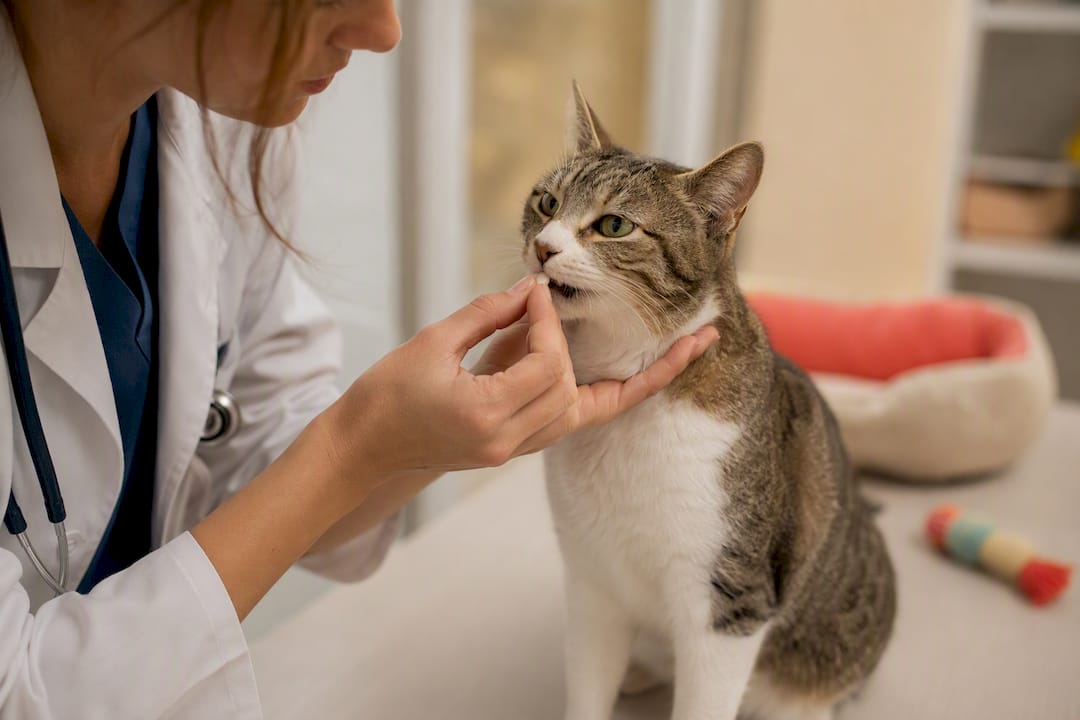
When a vet does prescribe supplementation, therapeutic dosing commonly falls in the range of 250 to 500 mg by mouth every 12 hours, adjusted for the individual cat and the condition being treated.
Taurine has a wide margin of safety, and cats generally excrete excess amounts rather than accumulating toxic levels. That said, supplement quality varies widely between brands.
- Choose a product with veterinary backing or a clear, tested concentration on the label
- Confirm the dose with your vet rather than guessing from a bottle
- Avoid stacking multiple supplements without oversight
- Track your cat's energy, coat, and appetite over several weeks to gauge response
Supplementing a cat that already eats a complete commercial diet rarely adds benefit. It's the diet quality that matters most, not an extra pill on top of it.
What to Expect After Diagnosis and Treatment
Recovery timelines vary by system. Many owners notice improved energy and coat condition within two to four weeks of consistent, vet-directed supplementation.
Heart function often improves with early-stage dilated cardiomyopathy, especially when treatment combines taurine with standard cardiac medication. Retinal degeneration is a different story. Damage already done to the retina is usually permanent, even though supplementation halts further decline.
Ask your vet about follow-up blood testing to confirm levels have normalized, rather than assuming symptoms improving means the underlying deficiency is resolved.
Quick Checklist: Is Your Cat's Diet Taurine-Safe?
Run through this before your next vet visit:
- Check the food label for an AAFCO statement and correct life stage.
- Confirm the first ingredients are named animal proteins.
- Stop feeding dog food, vegan diets, or unverified homemade recipes until reviewed.
- Write down when any symptoms started.
Call your vet right away for breathing trouble, collapse, sudden appetite loss, vision changes, or a kitten failing to grow normally. Expect a diet history review, physical exam, blood work, and possibly an echocardiogram or ophthalmology referral.
How Kiblco Evaluates Taurine and Nutrition Claims
Kiblco's guidance draws on veterinary hospital resources, peer-reviewed nutrition research, and hands-on product testing, with medical claims cross-checked against established sources rather than marketing copy.
- Veterinary references like VCA Animal Hospitals for physiological and dosing guidance
- Peer-reviewed studies (PMC) for deficiency mechanisms and outcomes
- Academic veterinary programs for diet-formulation standards
Dosing statements and product-specific recommendations get checked against veterinary sources first. Kiblco's own testing adds the real-world layer on top, not the other way around.
How Much Taurine Does a Cat Actually Need Each Day?
There's no single universal number, because requirements shift with age, health status, and diet type. AAFCO nutrient profiles set minimum concentrations for commercial food rather than a fixed milligram target per cat, which is why the standards are expressed per kilogram of diet rather than per animal.
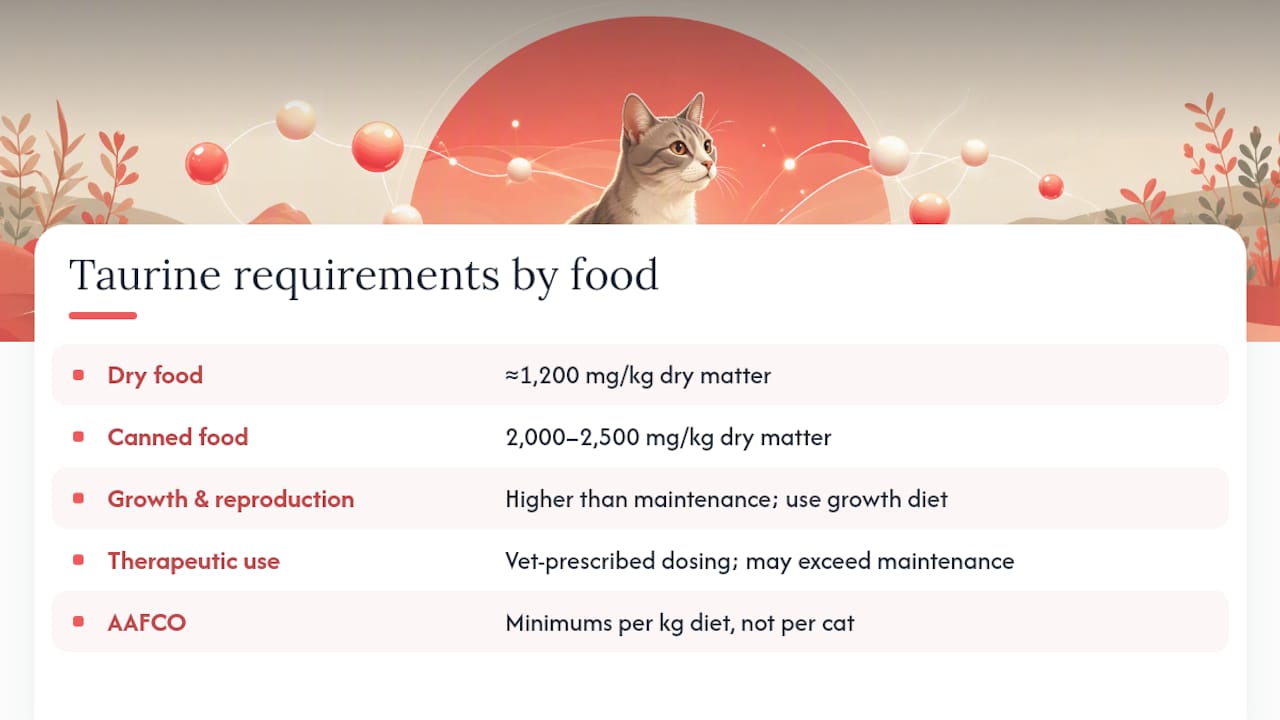
For a typical adult cat eating dry food, a diet meeting roughly 1,200 mg/kg dry matter generally covers maintenance needs. Canned diets need to run higher, often in the 2,000 to 2,500 mg/kg dry matter range, because processing and moisture content increase taurine losses.
Growing kittens and pregnant or nursing queens have elevated needs compared to adult cats at maintenance, since taurine supports fetal development and rapid tissue growth. A diet formulated specifically for growth or reproduction, and labeled as such under an AAFCO statement, is built to cover that higher demand automatically.
Cats being treated for diagnosed deficiency, dilated cardiomyopathy, or retinal disease fall into a different category entirely. Their therapeutic dosing is set by a veterinarian based on bloodwork and clinical response, not by a standard maintenance figure. This is one area where guessing at a dose from a supplement label is genuinely risky territory, since therapeutic needs can run well above what a healthy cat requires from food alone.
The simplest rule for most owners: feed a complete-and-balanced commercial diet appropriate for your cat's life stage, and let your vet handle any number beyond that baseline.
Can Too Much Taurine Hurt Your Cat?
Taurine has a notably wide safety margin compared to many other nutrients, and healthy cats generally excrete excess amounts through normal metabolic processes rather than storing them to toxic levels. That's reassuring, but it doesn't mean unlimited supplementation is risk-free or worthwhile.
The bigger practical risks come from how supplements are used, not the amino acid itself. Stacking multiple taurine-containing products, such as a fortified food plus a separate supplement plus treats marketed for heart health, can lead to inconsistent or excessive dosing without anyone tracking the total. Quality control among over-the-counter supplements varies too. Concentration claims on the label aren't always independently verified, so two products claiming the same dose might not deliver it identically.
There's also an opportunity cost worth naming plainly. Money and attention spent on unnecessary supplementation for a cat already eating a complete commercial diet is money not spent on diet quality, veterinary checkups, or catching an actual problem early. Routine supplementation for healthy cats on quality commercial food generally provides no measurable benefit, and it can create a false sense of security that delays a real diagnosis.
Cats with kidney disease or other conditions affecting excretion may process excess nutrients differently than healthy cats, which is another reason blanket over-the-counter dosing isn't a good substitute for veterinary guidance. If your cat is on any supplement, mention it at every vet visit, even if it seems minor. The goal isn't fear of taurine. It's making sure any use is a decision, not a habit picked up from a product label.
Does Cooking Destroy the Taurine in Cat Food?
Heat processing reduces taurine availability, which is a major reason commercial pet food manufacturers add taurine back into formulas after cooking rather than relying on raw ingredient content alone. Canning, in particular, involves higher temperatures and longer processing times than dry kibble extrusion, and that's part of why canned diets are formulated to higher target concentrations than dry food to compensate for the loss.
There's a second mechanism at play beyond heat: dietary fiber and certain processing methods can increase taurine loss through bile acid excretion in the gut, pulling more taurine out of the body than a low-fiber diet would. This is one reason older nutrition research flagged fiber-heavy commercial diets as a historical risk factor for deficiency before manufacturers adjusted formulations.
For home cooking, this matters even more, because a recipe that looks taurine-adequate on paper using raw ingredient values can fall short once you factor in cooking losses. A raw chicken thigh has a certain taurine content, but simmering, baking, or pressure-cooking that same thigh reduces what actually reaches your cat's bowl. Recipes that don't account for this gap are a common reason home-prepared diets under-deliver on taurine even when the shopping list looks reasonable.
This is precisely why reputable commercial pet food brands test finished, cooked product rather than raw formulation numbers, and why an AAFCO adequacy statement carries real weight. It reflects testing on the food as your cat actually eats it, not a theoretical calculation based on uncooked ingredients.

A Practical Note From Kiblco
Here's the honest take: for a healthy cat on a quality commercial diet, taurine supplements are usually solving a problem that doesn't exist. Save the money, and put it toward a diet with a solid AAFCO statement instead.
Where supplementation earns its place is after a vet diagnosis, not before. Test first, then treat. That order matters more than any product on a shelf.
How Kiblco Helps You Choose the Right Cat Nutrition Products
Kiblco is the shortcut to skipping guesswork on pet nutrition products. Instead of scrolling through dozens of supplement listings with vague label claims, you get hands-on reviews from real pet owners, cross-checked against veterinary sources, so you know which products actually back up what they say on the bottle.

Kiblco earns commissions when you shop through links to retailers like Amazon, Chewy, and Petco, which keeps the reviews free and doesn't change what gets recommended. If your cat has a diagnosed health condition, always loop in your veterinarian before adding any supplement to the routine. For everyone else, browsing Kiblco's product guides is the fastest way to compare complete-and-balanced cat food options and vetted supplements side by side, so your next purchase is backed by more than a marketing claim. Start there before you add anything new to your cat's bowl.
Sources
For deeper reading or to bring questions to your vet, these sources back the guidance in this article:
- Taurine in Cats | VCA Animal Hospitals
- Nutritional Problems in Cats: Taurine Deficiency and Vitamin A Excess - PMC
- Taurine for Cats: Why This Amino Acid Is… | SpectrumCare
- Taurine: an essential nutrient for cats (Journal citation excerpt / DOI)
Print these out or save the links. Your vet can use them to confirm any specific recommendation for your cat.
This article is general information, not a substitute for advice from a qualified doctor. Consult a qualified healthcare professional about your own circumstances before acting on anything here.