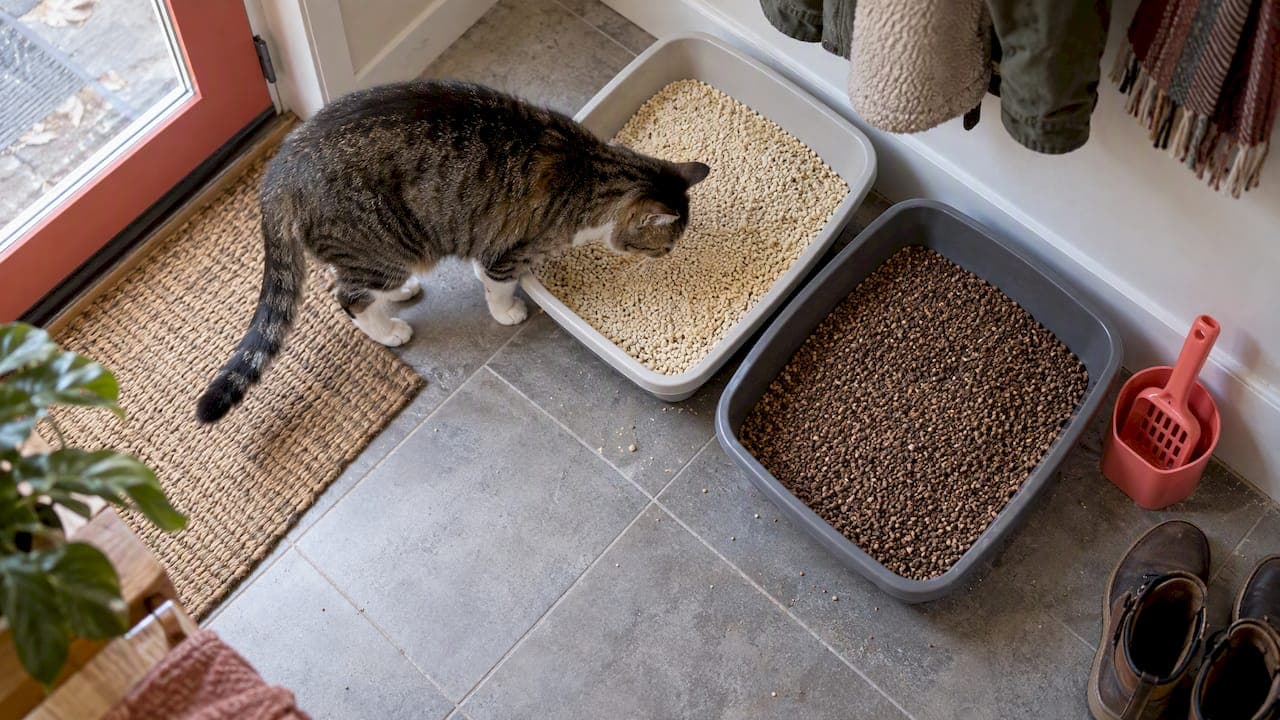
Corn litter is lighter, softer under paw and usually the easier switch for a cat used to clay. Walnut-shell litter is denser, darker and tends to hold odor and clumps well, but it can leave dark dust and has coarser granules. Neither is better for every cat. The right pick depends on your cat's paws and habits, whether you have a curious kitten, how you dispose of waste and how much mess you will tolerate around the box.
Both are plant-based, both clump, and both appeal to people who want to move away from mined clay. Below we compare them on the things that decide whether a litter stays in your home: clumping, odor, dust, tracking, safety, disposal and cost.
TL;DR
- Corn: lighter and softer, a gentle first step away from clay, but it can track on paws and needs dry storage because corn can grow mold.
- Walnut: denser and dark, often good at odor control, but some grinds shed fine dark dust and feel coarser.
- Safety: curious kittens and cats that nibble litter are the main concern with corn. Watch any litter-eaters closely, and ask your vet if it continues.
- Disposal: do not flush either one. Bag and bin it unless the label and your local rules say otherwise.
- Switching: change gradually over a week or two and keep one box on the old litter until your cat accepts the new one.
Table of Contents
- What each litter is made from
- Side-by-side comparison
- Clumping and odor control
- Dust, tracking and cleanup
- Safety: what cat parents should watch
- Disposal: can you flush walnut or corn litter?
- Cost: what to expect
- Which one suits your cat and home
- How to switch without a standoff
- Our perspective
- Find your litter
- FAQ
- Sources
What each litter is made from
Corn litter is made from processed corn, usually the cob or kernels, ground or pelleted so it absorbs liquid and binds into clumps. It tends to be pale and light, with a texture many cats find soft.
Walnut litter is made from ground walnut shells, the hard, fibrous outer layer left over from the nut industry. The shell is crushed to a granule size that ranges from fine to chunky depending on the brand. The color is dark brown, which hides stains but can show up on light floors.
Both count as renewable, plant-based litters, which is the main reason people compare them. Neither is automatically greener or safer than the other. What matters in daily use is how the granule behaves once it is wet, how it feels under your cat's paws and what happens when the bag is open for a month.
Side-by-side comparison
These are general patterns from the types of litter and from how our testers describe them. Individual brands vary, especially in granule size, so use this as a starting point and read each product's review.
| Factor | Corn litter | Walnut litter |
|---|---|---|
| Weight | Light, easy to carry and pour | Denser, a bit heavier per scoop |
| Feel under paw | Soft, often described as gentle | Coarser, depends on the grind |
| Clumping | Forms lighter clumps that can crumble if urine reaches the bottom | Often forms firmer clumps, sometimes broad and flat |
| Odor control | Decent when scooped daily | Often strong, with a natural earthy scent of its own |
| Dust | Generally low, varies by brand | Can shed fine dark dust |
| Tracking | Light granules cling to paws and fur | Varies a lot by grind, dark bits show on pale floors |
| Storage | Keep dry, mold risk | Less fussy, still keep dry |
| Ingestion concern | Some cats treat it like food | Hard shell pieces are not meant to be eaten |
Clumping and odor control
Clumping comes down to how quickly the material grabs moisture and whether the wet zone stays together when you lift it. Corn tends to form lighter clumps that are easy to scoop when the litter is fresh. The failure we see most is the clump that looks solid on top but crumbles when the scoop slides underneath, especially when the litter bed is too shallow and urine reaches the bottom of the box.
Walnut usually forms firmer, heavier clumps, which is helpful for cats with larger urine volume. The tradeoff is that some walnut clumps spread wider, so each scoop can pull out more clean litter than you would like.
On odor, both do best with daily scooping and a full litter depth, which gives the material enough volume to absorb. Walnut often has the edge in the first weeks because the shell is naturally absorbent. Corn can smell faintly sweet or grainy, which some owners like and some cats do not. If you have been using a fragranced clay litter, expect the natural scent of either one to be more noticeable at first. Be careful with add-ons: if you are thinking of a deodorizer on top, read our guide on whether litter deodorizer is safe for cats first.

If you want to see how a corn litter holds up against another plant-based option, we ran home clump tests in tofu vs corn cat litter.
Dust, tracking and cleanup
Dust matters most for two groups: cats with sensitive airways and the people who pour the bag. Corn is generally a lower-dust option, though quality varies. Walnut can shed fine, dark dust, especially when you pour from a height. That dust is not a danger on its own, but it is more visible on light floors and litter mats. If your cat has asthma or a chronic cough, work with your vet and read our guide to the best litter for cats with asthma before changing anything.
Tracking is about the size, weight and shape of each piece. Corn is light and can cling to paws and fur, so a few granules end up on the floor beside the box. Walnut tracking depends heavily on the grind: chunky shell pieces tend to stay in the box, while finer grinds stick to paws and leave dark specks. A textured mat outside the box helps with either litter.
Cleanup is more forgiving with walnut when clumps stay intact, but dark residue can stain pale grout or carpet edges. Corn is easier to sweep but can scatter more widely.
Safety: what cat parents should watch
Corn and mold
Corn can grow mold when it gets damp. According to Zoetis Petcare, corn litter can potentially support the growth of aflatoxins, which come from mold. Manufacturers typically treat the litter to reduce that risk, and the practical step for you is to store the bag somewhere clean and dry. Throw out any litter that smells musty, looks discolored or has clumped in the bag before use. Do not top off a box that has gotten wet from a leaking window or spilled water.
Cats that eat litter
The same Zoetis page notes that cats may find wheat or corn litters soft to the touch, while some may try to eat them as if they were food, which is a particular consideration for households with curious kittens. Kittens explore with their mouths, and a few nibbles are common. Repeated eating is different. If your cat keeps eating litter of any kind, or you see vomiting, straining in the box, a swollen belly or a loss of appetite, call your veterinarian rather than waiting to see if it passes.
The Zoetis veterinary perspective also suggests weighing your cat's mobility, paw sensitivity and tendency to ingest foreign objects when you choose a litter. For a litter-nibbler, a larger-pellet or non-edible-looking litter is usually the safer starting point, and you can supervise the first week in the new box.
Walnut shells
Walnut litter is made from hard shell, and the concern people raise is rough, sharp-edged pieces. A finer, smoother grind is gentler on paws than a chunky one. If your cat has sore paws, is declawed, is elderly or has arthritis, watch how they step into and out of the box. Cats with a tree-nut allergy are not a standard concern we can confirm, but if your own household has a nut allergy, a walnut litter is worth ruling out in your own home. Ask your doctor or allergist if it is relevant for you.
Accidents during a switch
A cat that dislikes the new texture may stop using the box. If that happens, clean the spot properly so the smell does not invite a repeat. Our partners at a carpet care service have a useful walkthrough on removing cat urine from carpet, and it is worth reading before an accident happens, not after.
Disposal: can you flush walnut or corn litter?
Short answer: no, do not flush either one as a routine. Even litters that are biodegradable can cause plumbing problems, according to The Vet Desk, which says flushing any cat litter is not advisable. Sewer and septic rules vary by area, and a "flushable" label does not guarantee your own system can handle it.
What to do instead:
- Scoop into a bag, tie it and put it in the household trash.
- Do not compost cat waste in a garden used for food, and check local rules before composting anything.
- If you are specifically after a litter you can flush, read our guide to the best flushable cat litter and confirm the product label and your local rules.
If you scoop a lot of litter and the smell in the bin bothers you, a sealed bin helps. We compare options in our guide to cat litter disposal systems that lock in odor.
Cost: what to expect
We do not publish a fixed price for either litter, because prices change by retailer, bag size and brand. A few patterns hold across the market. Natural litters usually cost more per bag than basic clay, and both corn and walnut tend to sit in a similar range to each other, with premium blends costing more. The number that matters is cost per month, not per bag. Corn is light, so a bag can look bigger than it is by weight. Walnut is dense, so a bag lasts a little longer by volume. Compare the price per pound at your retailer, then check how many weeks a full box lasts for your cat.
If you are coming from clay and want to see the trade-off in the other direction, our tofu vs clay litter test explains the dust-versus-cost question using a similar approach.
Which one suits your cat and home
Corn tends to suit
- Cats moving away from clay that like a soft, fine-grained texture
- Homes that want a lighter bag to carry
- Owners who scoop daily and store litter in a dry place
- Multi-cat households that can supervise a gentle transition
Walnut tends to suit
- Adult cats with larger urine volume that need firm clumps
- Owners who prioritize odor control and do not mind a dark color
- Cats that have no paw sensitivity or arthritis
- Homes with dark flooring, where dark dust is less visible
Think twice about either if
- Your kitten eats litter regularly
- Your cat has respiratory disease, in which case talk to your vet first
- You live where mold is a recurring problem and can't store the bag dry
- Your cat has painful paws or limited mobility
If you are still weighing ingredients, our vet-informed guide to choosing cat litter walks through each type step by step.
How to switch without a standoff
- Start with a mix. For the first few days, use about a quarter new litter and three quarters old.
- Increase gradually. Move to half and half, then mostly new, over one to two weeks.
- Keep the depth consistent. Too shallow and clumps break, no matter which litter you use.
- Scoop daily. Both natural litters handle moisture best when wet clumps come out quickly.
- Offer a choice. Put a second box with the old litter nearby until your cat uses the new one reliably.
- Watch your cat, not the bag. Straining, avoiding the box, or eating litter is a reason to call your vet.
If you want to track changes in urine habits as you try new litters, see health monitoring cat litter for what actually works.
Our perspective
We buy and test litters in real homes, and the pattern is consistent: the ingredient list matters less than the cat. A litter that wins on paper can lose in the box if your cat hates the texture, so we test with several cats and report the downsides alongside the strengths. Corn is usually our starting recommendation for a cat leaving clay, with the storage and ingestion caveats above. Walnut is the one we reach for when odor control and firm clumps matter most and the household can live with some dark dust.
Health-related picks are cross-checked with veterinary input, and we do not accept payment for coverage. We earn a commission if you buy through a retailer link, and we say so openly. If a product fails in our homes, you will read about it.
— Chris
Find your litter
If you are ready to shop, our hands-on reviews cover litters, boxes and accessories with clear pros and cons for each. Start with the cat litter category to compare tested options side by side.

FAQ
Are walnut shells good for cat litter?
For many cats, yes. Walnut litter absorbs well, forms firm clumps and controls odor. The drawbacks are dark dust and a coarser feel on some grinds, so choose a finer, smoother grind if your cat is sensitive to texture.
Is it safe for my cat to eat corn litter?
A small nibble is not usually a crisis, but you should not let a cat treat litter as food. Corn can also grow mold if it gets damp. If your cat keeps eating litter or shows vomiting, straining or a swollen belly, call your veterinarian.
Can you flush walnut or corn cat litter?
We advise against it. Even biodegradable litter can clog pipes and may not break down quickly in plumbing. Bag it and put it in the trash unless the product label and your local sewer or septic rules clearly allow otherwise.
Is corn litter better than clay?
It depends on what you value. Corn is lighter, plant-based and usually lower in dust, while clay is often cheaper and clumps very firmly. Some cats prefer the familiar feel of clay, so switch slowly either way.
Can I mix walnut and corn litter?
You can, and some owners blend them to balance clump strength and softness. Mix small batches first, watch how your cat reacts and keep scooping daily.
Sources
- Cat Litter Types: Which is Right for Your Cat (and You), Zoetis Petcare
- Can You Flush Cat Litter? Vet-Reviewed Tips, The Vet Desk