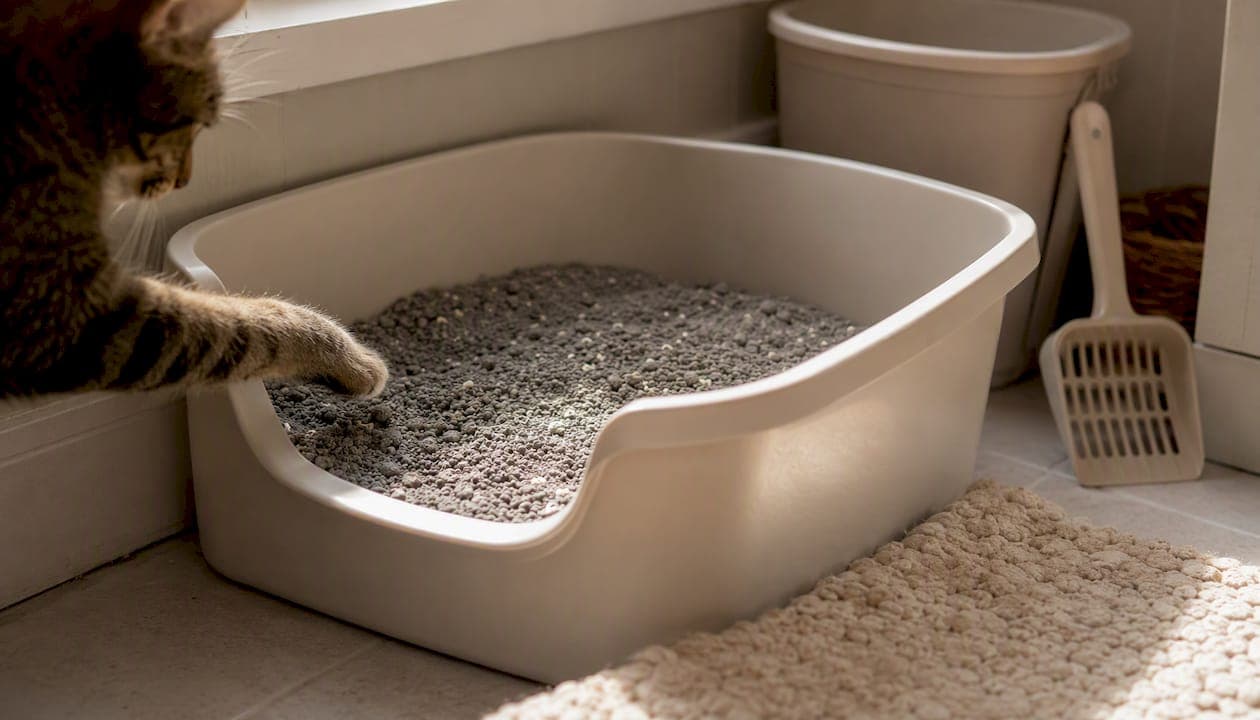
A small amount of a low-dust, fragrance-free granular adsorber is the safest routine deodorizer for most healthy adult cats. Specifically, clinoptilolite zeolite granules and activated-charcoal granules are the two categories most consistently recommended by veterinarians and hands-on testers. Baking soda works in a pinch but carries dust risk in its loose powder form. Kiblco's vet-reviewed picks cover all three categories if you want a vetted shortlist to start from.
The short version:
- Safest choices: Low-dust clinoptilolite zeolite granules (best for ammonia/urine odor) and activated-charcoal granules (best for mixed odors)
- Acceptable with caution: Baking soda only in granular or tablet form, mixed below the litter surface
- Avoid entirely: Essential oils, fragranced powders, aerosol sprays, and any fine-powder deodorizer
Do: Use sparingly, mix below the top inch of litter, and keep scooping daily. A deodorizer is a supplement, never a substitute for cleaning.
Don't: Rely on any deodorizer to cover up a box that hasn't been scooped. The odor will compound, not disappear.
Pro Tip: Before committing to any new product, run a 48-to-72-hour trial with one box treated and one untreated. If your cat starts avoiding the treated box or sneezing near it, stop immediately.
Key Takeaways
The safest litter deodorizer for most cats is a low-dust, fragrance-free granular adsorber, used sparingly below the litter surface, with daily scooping as the non-negotiable foundation.
| Point | Details |
|---|---|
| Top-safe categories | Clinoptilolite zeolite (ammonia) and activated-charcoal granules (mixed odors) are the safest routine choices. |
| Scoop first, always | Daily scooping controls odor more effectively than any deodorizer; additives are auxiliary, not primary. |
| Trial protocol | Run a 48–72-hour trial with one treated box; stop if your cat sneezes, coughs, or avoids the box. |
| What to avoid | Essential oils, fragranced powders, aerosol sprays, and fine loose powders pose real respiratory and toxicity risks. |
| Kiblco's recommendation | Kiblco's vet-reviewed picks favor fragrance-free, low-dust granular formats; full roundups at kiblco.com. |
Table of Contents
- How do litter deodorizers actually control odor?
- What types of cat-safe deodorizers are worth using?
- What ingredients and formats should you avoid?
- How to introduce a new deodorizer safely
- Special considerations for kittens, seniors, and sensitive cats
- How do you pick the right deodorizer for your household?
- Kiblco's vet-informed picks: which categories made the cut?
- The part most guides skip over
- Kiblco's vetted picks are one click away
- Sources
How do litter deodorizers actually control odor?
The mechanism matters because it tells you what a deodorizer can and cannot do. There are three main approaches, and none of them replace a clean box.
Adsorption is what activated charcoal does. Its porous surface physically traps odor molecules, pulling them out of the air inside the litter. It doesn't neutralize anything chemically; it just holds the molecules until you scoop the litter out. That's why an overloaded, rarely-scooped box will eventually overwhelm even the best charcoal product.
Ion exchange is zeolite's mechanism. Clinoptilolite zeolite swaps ammonium ions from cat urine for less reactive ions in its crystal structure, which directly reduces the ammonia gas that causes that sharp, eye-watering smell. Zeolite's ammonium ion-exchange properties make it especially effective when urine ammonia is the dominant odor source. Litter boxes can concentrate ammonia from urine to levels that cause respiratory irritation, so controlling it at the source matters.
Enzymatic sprays work differently from granular products. They introduce beneficial bacteria that produce enzymes to break down organic odor molecules at a molecular level. They're best applied to the box walls and liner surfaces between full cleanings, not mixed into the litter itself.
The hierarchy is straightforward: daily scooping comes first, followed by regular full litter replacement, and then a deodorizer as an auxiliary measure. Purina advises that safe deodorizers can add odor protection but should never replace daily scooping and regular deep cleaning. A deodorizer applied to a dirty box just creates a confusing layered smell that cats often find more off-putting than plain ammonia.
- Activated charcoal: adsorbs broad odor molecules
- Zeolite: exchanges ammonium ions, targets urine smell directly
- Baking soda: neutralizes acidic odor compounds
- Enzymatic sprays: break down organic molecules on surfaces
Pro Tip: Place the litter box in a ventilated area. Airflow reduces ammonia buildup faster than any additive, and it costs nothing. A deodorizer in a sealed closet is fighting an uphill battle.
What types of cat-safe deodorizers are worth using?
Choosing the right category depends on your primary odor problem and your cat's sensitivities. Here's how the main options stack up.
Clinoptilolite zeolite granules
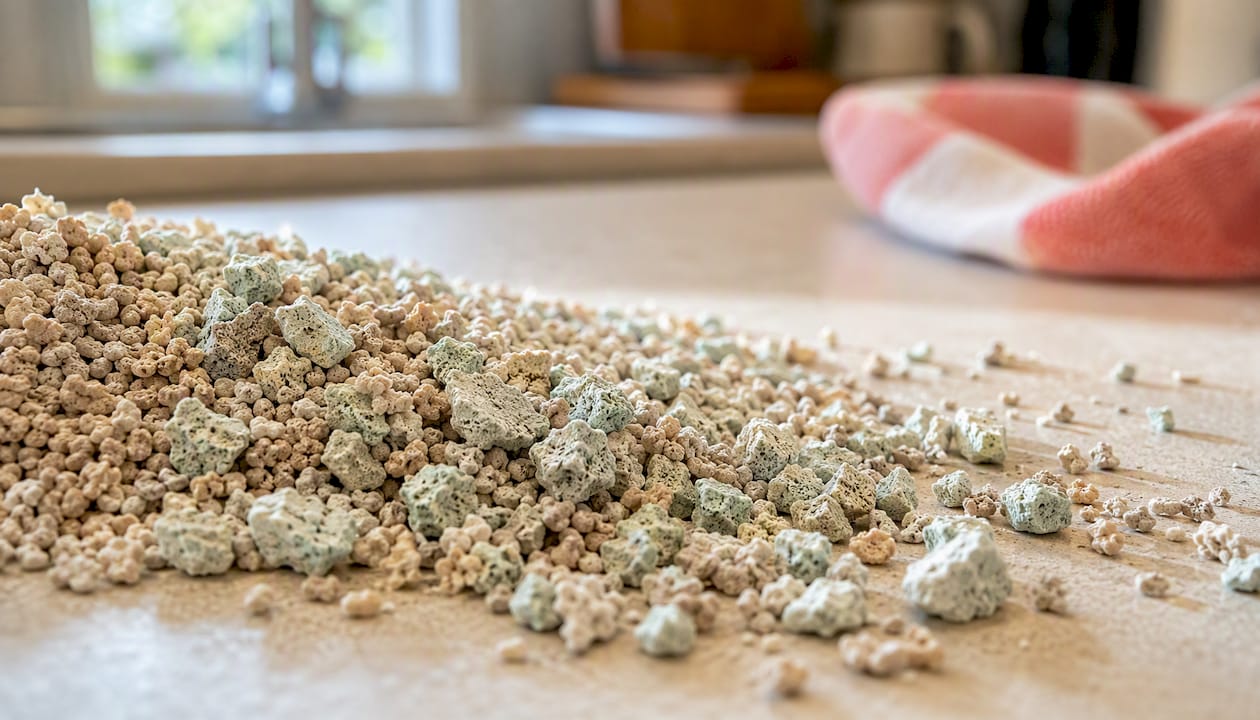
Zeolite is the strongest option for households where urine smell is the main complaint. VivaEssence's ranking places low-dust clinoptilolite zeolite at the top for ammonia control, recommending granular, fragrance-free forms specifically. The granules are heavy enough to stay mixed into the litter rather than floating to the surface, which reduces paw contact and inhalation.
- Pros: Excellent ammonia control, low dust, no fragrance needed, safe for most cats
- Cons: Less effective on fecal odors; needs replacing when saturated (usually with a full litter change)
Activated-charcoal granules
Charcoal handles a broader odor spectrum than zeolite, making it the better pick for multi-cat homes or boxes that collect both urine and fecal waste. The granular form is key. Fine charcoal powder can become airborne and irritate airways.
- Pros: Broad-spectrum adsorption, fragrance-free, widely available
- Cons: Doesn't specifically target ammonia; can darken litter color, which some cats notice
Baking soda (sodium bicarbonate)
Baking soda neutralizes acidic odor compounds and is genuinely effective in small amounts. The problem is the form it's usually sold in. Hepper highlights that baking soda can absorb odors effectively but that fine powder increases dust and ingestion exposure risks. If you use it, look for granular or tablet formats rather than loose powder, and mix a small amount below the litter surface rather than sprinkling it on top.
- Pros: Inexpensive, widely available, effective at neutralizing acids
- Cons: Fine powder form raises dust and ingestion risk; overuse can alter litter texture
Enzymatic sprays
These belong on box surfaces and liners, not in the litter itself. Spray the interior walls and base of a freshly cleaned box, let it dry completely, then add litter. They're particularly useful for eliminating residual odor from plastic that regular washing doesn't fully remove.
- Pros: Breaks down odor at the molecular level, effective on residual surface smells
- Cons: Not designed for in-litter use; requires dry application time
Carbon filters and inserts
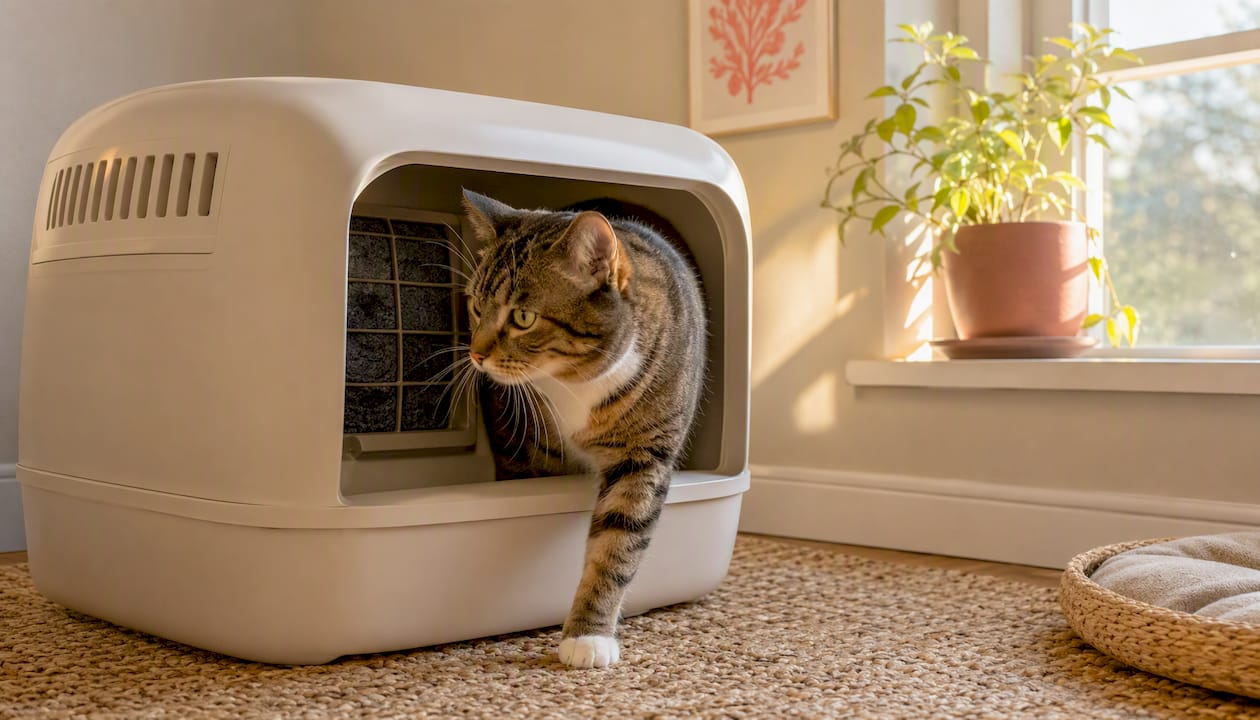
For covered boxes, a carbon filter insert in the hood can capture airborne odor before it escapes. The catch is airflow: a filter that's too restrictive can make the box feel stuffy to your cat, which may discourage use. Check that the box has adequate ventilation even with the filter installed.
Pro Tip: When switching litter types or adding a deodorizer for the first time, keep a second box with your cat's usual unmodified litter available. Cats that reject the new setup still have a safe option, which prevents accidents outside the box.
What ingredients and formats should you avoid?
Some products marketed as "litter fresheners" or "odor eliminators" are genuinely risky for cats. The red list is short but worth memorizing.
- Essential oils and fragranced compounds: Cats lack the liver enzymes needed to metabolize many aromatic compounds, including phenols found in tea tree, eucalyptus, and pine oils. Even low concentrations can cause drooling, lethargy, and in serious cases, liver damage. Catster notes that "cat-safe" products should avoid known feline toxins and minimize airborne particulates. Scented deodorizers also tend to layer smells rather than neutralize them, which cats find repellent.
- Fine powdered deodorizers: Any loose powder that becomes airborne during digging or scooping poses a respiratory risk. Cats spend time with their faces close to the litter surface, so fine particles go directly into their airways.
- Aerosol air fresheners and perfumed sprays near the box: Spraying anything scented near an open litter box coats the litter surface and the air your cat breathes during use. This is one of the fastest ways to cause box avoidance.
- Heavy or frequent application: More is not better. Overusing a deodorizer coats paws, changes litter texture, and can make the box smell foreign enough that your cat refuses it.
- Household deodorizers not intended for litter: Products like scented potpourri, plug-in air fresheners, or general-purpose odor sprays are formulated for human-occupied spaces, not for areas where cats groom paws that have been in direct contact with the product.
A note on "natural" labeling: Natural does not automatically mean safe for cats. Many plant-derived essential oils are among the most toxic substances for felines. Always check the active ingredient, not just the marketing language.
How to introduce a new deodorizer safely
A structured trial takes less than a week and tells you clearly whether a product works for your cat.
- Clean the box completely first. Scoop all waste, wipe the interior with warm water, and let it dry. Starting with a clean baseline means you're testing the deodorizer, not masking an already-dirty box.
- Add a minimal amount below the surface. Mix a thin layer into the lower portion of the litter, roughly below the top 1–2 inches. Catster advises applying a minimal amount below the litter surface to reduce paw coating and inhalation. Avoid sprinkling on top.
- Keep one untreated box available. If you have multiple boxes, leave at least one unmodified. If you have only one box, this trial is your only option, so watch your cat's behavior closely.
- Observe for 48–72 hours. Normal use of the treated box is a green light. Watch for sneezing, coughing, watery eyes, or avoidance of the box.
- Stop if you see any warning signs. Remove the deodorizer, do a full litter change, and contact your veterinarian if symptoms persist beyond 24 hours after removal.
Dos and don'ts for ongoing use:
- Mix granular deodorizer into the litter rather than layering it on top
- Prefer granular or tablet forms over loose powders
- Scoop daily regardless of whether you're using a deodorizer
- Keep the box in a ventilated area
- Don't increase the amount if the odor persists; increase scooping frequency instead
- Don't use multiple deodorizer types simultaneously
When to call your vet: Persistent coughing or sneezing that doesn't resolve within 24 hours of removing the product, signs of GI upset (vomiting, diarrhea), or complete litter-box avoidance lasting more than a day all warrant a call.
Pro Tip: Cats are extremely sensitive to scent and texture changes. Introduce any new product by mixing a very small amount and monitoring for behavioral changes before making it a regular part of your routine.
Special considerations for kittens, seniors, and sensitive cats
Not every cat has the same risk profile, and a product that's fine for a healthy adult may be a problem for a vulnerable one.
Kittens have smaller airways, higher grooming frequency relative to body size, and developing immune systems. If possible, skip added deodorizers entirely for kittens under six months and rely on frequent scooping instead. Their tendency to dig and mouth litter means ingestion exposure is higher than for adults.
Senior cats often have established litter preferences that took years to form. Changing the scent or texture of their litter box can cause avoidance, which in older cats can quickly become a health issue. If a deodorizer is needed, introduce it more slowly than you would for a younger cat, and monitor closely for any change in elimination habits.
Cats with asthma or chronic respiratory conditions are the highest-risk group. Even low-dust granular products can be a problem for a cat that already has compromised airways. Catster's vet-approved guidance emphasizes that granular, low-dust formats are preferable for respiratory health, but for cats with diagnosed asthma, consult your veterinarian before adding any product to the litter box.
Multi-cat households face a different challenge: cumulative exposure. With multiple cats using the same box, the total amount of deodorizer each cat contacts over a day adds up. Prioritize adding more boxes and increasing scooping frequency before increasing deodorizer use. Purina recommends the general rule of one box per cat plus one extra, which reduces odor load naturally without any additives.
- Kittens: avoid deodorizers if possible; scoop more frequently instead
- Seniors: introduce any new product slowly; watch for avoidance
- Asthmatic cats: consult your vet before adding anything to the litter
- Multi-cat homes: more boxes and more scooping before more deodorizer
How do you pick the right deodorizer for your household?
A short checklist cuts through the noise quickly.
Safety checklist before buying:
- Dust profile: granular or tablet, not loose powder
- Fragrance-free: no added scents, essential oils, or perfume compounds
- Stated active material: look for zeolite, activated charcoal, or sodium bicarbonate listed explicitly
- Dosing instructions: clear guidance on how much to use; avoid products with vague "use as needed" directions
- Ingredient transparency: full ingredient list available, not just marketing claims
Quick decision guide by situation:
| Your primary concern | Recommended category |
|---|---|
| Ammonia-heavy urine odor | Clinoptilolite zeolite granules |
| Mixed odors (urine + fecal) | Activated-charcoal granules |
| Respiratory-sensitive cat | Zeolite granules (lowest dust); consult vet first |
| Multi-cat household | Charcoal granules + increased scooping frequency |
| Surface/box-wall residual odor | Enzymatic spray applied between cleanings |
The priority order for features is straightforward: safety (dust profile and fragrance-free status) comes first, then efficacy for your specific odor type, then ease of use. A product that works brilliantly but coats your cat's paws with fine powder is not a good product for your cat.
For covered boxes, a litter box with a built-in carbon filter can handle airborne odor without adding anything to the litter itself, which is worth considering if your cat has any respiratory sensitivity.
Kiblco's vet-informed picks: which categories made the cut?
Kiblco's evaluation process for litter deodorizers focuses on three criteria in order: safety profile (dust, fragrance, ingredient transparency), litter-box acceptance (did the test cats keep using the box normally?), and odor performance. Products that passed on safety but caused box avoidance didn't make the list.
What Kiblco recommends by category:
- Granular zeolite products: Highest safety rating for ammonia-focused households. Low dust, no fragrance, and the ion-exchange mechanism means they work without adding anything synthetic. Watch for: litter color change and whether your cat notices the texture difference.
- Activated-charcoal granules: Recommended for mixed-odor households and multi-cat setups. Broad adsorption, fragrance-free, and widely available. Watch for: darkening of litter and any sign of increased sneezing during the first week.
- Granular or tablet baking soda formats: Acceptable for occasional use in households where cats tolerate it well. The granular form matters. Hepper's review specifically flags fine baking-soda powder as a dust and ingestion risk, so Kiblco only recommends the coarser formats. Watch for: litter texture changes and any GI signs if your cat ingests small amounts.
- Enzymatic sprays for box surfaces: Recommended as a complement to granular in-litter products, not a replacement. Apply to a clean, dry box before adding litter. Kiblco's guide to odor-eliminating sprays covers the best options for pet homes in more detail.
The single most important thing Kiblco's testing confirmed: cats.com's roundup of the best cat litter deodorizers corroborates what hands-on testing shows — charcoal, controlled baking soda, and purpose-made granular products are the practical go-to options, but scented versions consistently cause problems. Fragrance-free is not a preference; it's a requirement.
For readers managing litter tracking alongside odor, a litter mat reduces the amount of deodorizer-coated litter your cat carries through the house, which lowers ingestion exposure from grooming.
Pro Tip: If a product's ingredient list says "fragrance" without specifying the source, treat it as a red flag. Undisclosed fragrance compounds are one of the most common sources of feline respiratory irritation in litter products.
The part most guides skip over
Most litter deodorizer guides spend their energy ranking products. What they underemphasize is the behavioral signal your cat gives you for free.
A cat that starts eliminating outside the box after a new deodorizer is introduced is not being difficult. That cat is telling you the box has become aversive, which is the most important data point you have. No odor rating or safety certification overrides that signal.
The instinct to add more product when odor persists is also worth questioning. Odor that returns quickly after scooping usually means the litter needs a full replacement, the box needs a deep clean, or the cat has a health issue driving abnormal urine output. A deodorizer layered on top of those problems delays the real fix.
For cats with diagnosed asthma or chronic upper respiratory issues, the calculus is even simpler: the respiratory risk of any additive outweighs the odor benefit. Better ventilation, more frequent scooping, and a litter disposal system that seals waste immediately will do more for air quality than any granule.
Kiblco's vetted picks are one click away
Finding a litter deodorizer safe enough for your cat shouldn't require reading ingredient labels for an hour. Kiblco's vet-reviewed product pages cut that work down to a few minutes: every recommendation has been tested in real households, reviewed for ingredient transparency, and checked against veterinary safety criteria.

The picks cover granular zeolite and charcoal options, enzymatic sprays for box surfaces, and odor-locking disposal systems for households that want a complete odor-control setup. Each page includes clear pros and cons, a dust rating, and a note on which cat types the product suits best.
Visit Kiblco to browse the full vetted roundups and find the right product for your cat's specific needs.
Sources
These are the primary references used to build this guide, each worth bookmarking for deeper reading.
- Top 10 Ways to Control Cat Litter Box Odor | Purina US
- Is Litter Deodorizer Safe for My Cat? Vet-Approved Facts & Sanitation Tips - Catster
- We Ranked Natural Cat Deodorizers by Safety Risk – Viva Essence Pet
- The 6 Best Cat Litter Deodorizers
- Is Litter Deodorizer Safe For Cats? Safety & Effectiveness Examined | Hepper Pet Resources
This article provides general information for educational purposes. It is not a substitute for veterinary advice. Consult your veterinarian before introducing any new product to a cat with known health conditions.