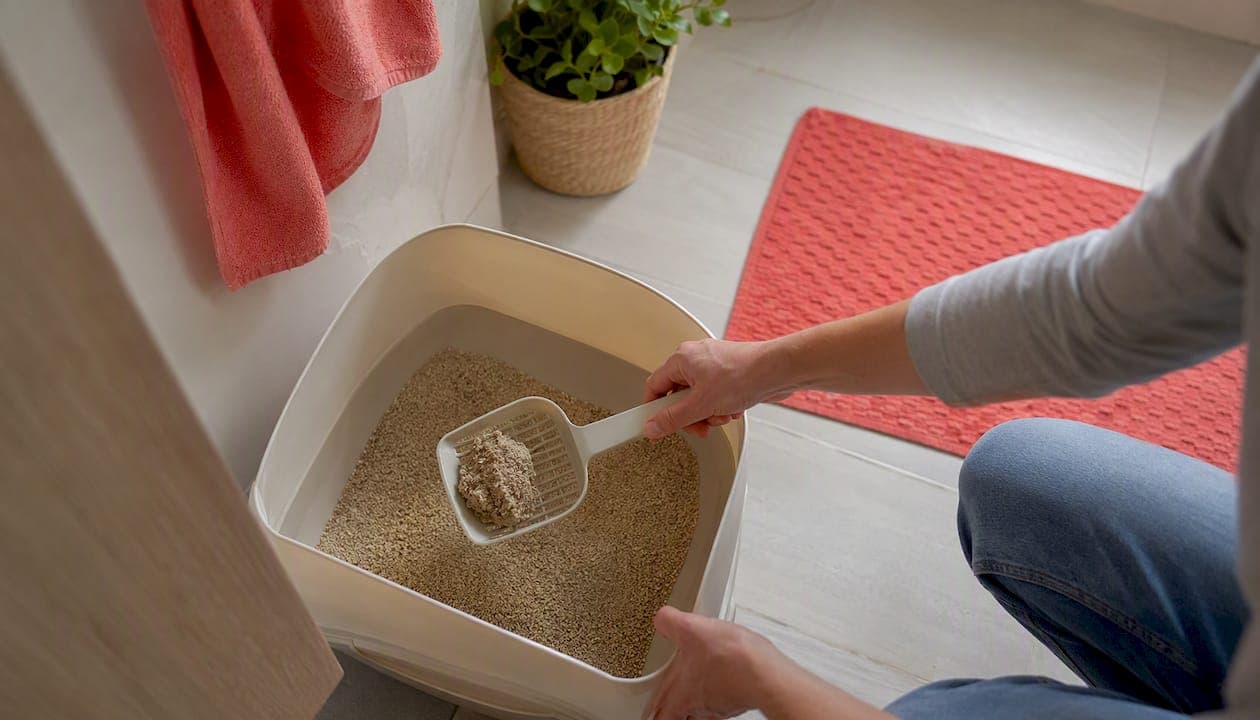
Plant-based, corn, and wheat litters are the only types worth considering for flushing — and even then, the rule is simple: flush only if your litter is labeled flushable, your home is on a municipal sewer (not a septic system), and your local wastewater authority permits it.
Here are the top picks and why each earns a spot:
- World's Best Cat Litter (corn-based) — cites independent testing for sewer and septic safety; flush one or two clumps at a time only
- sWheat Scoop / sWheat Scoop Multi-Cat — wheat starches soften in water rather than harden; the multi-cat formula adds odor control without losing that water-softening behavior
- Tuft & Paw Really Great Cat Litter (tofu/plant-based) — tofu formulas disintegrate in water instead of swelling, making them among the lowest-risk options for pipes
- ökocat Original Premium Wood Clumping — wood fiber base biodegrades well and produces minimal dust; lower plumbing risk than clay
- Almo Nature Unscented Clumping Plant-Based Grass Litter — simple ingredient list, no fragrance additives, and a grass-based composition that breaks down naturally
Should you flush? If you're on a septic system, the answer is no. If you're on a municipal sewer, check your city's wastewater authority page first — California, for instance, actively discourages flushing cat feces because of wildlife concerns. When in doubt, bag it.
Pro Tip: Before flushing any new litter, drop a clump into a cup of water and wait five minutes. If it softens and breaks apart, it's a reasonable candidate. If it swells, hardens, or holds its shape, keep it out of your toilet.
Key Takeaways
Plant-based litters — corn, wheat, tofu, wood, and grass — are the only materials worth considering for flushing, and even then, flushing is only appropriate on a municipal sewer with local permission and one clump at a time.
| Point | Details |
|---|---|
| Material determines safety | Only plant-based litters (corn, wheat, tofu, wood, grass) are candidates; clay and silica should never be flushed. |
| "Flushable" is unregulated | No U.S. federal standard governs the claim; look for named testing protocols, not just the label. |
| Septic systems are a hard no | No cat litter is safe for septic systems regardless of what the packaging says. |
| T. gondii risk is real | Pregnant people and immunocompromised individuals should avoid flushing cat feces entirely; oocysts can survive wastewater treatment. |
| Kiblco's top pick by scenario | World's Best (corn) for multi-cat odor control; Tuft & Paw (tofu) for lowest pipe risk and near-zero dust. |
Table of Contents
- Which flushable cat litters actually hold up under comparison?
- What each top pick is actually like to live with
- What does "flushable" actually mean for your plumbing?
- Toxoplasma gondii, wastewater, and why vets urge caution
- How to flush safely — and what to do when you can't
- How to choose a flushable cat litter for your home
- How Kiblco chose these picks
- The honest case against flushing — even with the "right" litter
- Kiblco makes finding the right litter easier
- Sources
Which flushable cat litters actually hold up under comparison?
The table below covers the key dimensions that matter for real-world flushing decisions. Price shapes are approximate and vary by retailer.
"Flushable" is not a regulated term in the United States. No federal standard governs what a cat litter manufacturer must prove before printing "flushable" on a bag. That means a manufacturer's claim can range from rigorous independent lab testing to nothing more than the fact that the material is biodegradable. Always look for specifics: what protocol was used, how many clumps at a time, and whether the claim covers septic systems.
Trust-label quick reference:
- Independent/lab-cited testing: World's Best Cat Litter (corn-based formulas)
- Manufacturer flushable claim, no third-party lab detail publicly listed: sWheat Scoop, ökocat, Almo Nature, Sustainably Yours
- Consumer-tested disintegration: Tuft & Paw Really Great Cat Litter
Pro Tip: When a brand says "sewer- and septic-safe," read the fine print. Most instructions specify flushing no more than one or two clumps at a time, with well-maintained plumbing. That caveat matters more than the headline claim.
What each top pick is actually like to live with
World's Best Cat Litter (corn-based, Multiple Cat formula)
Made from whole-kernel corn, this litter forms tight, scoopable clumps that hold together well enough to carry to the toilet without crumbling. World's Best cites independent testing for sewer and septic safety, which puts it ahead of most competitors on the trust ladder. Odor control is genuinely strong for a plant-based litter. The main downside: corn can attract pantry pests if stored in a humid space, and the bags are pricier per pound than wheat options.
Flush notes: Manufacturer claims sewer- and septic-safe after independent testing. Flush one to two clumps at a time only.
- ✅ Tight clumps, strong odor control, renewable material
- ⚠️ Higher price point; store in a sealed container to avoid pests
sWheat Scoop (original and Multi-Cat)
Wheat starch is the active ingredient here — it clumps on contact and then softens when exposed to water, which is exactly the behavior you want in a flushable litter. The Multi-Cat formula uses a denser wheat blend for stronger clumping and better odor management in boxes shared by two or more cats. Clumps are softer than corn-based litters, so they can break apart during scooping if you're not careful.
Flush notes: Marketed as flushable in small amounts; no third-party lab detail publicly listed. Softens and breaks down in water rather than expanding.
- ✅ Plant-based, water-softening behavior, Multi-Cat formula for heavier use
- ⚠️ Softer clumps can crumble; moderate odor control compared to corn
ökocat Original Premium Wood Clumping Cat Litter
Wood fiber litters tend to be the lowest-dust option on this list, and ökocat delivers on that. The compressed wood pellets or fiber clump on contact and produce almost no airborne particles, which matters if you or your cat has respiratory sensitivities. Odor control comes from the natural wood rather than added fragrance. Clumps are firm but lighter than clay, and the material biodegrades well.
Flush notes: Manufacturer flushable claim; biodegradable wood fiber base. No independent lab detail publicly listed.
- ✅ Very low dust, natural odor control, lightweight bags
- ⚠️ Clumps can be slightly crumbly; wood texture takes some cats time to accept
Tuft & Paw Really Great Cat Litter (tofu/plant-based)
Tofu litter is made from soybean byproduct, and it behaves differently from every other material on this list: clumps soften and disintegrate in water rather than holding together or swelling. Kiblco's hands-on tofu litter testing found this disintegration behavior to be consistent across brands, which makes tofu formulas the lowest mechanical risk for pipes among the options here. Dust is nearly zero. The texture is softer than wood or corn, and most cats accept it quickly.
Flush notes: Consumer-tested disintegration in water. Among the safest material choices for pipes when flushing small amounts.
- ✅ Disintegrates in water, near-zero dust, soft texture
- ⚠️ Odor control is moderate; clumps can feel less firm than corn-based options
Almo Nature Unscented Clumping Plant-Based Grass Litter
Grass-based litter is the least common material on this list, and Almo Nature's version keeps the ingredient list short: no fragrance, no antibacterial additives, just plant fiber. It clumps adequately for a single-cat box and breaks down naturally. Odor control is moderate — fine for one cat with daily scooping, but it can fall behind in a multi-cat setup.
Flush notes: Plant-based, natural breakdown. Manufacturer flushable claim; no independent lab detail publicly listed.
- ✅ Unscented, minimal additives, biodegradable
- ⚠️ Moderate odor control; best suited to single-cat households with daily scooping
Sustainably Yours
A corn and cassava blend that clumps firmly and is marketed as flushable. The cassava component helps the clumps break apart in water more readily than pure corn. Odor control is solid, and the multi-cat version handles heavier litter box traffic well. Price per pound is competitive with World's Best.
Flush notes: Marketed as flushable; biodegradable blend. No independent lab detail publicly listed.
- ✅ Good clumping, eco-friendly blend, competitive price
- ⚠️ No third-party lab testing detail publicly available
What does "flushable" actually mean for your plumbing?
"Flushable" on a cat litter bag is a marketing claim, not a regulated standard. No U.S. federal body certifies cat litter as safe to flush the way INDA and EDANA's Fine Mesh Screen test governs flushable wipes. What brands typically mean is one of three things: the material is biodegradable, it softens in water rather than hardening, or the company ran its own simulated-flush protocol and the product passed.
The distinction between those three matters enormously for your pipes.
Municipal sewer vs. septic: why it changes everything
Municipal wastewater systems are designed to handle higher volumes and have more tolerance for organic material. Septic systems are closed, biological environments where the wrong material can disrupt bacterial balance, clog the inlet baffle, or require an expensive pump-out. Plumbing professionals consistently warn that even litters marketed as flushable can cause blockages because they absorb water, expand, or simply don't fragment the way toilet paper does. If you're on a septic system, no cat litter — regardless of the label — belongs in your toilet.
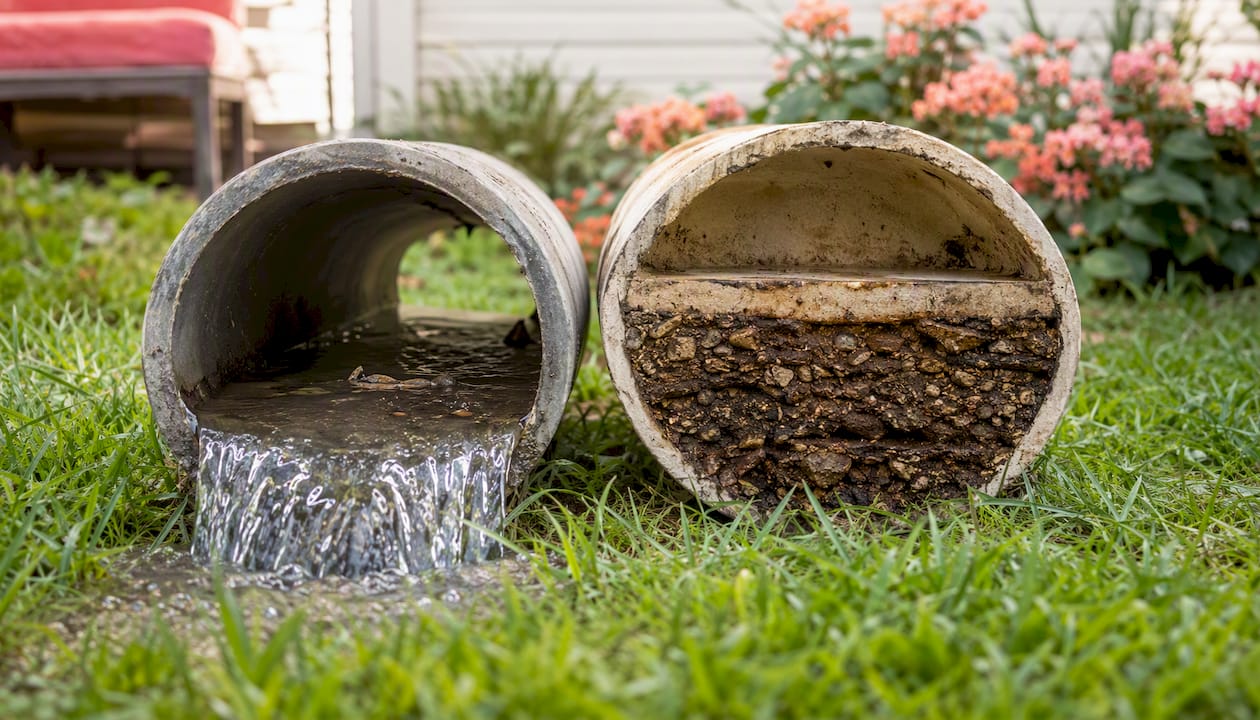
On a municipal sewer, the risk is lower but not zero. Older pipes, low-flow toilets, and long pipe runs to the main line all increase the chance that even a softening litter accumulates over time.
What lab testing actually measures
Some brands reference simulated-flush protocols: a clump is placed in a controlled water flow that mimics a toilet flush, and researchers measure how quickly and completely it breaks apart. World's Best Cat Litter is the most transparent about this process among the products listed here. The problem is that these testing methods vary by company — there is no single industry protocol — so a "passed our flush test" claim from Brand A and Brand B may reflect very different conditions.
Key plumbing risk factors:
- Clay and silica litters absorb water and harden — never flush these
- Litters that swell in water can create slow-growing blockages even in small amounts
- Low-flow toilets (1.28 gallons per flush or less) generate less force to carry material through pipes
- Long horizontal pipe runs give material more time to settle before reaching the main line
- Septic systems face disruption from any non-organic or slow-degrading material
Pro Tip: Run the cup test described in the intro before flushing any new litter. If the clump holds its shape after five minutes in water, treat it as non-flushable regardless of what the label says.
Toxoplasma gondii, wastewater, and why vets urge caution
The plumbing risk is real, but the public-health concern is what makes flushing cat feces genuinely complicated. Toxoplasma gondii is a parasite shed in cat feces, and it can survive some wastewater treatment processes, creating a plausible pathway from your toilet to waterways. Most municipal treatment plants are not designed to eliminate T. gondii oocysts reliably.
Who faces the highest risk?
CDC guidance identifies pregnant people and immunocompromised individuals as the groups most vulnerable to toxoplasmosis. For healthy adults, infection is usually mild or asymptomatic. For a developing fetus or someone with a compromised immune system, the consequences can be severe. Mayo Clinic's clinical overview notes that symptoms in healthy people often resemble a mild flu, while vulnerable individuals can develop serious neurological or ocular complications.
Cats shed T. gondii oocysts only during a short window after their first exposure, but the exact duration is uncertain, and outdoor cats or cats fed raw meat face repeated exposure and repeated shedding cycles.
Higher-risk cats for T. gondii shedding:
- Outdoor or indoor/outdoor cats
- Cats fed raw or undercooked meat
- Kittens (first exposure is more likely to trigger shedding)
- Recently adopted cats with unknown history
Households that should avoid flushing entirely:
- Anyone who is pregnant
- Immunocompromised individuals (HIV/AIDS, organ transplant recipients, chemotherapy patients)
- Households in coastal areas where local advisories discourage flushing cat feces
Environmental pathway and wildlife impacts
Coastal jurisdictions and some inland states have issued guidance discouraging flushing cat feces specifically because of documented links between T. gondii in waterways and mortality in marine mammals, including sea otters. Environmental advisories from California and similar coastal states reflect this concern. If you live near a watershed or coastal area, the environmental case against flushing is as strong as the plumbing case.
Is flushing dangerous to humans? For healthy adults who are not pregnant, the direct personal risk from flushing is low. The concern is systemic: T. gondii that survives treatment reaches waterways, affects wildlife, and can re-enter the food chain through shellfish and water sources. The risk is diffuse rather than immediate, but it's real enough that vets and public-health authorities consistently recommend against flushing cat feces as a routine practice.
How to flush safely — and what to do when you can't
Step-by-step flushing protocol
- Check your local rules first. Search your city or county wastewater authority's website for "cat litter" or "pet waste." Some municipalities explicitly prohibit flushing cat feces; others have no guidance either way.
- Confirm your litter is labeled flushable. Clay, silica, and any litter that swells in water are disqualified regardless of what the bag says.
- Confirm you're on a municipal sewer, not a septic system. If you're unsure, call your local utility or check your property records.
- Scoop one clump at a time. Flush a single small clump, wait for the tank to refill fully, then flush the next. Never dump multiple scoops in one flush.
- Run a cup test first. Drop one clump in a cup of water. If it softens and breaks apart within five minutes, proceed. If it holds shape or swells, stop.
- Monitor your drains over the first two weeks. A slow drain after starting to flush litter is a warning sign. Stop immediately and call a plumber before the problem worsens.
When flushing isn't an option
Most cat owners are better served by one of these alternatives:
- Biodegradable bags and trash: The most practical option for most households. Use compostable or biodegradable bags to reduce plastic waste. Double-bag if odor is a concern.
- Sealed disposal systems: Products like the Litter Genie contain waste in a sealed chamber with odor-blocking liners, making trash disposal cleaner and less frequent. Kiblco's guide to cat litter disposal systems covers the best options tested hands-on.
- Municipal composting (plant-based litters only): Some cities accept plant-based litter in green waste bins if it's free of clay and silica. Check your local program — cat feces is excluded from home composting in most jurisdictions because of pathogen risk.
- Hazardous waste drop-off: A small number of municipalities accept cat waste at designated drop-off points. Check your city's solid waste authority.
Pro Tip: A good litter scoop with a fine mesh catches small particles that would otherwise fall back into the box, which means less material going into the toilet or trash bag per scoop. It's a small change that adds up.
How to choose a flushable cat litter for your home
The right litter depends on three things: your plumbing setup, your cat situation, and your priorities. Work through these in order.
Hard requirements (non-negotiable)
- Labeled flushable — not just "biodegradable" or "natural." The label should say flushable explicitly.
- Plant-based material — corn, wheat, tofu, wood, grass, or paper. Never clay or silica.
- Sewer-compatible — confirm your home is on a municipal sewer, not a septic system.
- Local rules allow it — check your wastewater authority before the first flush.
Preference factors
- Clumping strength: Corn and wheat clump tightest; tofu and wood clump more loosely but still scoop cleanly.
- Dust: Wood and tofu are the lowest-dust options. Corn and wheat produce slightly more, though still far less than clay.
- Odor control: Corn-based litters (World's Best) and multi-cat wheat formulas (sWheat Scoop Multi-Cat) lead here. Grass and wood rely on natural absorption.
- Price: Wheat options tend to be the most affordable per pound; tofu and specialty grass litters cost more.
- Household size: Multi-cat households need the stronger clumping and odor control of World's Best Multiple Cat or sWheat Scoop Multi-Cat.
Red flags to avoid
- Vague "natural" or "eco-friendly" claims with no flushable label
- Fragrance or antibacterial additives (these can disrupt septic bacteria and irritate cats)
- Any litter that swells noticeably in the cup test
- Sellers or brands that suggest flushing entire box contents at once
- No mention of testing method or conditions on the packaging or brand website
Questions to ask before buying:
- What testing protocol was used, and is it third-party?
- Does the flushable claim cover septic systems specifically?
- How many clumps at a time does the manufacturer recommend?
- Are there state or regional restrictions noted on the packaging?
How Kiblco chose these picks
Kiblco's selection process for flushable litters combines four inputs: SERP and manufacturer claim review, material science basics (how each substrate behaves in water), plumber and vet guidance weighted against marketing language, and hands-on performance checks including the cup disintegration test described throughout this article.
Selection criteria, weighted in order:
- Flushability evidence (lab-cited testing ranked above manufacturer claim alone)
- Material safety (plant-based only; clay and silica excluded)
- Real-world clumping and odor performance
- Dust levels and respiratory safety
- Price per volume relative to performance
- Environmental impact and biodegradability
Vet input shaped the health and pathogen sections — specifically the guidance on T. gondii risk by cat type and household vulnerability. Plumber signals (pipe blockage patterns, septic system risks, low-flow toilet behavior) were drawn from trade sources and weighted against manufacturer claims where those claims lacked independent verification.
Affiliate transparency: Kiblco earns commissions when readers purchase through links on this site. That relationship does not change which products make the list — a litter with strong manufacturer claims but no independent testing evidence does not move up the rankings because of affiliate availability. Products are selected on merit first; affiliate links are added where they exist.
A natural cat litter buyer's guide from Petbite provided useful third-party context on plant-based litter performance that informed the material comparisons above.
The honest case against flushing — even with the "right" litter
Most flushable litter marketing is built around a best-case scenario: one clump, a well-maintained municipal sewer, a full-flush toilet, and a healthy household. The problem is that most cat owners don't live in that scenario. They have two cats, a low-flow toilet installed in 2015, and no idea whether their city's wastewater plant can handle T. gondii oocysts.
The conventional advice — "just use a flushable litter and you're fine" — skips over the fact that "flushable" is an unregulated claim, that septic systems are a hard stop, and that the pathogen concern is not hypothetical. Sea otter populations along the California coast have faced documented T. gondii mortality linked to cat feces in waterways. That's not a fringe concern.
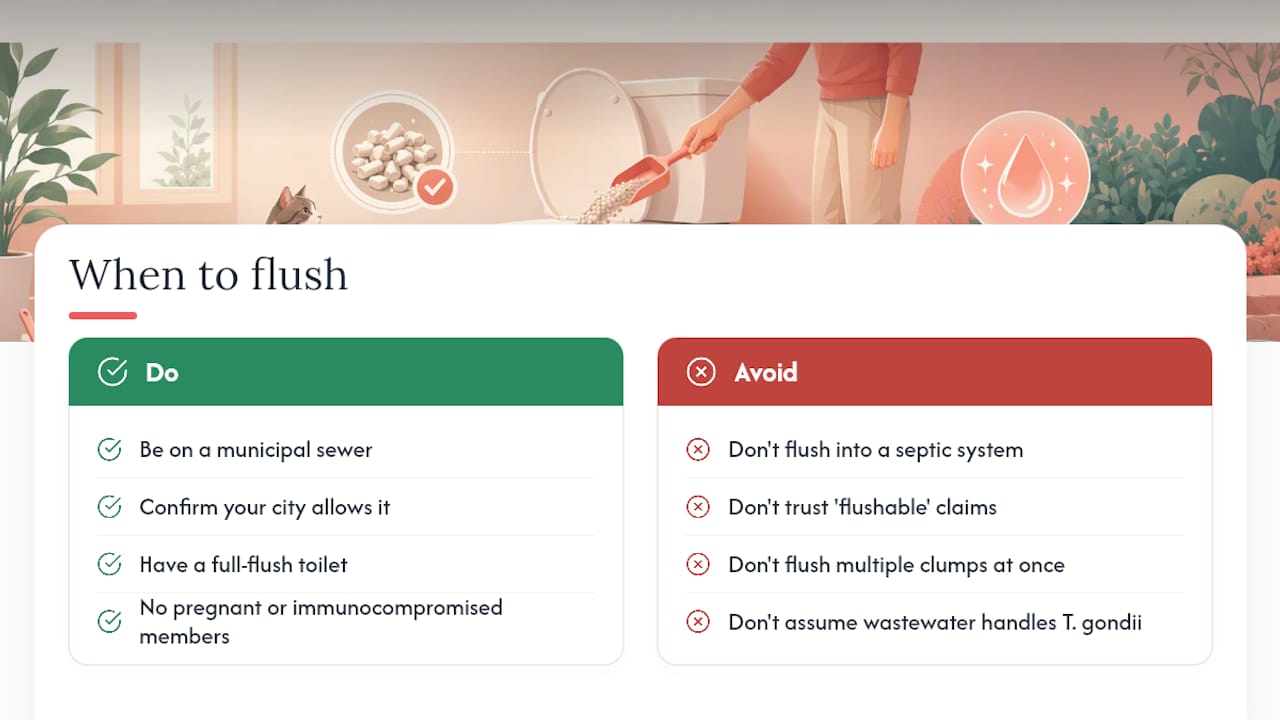
What the research actually supports is a narrower recommendation: if you're on a municipal sewer, your city allows it, you have a full-flush toilet, and your household has no pregnant or immunocompromised members, then flushing one clump at a time of a genuinely tested plant-based litter is a reasonable choice. For everyone else, a sealed disposal system and biodegradable bags are the more defensible answer — and honestly, the less stressful one.
The litters on this list are the best options available if you're going to flush. But the cup test, the local rules check, and the septic system question matter more than which brand you pick.
Kiblco makes finding the right litter easier
Sorting through flushable litter claims — manufacturer testing language, septic caveats, material comparisons — takes more time than most cat owners want to spend. Kiblco cuts through that by testing products hands-on and weighing vet and plumber signals before making any recommendation.
Every litter review on Kiblco includes real clumping and odor observations, a dust assessment, and a clear note on flushability evidence — so you're not relying on a bag claim alone. If you want an integrated setup that reduces how often you handle waste directly, Kiblco's guide to automatic litter boxes pairs well with the plant-based litters covered here. For the full range of vet-informed pet product picks, visit Kiblco and find what actually works for your cat.
This article is general information, not a substitute for advice from a qualified doctor. Consult a qualified healthcare professional about your own circumstances before acting on anything here.
Sources
Before flushing, check these directly:
- Is flushable cat litter a public-health hazard? — Worms & Germs Blog
- Toxoplasmosis - Symptoms and causes — Mayo Clinic
- Can You Flush ‘Flushable’ Cat Litter? - McCarthy Plumbing Group