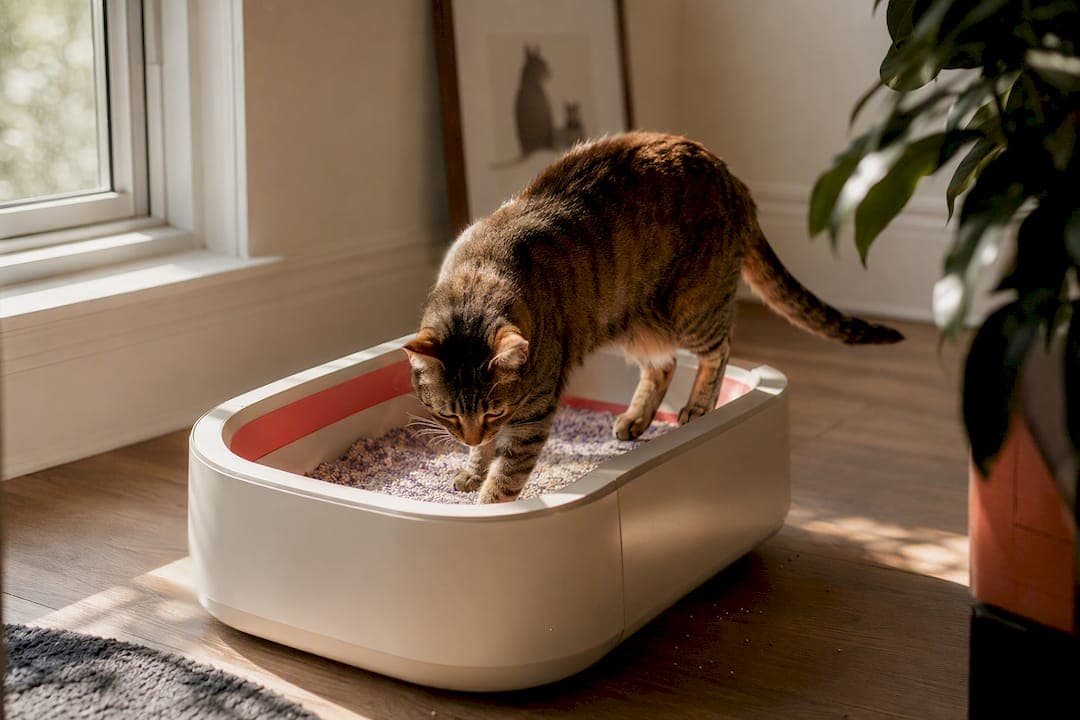
If your cat's litter box could talk, it would probably tell you something's wrong before your cat ever does. That's the whole premise behind health monitoring cat litter, and right now the strongest options on the market are PrettyLitter, Fresh Step Health Monitoring, Tidy Care Alert from Tidy Cats, Genius Litter, PETKIT Urine Monitor Cat Litter, and Kitty Poo Club's health-monitoring formula. Each uses color-changing crystals or granules to flag pH shifts or blood in urine, days or weeks before you'd notice a behavior change.
Here's the quick version:
- PrettyLitter — best if you want lightweight crystal litter delivered on a subscription
- Fresh Step Health Monitoring — best if you want clumping convenience with blood detection built in
- Tidy Care Alert — best if you want Purina's manufacturer-backed baseline instructions and easy retail access
- Genius Litter — best for low-dust homes that want a monthly refill cycle
- PETKIT Urine Monitor Cat Litter — best for multi-cat households that need app-based attribution
- Kitty Poo Club — best for simple, subscription-based crystal monitoring
None of these diagnose anything. They're screening tools that flag a possible problem, and a persistent color change still means a call to your vet, not a Google search.
Key Takeaways
Health monitoring cat litter flags pH shifts and blood through color-changing crystals, but it only works as a screening tool when paired with a proper baseline and follow-up vet care.
| Point | Details |
|---|---|
| Choose by litter base | Pick clumping (Fresh Step) for easy vet samples, silica crystal (PrettyLitter, Genius Litter) for low dust. |
| Establish a baseline first | Watch the box for 3 to 5 days before treating any color shift as meaningful. |
| Know the vet-trigger rules | Call your vet for any red/blood indication or color changes lasting 48+ hours. |
| Multi-cat homes need attribution | PETKIT's app and camera system identifies which cat triggered a color change. |
| Kiblco tests beyond the label | Kiblco's hands-on reviews compare clump strength, dust, and odor control across brands to help you pick the right fit. |
Table of Contents
- What Is Health Monitoring Cat Litter and How Does It Work?
- Which Health-Monitoring Litter Should You Buy?
- How Do You Set Up Health Monitoring Litter and Establish a Baseline?
- Can Health Monitoring Litter Replace a Vet Visit?
- What Did Kiblco Find Testing These Litters?
- Is Indicator Litter Worth Adding to Your Routine?
- Where Can You Find Kiblco's Full Product Reviews?
- Frequently Asked Questions
- Sources
What Is Health Monitoring Cat Litter and How Does It Work?
Health monitoring litter uses colorimetric dyes embedded in silica crystals or clay granules that react to your cat's urine chemistry. When pH shifts outside a normal range, or when blood is present, the crystals change color, usually within minutes of contact.
Manufacturer color guides typically map the shades the same general way: blue or green tones signal alkaline urine, a neutral tan or beige is typical, orange or yellow leaning tones suggest acidic urine, and red or pink indicates possible blood in the urine. The chemistry behind this is similar to pH indicator strips used in labs, though the exact formulas are proprietary to each brand.
The technical term for this category is colorimetric urinalysis screening, though almost nobody outside a veterinary chemistry lab calls it that. You'll see it marketed as "diagnostic litter" or "smart litter," but neither label is quite accurate. It's a cat litter health tracker, not a lab test, and that distinction matters more than most product pages let on.
Which Health-Monitoring Litter Should You Buy?
The products differ more than their marketing pages suggest, mostly in litter base, how fast you'll see a color change, and whether they play nice with an automatic litter box.
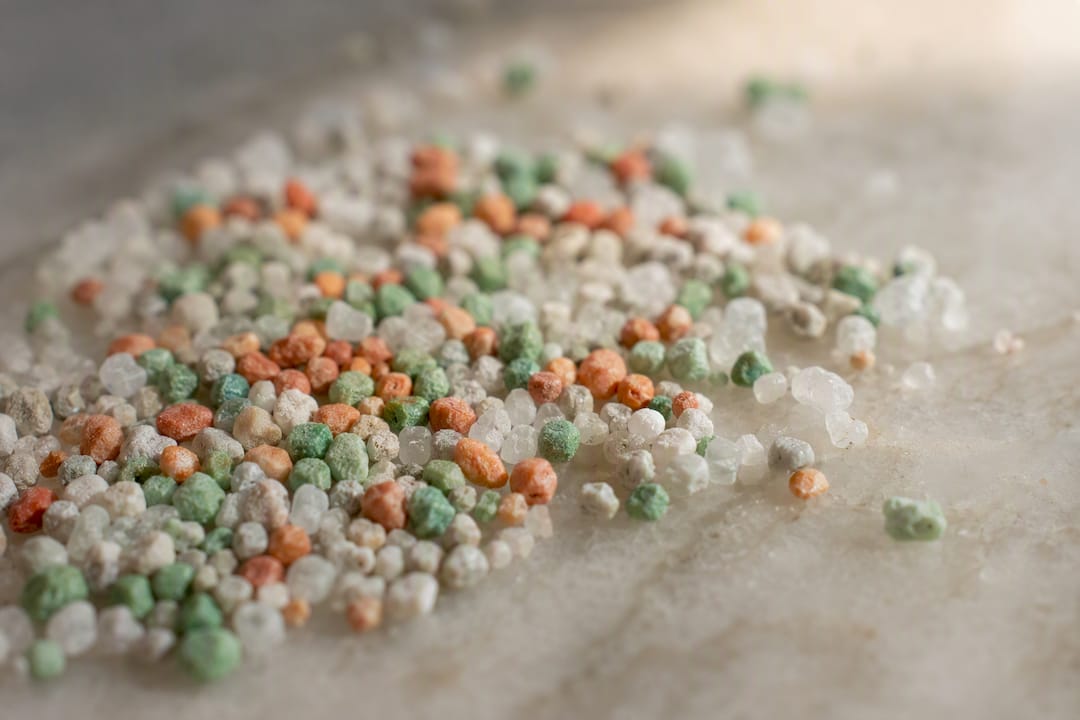
PrettyLitter works well if you want a set-and-forget subscription, but the crystals are lighter than clay, so cats used to a heavier litter sometimes take a few days to adjust. Fresh Step Health Monitoring is the one to pick if you don't want to give up clumping litter. Its Blücare granules detect blood and pH shifts while still clumping normally, which makes scooping and sample collection for the vet easier. The tradeoff is that clay dust is heavier than silica, so it's not the best pick for dust-sensitive homes.
Tidy Care Alert leans on Purina's brand trust and detailed baseline instructions, which is genuinely useful if this is your first time trying indicator litter. Genius Litter markets itself on lower dust and tracking, with a refill cycle stretched to about a month, good for owners who hate monthly litter shopping. PETKIT Urine Monitor Cat Litter stands apart because it pairs the granules with camera and app logging that attributes each event to a specific cat, which solves the biggest problem multi-cat households have with any indicator litter: figuring out whose litter box just changed color. Kitty Poo Club keeps things simple with a non-clumping, subscription-only crystal product that focuses on odor control alongside the color indicator.
If you're running an automatic litter box like a Litter-Robot or ScoopFree, check compatibility before switching. Silica crystal formulas generally work fine in automated systems, but clumping clay products like Fresh Step's aren't built for every automatic mechanism, so check your box's litter specifications first. If you already run more than one cat and one box, PETKIT's app integration solves an identification problem that plain crystal litter cannot.
How Do You Set Up Health Monitoring Litter and Establish a Baseline?
Getting reliable readings starts with the setup, not the litter itself. A few small mistakes here will give you false alarms for weeks.
- Fill to the manufacturer's recommended depth, usually 2 to 3 inches, since too little litter means less contact time between urine and the indicator crystals.
- Use one litter box per cat, plus one extra, and never mix two different indicator litters in the same box; that muddies the color reaction.
- Watch the box for 3 to 5 days before drawing conclusions. Manufacturers recommend this window because urine pH naturally shifts after meals, sometimes noticeably within 1 to 2 hours of eating.
- Photograph the litter each time you scoop, with a timestamp, so you have a visual record instead of relying on memory.
- Log occurrences in a simple note, tracking color, time of day, and how often it happens, so you can hand your vet a pattern instead of a guess.
Pro Tip: Take your baseline photos in the same lighting every time. Bathroom lighting can shift a neutral tan toward yellow or green, which is exactly the kind of false alarm that sends owners into a panic over nothing.
Can Health Monitoring Litter Replace a Vet Visit?
No, and no manufacturer actually claims it can — these products are screening tools, as explained in How to Spot Maine Coon Kitten Scams: A Breeder’s Guide, reinforcing the need to confirm findings with a veterinarian rather than relying solely on the indicator litter. These products are screening tools, and independent reporting is consistent on that point: the colorimetric dyes react to pH and the presence of blood, but diet, hydration, time of day, and even ambient humidity can shift the shade you see.
A one-time color change usually isn't an emergency. Feed your cat something acidic, let them go a few hours without water, or catch the litter right after a big meal, and you might see a shift that has nothing to do with illness.
Call your vet when any of the following happens:
- The color change persists for 48 hours or longer
- You see any red or pink shade suggesting blood, regardless of how faint
- Color changes show up alongside straining, frequent trips to the box, vocalizing while urinating, or reduced appetite
- The pattern in your log shows the abnormal color repeating over several days rather than a one-off
Cats are notorious for hiding illness until a problem is well underway, which is the entire reason this product category exists. Any blood indication, even a small amount, deserves prompt veterinary attention rather than a wait-and-see approach.
What Did Kiblco Find Testing These Litters?
Kiblco's testing approach for indicator litters follows the same baseline period manufacturers recommend: several days of observation, daily photo logs, and notes on odor control, clump strength, and dust before drawing any conclusions about accuracy or usability.
A few patterns showed up consistently across products. Color changes appeared fastest in silica crystal formulas, usually within minutes of contact, while clay-based options took slightly longer to show a clear shift. False positives tracked closely with diet changes and with litter surface contamination from food residue tracked in on paws. Clumping formulas made vet-sample collection noticeably easier, since you can scoop and hand over a solid clump rather than trying to isolate crystals.
Clumping litter with a color indicator, like Fresh Step's version, turned out to be the easiest for actually getting a usable sample to the vet. Crystal litters are cleaner day to day, but they're harder to work with if your vet wants a physical sample.
If you're deciding between formats: pick a clumping indicator litter if you anticipate needing vet samples, pick silica crystal if dust and tracking bother you more, and consider PETKIT only if you're comfortable with the added complexity of app setup and camera monitoring.
Is Indicator Litter Worth Adding to Your Routine?
Indicator litter earns its keep with older cats and cats with a history of urinary problems, where catching a shift early can mean treatment days sooner than waiting for obvious symptoms. For a healthy young cat with no history of urinary issues, it's a nice-to-have rather than a necessity.
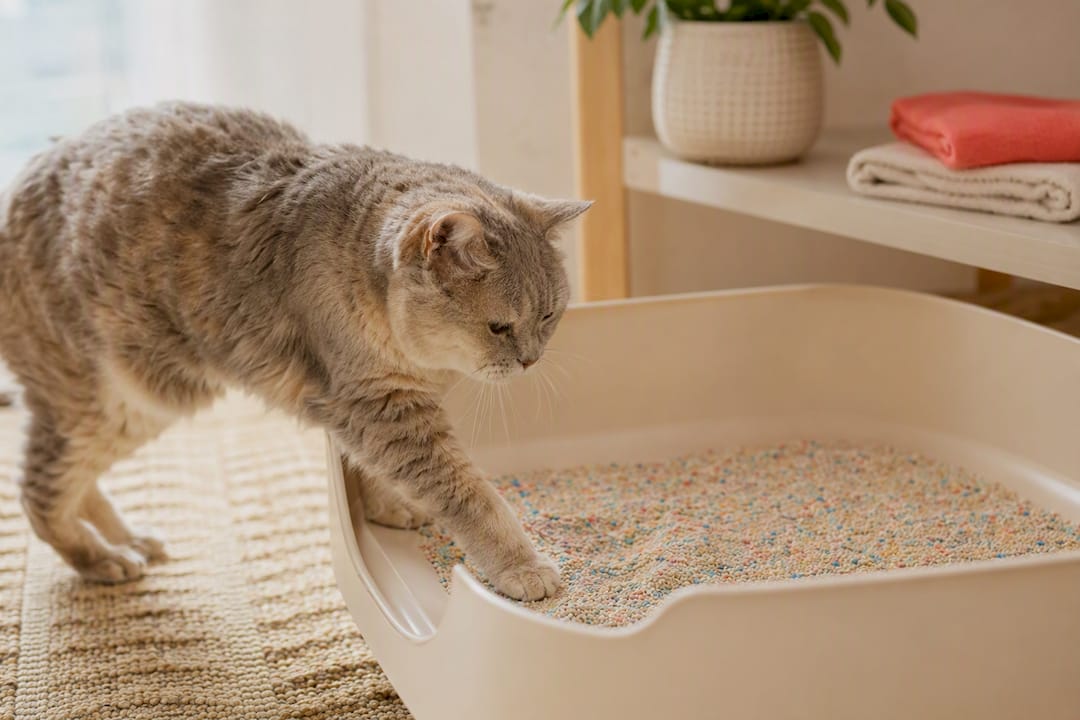
It's not worth the money in multi-cat homes without separate boxes per cat, since you won't know who produced the change, or for owners who won't check the box daily. A monitoring tool nobody looks at isn't monitoring anything.
Where Can You Find Kiblco's Full Product Reviews?
Kiblco tests these litters the way you'd actually use them at home, not the way a manufacturer's product page describes them. That gap between marketing claims and real-world clumping, dust, and odor performance is exactly what our hands-on reviews are built to close.
If you're ready to compare full breakdowns of PrettyLitter, Fresh Step, Tidy Care Alert, and the rest, including notes on clump strength, dust levels, and how each held up over multiple weeks, Kiblco's full litter reviews walk through the pros and cons of each option with buying links to the retailers that carry them. Pair whichever litter you choose with a litter mat that catches tracked crystals before they spread through the house, and if hydration is a concern for your cat's urine concentration, a cat water fountain can help reduce the false positives that come from a dehydrated cat's more concentrated urine. Head to Kiblco's site to see which indicator litter matched our testing notes best before you commit to a subscription.
Frequently Asked Questions
How long does it take to see reliable health indicators after starting health monitoring litter? Most crystals or granules change color within minutes of contact with urine, but reliable interpretation takes 3 to 5 days of baseline observation, since diet and hydration cause normal, temporary pH swings during that window.
Does health monitoring cat litter work with automatic litter boxes? Silica crystal formulas generally work in most automatic boxes, but check your specific model's litter guidelines first, since some automated mechanisms aren't built for clumping clay formulas like Fresh Step's.
Can diet change the color of the indicator litter? Yes. Urine pH shifts naturally after meals, sometimes within an hour or two of eating, which is exactly why manufacturers recommend a multi-day baseline instead of judging by a single reading.
Is health monitoring litter a substitute for a vet checkup? No. It's a screening tool that flags possible pH or blood changes, not a diagnostic test, and any persistent or blood-related color change still needs veterinary confirmation.
Which health monitoring litter is best for multiple cats? PETKIT Urine Monitor Cat Litter is built for multi-cat households, since its app and camera system logs which specific cat triggered a color change, something plain crystal litter can't tell you on its own.
This article is general information, not a substitute for advice from a qualified doctor. Consult a qualified healthcare professional about your own circumstances before acting on anything here.
Sources
- Tidy Care Alert Cat Litter | Purina US
- Fresh Step™ Clumping Unscented Health Monitoring Cat Litter
- What is health-monitoring cat litter, and how does it help detect when your cat is sick? | C&EN
- Feline lower urinary tract disease | Cornell Feline Health Center