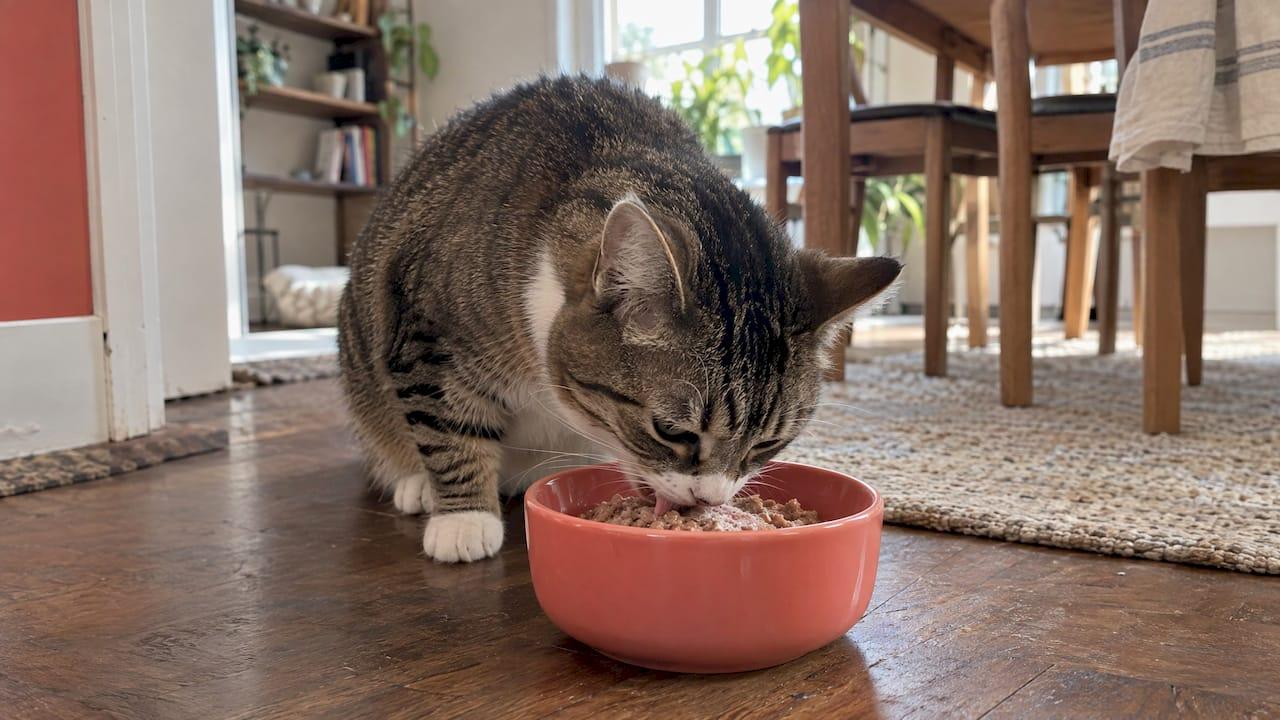
For a cat with mild, short-lived diarrhea, a probiotic made for cats is a reasonable first thing to reach for. It fits best when the cause is stress, a recent antibiotic or a change in routine. Pick a product with published feline research behind it, give it with food, and call your vet if the diarrhea lasts past 48 to 72 hours or comes with other symptoms. This guide covers what the research says, how to choose, how to dose and when a probiotic is not enough. It is general information, not a diagnosis for your cat.
TL;DR
- Probiotics have the strongest veterinary support for stress-related diarrhea, such as shelter stays, and for antibiotic-associated stomach upset.
- Choose a cat-labeled product with published feline studies, a named strain and a stated CFU count (colony-forming units, the number of live organisms).
- Give it with a meal, measure liquid or paste doses carefully, and start with a lower dose if your cat gets gassy or loose at first.
- See a vet if diarrhea lasts beyond 2 to 3 days, contains blood, or comes with vomiting, lethargy, poor appetite or dehydration. Kittens and senior cats should be seen sooner.
- Our probiotics for cats with sensitive stomachs guide goes deeper on everyday digestive support.
Table of Contents
- When a probiotic makes sense for a cat with diarrhea
- What the research shows
- Types of cat diarrhea products
- How to choose a cat probiotic for diarrhea
- How to give it
- How long until it works
- Side effects and who should skip a kit
- When to see the vet instead
- Other gentle gut helpers
- Find a probiotic we have tested
- Our perspective
- FAQ
- Sources
When a probiotic makes sense for a cat with diarrhea
A probiotic is a live microorganism, usually bacteria or yeast, given to support the balance of microbes in the gut. Diarrhea in cats has many causes: a new food, stress, parasites, infections, antibiotics, or an underlying disease. A probiotic does not suit all of them equally, so it helps to know where it has the best track record.
A 2017 review in the Journal of the American Veterinary Medical Association found substantial evidence for probiotics in preventable stress-induced diarrhea in dogs and cats. It named housing in shelters and kennels, extreme exercise and antimicrobial treatment as the triggers. That matches what most cat owners actually face:
- A move, a new pet, boarding or a vet visit. Stress is a common trigger for loose stool in cats.
- A course of antibiotics. Antibiotics can disturb the gut's bacteria along with the target infection.
- Mild, short-lived loose stool in an otherwise bright, eating, drinking cat.
A 2020 overview in Today's Veterinary Practice lists the most promising uses in cats as acute uncomplicated diarrhea, prevention of stress diarrhea, prevention of antibiotic-associated GI signs, and adjunct therapy for chronic bowel disease. A 2025 DVM360 review adds that moderate- to high-quality evidence supports probiotics or synbiotics (a probiotic plus a prebiotic fiber that feeds it) for shelter-induced diarrhea, self-limiting gastroenteritis and several other conditions managed by vets.
If your cat has diarrhea that is not mild, a probiotic is something to discuss with your vet, not a replacement for an exam.
What the research shows
You do not need to read the papers, but a few results explain what to expect.
Shelter cats. In a 2011 double-blind, placebo-controlled study of 217 shelter cats, those fed the probiotic Enterococcus faecium SF68 had a lower rate of diarrhea lasting two or more days: 7.4% versus 20.7% on placebo.
Cats with ongoing loose stool. In a 2012 open-label trial of 53 cats with chronic diarrhea, a multi-strain synbiotic given for 21 days lowered the average fecal score from 6.0 to 4.4 on a scale where lower is firmer. Owners perceived improvement in 72% of the cats.
Pooled results. A January 2025 systematic review and meta-analysis of 20 reports found that five of seven probiotic trials showed benefits for fecal consistency in cats. Researchers continue to refine which products and doses work best, which is why choosing a product with feline data matters.

Antibiotic-related upset. The DVM360 review describes randomized, blinded, placebo-controlled studies supporting a synbiotic called Proviable-Forte, alone or with a yeast product, to ease antibiotic-associated GI signs. In a crossover study, giving a higher-dose synbiotic one hour after the antibiotic clindamycin was linked to better food intake and less vomiting in cats. The benefit persisted for at least six weeks after administration. The review also notes that yeast probiotics may suit cats on antibiotics because antibiotics do not inactivate them.
The lesson: the product matters as much as the idea. Results belong to specific strains and formulas, so a cat-labeled product with its own data is a better bet than a generic one.
Types of cat diarrhea products
When you shop, you will mostly see four types. Knowing the difference makes labels easier to read.
| Type | What it is | Typical use |
|---|---|---|
| Single-strain probiotic | One organism, such as Enterococcus SF68, usually a powder or sachet | Daily gut support; stress diarrhea |
| Multi-strain probiotic or synbiotic | Several strains, often with a prebiotic fiber | Daily support; digestive balance |
| Kaolin-pectin plus probiotic kit | A paste or stick that firms stool, paired with a probiotic for daily use | Short-term loose stool, usually 2 to 3 days |
| Yeast probiotic | A beneficial yeast rather than bacteria | May suit cats taking antibiotics |
Kaolin and pectin are ingredients that help firm up loose stool and soothe the gut. Several brands now sell two-step kits that pair them with a daily probiotic. Purina launched one such kit, the FortiFlora Diarrhea Response Kit, in August 2026. It pairs kaolin-pectin stick packs given every 8 hours for up to 72 hours with daily sachets of the single strain Enterococcus lactis SF68. The multi-strain kit used in the 2012 trial above is another example of the category.
For a longer rundown of daily options, see our best probiotics for cats with sensitive stomachs.
How to choose a cat probiotic for diarrhea
Supplements are sold with very different levels of evidence behind them. The DVM360 review says the most important selection criterion is demonstrated efficacy in relevant peer-reviewed literature. Where data are lacking, it suggests looking at the product species, the microbial strains and the total CFUs, and choosing products whose manufacturers regularly evaluate content and viability.
Here is how to turn that into a shopping checklist:
- Made for cats. Cat-labeled products are dosed by cat body weight and flavored for cats.
- A named strain. "Proprietary blend" tells you less than Enterococcus faecium SF68 or a list of strains.
- Feline research. Look for a strain or product with studies in cats, not only in people or dogs.
- A CFU count at the end of shelf life. Live organisms decline over time, so the guaranteed number should hold through the expiration date.
- A form your cat will accept. A sprinkle powder on wet food, a paste, a capsule you can open or a chew. A probiotic your cat refuses does nothing.
- Short-term versus daily. A kit built for a few days of loose stool differs from a daily maintenance product.
- Storage. Some products need a cool, dry spot or the fridge. Follow the label.
Because supplements are not regulated as drugs in the US, quality control rests with the maker. A 2016 veterinary conference proceeding explains that effectiveness data is not required for these products. That is a reason to lean on strain research and brands with feline studies, and to ask your vet for a recommendation if your cat has a health condition.
How to give it
A good product still needs good technique.
Give it with a meal. VCA Animal Hospitals advises giving probiotics with food. Powders can be stirred into a spoonful of wet food, and most cats take them well that way.
Measure carefully. For pastes and liquids, use the dosing syringe or tube markings and your cat's current weight. Do not eyeball it.
Start low if your cat is sensitive. Today's Veterinary Practice notes that some animals get gas or looser stool for the first few days, especially on high-dose multi-strain products, and that reducing the dose for those first days is often enough to settle it.
Mind the antibiotic timing. If your cat is on antibiotics, space the probiotic from the antibiotic dose as your vet or the label directs. In the clindamycin study above, the synbiotic was given one hour after the antibiotic.
Finish the course. VCA advises giving a probiotic for the full time your vet prescribes, even if your cat seems better.
Keep feeding normally. Fresh water matters most, since diarrhea drains fluid. Do not switch foods mid-episode unless your vet says to, because that can prolong the upset.
How long until it works
Some short-term paste products describe an effect within about 24 hours, and kaolin-pectin kits are usually given for 48 to 72 hours. The multi-strain trial above ran 21 days, and Today's Veterinary Practice says long-term use over weeks to months is probably better for immune support. Cats with chronic bowel disease may need several months of probiotics, under veterinary guidance.
A practical rule: for an acute bout in an otherwise well cat, expect to see improvement within a few days. If stool is not firming by day two or three, stop guessing and call your vet.
Side effects and who should skip a kit
Probiotics have a good short-term safety record in the research. The 2017 JAVMA review noted no substantial adverse effects after probiotic administration in any of the studies it covered. The most common complaints are mild:
- Gas or a gurgly belly.
- Looser stool for the first days, which often settles with a lower starting dose.
- Constipation in some cats.
Stop and call your vet right away if your cat shows signs of an allergic reaction after a dose: irregular breathing, rash, fever, or puffiness and swelling around the face, per VCA.
Kaolin-pectin and probiotic products should not be used in pets that are critically ill, dehydrated, vomiting severely, immunocompromised or have infectious diarrhea, according to VCA's guidance on a kaolin-pectin-probiotic product. If any of these describe your cat, go to the vet before giving anything.
When to see the vet instead
Home care is for mild cases. Get your cat examined if you see any of the following, based on Purina's guidance reported by DVM360 and a veterinary trade report:
- Diarrhea that lasts longer than about 3 days or is getting worse.
- Blood in the stool.
- Repeated vomiting.
- Lethargy, abdominal pain or loss of appetite.
- Signs of dehydration.
- A very young kitten, a senior cat or a cat with a medical condition.
VCA adds that if diarrhea continues for more than 48 to 72 hours after starting a kaolin-pectin-probiotic treatment, you should contact your vet. Your vet may also suggest a fecal exam to rule out parasites, which a probiotic will not clear. The DVM360 review also notes that probiotics have not been shown to reduce diarrhea in weanling kittens, so a young kitten with loose stool is a vet-first situation.
Cats on chemotherapy are a special case. The AAHA 2026 oncology guidelines list probiotics among the supportive options for post-chemotherapy diarrhea, but that choice belongs to your oncology team.
Other gentle gut helpers
A probiotic is one tool. If your vet agrees the diarrhea is mild, other options we have researched may sit alongside it:
- Psyllium for cats, a fiber that can help bulk up stool, with dose and safety notes.
- Lactoferrin for cats, a protein studied for gut and immune support.
- Bone broth for cats, which can encourage a nauseous cat to drink and eat, with a label checklist to avoid unsafe ingredients.
- Goat milk for cats, because many owners ask whether dairy is safe.
Check new additions with your vet before starting them in a cat with diarrhea. Add one thing at a time so you know what is working.
Find a probiotic we have tested
Choosing among dozens of powders, pastes and kits is where most cat owners get stuck. We review cat health products that we buy and test in real homes, with health picks cross-checked by veterinary experts, and every review lists its pros and cons. You can browse the Cat Health category to compare options by form, ease of use and how cats took to them.

We disclose our affiliate relationships and accept no payment for coverage.
Our perspective
Most cat owners come to us in the middle of a messy week, with a litter box that needs attention and a cat that looks fine otherwise. The pull is to buy whatever has the biggest claim on the front of the package.
We think the better approach is slower and more practical. Look for strains with real feline studies. Pick a form your cat will eat, because a half-finished dose helps no one. Match the product to the situation: a short-term kit for a rough few days, a daily product for ongoing support, and the vet for anything that looks more serious.
That is how we review. We buy and test products in real homes, we cross-check health picks with veterinary experts, and we state the downsides next to the strengths. We do not accept payment for coverage, and we disclose our affiliate links. When you click through to a retailer from one of our reviews, you should already know what you are buying and why.
Gut health is a place where a calm, informed choice beats a panicked one. A good probiotic, used at the right time and with a vet in the loop when needed, can help many cats get back to normal faster.
Chris
FAQ
How long does it take for probiotics to work for cats with diarrhea?
For mild, short-term loose stool, many owners look for improvement within a few days, and kaolin-pectin kits are typically used for 48 to 72 hours. Daily probiotics used for ongoing support are given over weeks, and cats with chronic bowel disease may use them for months under veterinary guidance. If stool has not improved after 2 to 3 days, call your vet.
What can I give a cat for diarrhea at home?
Keep fresh water available and feed your cat's normal food, and a cat-labeled probiotic can be a reasonable choice for mild, short-lived diarrhea. Do not give human medicines or products meant for dogs only without asking your vet. If the diarrhea includes blood, vomiting, lethargy or lasts beyond 2 to 3 days, see your vet.
Which probiotic is good for antibiotic diarrhea in cats?
The veterinary literature points to synbiotics studied alongside antibiotics, such as Proviable-Forte, and notes that yeast probiotics may be a good fit because antibiotics do not inactivate them. Ask your vet which product and timing suit your cat's antibiotic. Spacing the dose from the antibiotic is a common instruction.
Is it safe to give a kitten a probiotic for diarrhea?
Diarrhea in a young kitten can turn serious fast because kittens dehydrate quickly. Probiotics have not been shown to reduce diarrhea in weanling kittens, so call your vet the same day rather than treating at home. Your vet can check for parasites and other causes and tell you whether a probiotic and what dose fits.
Can I give my cat human probiotics or yogurt?
Human products are not dosed or studied for cats, and some contain added ingredients that do not suit them. A cat-labeled probiotic with a named strain and a stated CFU count is the better choice, and your vet can recommend one if your cat has a health condition.
Sources
- Use of probiotics in small animal veterinary medicine, JAVMA (2017)
- Open-label trial of a multi-strain synbiotic in cats with chronic diarrhea (2012)
- Effect of the probiotic Enterococcus faecium SF68 on cats in a shelter (2011)
- Efficacy of probiotic, prebiotic, synbiotic and postbiotic supplementation in cats, systematic review (2025)
- Gut check, DVM360 (2025)
- Probiotics, Prebiotics, Synbiotics, and Intestinal Health, Today's Veterinary Practice (2020)
- Evidence and Indications for Using Probiotics in Dogs and Cats (2016 proceedings)
- Probiotics, VCA Animal Hospitals
- Pro-Pectalin, VCA Animal Hospitals
- Purina releases FortiFlora diarrhea kit for dogs and cats, DVM360 (2026)
- Purina launches new two-step FortiFlora kit (2026)
- AAHA 2026 Oncology Guidelines, Section 7: Supportive and Symptomatic Care