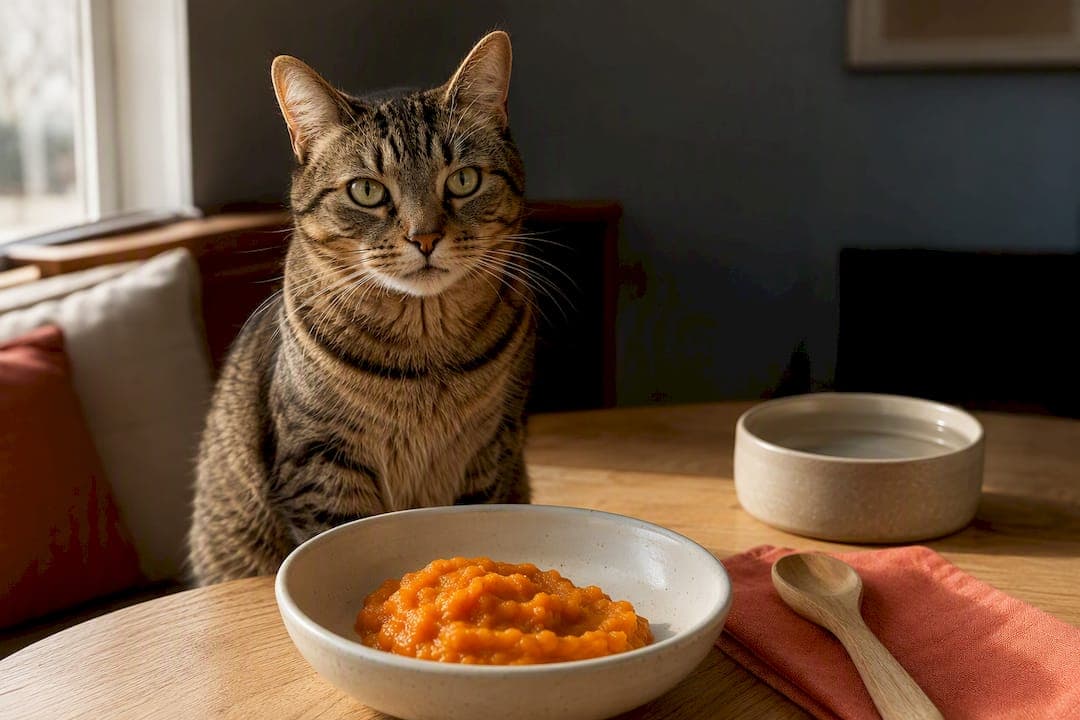
Plain canned or cooked pumpkin can ease mild constipation in many cats when given in small amounts, usually within a day or two. It's a short term supportive step, not a fix for severe or repeated blockages. Use only 100% pumpkin puree, keep your cat drinking water, and watch closely. If straining continues for several days, or your cat seems distressed, call your veterinarian.
TL;DR:
- Pumpkins should be given in small, gradual doses, with 1/2 to 1 teaspoon daily depending on the cat's size, and should be mixed into familiar food.
- The fiber in pumpkin absorbs water and can soften stool or firm loose stool, but hydration must be adequate to prevent worsening constipation.
- If no improvement occurs within three days or symptoms worsen, a veterinarian should be consulted instead of increasing home remedies.
- Avoid using pie filling, raw pumpkin rind, or seeds, as these can cause digestive issues or pose choking risks, especially for smaller cats.
- Long-term reliance on pumpkin indicates an underlying health issue that needs professional diagnosis, as pumpkin alone is a mild supportive measure.
Table of Contents
- How to Give Your Cat Pumpkin for Constipation
- Why Pumpkin Helps: Fiber, Water, and Hairballs
- How Long Pumpkin Takes to Work and What to Watch
- What Not to Feed and Possible Side Effects
- When Pumpkin Isn't Enough: Why Vets Often Reach for PEG 3350
- Our Take on Pumpkin, Hydration, and Long Term Gut Health
- Where to Find Vet-Informed Reviews for Cat Digestive Health
- Sources
How to Give Your Cat Pumpkin for Constipation
Skip the pie aisle. You want plain, 100% pumpkin puree with nothing else in the can, no sugar, no cinnamon, no nutmeg. Fresh pumpkin works too, as long as you cook it plain and mash it smooth with no skin or seeds attached.
Dosing is small on purpose. Here's the general approach vets and pet nutrition writers point to:
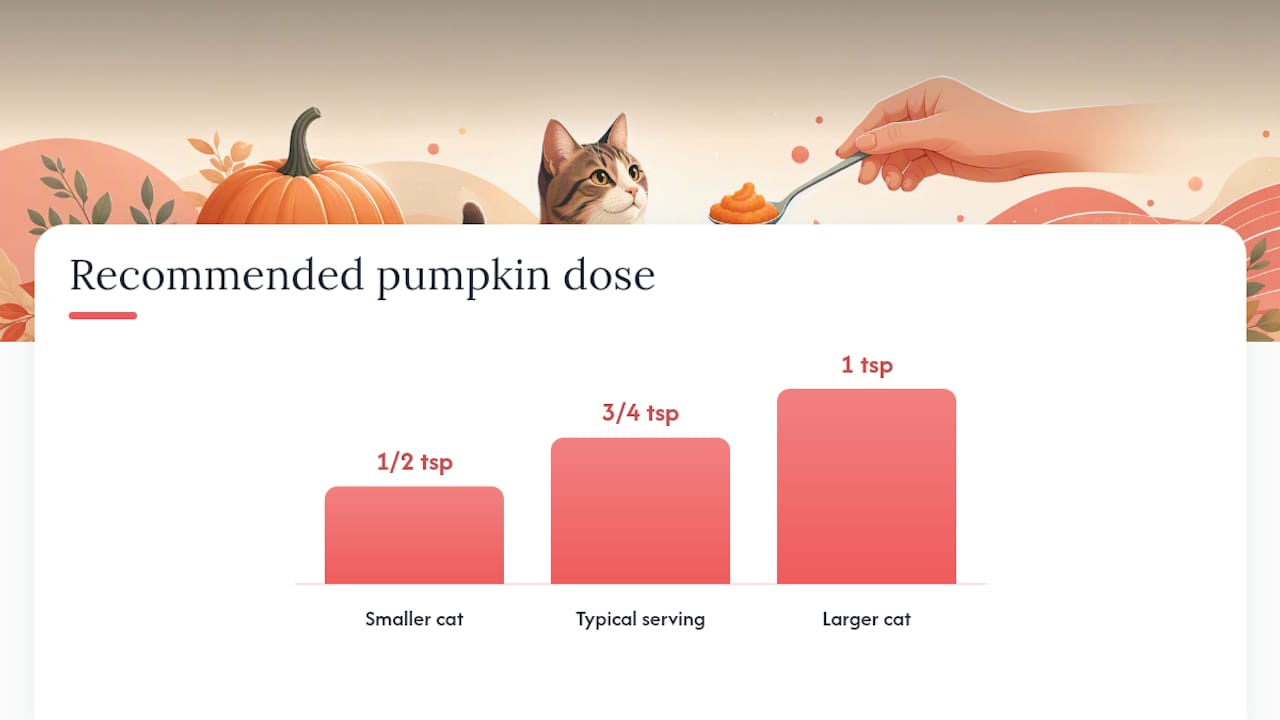
- Start small. Mix about 1/2 teaspoon of plain pumpkin puree into wet food once a day for a smaller cat.
- Scale up cautiously. Larger cats can go up to 1 teaspoon daily, but there's no reason to start there. Build up over a few days.
- Blend it into a meal your cat already likes. Pumpkin has a mild taste, but a suspicious cat will pick it out of a bowl in seconds.
- Use a syringe as backup. If your cat doesn't touch food with pumpkin mixed in, a small oral syringe (no needle) lets you place a bit directly in the cheek pouch.
- Never serve it as its own dish. A bowl of straight pumpkin isn't a treat, it's an easy way to overshoot the dose and end up with the opposite problem: loose stool.
- Track the next two to three days. Note stool frequency, size, and consistency, plus whether your cat is eating and acting normal.
Webvet's feeding guidance puts the typical serving at roughly 1/2 to 1 teaspoon mixed into food once daily, which lines up with what most veterinary sources recommend for mild cases.
Pro Tip: Warm the pumpkin slightly (room temperature, never hot) before mixing it in. Cats respond better to food that smells the way their regular meal does, and a cold spoonful straight from the fridge can make an already picky cat turn away entirely.
If you don't see any change after three days, or things get worse before that, stop the home approach and get your vet involved.
Why Pumpkin Helps: Fiber, Water, and Hairballs
Pumpkin works because of soluble fiber, which absorbs water in the gut and forms a gel like texture. That gel can soften stool that's too hard to pass, and according to the Cornell Feline Health Center, the same fiber can also firm up stool that's too loose. It's a two way regulator, not a one trick laxative.
Fiber alone isn't the whole story, though. The Merck Veterinary Manual notes that hydration matters just as much, if not more, and that fiber should only be added once a cat is well hydrated. A dehydrated cat given more fiber can actually make things worse, since fiber needs water to do its job.
Pumpkin also helps move hair through the gut, which makes it a reasonable pick for hairball related constipation. What it can't do:
- Clear a true intestinal obstruction
- Resolve megacolon or chronic motility problems
- Replace fluids in a dehydrated cat
- Fix constipation caused by pain, arthritis, or kidney disease
How Long Pumpkin Takes to Work and What to Watch
Give it 24 to 72 hours. That's the window most mild cases need before you see a real change in litter box behavior.
Track these signs daily:
- Litter box visits: more frequent trips with normal sized stool is a good sign.
- Straining: less grunting or hunching over the box means things are moving.
- Stool appearance: softer, more formed stool beats either rock hard pellets or watery mess.
- Appetite and energy: a constipated cat that's still eating and playing is in a very different situation than one that's hiding and refusing food.
Some findings count as urgent no matter how mild things looked yesterday. Repeated straining with nothing coming out, vomiting, blood in the stool, lethargy, or skipping meals all mean you stop waiting and call your vet. VCA Animal Hospitals lists these alongside dehydration and dietary change as common triggers worth flagging to a vet early rather than late.
One more thing worth mentioning to your vet: if pumpkin has become a daily requirement just to keep stool normal, that's not really "maintenance," that's a signal something underlying needs attention.
What Not to Feed and Possible Side Effects
Pie filling is the big one. It looks like pumpkin, it's sold near pumpkin, and it will not help your cat. It's loaded with sugar and spices that have no place in a cat's diet. Raw pumpkin rind and stem are also off the table, they're tough on digestion and not worth the risk.
Seeds deserve their own warning. Whole or lightly crushed pumpkin seeds can be a choking hazard or, in smaller cats, an obstruction risk.
Even plain pumpkin has limits:
- Too much, too fast can cause diarrhea or excess gas.
- Filling a cat up on pumpkin can crowd out the protein calories cats actually need.
- Cats with chronic kidney disease, diabetes, or those on regular medication should only get added fiber after a quick check with your vet, since fiber can affect how some medications and nutrients are absorbed.
When Pumpkin Isn't Enough: Why Vets Often Reach for PEG 3350
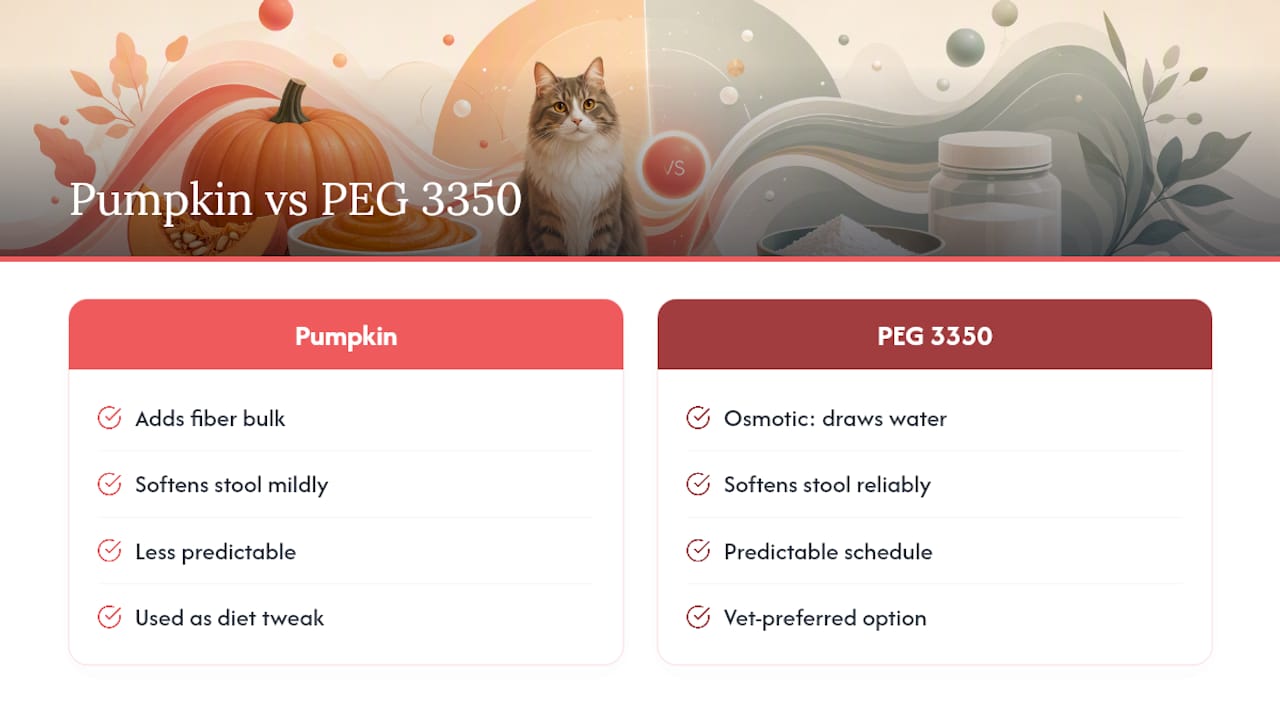
Pumpkin is a mild nudge. Polyethylene glycol 3350, commonly known by the brand Miralax, is a more dependable tool, and it's why many veterinarians reach for it first. It's an osmotic laxative, meaning it pulls water into the colon on a predictable schedule rather than relying on fiber bulk. Royal Canin Academy points to PEG 3350 as a preferred option specifically because it softens stool more reliably than dietary fiber alone.
Severe or repeated cases, what vets call obstipation, sometimes need more than any oral remedy: enemas, IV fluids, manual removal of impacted stool, or a short hospital stay.
Do not attempt any of this yourself. Human enema products contain electrolytes and salts that can cause fatal imbalances in cats, a risk well documented in veterinary poison reports. Skip the home enema entirely and let a vet handle anything beyond diet and hydration.
Our Take on Pumpkin, Hydration, and Long Term Gut Health
We lean conservative on dosing, always starting at the low end and tracking results rather than guessing bigger is better. Hydration comes first in our book, fiber is the supporting act, not the star.
When constipation keeps coming back, look past the pumpkin. A water fountain that actually gets a picky cat drinking more, a probiotic aimed at sensitive stomachs, or more frequent grooming to cut down on swallowed hair can all matter more than another spoonful of puree. Reviews built around vet-informed criteria and tested by pet owners are a good next step if you want product options that back up this advice.
— Chris
Where to Find Vet-Informed Reviews for Cat Digestive Health
If pumpkin buys your cat some relief but you want to fix the root cause, hydration and gut support tools are where to look next. A best cat water fountains for picky drinkers guide breaks down which models actually get reluctant cats to drink more, which matters more for bowel health than fiber alone. If constipation keeps recurring, A guide to probiotics for sensitive stomachs covers options tested for ongoing digestive support.

For cats who eat too fast and end up with irregular digestion, a puzzle feeder built for slower eating can help smooth things out over time. And if you're tracking symptoms closely, this feeding schedule documentation guide offers a simple way to log meals and litter box habits so patterns are easier to spot.
None of these replace a vet visit for constipation that won't quit. But for the day to day work of keeping a cat's gut healthy, they're a solid place to start. Head to Kiblco to browse the full lineup of vet-informed reviews and find the right fit for your cat's routine.
Sources
This guide draws on established veterinary references rather than guesswork. The Cornell Feline Health Center offers university clinic backed guidance on feline digestive health. The Merck Veterinary Manual is a widely used clinical reference for veterinarians. VCA Animal Hospitals speaks from its network of veterinary hospitals, and Royal Canin Academy and Webvet round out the practical, clinically grounded advice used throughout.
- Treating constipation in cats — Royal Canin Academy
- Can Cats Eat Pumpkin? — Webvet
- Constipation, Obstipation, and Megacolon in Small Animals — Merck Veterinary Manual
- Constipation — Cornell Feline Health Center