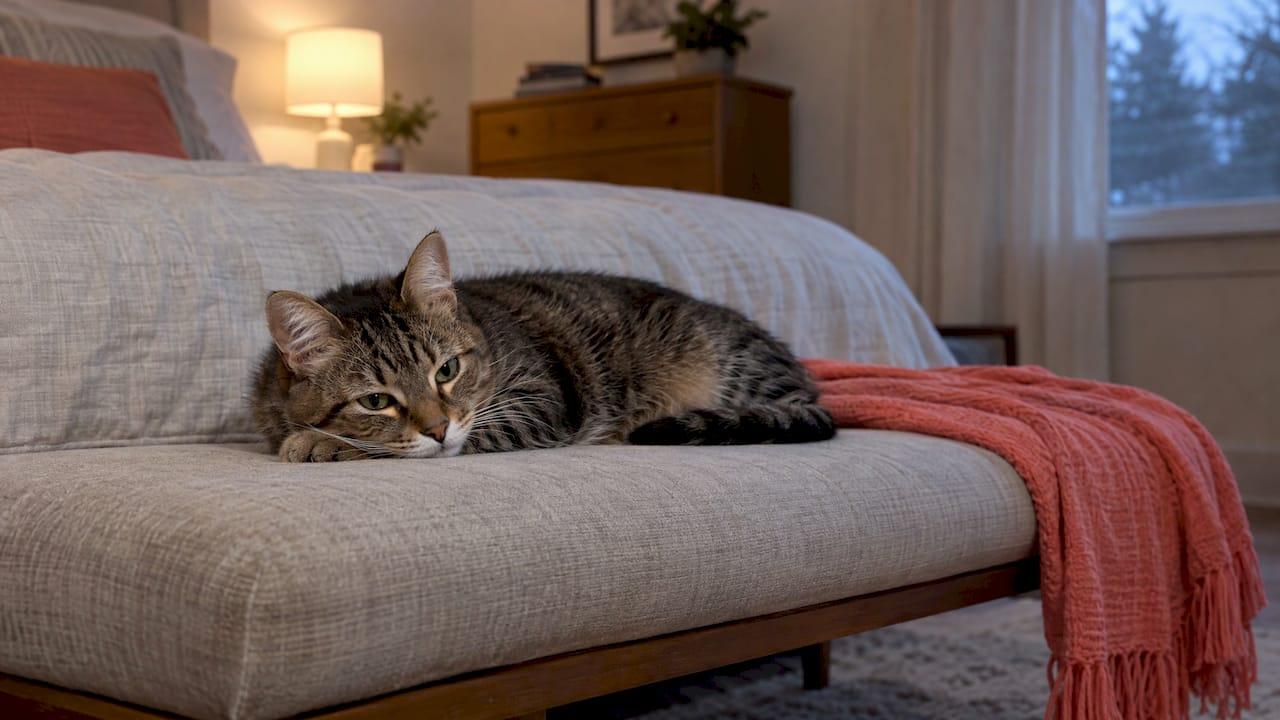
Melatonin is a hormone vets sometimes use off-label in cats for sleep and behavior problems. Dose and timing are set by your veterinarian, and the product you pick matters as much as the amount. At Kiblco we review pet supplements hands-on with veterinary input, so this guide covers what the vet sources say, how to read a label and what to do if something goes wrong. It's for cat parents who are weighing a calming or sleep supplement and want to shop with confidence.
TL;DR
- Vets use melatonin in cats off-label for sleep and behavior disorders, and sometimes to suppress the estrus cycle.
- There is no labeled cat dose. Published ranges run from 1.5 to 6 mg before bedtime, and your vet sets the actual amount.
- Sleepiness is the most common effect. Kittens, pregnant, nursing and breeding cats, and cats with liver disease need special veterinary guidance.
- Choose a plain melatonin product with a clear ingredient list. Check for xylitol and sustained-release formulas, which are not suited to off-label pet use.
- If your cat gets into a bottle of melatonin, call your vet or a poison hotline right away.
Table of Contents
- What melatonin does in a cat's body
- Why cat parents ask about it
- Is melatonin safe for cats?
- Melatonin dosage for cats
- Can cats take human melatonin?
- Melatonin treats and chews for cats
- If your cat eats too much melatonin
- Questions to bring to your vet
- Helping your cat sleep alongside any supplement
- Our perspective
- Where to find cat supplements and gear
- FAQ
- Sources
What melatonin does in a cat's body
Melatonin is a hormone made by the pineal gland, a small gland in the brain. It helps signal the body that it is time to rest, and it is tied to day and night rhythms. Supplements copy that signal.
The animal research goes back decades. A PubMed-indexed study in unanesthetized cats found that melatonin delivered directly into the brain induced non-REM sleep within 11 to 15 minutes and suppressed REM sleep for about three hours. That was a laboratory experiment, not a guide to what happens when you give a chew at home. It does show that the hormone acts on feline sleep.
In everyday practice, VCA Animal Hospitals states that melatonin is used off-label in cats to treat sleep and behavior disorders and to suppress the estrus cycle. "Off-label" means the product has no cat-specific label approval, so your vet's directions take the place of a label dose.
Why cat parents ask about it
Most searches come from a few situations.
Night-time activity. Cats that yowl, run the hallway or pounce on ankles at 3 a.m. push owners to look for sleep help. Older cats can also shift their sleep patterns.
Stressful events. Travel, vet visits, grooming, fireworks and moving house are common triggers. Melatonin is often discussed for these planned stress events.
Anxiety and behavior. Some vets use it for generalized behavior concerns where a calmer state is wanted. This is a conversation to have with your vet, because behavior problems can have medical causes that need to be found first.
Heat cycles. Vets have used it to suppress the estrus cycle in some cats, which is a medical decision for the vet to make.
If your goal is general calm rather than sleep, you may also want to read our guide to L-theanine for cats, another ingredient that shows up in calming products.
Is melatonin safe for cats?
Veterinary sources describe melatonin as generally well tolerated when it is used the way a vet directs. Paws & Claws Animal Hospital says it is generally considered safe at recommended dosages and should be used under veterinary supervision, because it is a hormone that can interact with other processes and medications. It also advises regular monitoring if a cat is on it for an extended time, since long use may interact with other hormones.
WebMD (October 2024) says side effects are uncommon in dogs and cats and that the main thing to watch for is sleepiness. It adds that melatonin can lower cortisol and sex hormones and can affect thyroid blood levels, which is useful to know if your cat has bloodwork coming up.
Side effects to watch for
VCA lists these possible effects:
- Sleepiness
- Weight gain
- Changes in fertility
It also notes that sensitivities can develop with repeated exposure. Other veterinary writing mentions itchiness, confusion and stomach upset in some cats. Sleepiness is often the effect owners are after, so the thing to track is whether your cat seems too groggy, wobbly or unlike themselves.
Cats that need extra veterinary guidance
Talk to your vet before any melatonin if your cat is:
- Pregnant, nursing or used for breeding. VCA advises caution, and JAM Veterinary Services lists these groups among those that should not get it without veterinary discussion.
- Not yet sexually mature, such as a young kitten.
- Living with severe liver disease. Per VCA, effects can last longer in pets with liver or kidney disease.
- Allergic to melatonin, in which case VCA says not to use it.
- Taking other medicines. Cats.com lists benzodiazepines such as Valium and Xanax as able to increase sedation, and says warfarin is not recommended for cats.
Mention every supplement and medicine your cat takes at the appointment, including calming chews.
Melatonin dosage for cats
There is no labeled melatonin dose for cats. Cats.com reports that doses for sleep disorders range from 1.5 to 6 mg before bedtime, and that higher doses, up to 12 mg every 12 hours, have been prescribed. VCA's drug information gives a similar frame, with cats dosed at 1.5 to 6 mg per cat as needed, up to every 12 hours, as reported in the top-ranking veterinary reference pages for this topic.

Treat those numbers as the range vets work within, not as a number to pick for yourself. Your vet will pick an amount based on your cat's weight, age, health and the reason you're using it. That's why a single "cat dose" printed on a bottle is rarely the whole story.
Timing
Timing depends on the goal:
| Goal | Typical timing described by vet sources |
|---|---|
| Planned stress event (travel, grooming, vet visit) | Given 1 to 2 hours before, per WebMD; Cats.com says at least 2 hours before for specific fear or stress events |
| Sleep schedule | Daily, before bedtime |
| Generalized behavior concerns | Sometimes morning and evening, as your vet directs |
| Long-term use for sleep or skin issues | Daily, and per WebMD it can take up to 2 months for full effect |
Melatonin is short-acting. VCA says it should stop working within 24 hours, though effects can last longer in cats with liver or kidney disease.
Keep a simple log
Before the vet visit, write down when your cat is active, when they sleep and what seems to set off the problem. A written baseline lets you and your vet see whether anything changes. The same idea applies in dogs, where a sleep tracking baseline is used to compare nights before and after a change. For cats, a notes app and a few nights of observation do the job.
Can cats take human melatonin?
VCA says human melatonin supplements may be used off-label in pets, but flags two points:
- Xylitol. Some human products contain this sweetener, which is toxic to dogs. ASPCApro notes that cats exposed to xylitol have only gastrointestinal upset, not the low blood sugar or liver effects seen in dogs. Still, a homes with both species should keep xylitol products well away from the dog.
- Sustained-release formulas. VCA says sustained-release oral melatonin should not be used off-label in pets.
ASPCApro also warns that many sleep aids are combination products, with extras such as 5-HTP, and that large gummy ingestions can cause stomach upset. Human gummies, in particular, are flavored to be tasty, which is a poor mix with a curious cat.
The simple rule: before you give anything made for people, show your vet the exact bottle, including the full ingredient list and the strength per tablet.
Melatonin treats and chews for cats
Cat melatonin treats are popular because they're easier to give than a tablet. Read them the way you'd read any supplement.
Check the strength per chew. One product's chew might hold 100 micrograms (mcg) of melatonin, which is 0.1 mg, far below the milligram ranges vets cite. Micrograms and milligrams are easy to mix up. 1 mg equals 1,000 mcg.
Look for added ingredients. Many calming chews pair melatonin with L-tryptophan, valerian, chamomile, L-theanine, ashwagandha or thiamine. That's a different product from plain melatonin, and your vet may want to know every component.
Count the total across everything. If your cat gets a calming chew plus a separate melatonin liquid, the melatonin adds up.
Skip sustained-release and xylitol formulas meant for people.
Pick a format your cat accepts. Liquids, small tablets and chews each have fans. A cat that refuses the product gets no benefit, and stress at dosing time defeats the purpose.
For product ideas, browse our cat health reviews, where each review lists pros and cons, usability and health effects.

If your cat eats too much melatonin
Accidents happen, especially with flavored chews. WebMD says that if you think your pet took more than intended, call your veterinarian or a veterinary emergency clinic immediately, and after hours contact an emergency hospital or an animal poison control center.
Phone numbers worth saving:
- ASPCA Animal Poison Control Center: 1-888-426-4435
- Pet Poison Helpline: 1-855-764-7661
These are the numbers listed by WebMD; fees may apply, so ask when you call.
According to ASPCApro, exposure to melatonin alone often causes vomiting, sedation and wobbliness (ataxia), and rarely agitation. Severe signs are not expected, and many pets recover with confinement at home or supportive care at the clinic. The bigger worry is a combination product, so have the package in hand when you call.
Questions to bring to your vet
A short list makes the visit efficient:
- What is causing the night waking or anxiety, and should we rule out pain, thyroid or other medical problems first?
- What dose and timing do you recommend for my cat's size and age?
- How long should we try it before reassessing?
- Does it interact with anything my cat takes now?
- Which product format and brand fit my cat?
Because melatonin can affect thyroid test results, also ask whether upcoming bloodwork changes the plan.
Helping your cat sleep alongside any supplement
A supplement works best next to a routine. These habits cost little:
- Play hard in the evening. A 10 to 15 minute session with a wand toy, then a meal, mimics the hunt, eat, groom, sleep pattern. Our cat toys picks cover options that keep cats engaged.
- Keep a predictable schedule for feeding and lights out.
- Give a cozy sleeping spot away from foot traffic.
- Offer enrichment that holds interest. If catnip isn't your cat's thing, see our guide to catnip alternatives.
Our perspective
Cat owners usually come to melatonin tired and a little desperate. A cat that wakes the house every night is a real problem, and the web is full of confident answers with no source behind them.
We review pet products by buying them and using them in real homes, and for health products we cross-check with veterinary experts. That approach matters most with supplements, because the difference between a good fit and a bad one often sits in the small print: the strength per chew, the added ingredients, the sweeteners.
Our advice is to treat melatonin as a vet-guided choice and then shop carefully. Get the dose from your vet, pick a product whose label you can fully read, and give it a fair, monitored trial. Every review we publish lists pros and cons, and we accept no payment for coverage, so what you read reflects what we found.
Chris
Where to find cat supplements and gear
When your vet gives the go-ahead, our cat health category gathers our hands-on reviews of supplements and related products, each with transparent pros and cons, durability, usability and health effects. You can also start at Kiblco for dog and cat picks across health, gear, litter and toys. Kiblco earns a commission when you buy through links to retailers, and that never affects what we cover.

Have a dog as well? Our guide to vet-guided melatonin for dogs covers the dog side, which has different dosing and different cautions.
FAQ
Is melatonin safe for cats?
Vet sources describe it as generally well tolerated when used as directed, with sleepiness the most common effect. It is a hormone, so your vet should set the dose and check for interactions. Pregnant, nursing, breeding and very young cats, and those with liver disease, need individual guidance.
How much melatonin can I give my cat?
There is no labeled cat dose. Published ranges for sleep run from 1.5 to 6 mg before bedtime, with higher amounts prescribed in some cases. Your vet picks the amount for your cat's weight, age and health, so ask before giving any.
Can I give my cat melatonin made for people?
VCA says human products may be used off-label, but check for xylitol and avoid sustained-release formulas. Combination sleep aids can include other ingredients such as 5-HTP. Show your vet the bottle first.
How long does melatonin take to work in cats?
For a stressful event, give it 1 to 2 hours beforehand, according to WebMD. For long-term use such as sleep problems, it is given daily and may take up to 2 months for full effect. Once stopped, it should wear off within about 24 hours.
What if my cat ate melatonin gummies?
Call your vet or an emergency clinic right away, or the ASPCA Animal Poison Control Center at 1-888-426-4435 or Pet Poison Helpline at 1-855-764-7661. Keep the package so you can read out the full ingredient list.
Sources
- Melatonin, VCA Animal Hospitals
- Melatonin, VCA Animal Hospitals (human products and sustained-release)
- REM sleep suppression in cats by melatonin, PubMed
- Melatonin in Dogs and Cats, WebMD
- Melatonin, JAM Veterinary Services
- Melatonin for Dogs and Cats, Paws & Claws Animal Hospital
- The Most Common Sleep Aid Toxicities in Cats and Dogs, ASPCApro
- Melatonin for Cats: Overview, Dosage, and Side Effects, Cats.com