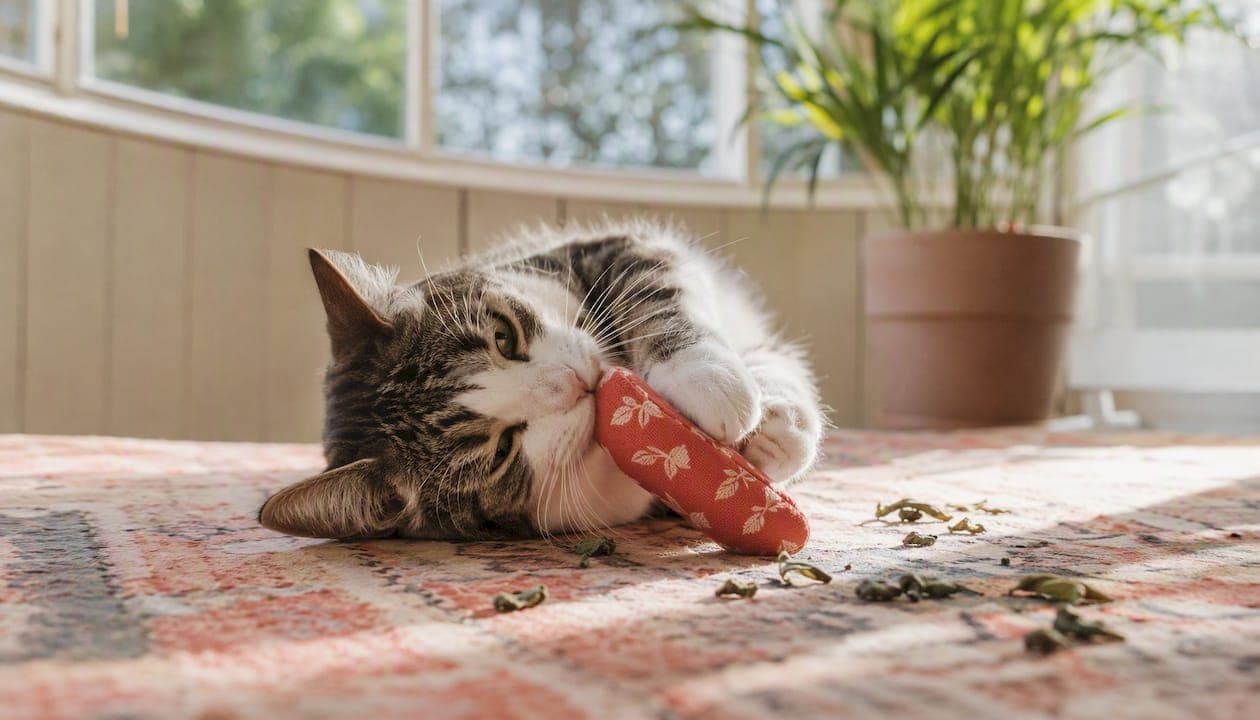
If your cat stares blankly at a catnip toy while every other cat on the internet goes wild, you're not alone. About 30% of cats are genetically unresponsive to catnip, and kittens under six months rarely react at all. The good news: there are proven catnip alternatives that work through entirely different compounds.
Here's where to start:
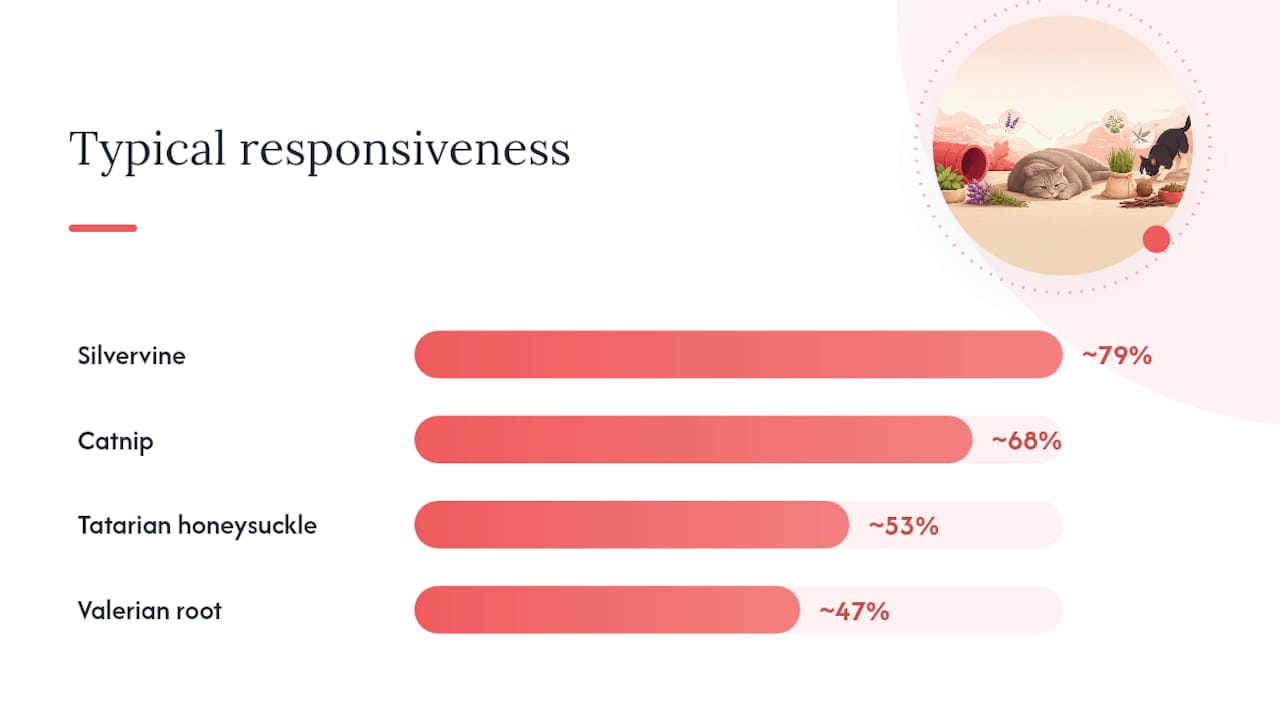
- Silvervine (Actinidia polygama) — Try this first. Studies show about 79% of cats respond, including many that ignore catnip entirely. Buy it as gall fruits or powder.
- Tatarian honeysuckle (Lonicera tatarica) — Wood chips or sticks that trigger a rolling, rubbing response in many cats. Use inside a refillable toy, not loose.
- Valerian root (Valeriana officinalis) — About 47% of cats respond; the effect can lean sedating rather than euphoric. Available as powder or dried root.
- Synthetic pheromones (e.g., Feliway) — Not a stimulant. Choose these when calming is the goal: travel stress, vet visits, or multi-cat tension.
Safety note: Always supervise first exposures. Keep whole galls, loose wood chips, and powders inside toys or on a towel you can remove. Never leave unsupervised.
Key Takeaways
| Point | Details |
|---|---|
| Try silvervine first | About 79% of cats respond, including many catnip nonresponders; start with gall fruits or powder. |
| Rotate every 2–3 days | Daily exposure causes habituation; spacing sessions keeps the response strong. |
| Match the tool to the goal | Plant stimulants are for play; synthetic pheromones (Feliway, Comfort Zone) are for calming and stress. |
| Supervise all new exposures | Keep chips and galls inside toys; never leave loose material where a cat can ingest it unsupervised. |
| Kiblco-tested picks | Kiblco reviews silvervine toys, pheromone diffusers, and blended-plant products with hands-on testing and vet input. |
Table of Contents
- How the top catnip substitutes compare
- 1. Silvervine: the strongest option for catnip nonresponders
- 2. Tatarian honeysuckle: a wood-based alternative worth trying
- 3. Valerian root: expect a different kind of reaction
- 4. Synthetic pheromones: when calming matters more than play
- 5. Why some cats don't respond to catnip at all
- 6. How to introduce a new alternative safely
- 7. What to try when nothing works
- What the science actually says about silvervine safety
- An honest take on what to try first
- Kiblco makes finding the right pick easier
- Sources
How the top catnip substitutes compare
The table below lays out the key decision points side by side so you can match an option to your cat's needs.
| Alternative | Active compounds | Cats typically responsive | Best use | Common forms | Ingestion risk | Typical products |
|---|---|---|---|---|---|---|
| Silvervine | Nepetalactol, actinidine, dihydroactinidiolide | ~79% | Play, rolling, rubbing | Gall fruits, powder, sticks, dried leaves | Low–moderate (supervise) | Catify Silvervine Gall Fruits, Spot Silver Vine Refillable Cat Toy, Leaps & Bounds Silvervine Sticks |
| Tatarian honeysuckle | Actinidine, related iridoids | ~53% | Chewing, rubbing | Fine chips, sticks | Moderate (splinter risk) | SpaceKittyExpress Fine Honeysuckle Chips |
| Valerian root | Valeric acid, actinidine | ~47% | Calming or mild play | Powder, dried root, stuffed toys | Low (strong odor) | Meowy Janes Valerian Root Powder |
| Catnip | Nepetalactone | ~68% | Play, rolling | Dried herb, spray, stuffed toys | Very low | From the Field Ultimate Blend Kicker Toy |
| Synthetic pheromones | Synthetic facial/harmony pheromones | Varies (calming, not euphoric) | Stress relief, calming | Diffuser, spray, collar | None | Feliway Classic Spray, Comfort Zone Cat Calming Diffuser, Relaxivet Cat Calming Collar |
A few things worth flagging: responsiveness rates come from controlled studies and your cat may fall outside the averages. Kittens and senior cats often show weaker or delayed responses regardless of which plant you try. The From the Field Ultimate Blend Kicker Toy and MPP Zanies Fruity Sweeties Plush Toys use blended attractants, which raises the odds that at least one compound lands.
1. Silvervine: the strongest option for catnip nonresponders
Silvervine (also called matatabi) is the most studied catnip substitute and the one most likely to work when nothing else does. It's native to East Asia and has been used in Japanese cat enrichment for decades, though it's now widely available in the U.S.
The reason it outperforms catnip comes down to chemistry. Catnip relies on a single compound, nepetalactone, acting through the olfactory system. Silvervine contains multiple active iridoids including nepetalactol, actinidine, and dihydroactinidiolide. That broader chemical profile likely explains why cats unresponsive to catnip often react strongly to silvervine.
Product forms and when to use each:
- Gall fruits (Catify Silvervine Gall Fruits): the most potent form. Dried galls contain concentrated iridoids and many cats treat them like a toy. Supervise closely; don't leave a whole gall where a cat can chew through it unsupervised.
- Powder: sprinkle a small pinch into a refillable toy like the Spot Silver Vine Refillable Cat Toy. Easiest to dose and store.
- Sticks (Leaps & Bounds Silvervine Sticks): good for cats that like to chew. They also offer some dental engagement similar to chew treats.
- Dried leaves: effective and lower-cost, though less potent than gall fruits.
Pro Tip: Dry fresh silvervine leaves for 4–7 days before offering them. This drying window shifts the iridoid ratio toward the profile cats prefer, and peer-reviewed testing found no signs of addiction or liver/kidney injury from normal olfactory exposure.
A controlled study found that 79% of cats responded to silvervine versus 68% to catnip, and many cats that showed no reaction to catnip did respond to silvervine. That gap matters when you're troubleshooting a nonresponder.
2. Tatarian honeysuckle: a wood-based alternative worth trying
Tatarian honeysuckle (Lonicera tatarica) is the second most studied option and the one that surprises most cat owners. The attraction comes from the wood, not the flower. The wood contains actinidine and related iridoids that trigger rolling, rubbing, and chewing behaviors similar to catnip.
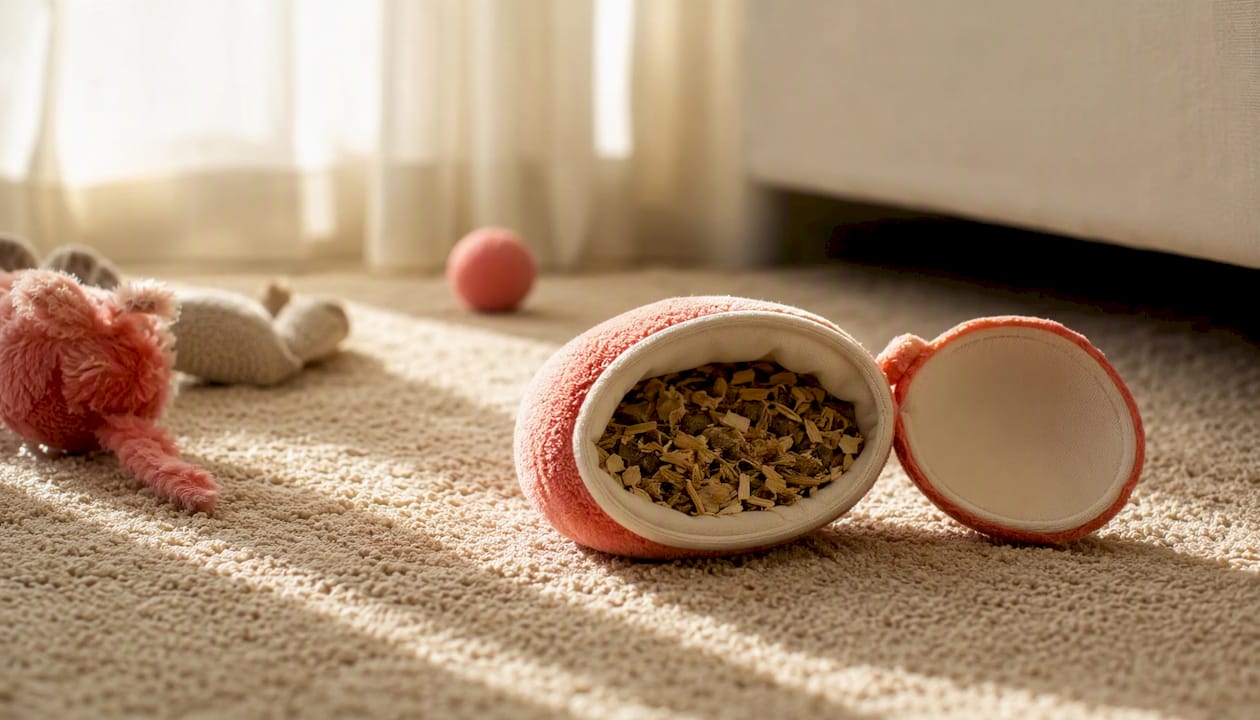
The most practical form is fine chips, like SpaceKittyExpress Fine Honeysuckle Chips, which are pre-cut to reduce splinter risk. Stuff them inside a refillable toy or a small mesh pouch rather than scattering them loose. Some cats respond more strongly when the wood is slightly dampened, which releases more of the volatile compounds.
Safety is the main consideration here. Whole sticks can splinter, and sharp wood fragments are a choking and intestinal hazard. Practical guides recommend keeping honeysuckle chips inside secure, refillable toys at all times and removing the toy after each play session. Never leave loose chips where a cat can chew and swallow them unsupervised.
For cats that don't respond to silvervine, honeysuckle is a reasonable second experiment.
3. Valerian root: expect a different kind of reaction
Valerian root (Valeriana officinalis) works differently from the plant stimulants above. The active compounds, including valeric acid and actinidine, tend to produce a response that leans calming or mildly sedating in some cats rather than the energetic rolling and rubbing you'd see with silvervine. About 47% of cats respond, so it's worth trying if the others haven't worked.
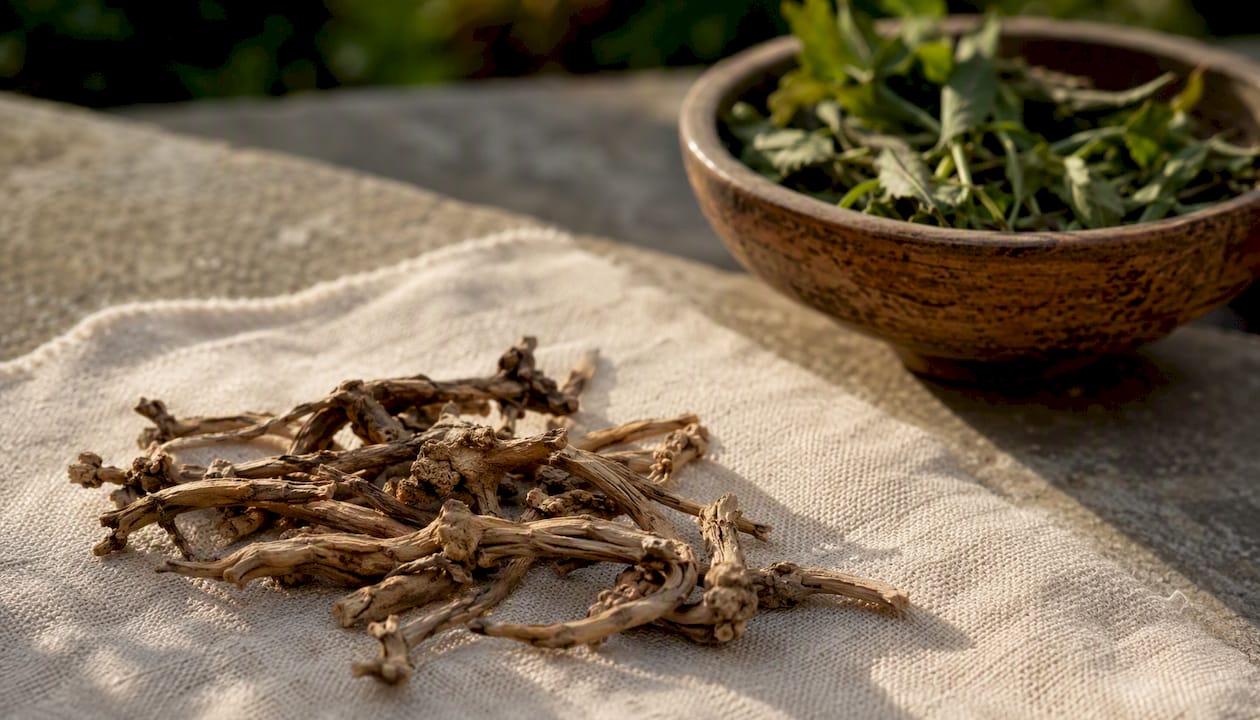
The smell is intense, and not just for cats. Valerian root powder has a strong, earthy odor that many humans find unpleasant. Meowy Janes Valerian Root Powder is highly concentrated, so a small pinch inside a toy is enough. You don't need much.
A few practical notes:
- Use powder sprinkled into a toy, not loose on the floor.
- Stick to products formulated for cats. Human-grade valerian supplements often contain additives like xylitol or other fillers that are unsafe for cats.
- If your cat's goal is calming rather than play, valerian can overlap with pheromone products in effect, though the mechanism is completely different.
The From the Field Ultimate Blend Kicker Toy combines valerian with silvervine and catnip, which is a smart hedge if you're not sure which compound your cat responds to.
4. Synthetic pheromones: when calming matters more than play
Synthetic pheromones like Feliway don't produce the characteristic euphoric response you get from plant stimulants. They work by mimicking the facial pheromones cats deposit when they rub their cheeks on objects, which signals safety and familiarity. The goal is behavioral calming, not stimulation.
Clinical evidence supports pheromone use in specific contexts: carrier and travel anxiety, multi-cat household tension, and post-move stress. They're not a substitute for silvervine if you want your cat to play. They're the right tool when your cat is anxious, hiding, or spraying.
Which format to choose:
- Feliway Classic Spray: targeted and fast-acting. Spray inside a carrier 15–30 minutes before travel and let it dry before your cat enters. Commonly used by vets for situational stress.
- Comfort Zone Cat Calming Diffuser: plug-in, continuous release. Best for whole-room calming over weeks. Useful for multi-cat households where tension is ongoing.
- Relaxivet Cat Calming Collar: wearable and portable. Good for cats that roam the house and need calming wherever they go, without requiring a diffuser in every room.
Give diffusers two to four weeks before judging effectiveness. Sprays work within minutes but wear off in a few hours.
5. Why some cats don't respond to catnip at all
Catnip (Nepeta cataria) works through nepetalactone, which binds to olfactory receptors and triggers a short euphoric response lasting roughly 5–15 minutes. But the response is genetic.
Age matters too. Kittens under six months rarely respond, and some cats don't show full responsiveness until they're sexually mature. If your kitten ignores catnip, wait a few months before concluding it's a nonresponder.
The key takeaway: a cat that doesn't react to catnip is not missing something or unhealthy; learn more about responsiveness in our Amazing Queens to understand breed-specific behavior. It's just missing that one receptor profile. Silvervine, honeysuckle, and valerian all work through different or additional compounds, which is exactly why they reach cats that catnip misses.
6. How to introduce a new alternative safely
Start small and watch closely. Here's a practical sequence:
- Place a small amount of the new material inside a refillable toy or on a towel. For powder, a pinch is enough. For gall fruits or sticks, one piece per session.
- Observe for 5–10 minutes. Look for rolling, rubbing, chirping, or increased activity. A lack of response after two or three tries means this compound probably isn't the one.
- Remove the material after the session. Don't leave it out continuously.
- Wait 2–3 days before the next exposure. Offering stimulants daily leads to habituation, where the cat stops responding. Every-few-days rotation keeps the response fresh.
- Store powders and dried material in an airtight container away from light. Potency fades quickly once exposed to air.
- Try a different form before giving up on a compound. Some cats respond to gall fruits but not powder, or to sticks but not loose leaves.
Pro Tip: Pair the new material with an interactive wand toy during the session. The combination of scent stimulation and active play tends to produce a stronger, more sustained engagement than scent alone.
Plant-based iridoid enrichments are generally considered nontoxic in normal olfactory use, but supervision during initial introductions is always the right call.
7. What to try when nothing works
Some cats genuinely don't respond to any scent-based enrichment. That's not a problem to fix; it's a preference to work around.
Other enrichment options worth trying:
- Puzzle feeders: food-motivated cats often engage more with a puzzle feeder than any scent toy.
- Window perches: visual stimulation from birds and outdoor movement is enrichment too.
- Cat grass (wheatgrass or oat grass): safe to chew, different sensory experience, and many cats enjoy it even if they ignore catnip.
- Scheduled wand play: 10–15 minutes of active wand play twice daily covers the enrichment need that scent toys were meant to address.
- Scent trails: a drop of diluted safe herb like chamomile on a toy can engage cats that don't respond to the stronger iridoid plants.
When to call a vet or behaviorist: If your cat shows a sudden change in behavior (new aggression, hiding, or loss of interest in play that was previously normal), that's a health signal, not an enrichment problem. Similarly, if any enrichment product causes persistent vomiting, diarrhea, or lethargy, stop using it and contact your vet. A board-certified veterinary behaviorist is the right resource if anxiety or multi-cat conflict is the underlying issue rather than boredom.
What the science actually says about silvervine safety
The peer-reviewed evidence on silvervine is more reassuring than most cat owners expect. A controlled study reported 79% responsiveness to silvervine versus 68% to catnip, with Tatarian honeysuckle at 53% and valerian at 47%. More importantly, the same research found no physiological signs of harm from normal olfactory exposure.
A separate study on dried silvervine leaves found that the 4–7 day drying window produces an iridoid profile that cats prefer, and continuous exposure produced no blood markers of liver or kidney injury in tested cats.
Silvervine's multiple active iridoids, including nepetalactol, actinidine, and dihydroactinidiolide, likely explain why it reaches cats that catnip's single compound misses. The safety data from controlled exposure studies supports its use as a routine enrichment tool, not just an occasional novelty.
Gaps remain. Long-term behavioral studies, seasonal variation in iridoid concentration, and tissue distribution data are still limited. The current evidence supports normal, supervised use, not unlimited continuous exposure.
An honest take on what to try first
For a cat that ignores catnip, silvervine powder or gall fruits is the right first experiment. The responsiveness data is the strongest of any alternative, the safety profile is well-studied, and the product forms are easy to find in the U.S. If calming is the goal rather than play, skip the plant stimulants entirely and go straight to a Feliway Classic Spray or Comfort Zone diffuser. Kiblco tests these product categories hands-on and consistently finds that the form matters as much as the compound: a gall fruit your cat can bat around beats a powder sprinkled on the floor every time. Keep exposures short, rotate every few days, and supervise until you know how your cat responds.
Kiblco makes finding the right pick easier
Sorting through dozens of silvervine powders, pheromone diffusers, and blended-plant toys to find the ones that actually work is exactly the problem Kiblco was built to solve. Every product featured in this article, from the Catify Silvervine Gall Fruits to the Comfort Zone diffuser, has been evaluated through hands-on testing by real cat owners, with vet input factored into every recommendation. You get transparent pros and cons, not just a list of things to buy.

Whether your cat is a catnip nonresponder, an anxious traveler, or just bored with the same old toy rotation, Kiblco's reviews cut through the noise so you can pick one product with confidence and actually see a result. Browse the full cat enrichment and toy reviews at Kiblco to find the right fit for your cat today.
Sources
- Olfactory enrichment for cats: alternatives to catnip | dvm360 (PMC mirror / related peer-reviewed reporting)
- Article Assessing the safety and suitability of using silver vine as an olfactory enrichment for cats
- Silvervine Plant: An Alternative to Catnip | PetMD
- Crazy for catnip: the mosquito-repelling story behind a cat's love for catnip | SITN Harvard