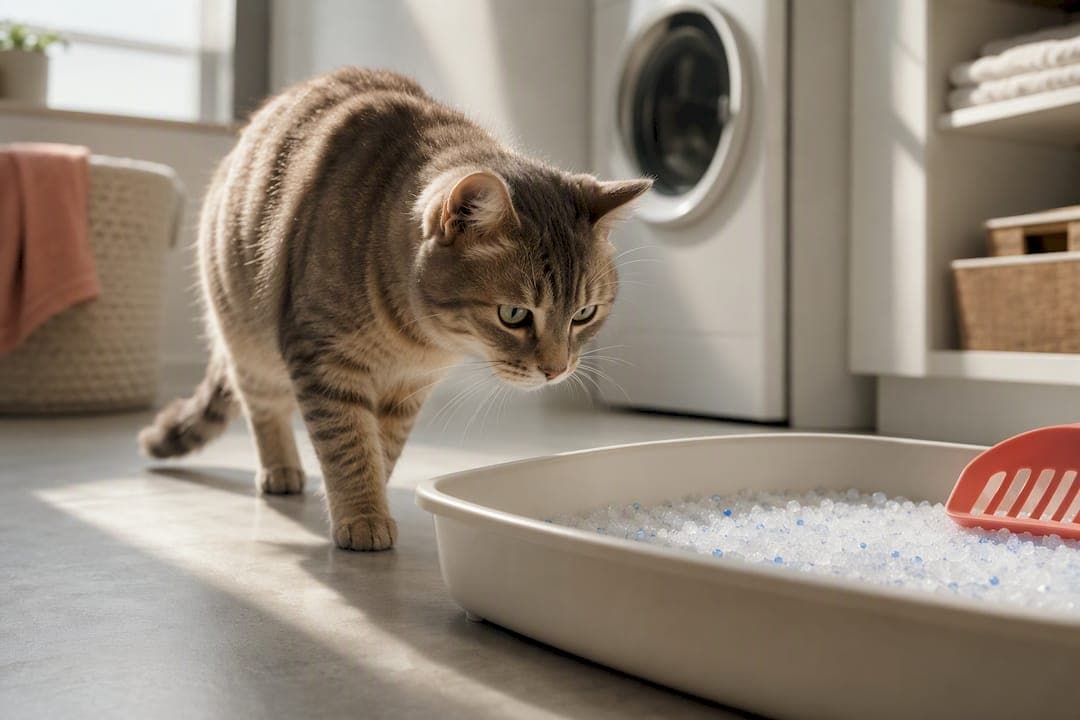
Most commercial crystal cat litters use amorphous silica gel, and that form is generally non-toxic to cats and people. The two real risks are inhaling respirable crystalline silica, which is almost exclusively an occupational hazard, as well as mechanical blockage if a cat eats a large volume of litter or a whole packet. Kittens, cats with asthma, and people with respiratory conditions need extra caution. The rest comes down to smart handling, not fear.
TL;DR:
- Crystalline silica found in quartz and sand poses significant health risks due to long-term inhalation, but household use of amorphous silica gel in litter generally does not cause these issues.
- Inhalation risks from silica dust are primarily occupational, involving high dust concentrations over years, which are unlikely in typical litter box cleaning routines.
- If a cat ingests a large amount of silica litter or a packet, the main concern is mechanical blockage, not toxicity, requiring monitoring for signs of digestive obstruction.
- Dust generation and cat rejection depend heavily on handling techniques, with slow pouring and guarded scooping reducing dust exposure and improving usability.
- Households with respiratory-sensitive cats or individuals should consider low-dust formulas and improved ventilation, especially during full litter changes or if coughing or eye irritation occurs.
Table of Contents
- Silica Cat Litter Safety Starts With Understanding Two Different Materials
- What Poison Control and Toxicology Research Say About Health Risks
- My Cat Ate Silica Litter. Is That an Emergency?
- Dust, Breathing, and Who Should Think Twice About Crystal Litter
- How to Use Silica Cat Litter Without the Guesswork
- When to Call Poison Control or Your Vet
- What Kiblco Found Testing Silica Litter in Real Homes
- Weighing Convenience Against Your Cat's Comfort
- Ready to Pick a Litter That Fits Your Household?
- Sources
- FAQ
Silica Cat Litter Safety Starts With Understanding Two Different Materials
The word "silica" covers two chemically related but functionally different substances, and mixing them up is where most of the internet's anxiety about crystal litter comes from. Amorphous silica, also sold as silica gel or silica crystals, is the material in litter boxes and those little "do not eat" packets in shoe boxes and beef jerky bags. Crystalline silica, the form found in quartz, sand, and cut stone, is a different structural arrangement of the same silicon dioxide molecule, and it behaves very differently once it enters lungs.
Manufacturers make silica gel by treating sodium silicate with acid, then washing and drying the result into porous granules. That processing step matters. It converts the material into an amorphous structure with no fixed crystal lattice, which is why it can absorb many times its weight in moisture without dissolving. Crystal cat litter is built from this processed amorphous form, not raw quartz sand.
The health hazard tied to silica almost always traces back to the crystalline version, specifically the fraction of dust small enough to reach deep lung tissue. The ATSDR toxicological profile is explicit on this point: silicosis and related lung disease come from years of inhaling respirable crystalline silica dust, typically in mining, construction, or stone cutting. OSHA's guidance on crystalline silica reinforces the same conclusion for workplace exposure limits.
A few distinctions worth keeping straight:
- Amorphous silica gel — used in cat litter and desiccant packets, generally recognized as non-toxic in small exposures.
- Crystalline silica (quartz/sand) — found in construction materials and some clay litters, the substance tied to occupational lung disease.
- Respirable fraction — the specific dust particle size (roughly under 10 microns) small enough to reach deep lung tissue, regardless of which silica type it comes from.
- Occupational exposure — years of daily, high-concentration dust exposure, a very different scenario from scooping a litter box.
Litter bag labels rarely spell this out, which is exactly why the confusion persists.
What Poison Control and Toxicology Research Say About Health Risks
The chemical toxicity picture for amorphous silica gel is reassuring, and the evidence comes from two very different directions: occupational health data and companion-animal poison control records.
On the human side, the ATSDR profile ties silica-related disease to long-term, high-concentration inhalation of respirable crystalline silica in industrial settings. Someone scooping a litter box for a few minutes a day, even daily for years, isn't replicating a quarry worker's exposure. A review of inhalation studies on amorphous silica exposure found that some animal studies showed pulmonary inflammation at very high, sustained exposure levels, but none produced silicosis, the fibrotic scarring associated with crystalline silica. That's an important nuance: amorphous silica isn't necessarily inert at any dose, but it doesn't cause the same disease process, and household-level exposure sits nowhere near the doses tested.
Poison Control's core message on silica gel: the "do not eat" warning on desiccant packets exists mainly to prevent choking or blockage, not because the material is acutely poisonous in small amounts.
On the animal side, the picture lines up. Poison describes silica gel as generally considered non-toxic, with the packaging warning aimed at mechanical risk rather than chemical risk. The ASPCA's guidance on silica gel says the same thing from a veterinary angle: a cat that licks up a few stray crystals or nibbles a corner of a packet is very unlikely to suffer poisoning.
Here's where the risk actually concentrates, according to that same guidance:
- Small, incidental ingestion (a paw-lick's worth of tracked crystals) typically causes nothing worse than mild stomach upset, if that.
- Swallowing an entire desiccant packet or a large mouthful of dry litter carries a real, if uncommon, risk of intestinal blockage.
- Dermal contact from normal handling isn't flagged as a concern in any of the toxicology sources reviewed here.
- Eye or respiratory irritation from a dust cloud is possible but transient, not a sign of chemical poisoning.
Veterinary sources like Vetstreet's review of silica safety land in the same place: amorphous silica gel is generally safe, but ingestion in quantity and dust exposure are the two things actually worth watching, particularly for kittens and cats with existing respiratory disease.
My Cat Ate Silica Litter. Is That an Emergency?
Most of the time, no. A cat that licks a few crystals off a paw or nibbles at tracked litter on the floor is almost never in danger. The chemistry isn't the problem here. Volume is.
The ASPCA and Poison Control both frame this as a mechanical risk rather than a toxic one: silica gel doesn't dissolve or break down quickly in the gut, so a large enough quantity, or a whole intact packet, can physically obstruct the intestines. That's rare, but it's documented, and the ASPCA notes that owners should watch for ongoing digestive signs rather than panic over a small lick.
Here's how to work through it if you catch your cat eating litter or swallowing a packet:
- Assess the amount. A few crystals stuck to fur is very different from an empty litter scoop or a torn-open packet.
- Watch for early signs. Mild vomiting or a slightly upset stomach shortly after ingestion is common and usually resolves on its own.
- Do not induce vomiting on your own. Wait for direction from a veterinarian or Poison Control before trying any home remedy.
- Track bowel movements over the next 24 to 48 hours. No stool, straining, repeated vomiting, or visible lethargy are the signs that point toward obstruction.
- Call for guidance if symptoms persist or worsen. A cat that stops eating, hides, or seems painful in the abdomen needs a same-day vet visit, not a wait-and-see approach.
Kittens deserve extra vigilance here, simply because they're smaller, curious, and more likely to treat a litter box like a snack bar during the exploratory phase of kittenhood. A volume that would pass through an adult cat without issue can sit differently in a four-pound kitten's gut.
Dust, Breathing, and Who Should Think Twice About Crystal Litter
Respirable dust is the piece of this conversation that gets skipped most often, and it's the one place where household exposure and occupational exposure actually share a mechanism, even if not a scale.
The health effects OSHA and ATSDR describe for crystalline silica specifically involve the respirable fraction, the portion of airborne dust fine enough to bypass the upper airway and settle in the lungs. Crystal litter granules are manufactured to be relatively large and porous, which limits how much fine dust they throw off compared to some clay litters, but no litter is entirely dust-free. Pouring, scooping, and a cat digging in the box all kick particles into the air.
What separates a litter box from a stone-cutting shop is concentration and duration, not just material. Occupational silicosis develops from years of sustained, high-density dust exposure in an enclosed workspace. A few minutes of daily scooping in a ventilated bathroom isn't the same exposure category, even accounting for cumulative years of pet ownership.
That said, some households and some cats have less margin for error:
- People with asthma, COPD, or compromised immune systems can react to any airborne particulate, silica or otherwise.
- Cats with feline asthma or chronic respiratory disease are more sensitive to dust than healthy cats.
- Kittens spend more time nose-down in the box during litter training, increasing incidental exposure.
- Multi-cat households generate more litter dust simply through higher box traffic and turnover.
If you or your cat fall into any of those groups, a low-dust crystal formula, better box placement, and more frequent ventilation aren't overkill. They're proportionate. Veterinary guidance on feline respiratory sensitivity points to crystal litter as a reasonable lower-dust option compared to some traditional clays, provided the specific product and cat are a good match.
Pro Tip: If anyone in the house coughs or gets watery eyes right after scooping, that's your cue to switch to a low-dust formula or move the box to a spot with better airflow, not a sign the litter is inherently unsafe.
How to Use Silica Cat Litter Without the Guesswork
Safety with crystal litter is mostly a handling problem, not a chemistry problem, and it responds well to a few consistent habits.
- Read the bag before you buy. Look for "amorphous silica" on the label and any low-dust or "99% dust-free" language, which usually reflects tighter manufacturing control over fine particles.
- Store it sealed. Keep the bag closed between refills and store any loose desiccant packets from other products well away from curious paws and small kids.
- Pour slowly. Dumping a full bag into the box in one motion is exactly when the biggest dust cloud happens. A slow, low pour cuts that down noticeably.
- Scoop with a guarded tool. A scoop with raised sides limits the fine dust that gets kicked up compared to an open, flat-bottomed one.
- Ventilate during full changes. Crack a window or run a fan when you're doing a complete litter swap, not just topping off.
- Mask up if you're sensitive. Anyone with asthma or dust sensitivity can wear a basic disposable mask during a full litter change without it being an overreaction.
- Bag it and trash it. Used silica litter goes in a sealed bag in the regular trash. It should never go down the toilet, since it doesn't break down the way some flushable litter formulas are designed to.
- Watch for breakdown. Follow the product's stated change schedule, but swap sooner if you notice rising dust, crumbling crystals, or odor creeping back before the expected interval.
One honest trade-off worth naming: silica litter isn't biodegradable the way some plant-based litters are, so what you gain in odor control and low dust, you give up in landfill impact. That's a values call for each household, not a safety issue.
Pro Tip: Keep the first bag of a new brand small. If your cat avoids the box after a switch, you've caught a texture problem early instead of after buying a 20-pound bag.
When to Call Poison Control or Your Vet
Most silica litter incidents resolve without drama, but a few situations call for a phone call, not a wait-and-see approach.
Call Poison Control at 1-800-222-1222 or head straight to an emergency vet if your cat swallowed a large packet or a significant volume of litter, is showing signs of obstruction (repeated vomiting, no bowel movement for over 24 hours, visible abdominal pain), is having trouble breathing, or has collapsed. Those are not symptoms to monitor from the couch.
A routine call to your regular vet covers the milder end: a small ingestion with mild, short-lived vomiting, or a change in appetite or behavior that doesn't look like an emergency but doesn't feel normal either. Poison Control can also help you triage over the phone before you decide which route to take.
Whoever you call, have this ready:
- The exact product name and brand.
- How much was eaten, as close an estimate as you can give.
- How long ago it happened.
- Your cat's current symptoms and approximate weight.
That handful of details turns a five-minute call into a fast, accurate answer instead of a guessing game.
What Kiblco Found Testing Silica Litter in Real Homes
The testing process leans on hands-on use in real households, cross-checked against veterinary guidance, rather than taking a bag's marketing claims at face value. A few patterns showed up consistently across brands.
Dust output varied more with handling than with the product itself. Slow pouring and a guarded scoop cut visible dust noticeably compared to a fast dump-and-scoop routine, even within the same bag.

Texture, not scent or dust, was the biggest factor in whether cats actually used the box. Some cats rejected the gritty feel outright after a switch from clay, while others adapted within days. A gradual transition, mixing new litter into the old, headed off most of that resistance.
Odor control also degraded at different rates depending on household humidity and cat count, which matters for figuring out real-world change frequency rather than trusting the bag's printed estimate.
Readers weighing specific products can check Kiblco's picks for litter suited to cats with asthma or browse the broader cat litter category for vetted comparisons.
Weighing Convenience Against Your Cat's Comfort
Crystal litter earns its popularity honestly. Lower dust than many clays, solid odor control, and less tracking make it a reasonable default for a lot of households. But "reasonable for most" isn't the same as "right for every cat," and that gap is where owners run into trouble.
Test a small bag before committing to a case. Watch how your cat's paws and nose react in the first week, and pay attention to your own breathing if you're prone to dust sensitivity. A litter that checks every safety box on paper still fails if your cat refuses the box or someone in the house starts coughing every time you scoop.
Kiblco's cat health resources are built for exactly that kind of situation-specific decision, not a one-size-fits-all verdict.
— Chris
Ready to Pick a Litter That Fits Your Household?
Once you know the safety basics, the next question is which specific product actually works for your cat and your home, and that's where a bag's marketing copy tends to fall short. Litter is tested the way you'd actually use it: real boxes, real cats, real dust measurements, cross-checked against veterinary guidance instead of a manufacturer's claims sheet.

If dust or texture is a concern, start with Kiblco's Cat Litter category for side-by-side breakdowns of low-dust formulas and how different brands actually perform once cats and owners live with them day to day. And if a respiratory-sensitive cat is part of the equation, a resource like PAW Vet Practice's guidance on feline asthma management is worth a look alongside your litter choice. Browse the picks, compare the pros and cons Kiblco lists for each one, and pick the bag that matches what your cat, and your lungs, can actually tolerate.
Sources
- Learn more about silica gel — common pet toxin (ASPCA)
- Toxicological profile for silica (ATSDR/CDC)
- Poison
- Silica – crystalline: health effects (OSHA)
- Is silica safe for cats? (Vetstreet)
FAQ
What cat litter should you stay away from?
Litters that generate heavy amounts of fine dust or contain crystalline silica sand, rather than processed amorphous silica gel, deserve more caution, especially in homes with asthma or respiratory-sensitive cats. Scented clumping clays with strong fragrance additives also cause irritation in some cats and people, independent of the silica question.
What is the least toxic cat litter?
Low-dust amorphous silica crystal litter and unscented, minimally processed clay or plant-based litters all rank as low-toxicity choices when used and stored correctly. The bigger safety factor is usually handling and ventilation rather than the base material itself, according to guidance from the ASPCA and Vetstreet.
Is silica gel safe to use in cat litter?
Yes, the amorphous silica gel used in crystal litter is generally considered non-toxic for cats and people in normal household use. The real risks are dust inhalation for sensitive individuals and intestinal blockage from swallowing large amounts, not chemical poisoning, per Poison Control's guidance.
How often should silica cat litter be changed?
Follow the manufacturer's stated interval, which is often several weeks for a single cat, but change it sooner if you notice rising odor, dust, or crumbling crystals. Multi-cat households typically need more frequent changes than the bag's default estimate suggests, based on real-world testing.
Is silica cat litter safe for kittens?
Amorphous silica gel itself isn't more toxic to kittens than to adult cats, but kittens are more likely to ingest larger relative amounts during litter-box exploration. Supervise a kitten's first few weeks with any new litter and watch for signs of digestive upset or reduced appetite.