
Krill oil is a highly absorbable omega-3 supplement that can support joint comfort, skin and coat health, and antioxidant status in dogs, largely because its EPA and DHA are bound to phospholipids rather than triglycerides. It's a smart pick for picky eaters, dogs with fat malabsorption issues, or owners who want astaxanthin's extra antioxidant punch. The tradeoffs are real cost and two safety flags: shellfish allergy and bleeding risk in dogs on blood thinners or facing surgery. Talk to your vet before starting a therapeutic dose.
TL;DR:
- Krill oil provides a greater increase in omega-3 blood levels and antioxidant activity than fish oil, thanks to superior absorption from phospholipid binding.
- An 8-week trial showed dogs experienced higher antioxidant enzyme activity and lowered inflammatory markers, with visible coat and mobility improvements lagging behind blood chemistry changes.
- Cost per milligram of EPA+DHA is lower with concentrated fish oil, making it more economical for dogs requiring high therapeutic doses, especially in large breeds.
- Quality verification, including EPA, DHA, and astaxanthin content, COA availability, and contamination testing, is essential when choosing a krill oil product to avoid rancidity and contaminants.
- Dogs with shellfish allergies, bleeding risks, or pancreatitis should only start krill oil under veterinary supervision, with careful dose escalation and monitoring for adverse reactions.
Table of Contents
- What Are the Benefits of Krill Oil for Dogs?
- Krill Oil vs Fish Oil for Dogs: Which Actually Wins?
- How Much Krill Oil Should You Give Your Dog?
- Is Krill Oil Safe for Dogs? Risks and Interactions
- How to Choose a High-Quality Krill Oil for Your Dog
- How Kiblco Vets Krill Oil Picks Before Recommending Them
- When We Actually Recommend Krill Oil
- Where to Find Vetted Krill Oil Picks
- Sources
- FAQ
What Are the Benefits of Krill Oil for Dogs?
The strongest evidence for krill oil in dogs centers on measurable outcomes: omega-3 blood levels, antioxidant enzyme activity, and inflammatory markers. An 8-week trial feeding dogs krill oil found higher superoxide dismutase (SOD), catalase (CAT), and glutathione peroxidase (GSH-Px), the body's front-line antioxidant enzymes, along with elevated immunoglobulin G (IgG) and lower levels of inflammatory markers TNF-alpha, IL-1beta, IL-8, and MDA, a byproduct of oxidative cell damage, compared to dogs not given the supplement. That's not a marketing claim. It's a measured shift in blood chemistry tied directly to inflammation and immune function.
The mechanism behind the joint and skin benefits comes down to two ingredients working together. EPA and DHA compete with arachidonic acid in cell membranes, which dials down the production of inflammatory compounds that drive joint pain and itchy skin. Astaxanthin, the reddish pigment that gives krill its color, acts as a separate antioxidant layer, protecting the omega-3s themselves from breaking down and adding its own free-radical-fighting effect inside cells. Fish oil delivers the first mechanism. Krill oil delivers both.
Timelines matter here, because owners often quit too early. Antioxidant and inflammatory marker changes showed up within the studied timeframe, but visible coat changes and mobility improvements tend to lag behind blood chemistry. Many dogs need several weeks before an owner notices changes, and joint comfort in arthritic dogs often takes additional consistent dosing.
Not every claim carries equal weight. Here's how the evidence breaks down:
- Well-supported in dogs directly: omega-3 index increases, antioxidant enzyme boosts (SOD, CAT, GSH-Px), reduced inflammatory cytokines, and shifts in fecal microbiota diversity, all documented in controlled beagle trials.
- Reasonably supported: hair-quality changes, including increased amino acid content and thinner hair scale structure, observed in the same study population.
- Inferred from mechanism, not yet proven in dog-specific trials: cognitive support and heart health benefits, both plausible extensions of what EPA/DHA do in other mammals but thinner on dog-specific clinical endpoints.
Krill Oil's Measured Effect: In an 8-week trial, dogs fed krill oil showed higher antioxidant enzyme activity and lower inflammatory cytokines than dogs without it, alongside detectable changes in gut bacteria diversity. Source: PMC study on krill oil in beagle dogs.
Track these signs over the first two to three months: coat shine and shedding volume, stiffness after rest (especially first thing in the morning), stool consistency, and appetite. If you're managing an older dog's mobility alongside supplementation, a joint supplement built for senior dogs can work alongside krill oil rather than replace it. Keep a simple weekly note on your phone. Vague impressions ("seems better?") are far less useful than "climbs stairs without hesitation now" three weeks in.
Krill Oil vs Fish Oil for Dogs: Which Actually Wins?
Krill oil wins on absorption efficiency and antioxidant content. Fish oil wins on cost per milligram of EPA and DHA, especially at high therapeutic doses. Neither wins outright, and the right answer depends on your dog's needs and your budget.
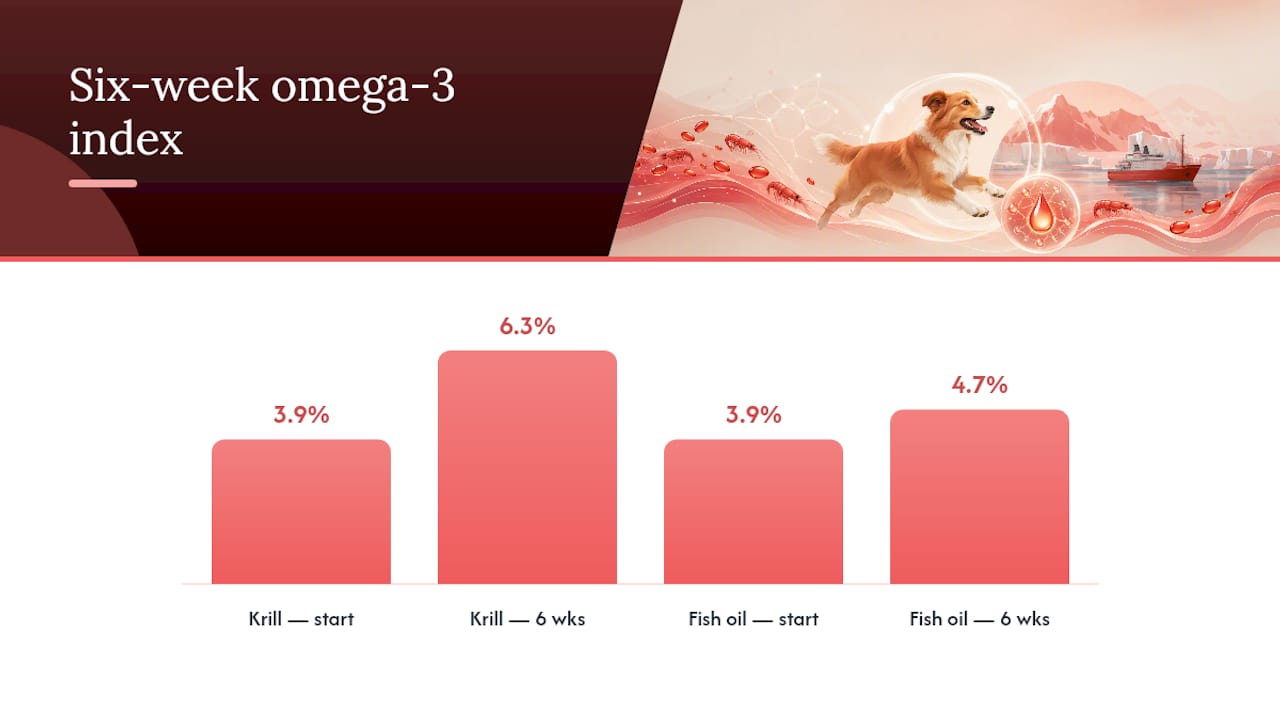
The absorption difference isn't theoretical. A controlled trial in Alaskan Huskies found that dogs given krill meal saw their omega-3 index rise from 3.9% to 6.3% over six weeks, compared with a rise to only 4.7% in dogs given fish oil, a statistically significant gap (p<0.001). The omega-3 index measures how much EPA and DHA actually gets incorporated into red blood cell membranes, which is a better proxy for real tissue-level benefit than simply how many milligrams a label promises. A separate six-week study found the same pattern: krill meal produced a larger EPA increase than fish oil at a comparable dose. The reason traces back to chemistry. Krill's omega-3s are bound to phospholipids, the same fat structure that makes up cell membranes, so the body incorporates them more readily than the triglyceride-bound omega-3s in standard fish oil.
Astaxanthin is the other differentiator. This natural pigment protects the omega-3 molecules from oxidizing before they're absorbed, and it contributes its own antioxidant activity once inside the body. Fish oil has no equivalent built in, which is part of why fish oil products go rancid faster and need more preservative support.
Where does krill oil lose? Cost per unit of active ingredient. Krill oil capsules typically deliver less EPA+DHA per capsule than concentrated fish oil, because krill oil runs 30 to 40% omega-3 content by weight versus 60% or higher in triple-strength fish oil concentrates. For a 70-pound dog needing a therapeutic dose for chronic arthritis, that difference can mean four or five krill capsules a day versus one fish oil softgel, and the price gap adds up fast.
A few other practical points worth weighing:
- Krill oil tends to produce fewer "fishy burps," a real palatability win for dogs and their owners alike.
- Fish oil sourced from smaller species (sardines, anchovies) carries lower mercury risk than oil from large predatory fish, and reputable krill products carry similarly low contaminant profiles.
- Sustainability claims deserve scrutiny either way. Antarctic krill fisheries operate under quota systems set by the Convention on the Conservation of Antarctic Marine Living Resources, and a product citing CCAMLR compliance or MSC certification is making a checkable claim, not a vague one.
If your dog needs a modest daily maintenance dose and you value absorption and antioxidant support, krill oil earns its higher price. If you're managing a large-breed dog with a high therapeutic EPA+DHA target, concentrated fish oil usually makes more financial sense.
How Much Krill Oil Should You Give Your Dog?
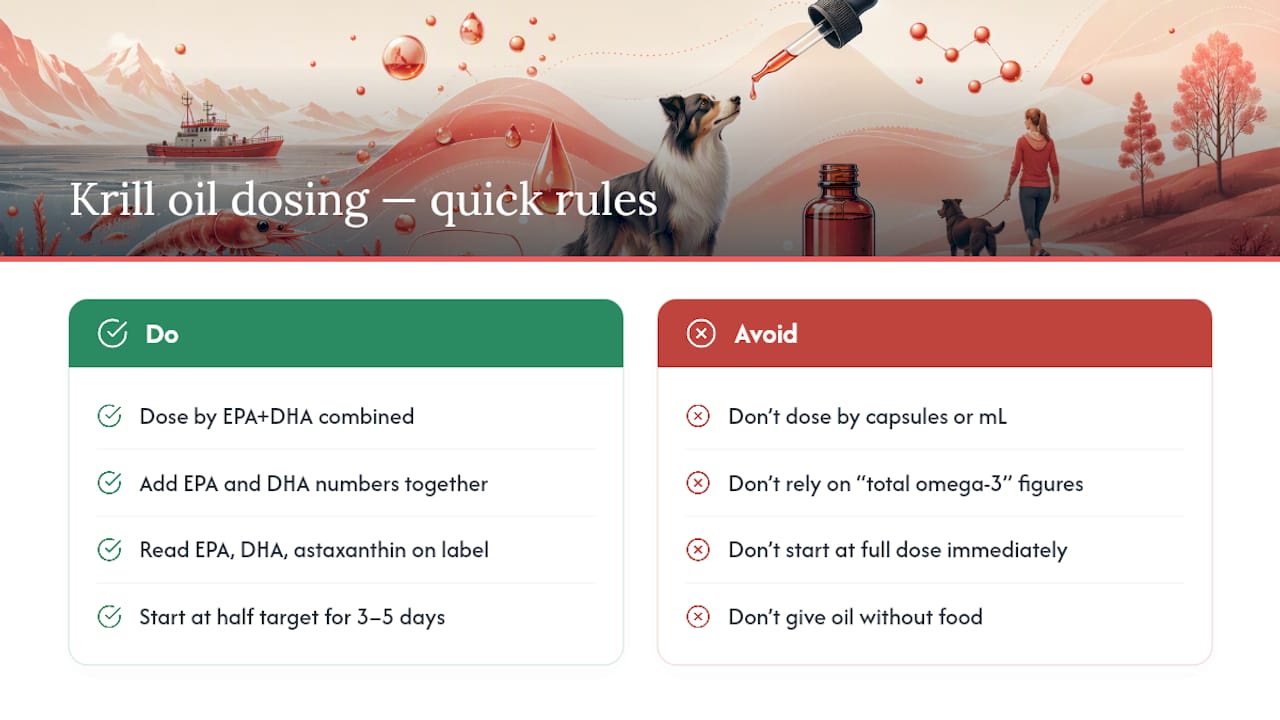
Dose by EPA+DHA content, not by the number of capsules or milliliters of oil. Every reputable krill oil label states EPA and DHA amounts per serving separately from the total oil volume, and that combined number is what determines the actual dose your dog is getting.
General maintenance dosing for EPA+DHA is often guided by the dog's weight, with therapeutic doses for conditions like arthritis set and monitored by a veterinarian due to risk factors. Small dogs need a modest amount daily, medium dogs more, and large dogs the highest amounts to maintain omega-3 levels. The cost-per-dose advantage shifts toward concentrated fish oil as dose requirements increase.
Read the label closely before you calculate anything. Look for three numbers specifically: EPA content per serving, DHA content per serving, and astaxanthin content (usually listed in micrograms). Add EPA and DHA together for your dosing math. Ignore any "total omega-3" figure that lumps in less-active omega-3 fatty acids like ALA, since that number inflates the apparent dose without delivering the same benefit.
Start low. Give roughly half the target maintenance dose for the first three to five days, then ramp to the full target over one to two weeks. Always give krill oil with a meal, since fat-soluble supplements absorb better with food and this cuts down on the loose stool some dogs get when starting any new oil supplement.
Pro Tip: Split the daily dose into two smaller servings, morning and evening, rather than one large dose. It reduces GI upset in sensitive dogs and keeps blood omega-3 levels more stable throughout the day.
Escalate toward therapeutic dosing, and involve your veterinarian directly, if your dog has diagnosed arthritis, a cardiac condition, or is already taking other medications. This is also the point where dosing calculators built for other supplements, like the weight-based approach used for MCT oil, can help you think through the math, even though the target compounds differ.
Is Krill Oil Safe for Dogs? Risks and Interactions
Krill oil is safe for most dogs at appropriate doses, but it carries three risks worth taking seriously: shellfish allergy, bleeding risk, and pancreatitis in fat-sensitive dogs.
Shellfish allergy is the most direct concern, since krill are crustaceans and structurally similar to shrimp. Dogs with a known shellfish or shrimp sensitivity can show cross-reactive symptoms: facial swelling, hives, intense itching, vomiting, or in rare severe cases, difficulty breathing. If your dog has never had shellfish before, introduce krill oil at a small fraction of the target dose and watch for any reaction over the first 24 to 48 hours before continuing.
Bleeding risk comes from the same anti-inflammatory mechanism that makes omega-3s useful. EPA and DHA reduce platelet aggregation, which is generally beneficial for cardiovascular and joint health but becomes a real concern in dogs on anticoagulant or antiplatelet medications, or in the two weeks before any scheduled surgery. If your dog takes a blood thinner, or has a clotting disorder, tell your vet before adding krill oil, and watch for unusual bruising, prolonged bleeding from minor cuts, or blood in stool.
Pancreatitis risk applies to any high-fat supplement, krill oil included. Dogs with a history of pancreatitis, or breeds predisposed to it (Miniature Schnauzers, Yorkshire Terriers), should only start a fat-based supplement under veterinary guidance, and dosing should stay conservative regardless of therapeutic targets suggested elsewhere.
An 8-week feeding trial in dogs also documented a meaningful upside relevant to safety: krill oil supplementation was tied to higher IgG and lower inflammatory markers like TNF-alpha and IL-1beta, suggesting a supported immune system rather than a stressed one, which is reassuring for otherwise healthy dogs starting supplementation.
Quality risks matter as much as biological ones. Oxidized fish and krill oils can cause GI upset on their own and deliver less active EPA/DHA than the label claims. A certificate of analysis (COA) that checks oxidation markers, specifically peroxide value and anisidine value, along with contaminant screens for heavy metals, is the only real way to confirm a product hasn't gone rancid before it reached your dog.
Here's a quick monitoring checklist for the first month:
- Mild, temporary soft stool in the first few days is common and usually resolves as the dose ramps up gradually.
- Persistent vomiting, refusal to eat, or diarrhea lasting more than 48 hours warrants a pause and a call to your vet.
- Any swelling, hives, or breathing changes mean stop immediately and seek veterinary care, since this could signal an allergic reaction.
- Unusual bruising or bleeding that doesn't stop normally should be reported right away, especially in dogs on other medications.
How to Choose a High-Quality Krill Oil for Your Dog
The label should tell you exactly how much EPA, DHA, and astaxanthin your dog gets per serving, not just a vague "omega-3" total. If a product only lists total oil volume or a combined omega-3 figure without breaking out EPA and DHA separately, that's a red flag worth skipping past.
A real certificate of analysis (COA) is the single best tool for verifying quality before you buy. A trustworthy COA shows purity testing, oxidation markers (peroxide and anisidine values), and screening for heavy metals and other contaminants. Reputable brands make this available on request or post it directly on their product page. If a company won't produce one, that tells you something on its own.
Third-party accreditation adds another layer of confidence. Look for products manufactured under National Animal Supplement Council (NASC) guidelines, or tested by an independent lab unaffiliated with the manufacturer. Sustainability claims deserve the same scrutiny: krill sourced from fisheries operating under CCAMLR quota management, or carrying Marine Stewardship Council certification, are backed by an actual regulatory framework, not just a green label.
Format matters more than most owners expect:
- Liquid krill oil offers the most precise weight-based dosing and works well for small dogs or households with multiple pets needing different amounts.
- Softgel capsules are convenient and mess-free, though large dogs may need several capsules daily to hit a therapeutic target.
- Krill oil chews improve palatability for finicky dogs, but check the ingredient list for added sugars or fillers that dilute the actual EPA+DHA content per treat.
- Capsule size matters for small breeds specifically. A capsule sized for a Labrador is genuinely hard for a Chihuahua to manage whole.
Run a simple cost check before buying: divide the product's price by the total EPA+DHA milligrams in the bottle, not by the number of capsules. This is the only fair way to compare a $25 bottle of 40 capsules against a $45 bottle of 60, since concentration varies wildly between brands.
Pro Tip: If sustainability and allergy safety both matter to you, prioritize CCAMLR-sourced krill oil with a published COA over a cheaper product with vague sourcing language like "wild-caught" and nothing else to back it up.
Decide based on your actual priority. If budget is the constraint, a concentrated fish oil at a lower cost-per-EPA+DHA might serve better. If your dog needs a therapeutic dose for arthritis, a proven turmeric or krill oil combination approach, discussed with your vet, may outperform either supplement alone.
How Kiblco Vets Krill Oil Picks Before Recommending Them
Krill oil recommendations go through a review process including veterinary consultation on dosing and safety claims, hands-on palatability testing, label verification against EPA/DHA/astaxanthin numbers claimed, and a review of the product's COA when available.
That process catches problems marketing copy tends to hide. The most common failure modes we see: oxidized oil that smells noticeably "off" despite fresh packaging dates, EPA+DHA totals that don't match what's stated when checked against independent lab data, and chews padded with added sugars or fillers that dilute the active dose per treat. A product that fails any one of these doesn't make our recommendations, regardless of how polished its marketing looks.
The review process cross-checks supplement claims against peer-reviewed veterinary research and flags any gap between label promises and independent testing results.
The same checklist works for readers doing their own homework:
- Request the COA directly from the manufacturer if it isn't posted publicly.
- Compare the EPA+DHA number on the label against the price to calculate a real cost-per-dose.
- Check for NASC participation or third-party lab testing as a baseline trust signal.
- Watch for consistent smell and texture over the life of the bottle. A sudden fishy or rancid smell partway through means the oil has started to oxidize.
You don't need a lab to apply these standards. You just need to ask the right questions before you buy, the same ones we ask before we recommend anything.
When We Actually Recommend Krill Oil
Krill oil earns its place for a specific type of dog owner, not every dog owner. It's the right call for picky eaters who reject the smell of standard fish oil, for dogs with malabsorption or chronic GI disease where every milligram of absorbed omega-3 counts more, and for owners who specifically want astaxanthin's antioxidant contribution or care about verifiable sustainability sourcing.
Where I'd push back on the hype: if your dog is a large breed needing a high therapeutic dose for chronic arthritis, concentrated fish oil almost always wins on cost without meaningfully sacrificing outcomes. The absorption advantage krill oil offers is real and well documented, but it doesn't erase basic math when you need 1,200 milligrams of EPA+DHA a day for months on end.
One more thing worth saying plainly: this article contains affiliate links, and Kiblco earns a commission on qualifying purchases made through them. That doesn't change what we recommend. For any therapeutic dosing decision, especially around cardiac disease or existing medications, talk to your vet before you commit to a regimen.
— Chris
Where to Find Vetted Krill Oil Picks
Kiblco's Dog Health category exists because sorting through krill oil brands on your own means wading through marketing claims with no easy way to check them. Every supplement listed there has gone through label verification against actual EPA, DHA, and astaxanthin content, plus a review of available COA data, so you're not starting from zero.

Before you buy anything, run through three checks: confirm the EPA+DHA number per serving matches what you need for your dog's weight, ask for a COA if one isn't posted, and start at a lower dose than the label's maximum for the first week regardless of how healthy your dog seems. If you're working toward a therapeutic dose for arthritis or a diagnosed condition, loop your vet in before you scale up. Browse the Dog Health picks to see which krill oil and joint supplement options have already cleared that bar.
This article is general information, not a substitute for advice from a qualified doctor. Consult a qualified healthcare professional about your own circumstances before acting on anything here.
Sources
- Effect of krill meal vs fish oil on omega-3 index in dogs (Alaskan Huskies trial)
- Effects of supplementation with krill oil on blood parameters, hair quality, and fecal microbiota in male beagle dogs
- Six-week krill meal vs fish oil study: krill meal increases omega-3 index in dogs
- CCAMLR and Antarctic marine living resources – British Antarctic Survey
FAQ
Is Krill Oil Good for Dogs?
Yes, for most healthy dogs krill oil is a safe and effective source of EPA and DHA, with the added benefit of astaxanthin's antioxidant support. Dogs with a shellfish allergy or those on blood-thinning medication need veterinary guidance before starting it.
Which Is Better for Dogs, Salmon Oil or Krill Oil?
Krill oil generally wins on absorption efficiency, raising the omega-3 index more effectively per gram thanks to its phospholipid structure, while salmon and other fish oils usually win on cost per milligram of EPA+DHA at high doses. The better choice depends on your dog's needs and your budget rather than one oil being universally superior.
What Are the Cons of Krill Oil for Dogs?
The main downsides are higher cost per milligram of active EPA+DHA compared to concentrated fish oil, a shellfish allergy risk since krill are crustaceans, and an increased bleeding risk for dogs on anticoagulant medications. Quality also varies widely between brands, which makes checking for a COA important.
How Much Krill Oil Can I Give My Dog?
Dosing for EPA and DHA is typically guided by the dog's weight, with higher therapeutic doses set and monitored by a veterinarian. Always calculate from the label's EPA and DHA numbers rather than total oil volume.