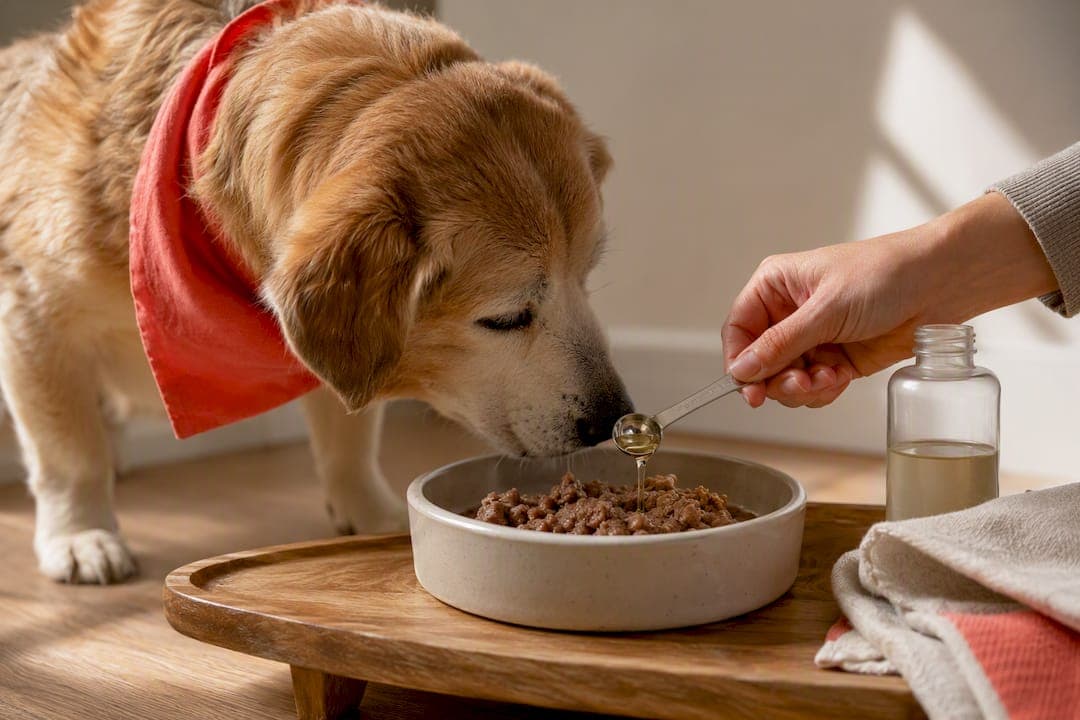
MCT oil can genuinely help some dogs, particularly with cognitive decline in seniors and as an add-on for epilepsy that isn't fully controlled by medication. It is not a cure and not a substitute for prescribed antiseizure drugs. Avoid it in dogs with severe liver disease, use caution with any liver or metabolic condition, and always loop in your veterinarian before starting, especially if your dog takes other medications.
TL;DR:
- MCT oil can reduce seizure frequency and improve cognitive function in dogs, but benefits vary depending on individual response and dosage.
- The key active component, C8 fatty acid, converts to ketones faster and is more effective for neurological support than C10 or coconut oil.
- Starting doses should be low, gradually increased over weeks, with close veterinary monitoring to prevent gastrointestinal upset or metabolic issues.
- Dogs with severe liver disease or history of ketoacidosis should avoid MCT oil due to risk of metabolic overload.
- Product selection matters; choose formulations that disclose fatty acid content and avoid fillers to ensure therapeutic benefit.
Table of Contents
- What Is MCT Oil for Dogs, and How Does It Work?
- Does MCT Oil Actually Help Dogs With Seizures or Cognitive Decline?
- Is MCT Oil Safe for Dogs? Side Effects and Warning Signs
- How Do You Give a Dog MCT Oil the Right Way?
- What Should You Look for When Choosing an MCT Oil Product?
- Is Coconut Oil the Same as MCT Oil for Dogs?
- What Do the Key Studies Actually Show?
- Perspective: What We Look For in an MCT Supplement
- Where to Find Kiblco's Vetted MCT Picks
- Sources
What Is MCT Oil for Dogs, and How Does It Work?
MCT stands for medium-chain triglyceride. Regular dietary fats, the long-chain triglycerides in most kibble and treats, require bile and a longer digestive process before the body can use them. MCTs skip most of that. They get absorbed almost directly into the bloodstream and travel straight to the liver, where they're converted into ketones far faster than long-chain fats ever could be.
Two specific fatty acids do most of the work: caprylic acid (C8) and capric acid (C10). Products vary widely in their C8/C10 ratio, and that ratio matters more than most labels let on. C8 in particular converts to ketones more efficiently and is the component most closely tied to the brain-fuel effect researchers care about.
Here's why that matters biologically. A dog's brain normally runs on glucose. When glucose metabolism falters, whether from aging, seizure activity, or a neurological condition, ketone bodies can step in as an alternative fuel source. That's the whole rationale behind MCT feeding studies showing improved cognition in senior dogs: raise circulating ketones, give the aging or overstressed brain a second energy pathway, and some dogs respond with better mental sharpness.
For epilepsy, the theory runs parallel. Ketones may help stabilize neuronal activity in ways that reduce seizure threshold sensitivity, though the exact mechanism in dogs isn't fully mapped yet.
A few basics worth keeping straight:
- MCTs are metabolized primarily in the liver, not stored as body fat the way long-chain fats often are.
- C8 (caprylic acid) converts to ketones faster than C10 (capric acid), which is why product composition matters for therapeutic use.
- Ketone production from MCTs happens within hours of ingestion, not days.
- The brain-fuel effect is temporary and dose-dependent, which is why consistent daily dosing matters more than occasional use.
Does MCT Oil Actually Help Dogs With Seizures or Cognitive Decline?
The strongest evidence right now points to two areas: seizure frequency in dogs with idiopathic epilepsy and cognitive function in aging dogs. Neither is a slam dunk cure, but both show real, measurable signal in controlled research.
A prospective clinical trial found that dogs with idiopathic epilepsy who added MCT oil to their diet showed reduced mean seizure frequency and fewer seizure days compared to their own baseline, according to research published on dietary MCT supplementation in epileptic dogs. This was a non-blinded trial, and not every dog in the study responded the same way. Some saw meaningful drops in seizure activity; others saw little change. The researchers positioned MCT oil as an adjunct to existing antiseizure medication, not a replacement.
That distinction runs through the entire epilepsy conversation. Reviews synthesizing the mechanistic and clinical evidence describe MCTs as promising adjuncts for epilepsy and cognitive dysfunction, while also flagging that larger trials are still needed to nail down which dogs respond best and at what dose.
On the cognition side, feeding trials tracking metabolomic changes found that MCT diets shift the serum lipid profile and raise ketone levels in ways tied to measurable cognitive improvement in senior dogs, per the same lipidome and cognition research. Dogs on MCT-supplemented diets performed better on cognitive testing endpoints than dogs on standard diets, which lines up with decades-old human research on ketones and brain aging finally getting a canine parallel.
Beyond epilepsy and cognition, owners report other changes, though the evidence backing these is thinner:
- Digestive comfort: some dogs on MCT oil show steadier stools, though this is anecdotal rather than trial-confirmed.
- Coat and skin quality: reported improvements exist, but no controlled canine trial has isolated MCT oil as the cause.
- Energy levels: some owners note more alertness, likely tied to the same ketone mechanism behind cognitive benefits, though it hasn't been formally measured as a standalone endpoint.
Here's the framing that matters most: MCT oil is an adjunct therapy for epilepsy, not a monotherapy. No credible veterinary source suggests dropping prescribed antiseizure medication in favor of MCT oil alone. The trials that show benefit all layered MCT supplementation on top of existing treatment, and the dogs that seemed to benefit most were already on a stable medication plan when MCT oil was added.
Is MCT Oil Safe for Dogs? Side Effects and Warning Signs
MCT oil is broadly safe for healthy dogs, but "safe" comes with real conditions attached, and skipping them is where owners run into trouble.
The clearest red line: avoid MCT oil in dogs with severe liver disease. Because MCTs are metabolized almost entirely through the liver, a compromised liver may struggle to process the sudden ketone load, according to veterinary guidance on MCT oil. Dogs with mild to moderate liver conditions may still tolerate MCT oil, but only under veterinary supervision with appropriate monitoring. Dogs with diabetic ketoacidosis (DKA) or a history of it should also avoid MCT oil, since adding an exogenous ketone source to a dog already struggling with ketone regulation can worsen the metabolic picture rather than help it.
Side effects in otherwise healthy dogs tend to be mild and short-lived. A short-term tolerability trial found MCT oil to be palatable and well tolerated in healthy dogs, with no significant drop in food intake and only occasional, transient increases in flatulence or grass-eating in a minority of dogs. The most commonly reported issues across studies are:
- Loose stool or diarrhea, usually within the first few days of introduction
- Increased gas
- Temporary appetite changes
- Occasional vomiting if the dose jumps too fast
These almost always resolve once the dose is reduced or the introduction is slowed down. A 90-day feeding study found no toxic effects at inclusion levels up to 15% MCT, though very high inclusion levels caused palatability problems and some non-pathological changes in blood chemistry, a good reminder that more isn't automatically better.
Medication interactions deserve their own mention. Veterinarians caution against treating MCT oil as a harmless nutritional topper, since it changes metabolism and ketone levels in ways that can interact with antiseizure drugs, cardiac medications, or existing hepatic conditions. Any dog on prescription medication needs veterinary input before starting MCT oil, full stop.
Pro Tip: Keep a simple log for the first two weeks: stool consistency, appetite, energy level, and dose given. If you're working with your vet to titrate toward a therapeutic dose for seizures, that log becomes the data point that tells you whether it's actually working, not just whether your dog tolerates it.
Watch for these signals that warrant a call to your veterinarian: persistent vomiting, diarrhea lasting more than two to three days, lethargy, loss of appetite lasting more than a day, or any signs of confusion or worsening neurological symptoms. A vet may want to run baseline liver enzyme panels before starting, particularly for older dogs or those with any history of liver or pancreatic issues, and repeat testing a few weeks into supplementation if the dose is being pushed toward a therapeutic range.
How Do You Give a Dog MCT Oil the Right Way?
MCT oil for dogs comes in three main forms: straight liquid oil sold as a supplement, veterinary-formulated MCT products designed for specific conditions, and therapeutic prescription diets with MCTs already built into the formula. Which one makes sense depends on why you're using it. A senior dog getting general cognitive support might do fine with a quality liquid supplement. A dog with poorly controlled epilepsy is usually better served by a veterinary-formulated product or a therapeutic diet with a known, consistent C8/C10 ratio.
Introduction needs to be slow, no exceptions. Practitioners consistently emphasize gradual titration because even small, fast increases in MCT intake commonly trigger transient GI upset. The empirical approach used in practice: start at a fraction of the eventual target dose, hold it there for several days, then step up gradually.
- Start tiny. A commonly cited practical starting point is roughly a quarter teaspoon per 10 pounds of body weight, mixed into a meal, per VCA's dosing guidance. This is a starting reference, not a target.
- Hold and observe. Keep the dog at that starting dose for three to five days, watching stool quality and appetite before increasing anything.
- Titrate upward slowly. If tolerated well, increase gradually toward the target your veterinarian sets, often expressed as a percentage of total dietary energy rather than a fixed teaspoon amount.
- Divide the dose. Split the daily amount across two meals instead of one large dose. This alone prevents a lot of the diarrhea owners report.
- Reassess at the right interval. Give it time before judging results.
That last step trips up a lot of owners who quit too early. Therapeutic diets and clinical trials targeting seizure reduction or cognitive benefit typically evaluate outcomes over several weeks to a few months, not days. Expecting a visible change in the first week sets you up for disappointment even when the product is working.
Palatability is rarely the dealbreaker people expect. Most dogs accept MCT oil without a fight, but if yours turns up its nose, try warming the food slightly to release more aroma, mixing the oil into wet food rather than dry kibble, or switching to a veterinary-formulated product designed specifically for taste acceptance.
Pro Tip: If your dog is finicky, don't drizzle MCT oil on top of food where it pools and tastes strongest. Stir it in thoroughly so every bite carries a smaller, more consistent amount. It masks the oily texture that turns picky eaters off.
What Should You Look for When Choosing an MCT Oil Product?
Not every bottle labeled "MCT oil" is built the same way, and the differences matter more for therapeutic use than for general wellness.
Check the label for actual C8/C10 content, not just the phrase "MCT oil." Some products lean heavily on lapric acid or other medium-chain fats that don't convert to ketones as efficiently as caprylic and capric acid do. If a bottle doesn't disclose the fatty acid breakdown, that's a gap worth questioning before you buy.
Watch the wording closely. "MCT oil" and "coconut oil" are not interchangeable claims, even though coconut oil contains some MCTs. A product marketed loosely with coconut-derived language may have a much lower concentration of the C8/C10 fractions that actually matter for seizure or cognitive support.
A few more things worth scanning for:
- No unnecessary fillers. Palm oil, added flavorings, or vague "proprietary blend" language are red flags for a supplement that should be simple.
- Third-party testing. Products that disclose independent lab verification of fatty acid content carry more weight than those that don't.
- Clear dosing instructions. A trustworthy product tells you exactly how much oil equals how many grams of MCT, not just "give a spoonful."
- Transparent sourcing. Ingredient lists that specify the oil source (coconut-derived, palm kernel-derived) let you judge quality instead of guessing.
For epilepsy or cognitive dysfunction specifically, a veterinary-formulated supplement or a therapeutic prescription diet is usually the better call over a generic topper. Clinical benefit in the epilepsy trials tracked closely with specific compositions, higher C8 proportions in particular, and consumer products vary enough in that ratio that you can't assume equivalence between brands. If your dog's condition is significant enough to warrant MCT therapy in the first place, that's exactly the situation where a consistent, veterinarian-guided formulation earns its higher price tag.
Is Coconut Oil the Same as MCT Oil for Dogs?
No, and this is one of the most common mix-ups owners make. Coconut oil does contain MCTs, but typically only around 50 to 60% of its fat content qualifies as medium-chain, and a good portion of that is lauric acid, which behaves more like a long-chain fat metabolically and doesn't convert to ketones the way C8 and C10 do.
That difference matters a lot for neurological use and barely matters at all for cosmetic use. A little coconut oil for coat shine or minor skin dryness is a low-stakes decision either way. But if you're trying to influence seizure frequency or cognitive function, swapping in coconut oil instead of a purified MCT product is very likely to underdeliver, since you're diluting the active C8/C10 fraction with fats that don't do the same job.
The practical rule:
- Use coconut oil for coat, skin, or general wellness if you want, no real risk in modest amounts.
- Use a purified, veterinary-grade MCT oil or therapeutic diet when the goal is neurological or cognitive therapy.
- Don't assume one can substitute for the other just because both come from coconuts.
What Do the Key Studies Actually Show?
Strip away the marketing, and the research on MCT oil for dogs breaks into a handful of studies that keep getting cited, each with a specific job to do and specific limits worth knowing.
The epilepsy field trial tracked dogs with idiopathic epilepsy who added MCT oil to their existing treatment and found reduced seizure frequency and fewer seizure days relative to baseline. It was non-blinded and prospective, meaning no placebo control, which limits how confidently you can rule out other factors. Still, it's the most direct evidence linking MCT supplementation to seizure reduction in dogs.
The cognition and lipidome study fed senior dogs an MCT-enriched diet and tracked both metabolic markers and cognitive testing outcomes, finding improved performance alongside the expected shift in ketone and lipid profiles.
The palatability trial wasn't testing therapeutic benefit at all. It measured whether healthy dogs would actually eat and tolerate MCT oil day after day, and found strong acceptance with minimal side effects, which matters enormously for real-world compliance.
The 90-day toxicity study established that inclusion levels up to 15% of feed didn't produce toxic effects, giving a rough upper-bound safety reference, though it also flagged palatability breakdown at very high doses.
Quick snapshot of where the research stands:
- Epilepsy: Adjunct benefit shown in a non-blinded field trial; effect varies by dog, larger controlled trials still needed.
- Cognition: Measurable improvement in senior dogs tied to ketone and lipid shifts in controlled feeding studies.
- Safety ceiling: No toxicity found up to 15% dietary inclusion in a 90-day study, with palatability limits above that.
- Tolerability: High acceptance and minimal side effects in short-term trials on healthy dogs.
The honest gap in this research: nobody has yet run a large, blinded, placebo-controlled trial that pins down exact dosing thresholds for seizure response across different dog breeds and sizes. Until that exists, dosing recommendations remain practical estimates refined by individual veterinarians rather than a single settled number, which is exactly why working with your vet on titration matters more than following a generic chart.
Perspective: What We Look For in an MCT Supplement
Marketing claims on supplement bottles rarely match what a dog actually experiences, which is why Evaluation relies on hands-on, vet-informed testing rather than label copy. When we evaluate an MCT product, tolerability and palatability come first, since a supplement your dog refuses to eat delivers zero benefit regardless of what's in the bottle.
We also weigh usability: how clear the dosing instructions are, whether the C8/C10 ratio is disclosed, and whether measurable, real-world signals (stool quality, appetite, energy) shift over a testing window. Those endpoints echo what the clinical literature already tracks, just applied to actual products on actual shelves.
Where to Find Kiblco's Vetted MCT Picks
Sorting through supplement marketing claims is exhausting when your dog's comfort is on the line. This site helps cut through that by testing products hands-on and pairing the results with veterinary input, so what you read reflects how a dog actually responded, not just what the label promises.

If you're weighing MCT oil against other liver-support or cognitive supplements, our breakdown of milk thistle for dogs covers a related angle on liver safety worth reading before you commit to anything. And if tolerability and gut response are a concern with any new supplement, our look at vet-backed prebiotic testing shows how we measure real acceptance rates rather than relying on marketing copy.
Head to Kiblco to browse full reviews and find a tested MCT oil pick that matches your dog's specific needs, whether that's cognitive support for a senior dog or an adjunct approach for epilepsy management alongside your vet's treatment plan.