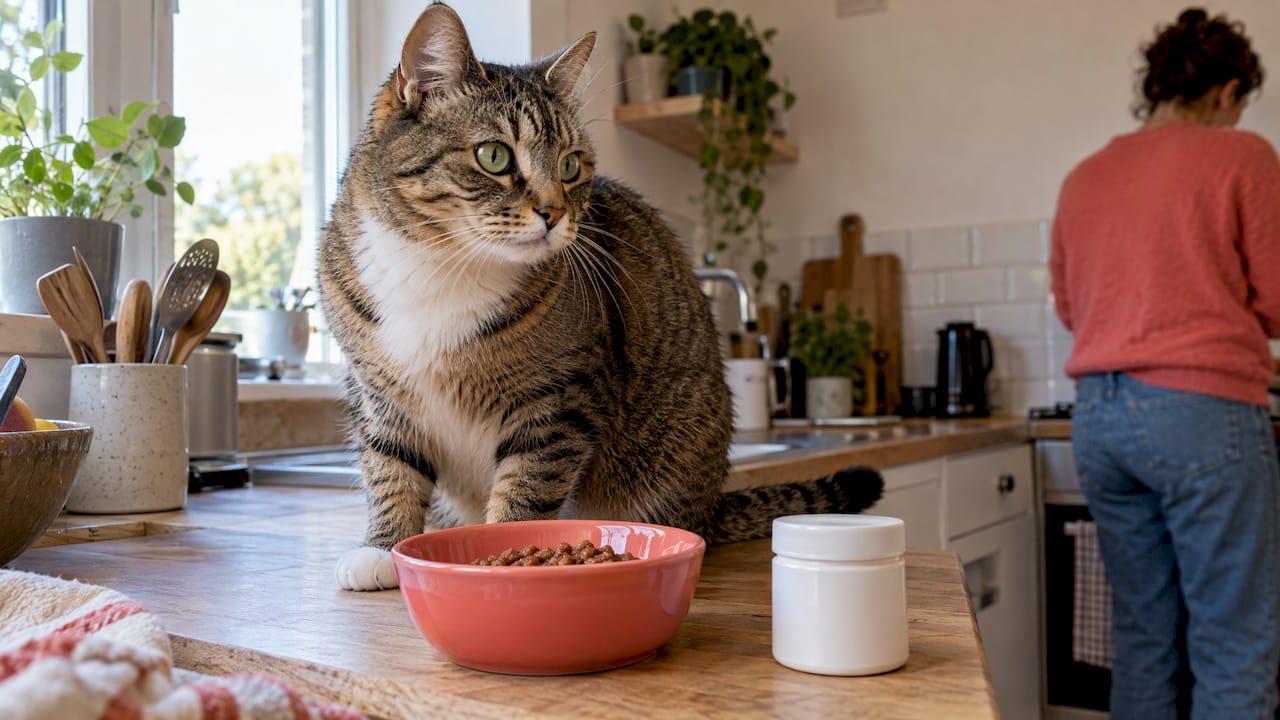
A cat liver supplement is a support product, not a treatment. Most pair SAMe or milk thistle (silybin) with antioxidants, and veterinarians use them alongside diagnosis and care, never instead of it. If your cat has stopped eating, looks yellow, or is vomiting, call your vet before you buy anything. If your vet has already suggested liver support, this guide shows you how to read the label, give it correctly and avoid the mistakes that cause trouble.
TL;DR
- Liver supplements are meant to be adjuncts to veterinary treatment, never a replacement for medical care.
- The most common ingredients are SAMe and milk thistle (silymarin/silybin). Both are widely used, but formal clinical trials in cats are very limited.
- Check the active ingredients per tablet, the coating, the directions and any medications your cat takes. Human liver products can contain ingredients that are toxic to cats.
- A cat that isn't eating for two to three days is an emergency, not a supplement question.
Table of Contents
- Signs your cat may need a vet, not a supplement
- What a liver supplement can and can't do
- The main ingredients, and what the evidence says
- Types of cat liver supplements compared
- How to read the label
- Giving it safely
- Food and habits that support the liver
- Our perspective
- Find vet-informed cat health picks
- FAQ
- Sources
Signs your cat may need a vet, not a supplement
Cats hide illness well, so liver trouble often shows up as vague changes. The MSD Veterinary Manual lists loss of appetite, vomiting, diarrhea, jaundice (yellow gums, skin or eye whites), excessive urination and thirst, and weight loss. Lethargy and behavior changes are also commonly reported.
The one to take most seriously is a cat that stops eating. Feline hepatic lipidosis, often called fatty liver, can develop when an overweight cat goes without food for two to three days. That calls for same-day veterinary attention. No powder or tablet fixes it.
Diagnosis is also not something to guess at. Vets typically use blood tests for liver enzymes and function, ultrasound, and often a biopsy or aspirate to find the cause. Elevated enzymes can come from several conditions, and the right plan depends on which one. Giving a supplement before the workup can muddy the picture and delay the real treatment.

What a liver supplement can and can't do
Liver supplements are sold as "hepatoprotectants." They aim to give liver cells antioxidant support while the underlying problem is managed. They do not cure fatty liver, cholangitis, or any other disease, and they don't replace food, fluids, medication or monitoring.
For hepatic lipidosis in particular, veterinary specialists note that antioxidants are indicated, but adequate nutrition is essential, and a feeding tube should be placed if the cat isn't eating enough. Calories come first. The supplement is a small piece of a larger plan.
Diet matters too. Veterinary nutrition guidance from Texas A&M says cats should not be severely protein-restricted or fed a non-meat diet when they have liver disease. That is the opposite of some advice written for dogs, so don't carry dog routines over to your cat.
The main ingredients, and what the evidence says
SAMe
SAMe (S-adenosylmethionine) is a precursor to glutathione, an essential antioxidant for liver cells. Vets reach for it often. Veterinary practitioners also note that SAMe and silymarin are widely considered safe in cats with no commonly known contraindications.
Two points are worth knowing. In the U.S., SAMe is regulated as a nutritional supplement rather than a drug, so it doesn't go through the same efficacy testing as a licensed medication. That makes product quality and brand reliability matter more, and it is a good reason to buy what your vet recommends.
Milk thistle (silymarin and silybin)
Silymarin from milk thistle is believed to have antioxidant, anti-inflammatory and antifibrotic properties, though evidence for efficacy in dogs and cats is very limited. Many vet-formulated products bind silybin to phosphatidylcholine, a form designed to be easier for the body to absorb. If you're comparing labels, look for the silybin amount, not just the words "milk thistle."
We cover the same herb for the other species in our guide to milk thistle for dogs. The cat picture is similar on ingredients, but cats are more sensitive to many botanicals, so cat products should be cat-labeled.
Antioxidant add-ons
You will see vitamin E, zinc, bioflavonoids, choline and turmeric in various blends. These are support ingredients, and their quality depends on the formula. One hard rule: ingredients common in human liver products, such as alpha-lipoic acid, are toxic to cats. Never give your cat a human liver or detox supplement.
Types of cat liver supplements compared
The table below describes the product styles you'll meet, using the manufacturers' own specifications. We describe what each is designed to do, not a guarantee of results.
| Style | Key ingredients | Form and dosing notes |
|---|---|---|
| SAMe plus silybin (Denamarin type) | SAMe 90 mg and silybin-phosphatidylcholine complex 31 mg (9 mg silybin A+B) per tablet | Enteric-coated tablet; manufacturer directs 1 tablet daily up to 12 lb, twice daily above 12 lb, on an empty stomach at least 1 hour before a meal; sold through veterinarians |
| Silybin plus antioxidants (ProHepatic type) | Silybin-phosphatidylcholine complex 180 mg, bioflavanol 40 mg and zinc 4 mg per tablet, per the retailer listing | Chewable tablet that can be crumbled into food |
| Whole-food glandular formula (Feline Hepatic Support type) | Bovine liver, kidney and spleen ingredients, L-glutamine, amla, milk thistle extract standardized to 80% silymarins, choline, inositol | 90-tablet bottle; one tablet twice daily or as directed, whole, crushed or mixed with food |
| Liquid herbal blend (liver kit type) | Milk thistle and turmeric | Liquid with droppers; can go in the cheek pocket or in food; multi-month kits are common |
The differences matter in practice. The enteric-coated SAMe tablets are the most clinical style and need an empty stomach. The chewable and liquid styles are easier for fussy cats, but you should still confirm the ingredients with your vet, especially the herbal and glandular ones.
How to read the label
Use this checklist before you add anything to the cart.
- Cat-labeled, with amounts per tablet. The active ingredients should be listed with milligrams, not "proprietary blend" alone. Denamarin for cats and small dogs, for example, lists SAMe and silybin amounts per tablet.
- Coating and packaging. SAMe is sensitive to air and moisture and comes in blister packs. Veterinary-approved SAMe products must be enteric-coated to protect the active ingredient from stomach acid. Discard broken tablets rather than dosing from the pieces.
- Directions that match your cat's weight. Dosing is by size, so follow your vet's number over any general label.
- No human-product ingredients. Skip anything containing alpha-lipoic acid, and anything not made for cats.
- Count and cost per month. Compare per-day cost, not bottle price. A 30-count box of a once-daily tablet is a month; a twice-daily product halves that. Prices change often, so check the current listing at your retailer.
- Availability. Some products are available only through a veterinarian. That is a good thing: your vet is already part of the plan.
Giving it safely
Timing with meals
SAMe works best on an empty stomach. The usual guidance is to give it at least one hour before or two hours after feeding. That sits awkwardly with a cat who has liver trouble and a shaky appetite, so ask your vet how to time it. If your cat eats very little, getting calories in remains the priority.
Side effects and interactions
SAMe may occasionally cause vomiting. Combining it with tramadol, selegiline, fluoxetine, clomipramine, amitriptyline or an amitraz-containing product could, in theory, cause serotonin syndrome. The risk is described as theoretical, but it is why you should give your vet and pharmacist a full list of everything your cat takes, including flea and tick products and other supplements.
Stop and call your vet if your cat vomits repeatedly, turns more lethargic, or seems to worsen after starting something new.
Pilling tips for picky cats
If a tablet can be crumbled (check the label first, because enteric-coated SAMe tablets should stay whole), mix it with a small amount of a strongly flavored food. A pill pocket treat works for whole tablets. For liquids, a dropper into the cheek pocket is quick. Keep sessions calm and short, since a stressed cat may stop eating, which is what you're trying to avoid.

Food and habits that support the liver
Supplements work around the edges. The foundation is steady calories, hydration and a stable diet. Cats can get into trouble when they refuse a new food and then stop eating altogether, so any diet change should be gradual. Our walkthrough on switching cat food with vet steps explains how to transition slowly and lower the fatty liver risk.
Other things to keep in view:
- Weigh your cat regularly. Rapid weight loss is a warning sign, and so is rapid dieting in an overweight cat.
- Keep water fresh and accessible.
- Don't add other supplements at the same time without checking. Related guides, such as taurine for cats and MCT oil for cats, explain what each does and who should skip it. Some of them are not appropriate for cats with liver concerns.
Our perspective
We review pet products by buying them, using them in real homes and writing down what happened, including the downsides. For health products, we cross-check our picks with veterinary input before they go live.
With liver support, that approach shapes our advice. The ingredient list tells you what a product is designed to do. It doesn't tell you whether a cat will accept it, whether the tablet is easy to give on an empty stomach, or whether the monthly cost is realistic. Those details decide whether a routine lasts, and that is where hands-on testing helps.
Our advice is simple. Get the diagnosis, ask your vet which ingredients make sense, then use our Cat Health reviews to compare formats, directions and real-world ease of use. We state our pros and cons plainly, we accept no payment for coverage, and we disclose our affiliate relationships, so you can shop with the full picture.
Chris
Find vet-informed cat health picks
Once you know which ingredients your vet recommends, you can compare formats and real-home results in one place. Our Cat Health reviews cover supplements for cats, with transparent pros and cons for each product.
We purchase and test products, then check health picks with veterinary experts. If you'd like to see everything else we cover, from litter to gadgets, start at the Kiblco homepage.
FAQ
Is milk thistle safe for cats with liver problems?
Veterinary practitioners generally consider silymarin safe in cats with no commonly known contraindications. Evidence that it improves liver disease in cats is limited, though. Choose a cat-labeled product and have your vet confirm the dose.
Is SAMe good for a cat's liver?
SAMe is a precursor to glutathione, an antioxidant that liver cells rely on, and vets use it often. Because it is sold as a supplement in the U.S., it hasn't been through the same efficacy testing as a drug. Give it on an empty stomach and keep the tablet whole and intact.
What are the side effects of Denamarin in cats?
The SAMe in products like Denamarin may occasionally cause vomiting. Theoretical interactions exist with serotonergic drugs such as tramadol, fluoxetine and amitriptyline, so tell your vet about every medication. Call your vet if your cat vomits repeatedly or stops eating.
What are the signs of liver problems in cats?
Watch for loss of appetite, vomiting, diarrhea, jaundice, increased thirst and urination, and weight loss. If your cat isn't eating, contact your veterinarian right away. Don't wait to see whether a supplement helps.
Can I give my cat a human liver supplement?
No. Some ingredients common in human liver products, such as alpha-lipoic acid, are toxic to cats. Use only products made for cats, and only after talking with your vet.
Sources
- Cat Liver Supplements: Evidence and Safety
- Essential Strategies for Treating Hepatic Disease (DVM360 proceedings)
- Disorders of the Liver and Gallbladder in Cats (MSD Veterinary Manual)
- Liver Disease in Cats (Hill's Pet)
- Signs and Treatment of Liver Disease in Cats (Litter-Robot)
- Diets for Pets with Liver Disease (Texas A&M)
- S-Adenosylmethionine (Veterinary Partner)
- Approach to Elevated Liver Enzymes in Cats (WSAVA 2019)
- Denamarin Coated Tablets
- S-Adenosylmethionine and Silybin (VCA Animal Hospitals)