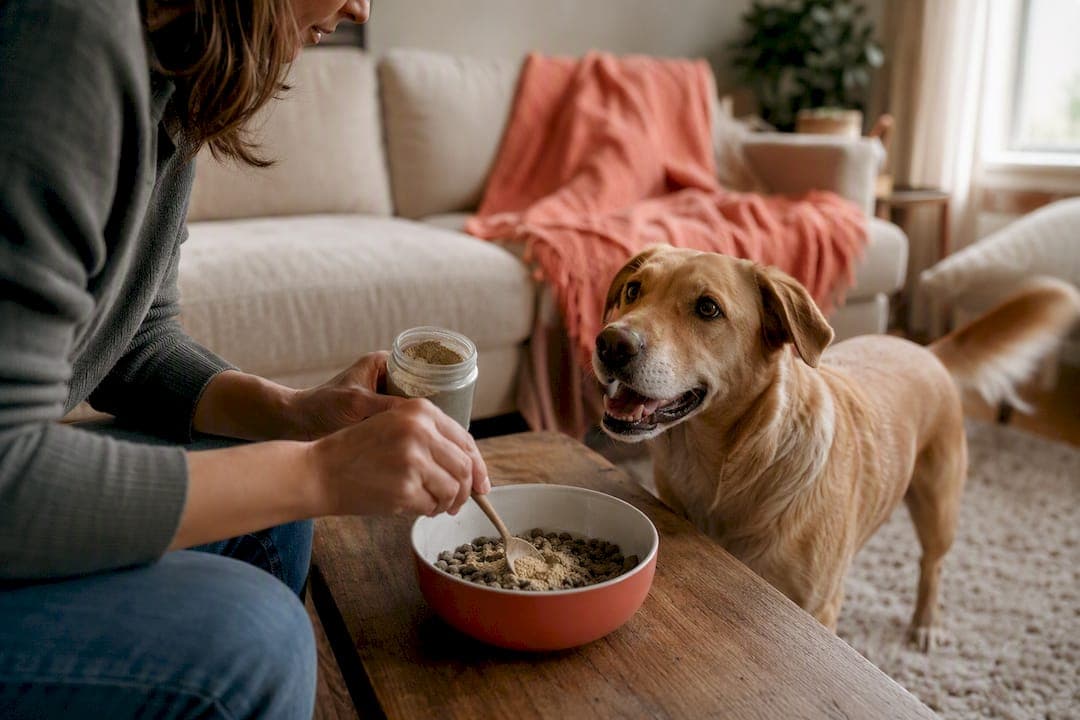
Milk thistle, the herbal extract known as silymarin, is widely used by veterinarians to support a dog's liver, but it works alongside treatment, not instead of it. It helps protect liver cells from damage and supports the organ's natural repair process. It does not reverse existing liver disease on its own.
Dosing depends on your dog's weight, and products differ wildly in how much actual silymarin they contain per serving. Bloodwork before and during use tells you whether it's actually helping.
Before you buy anything, take these steps:
- Bring your dog's full medical history and current medication list to your vet
- Bring the exact product label, including the silymarin percentage, to your appointment
- Ask about baseline liver bloodwork before starting
- Confirm the dosing plan in milligrams per kilogram, not just "one scoop"
Key Takeaways
Milk thistle can meaningfully support a dog's liver when it's dosed by weight, matched to a standardized product, and monitored with bloodwork under veterinary guidance.
| Point | Details |
|---|---|
| Not a standalone cure | Milk thistle supports liver cells but works alongside treatment, not as a replacement for it. |
| Dosing depends on label math | Convert the silymarin percentage to actual mg before calculating a mg/kg dose with your vet. |
| Working range cited in reviews | Veterinary literature commonly cites 20 to 50 mg/kg per day for standard silymarin extracts. |
| Monitor with bloodwork | Recheck ALT, ALP, and bilirubin roughly every 4 to 12 weeks to track real progress. |
| Kiblco checks quality first | Kiblco evaluates label transparency, excipient safety, and palatability before recommending a liver supplement. |
Table of Contents
- What Is Milk Thistle (Silymarin) and How Does It Work in Dogs?
- When Do Vets Recommend Milk Thistle for Dogs?
- Are There Side Effects or Drug Interactions to Watch For?
- How Much Milk Thistle Should You Give Your Dog?
- What Does the Research Actually Show?
- What Bloodwork and Follow-Up Should You Expect?
- How Do You Choose a Quality Milk Thistle Supplement?
- How Kiblco Vets Liver Supplements for Dogs
- Where to Find More Clinical Detail
- What the Research Actually Supports, and What Owners Get Wrong
- Find the Right Liver Supplement Without Guessing
- Frequently Asked Questions About Milk Thistle for Dogs
- Sources
What Is Milk Thistle (Silymarin) and How Does It Work in Dogs?
Milk thistle is a flowering plant, and silymarin is the extract taken from its seeds. Silymarin isn't one single molecule. It's a group of compounds called flavonolignans, and the most active one is silybin. Silybin is what actually does the work inside liver cells.
The mechanism is fairly well mapped out. Silybin acts as an antioxidant, mops up free radicals generated when the liver processes toxins, and helps preserve glutathione, one of the liver's own defense molecules. It also has anti-inflammatory properties and appears to stabilize hepatocyte (liver cell) membranes, which supports faster cell regeneration. Silymarin concentrates directly in liver and bile tissue, which is part of why it targets that organ so specifically rather than acting as a general supplement.
Formulation matters more than most owners realize:
- Standardized extracts (70 to 80 percent silymarin) give predictable dosing
- Silybin phospholipid complexes absorb better, sometimes allowing effective dosing at lower mg/kg
- Raw, unstandardized milk thistle powder is nearly impossible to dose accurately
When Do Vets Recommend Milk Thistle for Dogs?
Veterinarians reach for milk thistle in a handful of specific situations, and the strategy shifts depending on whether the problem is a one-time event or an ongoing condition.
- Acute toxin exposure. After ingestion of something toxic to the liver (certain mushrooms, xylitol, some medications), vets often use silymarin short-term to help limit oxidative damage while the liver clears the substance.
- Chronic hepatitis or ongoing liver disease. Dogs with diagnosed chronic liver conditions may stay on milk thistle long-term as part of a broader management plan that includes diet changes and monitoring.
- Medication-related liver stress. Drugs like phenobarbital, certain NSAIDs, and some chemotherapy agents are processed through the liver. Vets sometimes add milk thistle to help offset that metabolic burden during long courses of treatment.
- Adjunctive support during cancer treatment. Some oncology protocols include silymarin to help protect liver function while a dog undergoes chemotherapy.
In every one of these scenarios, milk thistle is a supporting player. It does not replace fluid therapy, diet management, specific antidotes, or prescription hepatic medications. Think of it as one tool that helps the liver help itself while the actual treatment plan does the heavier lifting.
Are There Side Effects or Drug Interactions to Watch For?
Most dogs tolerate milk thistle well. Short-term studies in healthy dogs have not shown major adverse effects on digestion or bloodwork, but "well tolerated" doesn't mean "risk free," and a few groups need extra caution.

Statistic Callout: Veterinary literature commonly cites a working dose range of 20 to 50 mg/kg per day for standard silymarin extracts, with lower ranges used for phospholipid-complexed formulations. That range alone is why guessing a dose from a bottle's suggested serving is risky.
Common issues to watch for:
- Mild GI upset: loose stool, gas, or reduced appetite in the first few days
- Allergic reaction in dogs sensitive to ragweed, chrysanthemums, or other plants in the Asteraceae family
- Reduced effectiveness or unpredictable dosing from low-quality, non-standardized products
Certain dogs need a vet's direct oversight before starting: pregnant or nursing females, puppies, dogs who are already critically ill, and any dog on multiple medications metabolized by the liver. Anticonvulsants like phenobarbital are a particular concern, since milk thistle can theoretically alter how the liver processes them. Always give your vet a complete list of every medication and supplement your dog takes, not just the prescription ones.
If your dog has ingested something toxic and you can't reach your vet immediately, contact the ASPCA Poison Control line or the Pet Poison Helpline right away.
How Much Milk Thistle Should You Give Your Dog?
Dosing comes down to three numbers: your dog's weight, the target mg/kg, and the product's actual silymarin percentage. Skip any one of them and you're guessing.
- Find the working range. Veterinary sources cite roughly 20 to 50 mg/kg per day of silymarin for standard extracts. Phospholipid-bound silybin formulas often work at a lower mg/kg because they absorb more efficiently.
- Check the label math. A capsule labeled "500 mg milk thistle extract, 80% silymarin" actually delivers 400 mg of silymarin, not 500. This is where most owners get the dose wrong.
- Split it up. Vets frequently recommend dividing the daily total into two or three smaller doses rather than one large dose, which tends to improve absorption and reduce GI upset.
- Match the form to your dog. Chewables work for most dogs; liquids offer more precise dose adjustment for small breeds; enteric-coated tablets are useful for dogs with sensitive stomachs.
For a 30-pound dog (about 13.6 kg), a middle-of-range dose of 30 mg/kg works out to roughly 408 mg of silymarin per day, split into two doses of around 200 mg each. Your vet will adjust based on labs and the specific product you're using.
Pro Tip: Skip alcohol-based tinctures for dogs. Alcohol tinctures can irritate the GI tract and defeat the purpose of a liver-support supplement. And always check human milk thistle products for xylitol before mixing anything into your dog's food.
What Does the Research Actually Show?
The evidence for silymarin in dogs is genuinely encouraging, but it comes with real caveats worth understanding before you set expectations.
A peer-reviewed review of silymarin in domestic animals documents antioxidant, anti-inflammatory, antifibrotic, and hepatoprotective effects across multiple species. Separately, a feed-supplementation study reported measurable improvements in liver-related biomarkers in animals given silymarin-containing supplements.
Two limitations matter here:
- Milk thistle supplements are not FDA-approved drugs, so manufacturing consistency isn't federally regulated the way prescription medications are
- Many trials use multi-ingredient formulas (silymarin plus SAMe, vitamin E, or other compounds), making it hard to isolate exactly how much credit belongs to milk thistle alone
The honest takeaway: there's a real, biologically plausible signal here, not a guarantee. Outcomes vary by dog, by product, and by underlying condition, which is exactly why vet-guided monitoring matters more than the supplement bottle's marketing copy.
What Bloodwork and Follow-Up Should You Expect?
Your vet isn't just handing you a bottle and moving on. Milk thistle use should come with a monitoring plan built around actual lab numbers.
- Baseline panel. Before starting, expect bloodwork checking ALT, AST, ALP, bilirubin, and sometimes bile acids to establish where your dog's liver stands.
- Recheck timing. Most vets recommend reassessing labs somewhere between 4 and 12 weeks after starting supplementation, depending on the severity of the underlying issue.
- Trend, not snapshot. A single improved number doesn't mean much. Vets look at the trend across multiple rechecks alongside how your dog is actually behaving and eating.
Call your vet immediately, don't wait for the next scheduled recheck, if you see jaundice (yellowing of the gums or eyes), repeated vomiting, severe lethargy, or any sign of collapse.
How Do You Choose a Quality Milk Thistle Supplement?
Not all bottles labeled "milk thistle for dogs" deliver what they claim, and formulation quality varies enough between brands that it's worth checking a few things before you buy.
- Look for pet-specific formulas with a clearly stated silymarin percentage (ideally 70 to 80 percent) and a mg-per-serving number you can actually do math with
- Skip alcohol-based tinctures and human products, which may contain xylitol
- Favor brands that share third-party testing or manufacturing transparency, since supplement quality control isn't federally mandated the way it is for drugs
- Combination formulas with SAMe or vitamin E can offer added support, but they need vet oversight since they change the dosing math entirely
Pro Tip: Take the actual bottle to your vet appointment, not just a photo of the label. Vets need the exact silymarin percentage to calculate a real mg/kg dose, and a screenshot often crops out the fine print that matters most.
How Kiblco Vets Liver Supplements for Dogs
Kiblco's reviewers check three things on every liver-support product before recommending it: label clarity on silymarin percentage, whether excipients (fillers, flavorings) are safe for long-term use, and how dogs actually respond to the taste in real households.
- Label transparency: does the bottle state mg of silymarin, not just total extract weight?
- Excipient safety: are fillers, preservatives, and flavorings appropriate for daily use?
- Palatability testing: will dogs actually eat it consistently, or does it get left in the bowl?
Chris, Kiblco's contributing author on supplement reviews, weighs in on the editorial perspective below. None of this replaces a vet visit, it's meant to narrow your shopping list before you get there.
Where to Find More Clinical Detail
- VCA Hospitals: clinical overview of silymarin's uses and safety status in dogs
- PetMD: dosing norms, monitoring guidance, and common combination supplements
- MDPI peer-reviewed review: mg/kg dosing ranges and mechanism-level evidence across species
- Whole Dog Journal: practical dosing examples and administration tips
What the Research Actually Supports, and What Owners Get Wrong
The biggest mistake I see in how milk thistle gets talked about online is treating it like a liver "reset button." It isn't. The research supports a narrower, more useful claim: silymarin helps protect liver cells from further oxidative damage and may support regeneration, which is genuinely valuable during toxin exposure or long medication courses. That's a real, defensible benefit. It's just not the same as reversing years of liver damage.
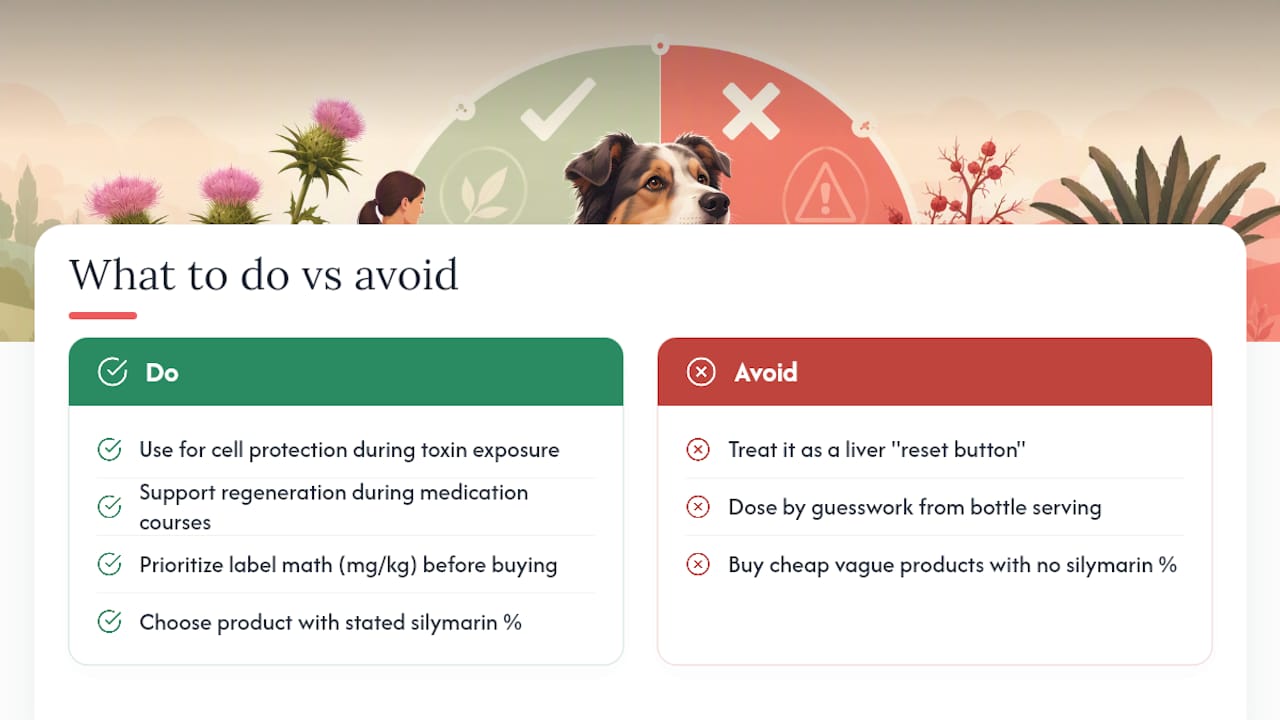
The conventional advice, "give your dog milk thistle if the liver values look off," skips the part that actually matters: dosing precision. A supplement dosed by guesswork off a bottle's suggested serving is nearly as useless as not giving it at all, because the therapeutic window depends on getting mg/kg right for that specific product's silymarin concentration.
If you take one thing from this article, prioritize the label math before the purchase decision. A cheap, vague product with no stated silymarin percentage isn't a bargain. It's an unknown dose you can't discuss meaningfully with your vet, which defeats the entire point of using bloodwork to track whether it's working.
Find the Right Liver Supplement Without Guessing
Picking a milk thistle product off a shelf is easy. Picking one with an honest silymarin percentage, safe excipients, and a dose your vet can actually work with is harder, and that's exactly the gap Kiblco closes. Kiblco's team checks label accuracy, ingredient safety, and real-world palatability on liver and joint supplements before they ever make a recommendation list, so you're not the one testing an unlabeled product on your dog.

If your dog's vet has cleared milk thistle or another liver-support supplement, browse Kiblco's vet-informed supplement reviews to compare formulations side by side before you buy, so the product you bring home actually matches the dose your vet wants to see.
Frequently Asked Questions About Milk Thistle for Dogs
Can dogs take milk thistle every day? Yes, many dogs on long-term liver support take it daily, but the duration and dose should come from your vet based on bloodwork trends, not a fixed schedule you set yourself.
Is milk thistle safe with other dog medications? Usually, but it depends on what else your dog takes. Disclose every medication and supplement to your vet, especially anticonvulsants like phenobarbital, since silymarin can affect how the liver processes other drugs.
How long does it take to see results from milk thistle? Most vets and owners report noticeable changes in liver bloodwork within 4 to 12 weeks, though timelines vary based on the underlying condition and product used.
Can I give my dog human milk thistle supplements? It's risky. Human products may contain xylitol, alcohol-based delivery, or dosing designed for human body weight, none of which suit a dog's needs. Pet-specific, standardized-extract products are the safer choice.
Does milk thistle cure liver disease in dogs? No. It supports liver cell protection and may aid regeneration, but it works as part of a broader treatment plan, not as a standalone cure for existing liver disease.
This article is general information, not a substitute for advice from a qualified doctor. Consult a qualified healthcare professional about your own circumstances before acting on anything here.
Sources
- Milk Thistle or Silymarin
- Milk Thistle and SAMe for Dogs: Uses, Dosage, and Side Effects
- Potential applications and effects of silymarin in domestic animals – a review
- Milk Thistle for Dogs - Whole Dog Journal