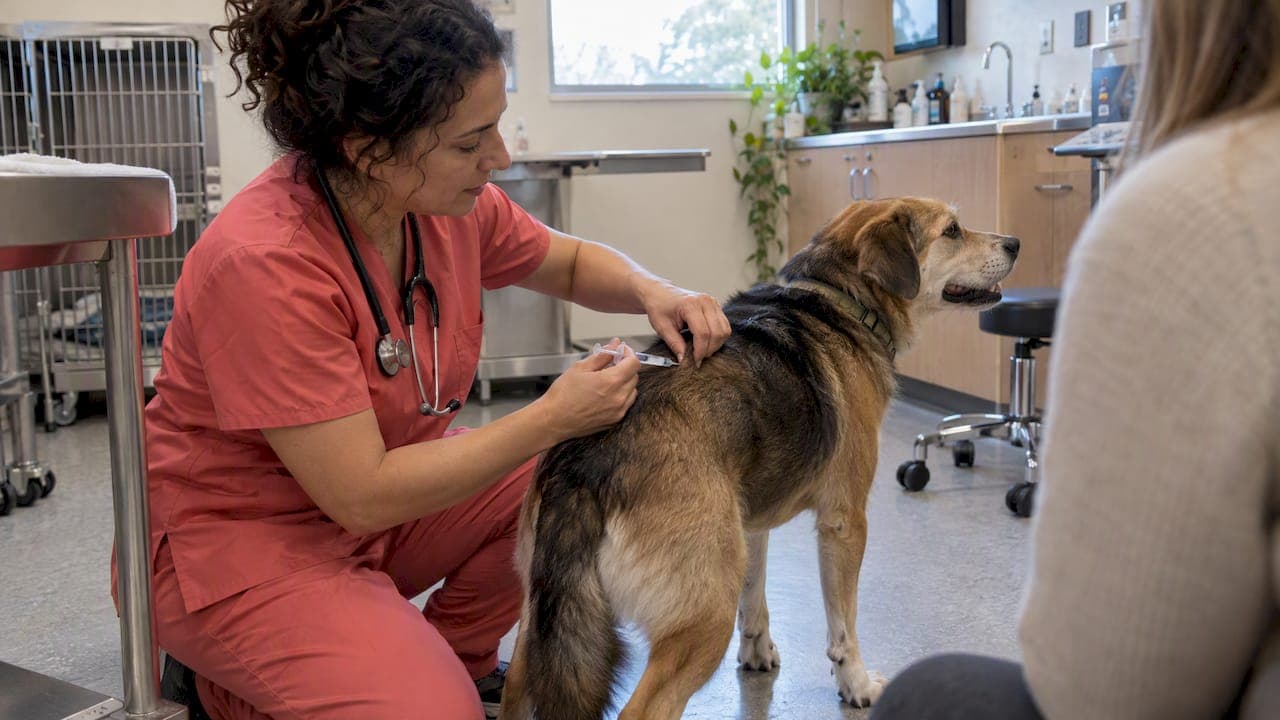
Both Apoquel and Cytopoint reduce allergic itch effectively, but they suit different dogs. Apoquel, a daily pill, works fast for adult dogs who tolerate medication by mouth, while Cytopoint, a monthly injection, often fits dogs needing fewer doses or facing other health complications. The right choice depends on age, pill tolerance, concurrent conditions, and monitoring needs, and it should always be part of a broader allergy-management plan developed with your veterinarian.
TL;DR:
- Apoquel’s rapid onset typically within 24 hours makes it suitable for quick relief in pill-tolerant adult dogs without major health issues.
- Cytopoint's longer-lasting injections are better for dogs needing fewer doses, especially if they are on multiple medications or struggle with daily pills.
- Dogs with a history of infections or tumors usually require regular blood monitoring when on Apoquel, while Cytopoint generally needs minimal ongoing checks.
- Response to either medication varies; if no improvement occurs after four weeks, additional causes like infections or parasites should be assessed.
- Cost and routine logistics are key considerations, with Apoquel suited for households comfortable with daily pills, and Cytopoint preferable for those favoring monthly injections.
Table of Contents
- Apoquel vs Cytopoint at a Glance
- How Apoquel and Cytopoint Work in the Body
- What the Clinical Evidence Says About Speed and Response
- Safety, Side Effects, and What to Monitor
- How to Decide Between Apoquel and Cytopoint
- A Practical Take on Living With Either Option
- Supporting Your Dog's Skin and Coat Beyond Medication
- FAQ
- Sources
Apoquel vs Cytopoint at a Glance
Here is how the two options stack up across the factors that matter most to owners.
| Factor | Apoquel | Cytopoint |
|---|---|---|
| Mechanism | Oral JAK inhibitor blocking multiple itch and inflammation signals | Injectable antibody targeting IL-31 only |
| Route and frequency | Pill, daily dosing | Subcutaneous injection every 4 to 8 weeks |
| Onset | Often within 24 hours | Often within a few days |
| Duration | Daily maintenance dosing | Single dose can last 4 to 8 weeks |
| Age limit | Dogs 12 months and older | No specific age restriction stated |
| Monitoring | Periodic bloodwork often discussed | Minimal routine monitoring needed |
| Common risks | GI upset, infection risk | Rare injection-site reactions |
| Convenience | Daily pill, weight-based dosing at home | Clinic visit, injection fee per dose |
- Pill-tolerant adult dogs with no major comorbidities often do well on Apoquel's fast daily control.
- Dogs on multiple medications or with health histories that make systemic immune suppression a concern tend to do better on Cytopoint.
- Owners who struggle with daily pilling often prefer Cytopoint's monthly schedule.
- Dogs needing itch relief within hours sometimes start with Apoquel and transition later.
How Apoquel and Cytopoint Work in the Body
Apoquel's active ingredient, oclacitinib, is an oral JAK inhibitor that interrupts several pruritogenic and inflammatory cytokine pathways at once, which is part of why it tends to act quickly, often within 24 hours of the first dose according to its prescribing information.
Cytopoint's active ingredient, lokivetmab, takes a narrower approach. It is a caninized monoclonal antibody that neutralizes a single cytokine, interleukin-31, one of the primary drivers of itch signaling in dogs, delivered by subcutaneous injection rather than as a pill, per the Cytopoint product information.
The practical trade-off is specificity versus breadth. Apoquel's wider cytokine impact means it addresses itch through multiple channels, which can help with layered inflammatory drivers, but also means its systemic effects touch more of the immune system. Cytopoint's narrow targeting generally keeps it confined to the itch pathway itself, which is part of why it tends to carry fewer systemic monitoring concerns in practice.

What the Clinical Evidence Says About Speed and Response
Trial data and prescribing information give owners a reasonable sense of what to expect in the first weeks. Many dogs on Apoquel show meaningful improvement within 24 to 48 hours, with controlled studies tracking pruritus reduction through endpoints spanning 30 to 112 days, according to Apoquel's clinical study summaries. Cytopoint's label reports onset within as little as one day in some cases, with a single dose showing antipruritic effect for a month or more in trials, per the Cytopoint product information.
Response estimates commonly cited in practice settings put both drugs working in a majority of dogs, though individual response varies and failure on one drug does not predict failure on the other, according to a Cytopoint clinical summary. If a dog does not respond within about a month, veterinarians typically look for secondary causes, like bacterial or yeast infection, parasites, or ear disease, before concluding the medication itself failed, as outlined in a review of canine atopic dermatitis management.

Safety, Side Effects, and What to Monitor
Apoquel carries an age restriction: it is approved only for dogs at least one year old, and its systemic effects mean it is generally avoided in dogs with serious infections and used cautiously in those with a history of cancer, per its prescribing information. The most common side effects are vomiting and diarrhea, and many vets recommend baseline bloodwork with periodic rechecks for dogs with prior infections or suspected tumors.
Cytopoint has shown a favorable safety profile in field and laboratory studies, including safe co-administration with many other medications and no clinically important changes in bloodwork compared to placebo, according to its product information. Injection-site reactions are rare, and routine monitoring is minimal. Over prolonged use, some dogs may lose response due to anti-drug antibody formation; owners should report any waning effect to their veterinarian rather than adjusting the dose themselves, per a case discussion on biologic response.
- Watch for new lumps, recurrent infections, unexplained lethargy, or unusual bleeding with either drug.
- Call your clinic promptly if itch relief suddenly stops working after months of success.
Pro Tip: Keep a simple log of itch severity and any new symptoms each week; it makes vet visits faster and helps catch a fading response early.
How to Decide Between Apoquel and Cytopoint
Walking into a vet visit with a clear checklist makes the conversation faster and the plan more durable.
- Confirm age and health history. Apoquel requires dogs to be at least 12 months old; Cytopoint has no such restriction.
- Assess pill tolerance. A dog that fights every pill is often a better fit for monthly injections.
- Weigh how fast relief is needed. Both can act within days, but severe flares sometimes push vets toward the oral option first.
- Factor in concurrent medications. Cytopoint's narrow mechanism makes it a common pick for dogs on multiple other drugs.
- Compare ongoing logistics. Daily pills at home versus a clinic visit every 4 to 8 weeks suits different household routines.
Bring these questions to your vet:
- How soon should I expect improvement, and what counts as a non-response?
- What monitoring will you recommend, and how often?
- Could this interact with medications my dog already takes?
- What's the realistic ongoing cost difference between monthly pills and monthly injections for my dog's weight?
Neither drug treats the underlying allergy, so pairing medication with flea control, medicated baths, and diet trials matters for long-term control, per guidance on multimodal allergy management. If there's no improvement within about four weeks, that's usually the signal to revisit the plan with your vet.
A Practical Take on Living With Either Option
In real households, the choice often comes down to routine more than biology. Families who already give daily supplements tend to stick with Apoquel without much friction, while households juggling erratic schedules often prefer Cytopoint's set-it-and-forget-it rhythm. One recurring surprise from testing pill-hiding products and dosing routines: cost isn't always predictable from the label alone, since clinic injection fees and pill counts both scale with a dog's weight.
A few habits make either medication easier to manage: set a recurring phone reminder for pills or injection due dates, keep a stash of a reliable pill-hiding treat on hand, and photograph affected skin weekly so you and your vet can see real progress instead of relying on memory. Our team's hands-on testing of supplements and dosing aids for other conditions, like our vet-reviewed melatonin dosing guide, has shown the same lesson applies broadly: small routines make medication adherence stick.
— Chris
Supporting Your Dog's Skin and Coat Beyond Medication
Medication handles the itch signal, but a full allergy plan often includes supplements, grooming tools, and pill-hiding aids that make daily management easier. Our Dog Health category rounds up vet-informed picks for exactly these needs, from medicated shampoos to adherence-friendly treats.

For dogs that need extra anti-inflammatory support alongside prescription treatment, options like allergy immune support chews can round out a multimodal plan, though any addition should be run by your vet first. Always confirm medication changes with your veterinarian before starting or switching treatments.
This article is general information, not a substitute for advice from a qualified doctor. Consult a qualified healthcare professional about your own circumstances before acting on anything here.
FAQ
Is Cytopoint safer than Apoquel for dogs?
Neither is universally safer; each carries a different risk profile. Cytopoint's narrow targeting of a single cytokine tends to involve less systemic monitoring, while Apoquel's broader action requires more attention to infection risk and bloodwork in some dogs, per veterinary guidance.
When should you not use Cytopoint?
Cytopoint is generally avoided if a dog has shown a prior hypersensitivity reaction to it, and any waning response over time should be reported to your vet rather than managed at home. Your veterinarian can determine whether an underlying infection or antibody response is behind reduced effectiveness.
What is a cheaper alternative to Cytopoint?
There's no single universally cheaper option, since cost depends on clinic fees, your dog's weight, and dosing frequency rather than one drug price. Discussing cost drivers like weight-based pill counts versus per-injection clinic fees with your vet gives a clearer picture than comparing sticker prices alone, per veterinary cost guidance.
What's more expensive, Cytopoint or Apoquel?
Cost comparisons vary by clinic, dog weight, and dosing schedule, so neither drug is consistently cheaper across the board. Ask your veterinary clinic for an estimated monthly cost for your dog's specific weight and dosing plan before committing.
Sources
- DailyMed - APOQUEL (oclacitinib maleate) prescribing information
- Cytopoint product information (Zoetis)
- Veterinary guidance summary (VIN)