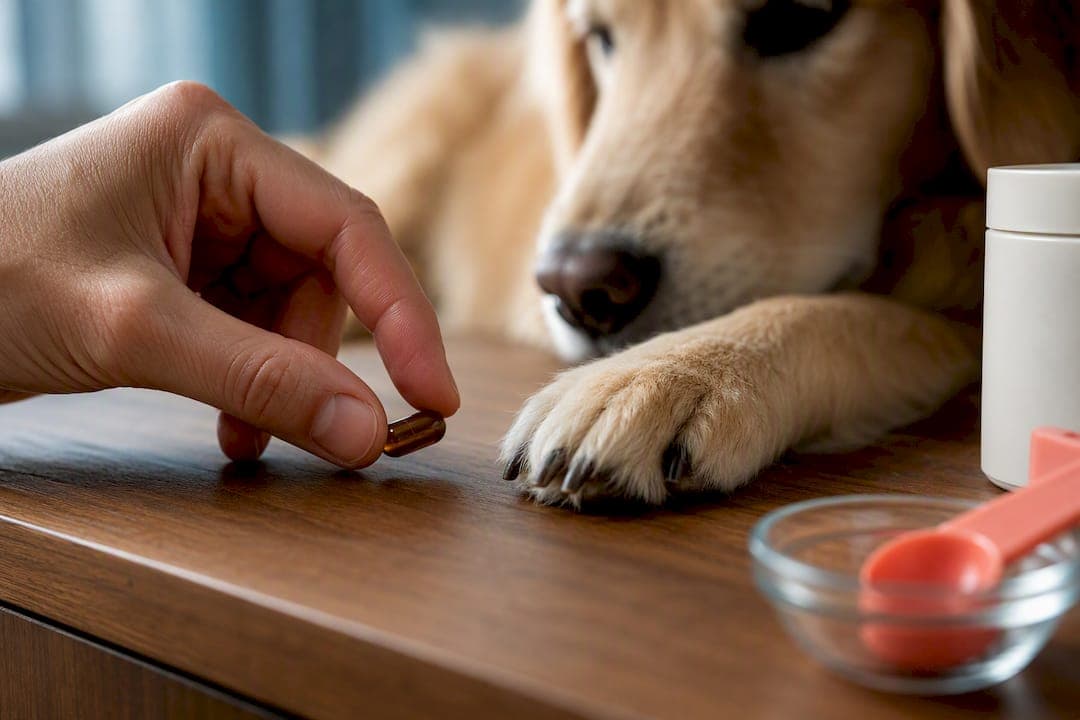
Quercetin can genuinely help many dogs with mild to moderate environmental allergies, working as a slow, preventive antihistamine rather than a fast rescue remedy. It's generally well tolerated, though you should loop in your vet if your dog takes other medications or has kidney issues. How well it actually works comes down almost entirely to formulation, specifically whether the product includes bromelain and uses an absorbable glycoside form.
TL;DR:
- The effectiveness of quercetin depends heavily on formulation, especially the inclusion of bromelain and the use of absorbable glycoside forms.
- Typical dosing ranges from 5 to 10 mg per pound of body weight twice daily, with starting doses low and titrating up over a week or two.
- Quercetin has a low oral bioavailability of around 4%, making product quality and ingredient form critical for actual absorption.
- It shows the strongest support for reducing itching and skin inflammation in dogs with atopic allergies but less evidence for joint or gut health benefits.
- Use quercetin as a preventive supplement over several weeks, pair it with other anti-inflammatory supports, and consult your vet if your dog takes other medications or has kidney issues.
Table of Contents
- How Quercetin Works as a Natural Antihistamine for Dogs
- What the Research Actually Shows
- Quercetin Dosage for Dogs: How Much and How Often
- Is Quercetin Safe for Dogs? Side Effects and Interactions
- Why Bioavailability Makes or Breaks a Quercetin Supplement
- A Realistic Protocol: When to Start and What to Track
- How Kiblco Evaluates Quercetin Products
- The Formulation Gap Nobody Talks About
- Where to Find Quercetin Supplements Kiblco Actually Recommends
- Sources
- FAQ
How Quercetin Works as a Natural Antihistamine for Dogs
Quercetin earns its "nature's Benadryl" reputation because it interrupts the allergic cascade at several points instead of just blocking one histamine receptor. It's a plant flavonoid, and its effects build slowly through repeated exposure rather than hitting fast like an oral antihistamine tablet.
Here's what it actually does inside the body:
- Stabilizes mast cells so they release less histamine when they encounter an allergen, which is the core reason it's compared to antihistamine drugs.
- Suppresses inflammatory cytokines, including IL-4, IL-13, and TNF-α, dialing down the immune signaling that keeps allergic skin inflamed.
- Inhibits COX and LOX enzymes, the same inflammatory pathways targeted by some anti-inflammatory drugs, while also acting as an antioxidant that mops up free radicals in irritated tissue.
That mechanism explains why quercetin behaves nothing like diphenhydramine. It needs time to accumulate an effect on mast cell behavior and cytokine levels. A PMC review of flavonoid mechanisms backs up this multi-pathway action, and it's the reason vets frame quercetin as preventive maintenance, not an emergency fix for a dog mid-reaction.
What the Research Actually Shows
The evidence for quercetin in dogs is real but narrower than most marketing copy suggests. An 8 week PLOS One study fed dogs a quercetin-supplemented pancreatic diet and found no adverse changes in body condition or most blood chemistry markers, which is a solid short-term safety signal.
By the Numbers: A canine pharmacokinetic study found quercetin's absolute oral bioavailability is only about 4%, meaning most of an oral dose never reaches the bloodstream intact. The same research found that glycosides like isoquercitrin and rutin absorb differently than plain quercetin, which is exactly why formulation matters so much.
Where does the evidence hold up best, and where is it thinner?
- Stronger support: reduced itching and calmer skin inflammation in dogs with atopic-type allergies, consistent with quercetin's mast cell and cytokine effects.
- Weaker or early-stage support: benefits for gut inflammation, joint comfort, or pancreatic health, which show promise in small studies but need more research before owners should expect dramatic results.
If your dog has a diagnosed condition beyond seasonal itching, treat quercetin as a supporting player and lean on your vet's guidance for the primary plan.
Quercetin Dosage for Dogs: How Much and How Often
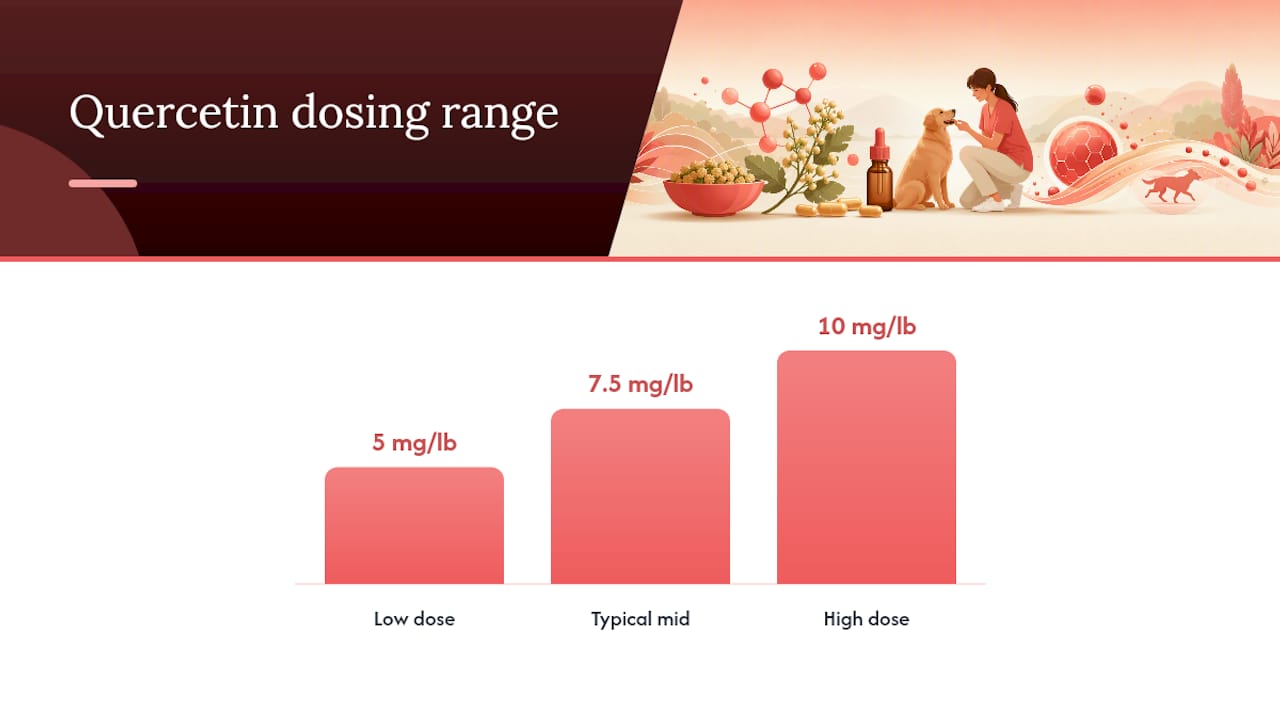
Most vet-informed dosing heuristics land in the range of about 5 to 10 mg per pound of body weight, given twice daily according to guidance summarized by Chewy's veterinary resource. Some products are formulated for once-daily use instead, so the label on your specific supplement should override any general rule.
A few practical notes on giving it:
- Start at the low end of the range and titrate up over a week or two rather than jumping straight to the ceiling dose.
- Twice-daily dosing keeps blood levels steadier than a single large dose, which matters given how quickly quercetin clears the body.
- Food alone rarely delivers therapeutic amounts. Apples, onions (never feed onions to dogs), and capers contain quercetin, but nowhere near supplement-grade concentrations.
- Read labels for the actual milligrams of quercetin per serving, not just total capsule weight, and check whether bromelain or a specific glycoside is listed.
- Skip anything hiding its dose behind a vague "proprietary blend."
Pro Tip: Give quercetin with a meal that contains some fat. It's absorbed better alongside food, and it also cuts down on the mild stomach upset some dogs get on an empty stomach.
Is Quercetin Safe for Dogs? Side Effects and Interactions
Quercetin has a favorable safety profile in the research available so far, but "safe" isn't the same as "no monitoring needed." Follow this checklist before and during use:
- Watch for mild GI upset, the most commonly reported side effect. Loose stool or nausea usually resolves by giving the supplement with food or lowering the dose.
- Check for anticoagulant use. Quercetin can interact with blood thinners and other medications processed through liver enzymes, so flag it with your vet if your dog is on any prescription drug.
- Get vet clearance for kidney disease or if your dog is pregnant or nursing, since these situations haven't been well studied.
- Never substitute quercetin for emergency treatment. If your dog has facial swelling, hives, or breathing difficulty, that's anaphylaxis territory. Get to a vet or emergency clinic immediately. Quercetin is not fast enough to help in that moment.
- Stop and call your vet if you see vomiting, lethargy, or worsening symptoms after starting supplementation.
Why Bioavailability Makes or Breaks a Quercetin Supplement
That 4% oral bioavailability figure isn't just a lab curiosity. It's the single biggest reason some quercetin supplements underperform. If very little of the dose survives digestion, the form of quercetin in the bottle matters as much as the dose on the label.
Rutin and isoquercitrin, two common glycoside forms, don't behave like plain quercetin. The same canine study found rutin absorbed more slowly but still reached comparable overall bioavailability, an important nuance for anyone comparing labels.
This is where bromelain earns its spot on ingredient lists:
- Bromelain, an enzyme derived from pineapple stems, appears to enhance quercetin absorption while adding its own anti-inflammatory activity, which is why many formulations pair the two.
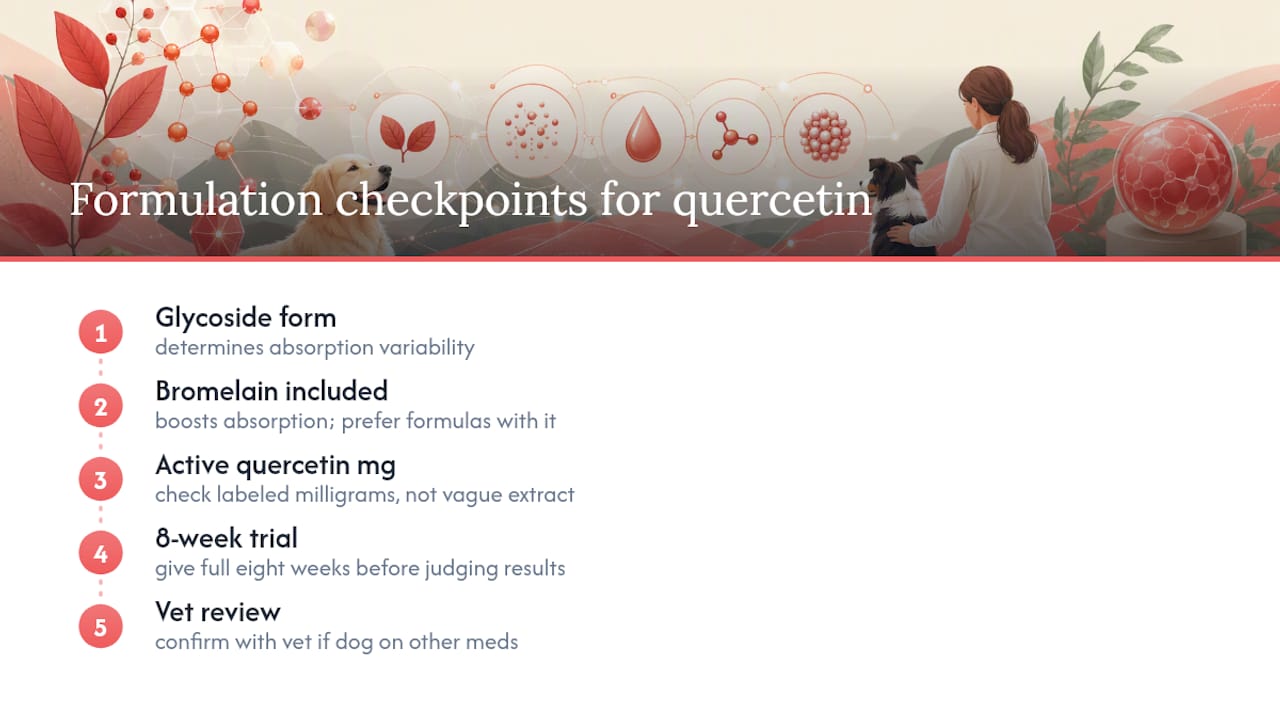
- Look for products that state milligrams of active quercetin, not just total capsule weight. A 500 mg capsule could be mostly filler.
- Favor labels that name the glycoside form used (quercetin dihydrate, isoquercitrin, or rutin) instead of listing "quercetin extract" with no specifics.
A Realistic Protocol: When to Start and What to Track
Start quercetin two to three weeks before your dog's usual allergy season kicks in, if you know the pattern, or begin any time for year-round sensitivities.
- Weeks 1 to 2: Introduce at a low dose with food, watching for GI tolerance.
- Weeks 2 to 4: Expect early signs of improvement, if any, such as slightly less scratching or paw licking.
- Weeks 6 to 8: This is when fuller effects typically show up. Track scratching frequency, redness, and how often your dog chews at its paws in a simple daily note or phone log.
- Ongoing: Pair quercetin with omega-3 fatty acids or gut-support supplements for complementary anti-inflammatory coverage, and keep a fast-acting antihistamine on hand for flare days.
Pro Tip: If you see zero change by week eight at an appropriate dose, that's your cue to talk to your vet about prescription options rather than pushing the supplement higher.
How Kiblco Evaluates Quercetin Products
Kiblco's reviews combine hands-on testing with veterinary input, the same approach behind our 94% acceptance trial for a vet-backed prebiotic. For quercetin specifically, we check labels for exact milligram counts, confirm the glycoside form, and flag products relying on vague "proprietary blend" language, the same scrutiny we apply in our ashwagandha for dogs review.
The Formulation Gap Nobody Talks About
Most quercetin content online treats every supplement bottle as interchangeable, and that's the biggest disservice to dog owners trying to help an itchy pet. The pharmacokinetic data is clear: absorption varies wildly by glycoside form, and a product without bromelain or a specified active-ingredient count is asking you to gamble on a molecule that's already poorly absorbed to begin with.
Conventional advice tends to stop at "give quercetin for allergies" without addressing why so many owners report lukewarm results. The honest answer is usually formulation, not the ingredient itself. A dog getting an unspecified "quercetin extract" with filler bulk is not getting the same exposure as one on a labeled dose paired with bromelain.
If you take one thing from this article, prioritize the label over the marketing. Check for milligrams of active quercetin, confirm the glycoside form, and give the trial a full eight weeks before judging results. Pair it with your vet's input if your dog is on other medications. That's a more useful filter than any five-star review count, and it's the difference between a supplement that actually does something and one that just sits in the cabinet.
— Chris
Where to Find Quercetin Supplements Kiblco Actually Recommends
Reading labels is only half the battle. Finding a bottle that actually meets the bar (specified milligrams, a named glycoside form, bromelain included) takes some digging, which is exactly what Kiblco's testing process is built to shortcut for you.

Our reviewers evaluate quercetin supplements the same way we test joint chewables and gut-health products: real dogs, transparent pros and cons, and a hard look at whether the label matches the actual dose. Before you buy the first bottle that shows up in a search, browse Kiblco's product reviews to see which quercetin formulations passed our formulation checklist and which ones fell short on active ingredient content. If your dog also deals with joint stiffness alongside allergies, our senior joint supplement roundup covers complementary options worth stacking into a broader anti-inflammatory plan.
Sources
- Oral bioavailability of quercetin from different quercetin glycosides in dogs
- Exploring the effects of quercetin-added pancreatic diet on metabolic homeostasis in dogs via metabolomics | PLOS One
- PMC review article related to flavonoid mechanisms and safety
- Quercetin for Dogs: How This Natural Remedy May Help Dog Allergies (Chewy)
This article is general information, not a substitute for advice from a qualified doctor. Consult a qualified healthcare professional about your own circumstances before acting on anything here.
FAQ
Is It Safe to Give Quercetin to Dogs?
For most healthy dogs, yes. Research including an 8 week feeding trial found no adverse changes in body condition or most blood chemistry markers, but dogs on anticoagulants, with kidney disease, or pregnant and nursing should get vet clearance first.
What Are the Negative Side Effects of Quercetin?
The most common issue is mild gastrointestinal upset, like loose stool or nausea, which usually improves when the supplement is given with food. Serious side effects are uncommon in the available research, but drug interactions with blood thinners are a real risk worth discussing with your vet.
How Long Does It Take for Quercetin to Work in Dogs?
Early signs, such as slightly less scratching, can appear within 2 to 4 weeks, but the fuller anti-inflammatory effect typically takes 6 to 8 weeks of consistent daily dosing to become clear.
What Is the Best Natural Antihistamine for Dogs?
Quercetin is one of the most researched natural options for dogs with allergies, thanks to its mast cell stabilizing and anti-inflammatory action, though it works best as a preventive supplement rather than a fast-acting rescue treatment for a dog already in the middle of a reaction.