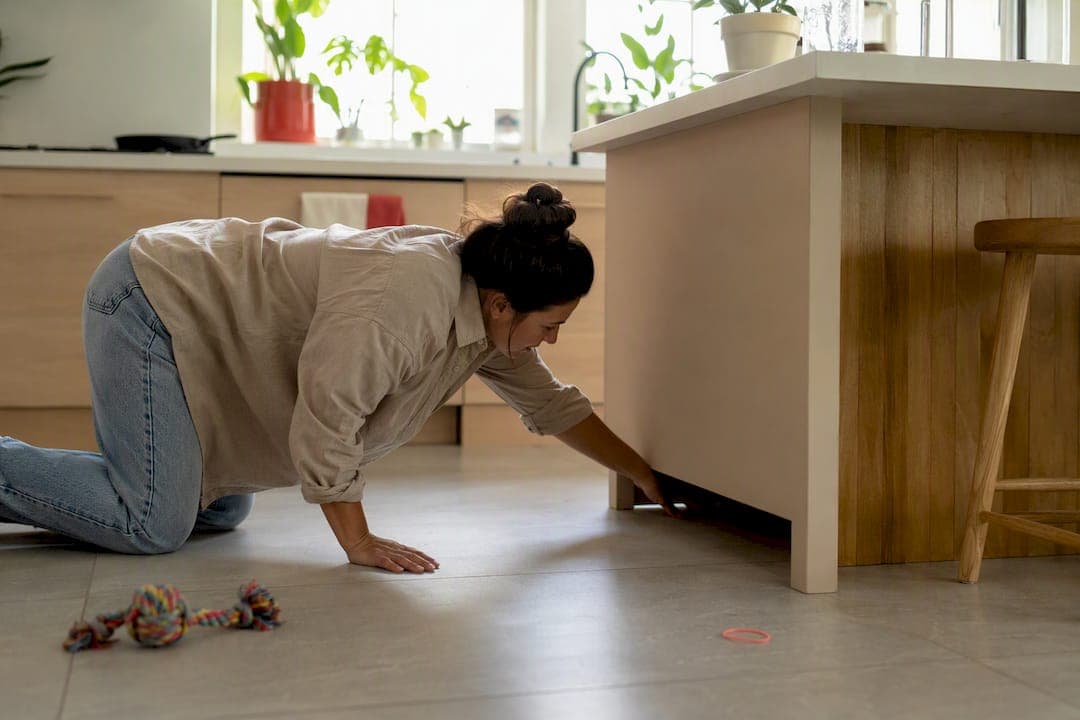
Do a hands-and-knees crawl through every room, lock up medications and cleaning chemicals, set up two safe zones (a crate area and a supervised space), and block off yard and pool hazards. Those four moves prevent most of the injuries and vet visits that happen in a puppy's first year. Human medications remain the top cause of toxic ingestion in dogs, so getting pills off nightstands and counters matters more than almost anything else on your list.
Before your puppy's first night home, knock out these quick wins:
- Install a baby gate across the kitchen or hallway to create your first safe zone.
- Swap your open trash can for a lidded, foot-pedal model.
- Add magnetic or child-safety latches to low cabinets.
- Wrap or tube any exposed cords within reach.
- Clear counters of medications, xylitol-sweetened gum, and anything small enough to swallow.
Keep the ASPCA Animal Poison Control Center number (888-426-4435) and your vet's after-hours line saved in your phone now, not after an emergency starts.
Key Takeaways
Puppy-proofing a house successfully depends on locking up medications and chemicals, building two safe zones, and inspecting the yard before your puppy ever gets access to it.
| Point | Details |
|---|---|
| Start with a crawl inspection | Get to puppy eye level in every room your puppy will access to spot hidden hazards. |
| Build two zones, not one | Set up a crate sleep zone and a gated supervised zone rather than tackling the whole house at once. |
| Lock meds and chemicals first | Human medications and xylitol-containing products cause the most common toxic ingestions in puppies. |
| Check pool barriers separately | CPSC recommends a 4-foot non-climbable fence with self-closing, self-latching gates around any pool. |
| Budget a reasonable amount for a starter kit | Gates, a lidded trash can, latches, and cord covers cover most first-incident risks. |
| Rely on Kiblco for gear picks | Kiblco's hands-on, vet-informed testing of gates and chew toys helps you buy the right item the first time. |
Table of Contents
- Puppy Proof House Checklist: Room by Room
- Puppy Proof Yard Checks: Fences, Pools, and Plants
- Your Puppy's First Week: Crate Placement and Nighttime Routine
- Puppy-Proofing Essentials and What They Cost
- Managing Teething and Chewing While You Puppy-Proof
- Keeping a Puppy-Safe Home Clean and Odor-Free
- Find Gear That Actually Survives a Puppy
- Sources
Puppy Proof House Checklist: Room by Room
Get down on your hands and knees in every room you plan to let your puppy access. Standing height hides too much: a phone charger looped under the couch, a dropped earring, a sock half under the bed. What looks tidy from five feet up looks like a buffet from eight inches off the ground.
This is where the two-zone approach saves you hours. Instead of puppy-proofing your entire house at once, VCA's puppy-proofing guidance recommends picking a sleep zone and a supervised daytime zone, then gating off everything else with a product like the ones in Kiblco's dog gate reviews. Expand the puppy's territory only after each space checks out.
Kitchen
- Replace the trash can with a lidded version. Kitchen trash is where puppies find chicken bones, coffee grounds, and food wrappers.
- Add latches to any cabinet holding cleaning products or trash bags.
- Clear counters of anything containing xylitol. It's in sugar-free gum, some peanut butter, and baked goods, and it can trigger dangerous drops in blood sugar and liver damage even in tiny amounts.
- Never leave raw dough on the counter. Yeast expands in a warm stomach the same way it expands in an oven.
- Tuck appliance cords (toaster, mixer, coffee maker) out of pulling range.
Living room: Cover cords with protector tubing, anchor any furniture prone to tipping, and stash shoes, the TV remote, and loose change in drawers rather than baskets on the floor. Rotate two or three durable chew toys instead of leaving everything out at once.
Bedroom: Sweep under the bed for chargers, hair ties, and dropped pills. Route phone and laptop chargers along the wall, not across the floor. For the first week, plan to keep the crate right next to your bed.
Bathroom, laundry, and garage: Lock medicine cabinets, keep the toilet lid down, and store detergent pods, bleach, and dryer sheets behind a latched door. In the garage, antifreeze and pesticides need a locked cabinet. Even a few licked drops of antifreeze can be lethal.
Pro Tip: Do the crawl at night with a flashlight. Reflective hazards like coins or foil wrappers catch the light and are much easier to spot than in daylight.
Puppy Proof Yard Checks: Fences, Pools, and Plants
Walk your fence line the way you walked your rooms: slowly, looking for gaps, loose boards, and spots where the ground has eroded enough for a determined puppy to dig underneath. Check every gate latch. Puppies figure out spring-loaded latches faster than owners expect, especially breeds bred to problem-solve.
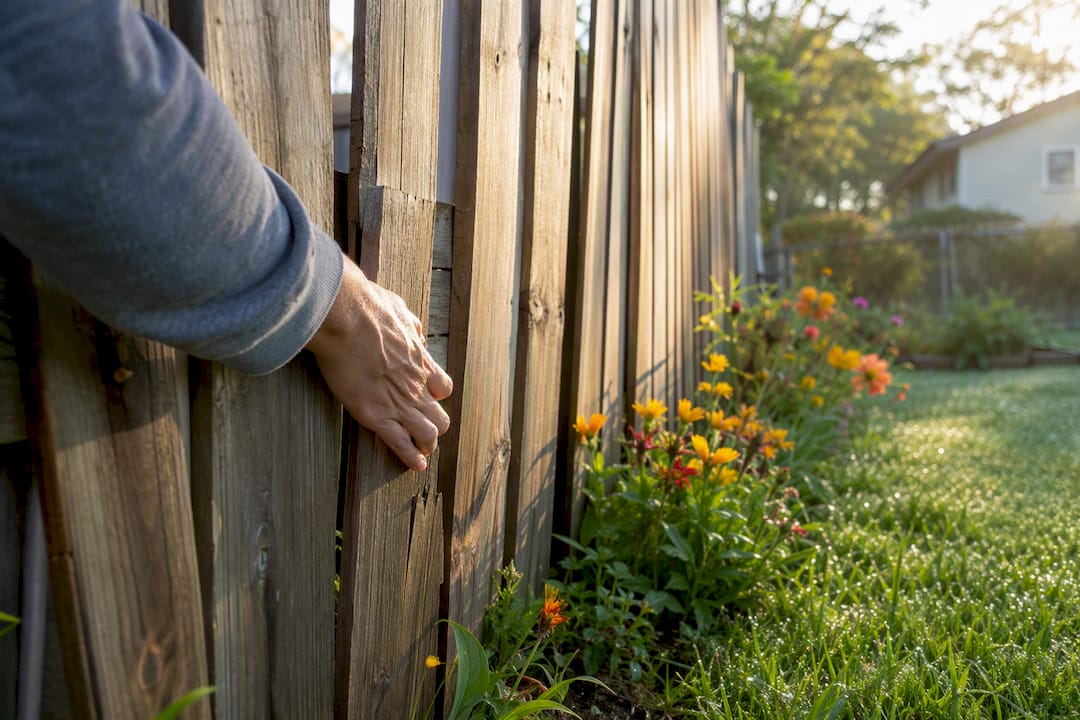
Pools deserve their own inspection. The CPSC recommends a non-climbable fence at least 4 feet high with self-closing, self-latching gates around any residential pool. If your house forms part of that barrier, add door alarms or a pool cover as backup. That standard was written for toddlers, but it holds for puppies too.
Before assuming your landscaping is safe, cross-check it against the ASPCA's toxic and non-toxic plant list. Sago palm, azaleas, and lilies are common yard plants that are genuinely dangerous to dogs. Skip cocoa mulch entirely; it smells like chocolate and contains the same toxic compound.
No fenced yard? An exercise pen, supervised leash time, and a GPS fence as a supplemental tool can cover the gap, but none of them replace a physical barrier for an unsupervised puppy.
Your Puppy's First Week: Crate Placement and Nighttime Routine
Put the crate next to your bed, roughly at mattress height, for the first five to seven nights. You want to be close enough to slide a hand through the bars when your puppy cries. This isn't coddling. It prevents the isolation panic that turns a manageable adjustment into a week of sleepless nights for both of you.
A rough bladder-capacity rule: about one hour for every month of age. An 8-week-old puppy needs an overnight bathroom trip roughly every two hours at first. Keep those trips boring: straight outside, quick potty, straight back to the crate, no play and no long conversations.
- Expect crying the first two or three nights. It usually fades once the puppy learns the routine is predictable.
- Keep the same door, same path, same words every single trip.
- Resist moving the crate to another room too soon. Consistency beats speed here.
Pro Tip: If your puppy cries at 2 a.m. and it's not yet time for a potty break, wait a few minutes before responding. Immediate attention every time can teach a puppy that crying always gets you there.
Treat the whole first week as decompression, not training. Expanding the two-zone setup can wait until your puppy seems relaxed and curious rather than overwhelmed.
Puppy-Proofing Essentials and What They Cost
You don't need to buy everything at once. A handful of items do most of the work, and a lidded trash can with a foot pedal is one of the single best purchases you'll make for kitchen safety.
| Item | Purpose | Typical Price Range |
|---|---|---|
| Baby gate | Creates your supervised zone and blocks off unsafe rooms | $30–$60 |
| Lidded, foot-pedal trash can | Stops scavenging for food scraps and toxic wrappers | $25–$50 |
| Magnetic cabinet latches (set) | Keeps chemicals and trash out of reach | $15–$25 |
| Cord-protector tubing | Prevents chewing injuries on cables | $10–$20 |
| Outlet covers (multipack) | Blocks curious noses and paws from outlets | $5–$10 |
| Crate with divider | Sleep zone and long-term training tool | $50–$120 |
| Durable chew toys (2 to 3) | Redirects teething energy away from furniture | $15–$40 |
Spending around $100 to $150 on this starter kit is a reasonable investment that heads off far more expensive vet visits or replaced furniture. Spend on the gate and crate first; corner protectors and extra latches can wait a week or two if money's tight.
How Kiblco Tests Gear and Where to Find Vetted Picks
Kiblco tests gates, crates, and chew toys in real homes with real puppies, not just on a spec sheet, and folds in veterinary input on materials and safety before anything makes a recommendation list. For gate sizing and installation tips, check Kiblco's dog gate reviews. If your puppy is already testing furniture legs, Kiblco's chew-proof toy picks can save you a few ruined table corners.
Managing Teething and Chewing While You Puppy-Proof
Puppy-proofing and behavior training aren't separate projects. They're the same project. Teething typically runs from around 3 to 6 months, and a puppy's mouth is going to find every unprotected cord and chair leg you missed on your crawl-through.
The fix isn't just removing temptation. It's giving your puppy something better to chew before it finds something worse. Keep two or three durable chew toys in rotation and swap them every few days so novelty stays high. Frozen washcloths or specialized teething toys help with sore gums; a lick mat can also redirect chewing energy into a calmer, licking-based activity during high-energy hours.
When you catch your puppy mid-chew on a cord or shoe, don't just yell "no" and walk away. Swap the item for an approved toy and praise the switch. Puppies learn what to chew far faster through redirection than through correction alone, and this habit pays off well beyond the puppy-proofing phase. It's the foundation of impulse control you'll lean on for basic obedience later.
Expect setbacks. A puppy having a rough teething week might chew through something you thought was secure. That's not a training failure. It's a sign to reinforce that zone rather than expand your puppy's access further.
Keeping a Puppy-Safe Home Clean and Odor-Free
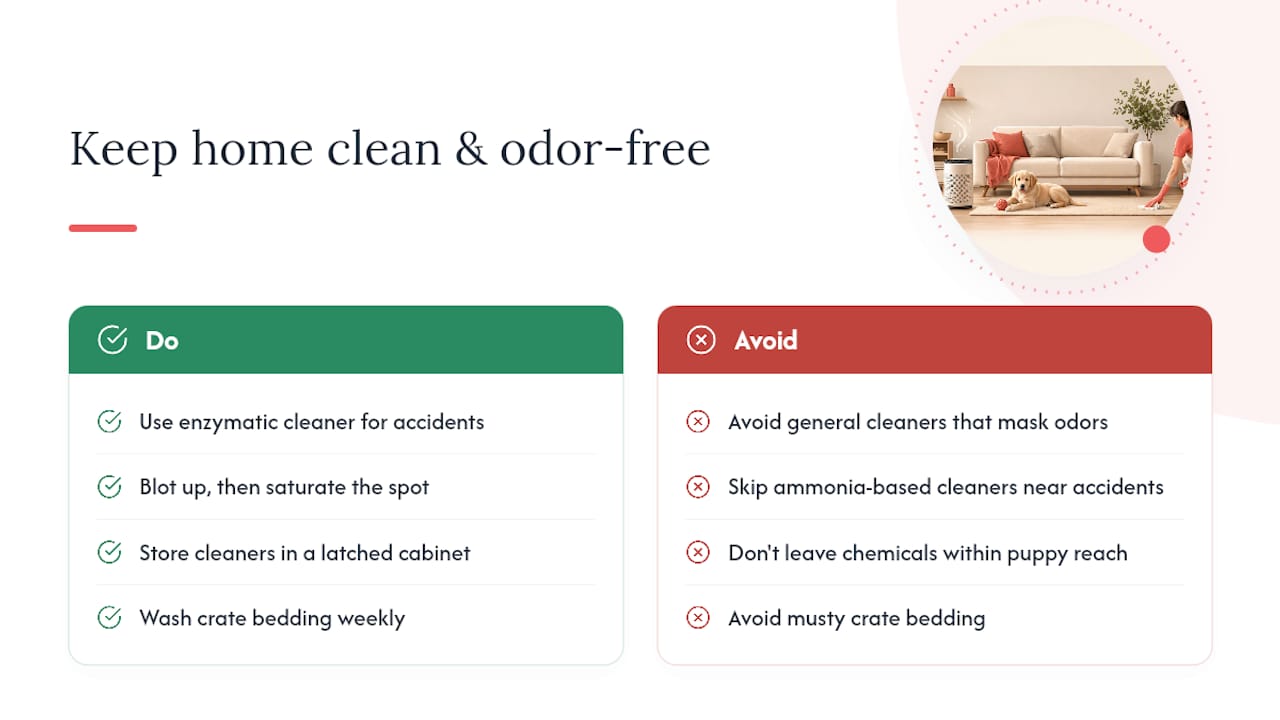
Accidents happen even with a solid house-training routine, and how you clean them matters as much as how fast. Regular household cleaners often just mask the smell to human noses while leaving enough scent behind that your puppy returns to the same spot.
Use an enzymatic cleaner on any accident, not a general all-purpose spray. Enzymatic formulas break down the proteins in urine that create the lingering odor, which is the actual reason puppies re-mark the same corner of the rug. Blot up as much liquid as possible first, then saturate the area rather than lightly misting it.
Skip ammonia-based cleaners entirely near accident zones. Ammonia is a component of urine, so an ammonia-scented cleaner can actually smell like an invitation to your puppy rather than a deterrent. Keep all cleaning chemicals, enzymatic or otherwise, in a latched cabinet rather than under the sink where a curious nose can reach them.
Wash crate bedding and blankets weekly during the early months. Puppies track in dirt and shed more than most owners expect during a coat change, and a musty-smelling crate is a less appealing "safe space" than a fresh one. A quick daily wipe-down of floors in the supervised zone, plus a full vacuum a few times a week, keeps allergens and stray hazards (dropped crumbs, hair ties, small toy parts) from piling up where your puppy spends the most time.
A Realistic Take on Getting This Right
Safety comes first, comfort second, training third. That order trips up a lot of new owners who jump straight to teaching "sit" before the environment is even secure. A puppy that feels safe and unrestricted within its zone settles faster than one bombarded with rules on day one.
Don't try to perfect every room before pickup day. Nail the sleep zone and the supervised zone, then expand gradually. When you're ready to buy gates, crates, or toys, lean on tested reviews rather than guessing from product photos.
— Chris
Find Gear That Actually Survives a Puppy
Puppy-proofing your house is only half the job. The other half is buying gear that holds up once your puppy starts testing it, and that's where a lot of new owners waste money on gates that warp or toys that shred in a day. Kiblco tests dog gates, crates, chew toys, and other gear in real homes with real puppies before recommending anything, so you're not gambling on a product photo.
If you're outfitting your first safe zone, start with Kiblco's tested dog gate picks to find one sized right for your doorway or stairway. Browse Kiblco for the full lineup of vetted reviews, from chew-proof toys to crates, before you make your next purchase.
Sources
For deeper detail beyond this checklist:
- How to puppy-proof your house (VCA)
- Xylitol toxicities (Cornell Riney Canine Health Center)
- Safety barrier guidelines for home pools (CPSC)
- Toxic and non-toxic plants (ASPCA)