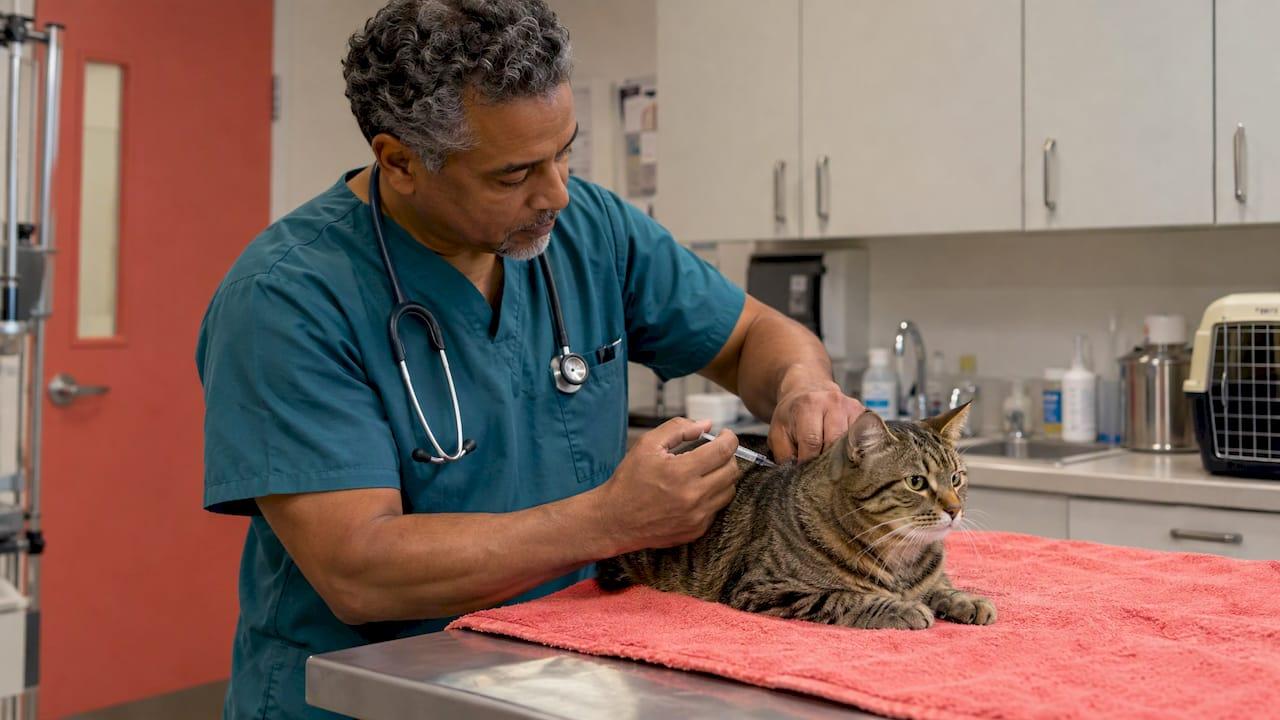
Most healthy cats that eat a complete diet do not need extra B12. Cats with chronic digestive disease often do, and the right route and dose depend on a blood test, not a guess. Cats cannot make cobalamin themselves, so low levels usually point to an absorption problem that deserves a veterinary workup. This guide covers what B12 does, the signs of a deficiency, how oral and injectable forms compare, the dosing vets and veterinary references use, and how to shop once your vet says yes.
TL;DR
- Cats are obligate carnivores that cannot synthesize vitamin B12, so they depend on animal tissue in their food and on healthy gut absorption.
- Low B12 is most often found in cats with chronic gut, intestinal or pancreatic disease. Vomiting, diarrhea, weight loss and poor appetite are the usual signs.
- A serum cobalamin test tells you whether your cat is low. Your vet then chooses injections or daily oral tablets based on the underlying disease.
- B12 is water-soluble and has a wide safety margin, but dose, duration and re-testing belong to your vet.
- Once your vet approves a supplement, compare products on form, strength and how easily your cat accepts it.
Table of Contents
- What vitamin B12 does in a cat's body
- Which cats may need a B12 supplement
- Signs of B12 deficiency in cats
- How vets diagnose low B12
- Does B12 increase a cat's appetite?
- Injection or oral: how the choice is made
- Is B12 safe for cats?
- What to ask your vet before giving B12
- Choosing a B12 supplement once your vet approves
- Where Kiblco fits in
- Our perspective
- FAQ
- Sources
What vitamin B12 does in a cat's body
Vitamin B12, or cobalamin, is a building block for enzymes that run core processes. According to a 2023 review of B12 in cats, cobalamin-dependent enzymes such as methionine synthase and methylmalonyl-CoA mutase take part in DNA synthesis, methylation and mitochondrial metabolism. In plain terms, cells use it to divide, to make energy and to keep the nervous system and blood working.
Because cats are obligate carnivores, the same review notes that they get B12 only from animal tissues. A typical commercial cat food built on meat supplies it. Trouble starts when the cat cannot absorb it. Cobalamin is taken up in the last part of the small intestine, the ileum, and Texas A&M's Gastrointestinal Laboratory notes that low values are often seen with disease of the distal small intestine, exocrine pancreatic insufficiency (EPI) or small intestinal dysbiosis.
That is why the question is rarely whether a cat eats enough B12. It is whether the gut and pancreas let it through.
Which cats may need a B12 supplement
A healthy cat on a complete diet generally has no need for a daily B12 pill. The cats that do tend to share a history:
- Chronic vomiting or diarrhea. Texas A&M's lab recommends that all dogs and cats with chronic gastrointestinal disease have serum cobalamin measured, especially when they respond poorly to treatment.
- Inflammatory bowel disease, intestinal lymphoma or other malabsorptive disorders. Cornell's diagnostic center says that cats with malabsorption or maldigestion often have subnormal B12.
- Pancreatic disease. EPI and pancreatitis both show up in the cobalamin literature.
- Cats that stall on treatment. A Clinician's Brief article on hypocobalaminemia reports that low-B12 cats often do not respond as readily to treatment of the primary disease unless they are supplemented.
If your cat has had loose stools or intermittent vomiting for weeks, the useful step is a vet visit and a B12 and folate panel. Supplementing first can delay a diagnosis of the condition that caused the deficiency.
Signs of B12 deficiency in cats
The 2023 review lists anorexia, vomiting, diarrhea, growth disorders and neurological findings among the most frequently described signs. Bloodwork can show non-regenerative anemia, low white cell counts, low blood sugar and high ammonia. A WSAVA congress summary makes a point worth remembering: many animals with deficiency show only gastrointestinal signs, which can be either the cause or the effect of the low cobalamin.
What you may notice at home:
- Weight loss despite a normal or reduced appetite
- Lethargy and less interest in play
- Ongoing soft stools or diarrhea
- Repeated vomiting that is not just hairballs
- Poor coat and a general failure to thrive in younger cats
None of these signs is specific to B12. They overlap with kidney disease, thyroid disease, parasites and more, which is another reason to test rather than assume.
How vets diagnose low B12
The test is a serum cobalamin measurement, often paired with folate, sometimes with methylmalonic acid. The 2023 review gives a feline reference interval of 290 to 1500 ng/L for serum cobalamin, with values under 290 ng/L considered subnormal. Texas A&M's lab goes further and recommends supplementing when levels are low-normal, below roughly 400 ng/L.

Your vet may also check pancreatic function. Texas A&M advises evaluating exocrine pancreatic function with trypsin-like immunoreactivity in animals with low cobalamin. The result matters for the choice of route, as the next section explains.
Does B12 increase a cat's appetite?
Sometimes, in cats that are actually deficient. The 2023 review reports that anorexic cats with cobalamin deficiency often start eating again while receiving B12, and that appetite can wane when weekly dosing stops, even when serum levels look normal. A veterinary proceedings article on chronic vomiting also describes the injectable dose as one that often stimulates appetite.
So if your cat is picky or off food, a B12 pill is not a shortcut. Appetite loss in cats has many causes, some serious, and a cat that stops eating for more than a day or two needs a vet. If bloodwork shows low B12, the supplement may help the appetite return as part of treating the underlying problem.
Injection or oral: how the choice is made
Both routes work. Which one fits depends on the disease, how well the cat tolerates handling, how reliably you can dose and what the plan costs. The 2023 review lists those factors directly.
| Injection (under the skin) | Daily oral tablet | |
|---|---|---|
| Typical protocol in the 2023 review | 250 µg every 7 days for 6 weeks, every 14 days for 6 more weeks, then monthly | 250 µg cyanocobalamin daily |
| Best fit | Cats with GI disease and low B12, and cats with EPI | Cats with chronic enteropathy that take pills easily |
| Practical demand | Vet visits or vet-taught home injections | Reliable daily dosing for weeks |
| Watch for | Stinging at the site; rare allergic reaction | Missed doses, refusal |
The review states that parenteral cobalamin is always recommended for cats with GI disease and low serum cobalamin, and that oral supplementation is not effective in cats with EPI. At the same time, it notes that daily 250 µg cyanocobalamin tablets significantly raised serum cobalamin in cats with GI disease, and Today's Veterinary Practice describes once-daily oral cobalamin at 250 µg as an effective alternative route in chronic enteropathies.
Dosing figures from veterinary references
These figures are for context. Your vet sets the actual plan for your cat.
- Injection: the Merck Veterinary Manual lists 20 to 50 mcg/kg subcutaneously every 7 days for 4 to 6 weeks, then monthly.
- Oral: the same manual lists 50 mcg/kg by mouth every 24 hours for at least 12 weeks and notes no major toxicity. Texas A&M's lab suggests 250 µg of cyanocobalamin daily for 8 to 12 weeks, with a serum re-check 4 weeks after stopping.
- Anemia protocol: a 2019 review of feline non-regenerative anemia recommends 250 µg subcutaneously once weekly for 6 weeks, plus one more dose 30 days later, and reassessing serum cobalamin 30 days after the last injection.
Why re-testing matters
The same anemia review reports that in cats with inflammatory bowel disease the half-life of serum cobalamin falls from 12.75 days to 5 days, which is why weekly dosing is used at first. In one group of cats with low B12 and enteropathy, 95% saw significant drops in serum cobalamin four weeks after finishing a 6-week course, and by 10 weeks 55% were again below the reference interval. That suggests some cats need ongoing or repeated supplementation. On the other hand, Today's Veterinary Practice notes that when the underlying disease can go into remission, long-term supplementation is often unnecessary unless it relapses. Scheduled re-checks are how your vet tells which cat yours is.

Is B12 safe for cats?
B12 has a strong safety record. Because cobalamin is water-soluble, the 2023 review says higher than normal serum levels are not considered dangerous, and that exceeding the normal range in treated patients is even recommended before stopping. Texas A&M's lab likewise describes it as inexpensive, with excess readily disposed of.
What to know before starting:
- Injection site sting. VCA Animal Hospitals says the injection may sting but this typically passes quickly.
- Allergic reaction. It is uncommon, but call your vet or an emergency clinic right away for irregular breathing, rash, fever, or swelling and puffiness around the face. JAM Veterinary Services adds pale gums to the list.
- Regulatory status. The injectable form is approved for humans rather than specifically for animals, and vets may use it extra-label in cats at their discretion, according to the same JAM page.
- Pregnancy and nursing. VCA says it is likely safe in pregnant animals and safe in nursing mothers and young animals, but tell your vet if your cat is pregnant or nursing.
Safe does not mean unsupervised. A cat with ongoing digestive signs needs the underlying cause found, and B12 alone will not fix an inflamed intestine or a failing pancreas.
What to ask your vet before giving B12
Bring this list to the appointment:
- Is my cat's serum cobalamin low, and what was the number compared with the lab's range?
- Should we check folate and pancreatic function too?
- Injection or oral for this cat, and why?
- What dose, how often and for how many weeks?
- When do we re-test, and what happens if levels fall again?
- Does B12 interact with anything my cat already takes? JAM Veterinary Services advises telling your vet about all other medications and supplements, current or past conditions, and any past medication side effects.
- What should I watch for that means a call or a visit?
Choosing a B12 supplement once your vet approves
If your vet recommends oral B12, the decision becomes a product decision. These are the things worth comparing:
- Strength per dose. Match the label to the amount your vet prescribed. Many products for cats and small dogs come as chewables or liquids, and the amount per tablet or milliliter varies.
- Form your cat accepts. A daily plan for 8 to 12 weeks only works if your cat takes it. Small chewable tablets, flavored liquids and mix-in options suit different cats.
- Single-ingredient or combination. A plain cyanocobalamin product makes it easy to hit a prescribed dose. A combination formula can complicate dosing.
- Clear labeling. Look for a stated amount of cobalamin per serving, a stated serving size for cats, and a company that lists a way to contact them.
B12 often comes up alongside other gut-support questions. If your cat has a sensitive stomach, our guide to probiotics for cats with sensitive stomachs covers that side. If you are reviewing the supplement shelf more broadly, taurine for cats is another nutrient owners ask about, and if your cat's food is changing during treatment, how to switch cat food safely helps you avoid a second stomach upset.
Where Kiblco fits in
Once your vet has set the plan, you are left with a crowded shelf of products that look alike. Our Cat Health reviews are written for that moment. We buy the products we review and test them in real homes, and health picks are cross-checked by veterinary experts. Every review lists clear pros and cons, we accept no payment for coverage, and we disclose our affiliate relationships.
Browse the Cat Health category to compare supplements and gut-support products side by side, then take your shortlist to your vet to confirm it fits the dose and plan you were given.
Our perspective
B12 is a good example of why we review supplements the way we do. The nutrient itself is simple and gentle. The hard part is knowing whether your cat needs it, and in what form. A cat with a chronic gut problem and a low blood value is a very different case from a healthy cat whose owner read that B12 is good for energy.
When we test a cat health product, we look at the things a cat parent actually lives with: whether the cat takes it, whether the label states the amount clearly, and how it fits into a daily routine. Health picks go through veterinary cross-checks before they make it onto the site, because a supplement should support a vet's plan, not compete with it.
Our advice is to start with the test, follow your vet's dose, and then use our reviews to choose a product your cat will really take. Honest pros and cons are there so that the product you pick is the one that suits your cat.
Chris
FAQ
Does B12 increase appetite in cats?
It can in cats that are deficient. The 2023 review reports that anorexic cats with low cobalamin often start eating again on B12, and that appetite can fade if weekly dosing stops. In a cat with normal B12, there is no reason to expect a boost, and a cat that stops eating needs a vet exam.
Is B12 safe for cats?
Generally yes. B12 is water-soluble, and higher than normal serum levels are not considered dangerous. The main reactions are a brief sting after an injection and, rarely, an allergic reaction with rash, fever, pale gums, facial swelling or trouble breathing, which is an emergency. Your vet should set the dose and duration.
What are the symptoms of low B12 in a cat?
Poor appetite, vomiting, diarrhea, weight loss, lethargy and, in some cases, neurological signs. Many cats show only digestive signs, and the symptoms overlap with other illnesses. Only a serum cobalamin test confirms a deficiency.
Can I give my cat oral B12 instead of injections?
Often yes, for cats with chronic enteropathy. Daily 250 µg cyanocobalamin tablets have raised serum levels in cats with GI disease. Oral dosing is not effective in cats with EPI, so your vet should check pancreatic function before choosing the route.
How long does a cat need B12?
It depends on the disease. Typical protocols run 6 to 12 weeks of injections or 8 to 12 weeks of daily tablets, followed by a re-test. Some cats drop below range again and need repeat or monthly dosing, while others in remission can stop.
Sources
- Vitamin B12 in Cats: Nutrition, Metabolism, and Disease
- Texas A&M Gastrointestinal Laboratory: Cobalamin (Vitamin B12) Information
- Texas A&M Gastrointestinal Laboratory: Serum Cobalamin and Folate
- Cornell University: Canine, Feline and Equine Metabolic Function Tests
- Clinician's Brief: Hypocobalaminemia
- dvm360: Chronic vomiting in cats
- Feline non-regenerative anemia: Diagnostic and treatment review
- Merck Veterinary Manual: Drugs Acting on the Blood or Blood-Forming Organs
- Today's Veterinary Practice: Cobalamin in Veterinary Health and Disease
- VCA Animal Hospitals: Cyanocobalamin
- JAM Veterinary Services: Cobalamin