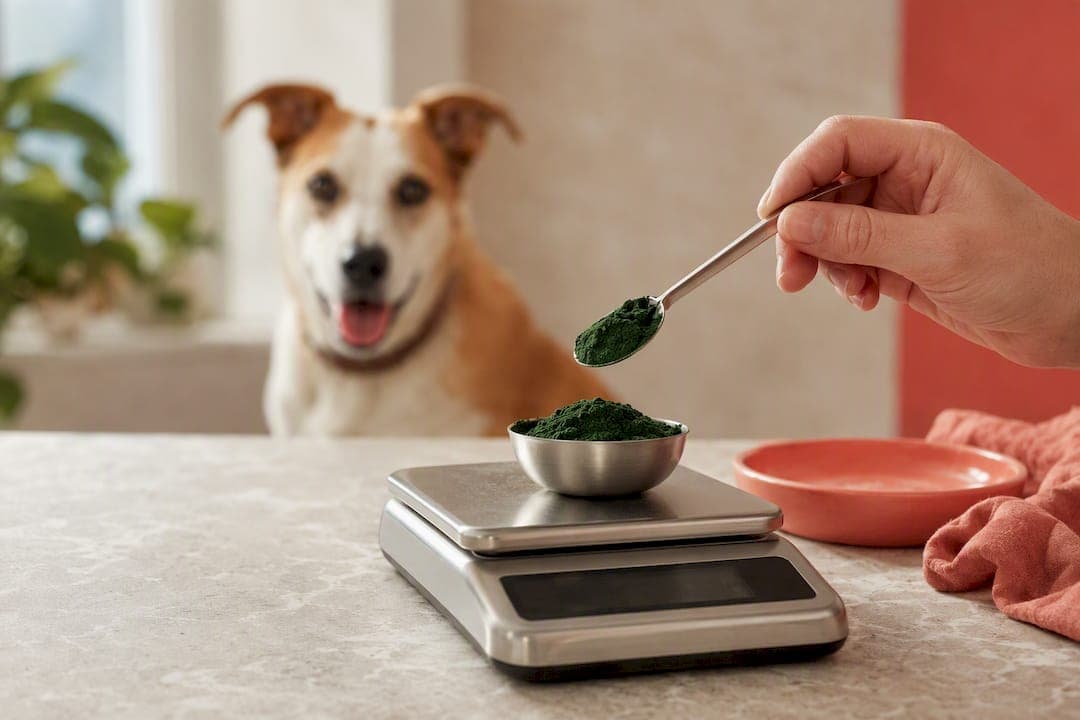
Spirulina is generally safe and can offer real immune, antioxidant, gut-stability, and coat-support benefits for most healthy dogs, but only when you use a high-quality, contaminant-tested product and dose it correctly. The main risks are contamination from poorly sourced algae and a handful of medical conditions where it's simply the wrong call. If your dog is healthy and you buy smart, spirulina is worth trying. If your dog has autoimmune disease or takes blood thinners, talk to your vet first.
TL;DR:
- Use high-quality, contaminant-tested spirulina products, as microcystins and heavy metals are the main safety concerns, not the supplement itself.
- Dosing should be based on your dog's weight, starting at a quarter to half the target dose for the first week, then gradually increasing.
- Stronger immune responses and gut microbiota stability are proven benefits, while effects on coat shine and energy remain anecdotal and unconfirmed at scale.
- Dogs with autoimmune conditions, blood-thinning medications, or severe liver disease should avoid spirulina or consult a vet before use.
- Third-party testing, species verification, and proper packaging are essential when selecting a safe, effective spirulina supplement for your dog.
Table of Contents
- What Peer-Reviewed Research Shows About Spirulina's Benefits for Dogs
- Risks to Know: Contamination, Side Effects, and Medication Interactions
- Weight-Based Dosing, Stepwise Introduction, and What to Track
- How to Pick a Safe, High-Quality Spirulina Product for Your Dog
- Powder, Tablets, or Treats: What Actually Works for Picky Eaters
- Conditions and Medications That Make Spirulina Inappropriate
- Kiblco's Vet-Informed Testing Checklist for Spirulina Products
- Final Verdict on Giving Your Dog Spirulina
- Where the Real Trade-offs Are With Spirulina
- Sources
What Peer-Reviewed Research Shows About Spirulina's Benefits for Dogs
Most of what gets said about spirulina online is marketing dressed up as science. The actual research is narrower, and honestly more interesting, than the "miracle superfood" pitch you'll see on a supplement label.
The strongest data comes from a 2021 trial published in Frontiers in Nutrition, which tracked dogs fed spirulina-supplemented diets over 42 weeks. The results were specific: higher fecal IgA (a marker of gut immune defense), a stronger antibody response to the rabies vaccine, and improved gut microbiota stability compared to unsupplemented dogs. That's not a vague "boosts immunity" claim. It's a measurable shift in how the immune system responded to a real vaccine challenge.
A more recent study adds dosing precision to the picture. Research published in BMC Veterinary Research tested working dogs at two inclusion levels, 0.04 g/kg and the higher tested dose of body weight, over seven weeks. The higher dose produced more pronounced effects: better antioxidant capacity, favorable shifts in lipid profiles, and upregulation of genes tied to gut-barrier function. The DOI-linked report on the same work describes biochemical and immunological changes that track with dose, meaning more spirulina (within tested ranges) generally means a stronger measurable effect, at least on paper.
Statistic callout: In the BMC trial, dogs receiving the higher dose (the higher tested dose) showed more consistent antioxidant and gut-gene changes than those on the lower dose (0.04 g/kg), suggesting a genuine dose-response relationship rather than a flat effect.
Here's where the evidence gets thinner:
- Strong evidence: immune markers (fecal IgA, vaccine antibody titers) and gut microbiota stability, backed by controlled trials.
- Moderate evidence: antioxidant capacity and lipid-profile shifts, shown in dose-dependent studies with defined timelines.
- Preliminary or anecdotal: coat shine, itch reduction, and general "energy" improvements, reported by owners but not yet confirmed in randomized trials at scale.
- Nutrient density claims: USDA FoodData Central confirms spirulina's protein, B vitamin, iron, and phycocyanin content is genuinely high, but some nutrients, notably B12, exist as analogues with limited bioavailability, so don't treat spirulina as a vitamin substitute.
The limitations matter too. These studies involve modest sample sizes, run for weeks rather than years, and skew toward working or research-colony dogs rather than the full range of breeds, ages, and health backgrounds you'd find in a typical household. A separate 2024 study in overweight dogs found improved antioxidant status and reduced triglycerides in a subset of animals, but that finding is preliminary and shouldn't be read as proof spirulina treats obesity-related metabolic issues.
Risks to Know: Contamination, Side Effects, and Medication Interactions
The single biggest risk with spirulina isn't the algae itself. It's what might be growing alongside it.
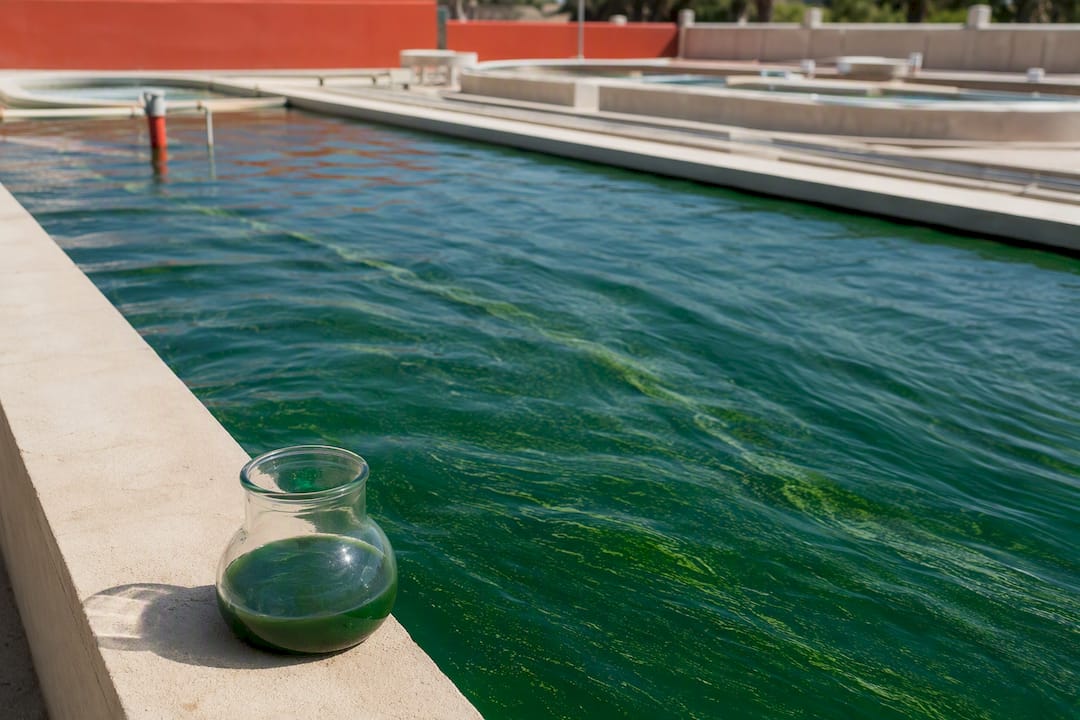
Spirulina is cultivated in open ponds or controlled tanks, and if the water source or growing conditions are poorly managed, the final product can carry microcystins (toxins produced by certain cyanobacteria) or heavy metals like lead and cadmium. This contamination risk is well documented enough that tolerability reviews consistently flag sourcing quality as the primary safety concern, not the spirulina itself. A clean, well-tested product and a contaminated one can look identical on the shelf.
Beyond contamination, short-term side effects tend to be mild and gastrointestinal: loose stool, mild gas, or a temporary appetite change, usually resolving within a few days. You reduce this risk by starting low and increasing gradually rather than jumping straight to a full dose.
Medical contraindications deserve more weight than most articles give them:
- Dogs with autoimmune disease (like lupus or immune-mediated hemolytic anemia) should generally avoid spirulina, since it can stimulate immune activity that's already overactive.
- Dogs on anticoagulant or antiplatelet medications need vet clearance first, because spirulina's effects on blood and inflammation markers could theoretically compound with these drugs.
- Dogs with severe liver disease should be supplemented only under veterinary supervision, since the liver processes much of what a dog ingests.
Pro Tip: Start any new spirulina product at a quarter of the target dose for the first week and watch stool consistency closely. A dog's gut will tell you faster than any label how well it's tolerating a new supplement.
Watch for red flags that mean stop and call your vet: persistent vomiting beyond 24 hours, hives or facial swelling, unusual bleeding or bruising, or sudden behavioral or neurological changes. None of these are common, but none should be brushed off either.
Weight-Based Dosing, Stepwise Introduction, and What to Track
Research dosing translates into simple weight brackets once you do the math. The BMC Veterinary Research study used 0.04 to 0.08 grams per kilogram of body weight, and that range lines up closely with the practical dosing guidance summarized in the dosing research behind it.
Introduce it in steps, not all at once:
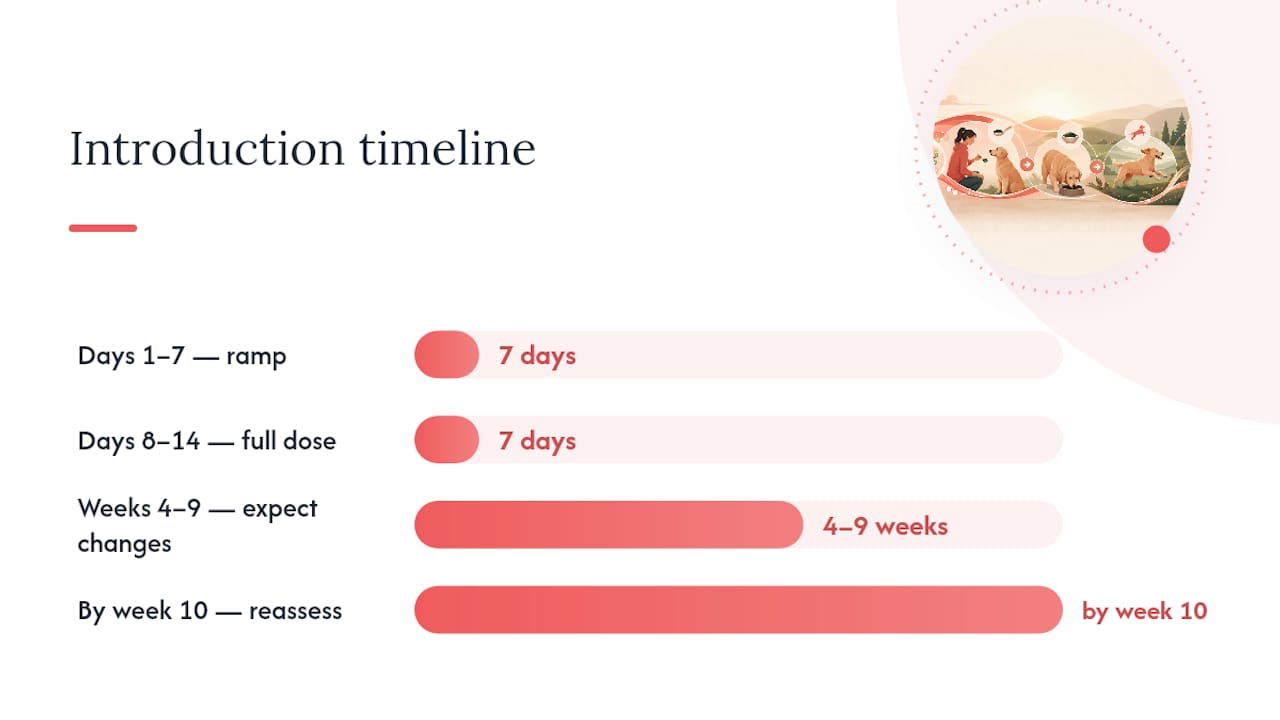
- Days 1 to 7: Start at 25% to 50% of the target dose, mixed into food once daily.
- Days 8 to 14: If stool and appetite look normal, move to the full target dose.
- Ongoing: Give it daily with a meal, since spirulina's fat-soluble carotenoids absorb better alongside food than on an empty stomach.
- Week 4 to 9: This is the realistic window for noticing measurable changes, based on the timelines used in the actual trials. Coat or energy changes, if they happen at all, tend to show up later than gut or immune markers.
If you're using powder, a kitchen scale beats eyeballing a scoop, since spirulina powder density varies by brand. Tablets remove that guesswork but limit your ability to fine-tune dose for smaller dogs. If you see no change by week 10, or if side effects show up early, stop and reassess with your vet rather than pushing through.
How to Pick a Safe, High-Quality Spirulina Product for Your Dog
This is the step most guides skip, and it's the one that actually determines whether spirulina helps your dog or quietly harms it. Third-party testing predicts safety far more reliably than small differences in dosing between brands.
Look for a Certificate of Analysis (COA) from an independent lab, not just an internal quality claim from the manufacturer. A usable COA should show microcystin levels (often reported in µg/kg or ppb) tested against recognized safety thresholds, plus a full heavy-metal panel covering lead, mercury, cadmium, and arsenic. If a brand won't produce a COA on request, that's a disqualifying red flag, not a minor omission.
Beyond the COA, check for:
- Species identification, specifically Arthrospira platensis, the species used in the dog studies cited here, rather than a vague "blue-green algae blend."
- Processing method, since freeze-drying or low-temperature drying preserves phycocyanin and other heat-sensitive compounds better than high-heat drying.
- No unnecessary additives, especially sweeteners, artificial flavors, or fillers that add no functional value.
- Canine-specific formulation where possible. A product like SEVA Canine Boost, formulated and dosed specifically for dogs, removes the guesswork of adapting a human supplement to a very different body size.
Pro Tip: Never substitute a human spirulina supplement for your dog's dose. Many human products are formulated with sweeteners like xylitol or flavoring agents that are unsafe for dogs, even when the base spirulina itself would be fine.
Powder, Tablets, or Treats: What Actually Works for Picky Eaters
Format matters more than most owners expect, mostly because it determines whether your dog will actually eat the stuff consistently.
- Powder offers the most dosing flexibility since you can adjust by fractions of a gram, but the taste is strong and grassy, and some dogs balk at it mixed into dry kibble.
- Tablets are easier to hide in a treat pouch or high-value snack, but they lock you into fixed increments, which makes fine-tuning a small dog's dose harder.
- Treats with spirulina baked in solve palatability but often dilute the actual dose, so check the label's per-treat milligram count against your target range.
If your dog turns their nose up at powder, try mixing it into wet food, plain pumpkin, or a small amount of bone broth, which masks the flavor better than dry kibble does. Splitting the daily dose across two meals instead of one also helps picky eaters tolerate the taste and reduces the odds of GI upset. For owners who want consistent, predictable dosing without measuring powder every day, a veterinary-formulated product designed for dogs from the start is usually the more reliable option.
Conditions and Medications That Make Spirulina Inappropriate
Spirulina isn't universally safe just because it's a "natural" supplement. A handful of situations call for a hard pass or a vet conversation before you start.
- Autoimmune disease. Spirulina can stimulate immune activity, which is the opposite of what you want in a dog already fighting an overactive immune system.
- Blood-thinning medications. Dogs on anticoagulants or antiplatelet drugs need veterinary clearance, since spirulina's effects on inflammation and clotting-related markers haven't been studied alongside these medications.
- Severe liver disease. The liver metabolizes much of what enters a dog's system, so any new supplement in a compromised liver deserves professional oversight.
- Pregnancy or nursing. Data on spirulina in pregnant or lactating dogs is limited, so this is a case where "no proven harm" isn't the same as "confirmed safe."
Before starting, run through this with your vet: current medications, any recent abnormal bloodwork, upcoming vaccinations (since spirulina may amplify immune response), and pregnancy status. Many vets will also recommend a baseline bloodwork check, particularly liver enzymes, before and a few weeks after starting supplementation, just to confirm nothing unexpected is shifting.
Kiblco's Vet-Informed Testing Checklist for Spirulina Products
Kiblco evaluates spirulina products the same way we evaluate every supplement: COA verification for microcystins and heavy metals, real-world palatability testing with actual dogs, clarity of dosing instructions on the label, packaging integrity, and retailer reliability.
The checklist we use, and one you can copy yourself:
- Request or locate a current COA before buying.
- Confirm the species is Arthrospira platensis.
- Check that dosing instructions map to your dog's actual weight, not a vague "one scoop."
- Test palatability with a small sample before committing to a full container.
- Verify the seller has a return policy in case your dog won't tolerate it.
Final Verdict on Giving Your Dog Spirulina
For most healthy dogs, spirulina backed by third-party testing and dosed correctly is a reasonable, evidence-supported addition. Check with your vet first, choose a tested product, start low, and track how your dog responds over several weeks.
Where the Real Trade-offs Are With Spirulina
The research on spirulina for dogs is more solid than most supplement categories get, and that's exactly why the marketing overreach around it bothers me. The immune and gut findings from the Frontiers in Nutrition trial are genuinely good evidence. The coat-shine and allergy-relief claims plastered across product pages are not, and treating them as equivalent does owners a disservice.
Where conventional advice falls short is dosing. Most product labels give you a single flat scoop size regardless of whether your dog weighs 12 pounds or 90. The actual research uses body-weight-based dosing for a reason: effect size scales with dose, and so does risk of GI upset. Match your dose to your dog's weight, not the scoop that came in the tub.
If I had to rank priorities for a dog owner considering this, quality control beats dosing precision, which beats everything else. A contaminated product at the "perfect" dose is worse than a clean product dosed slightly conservatively. Check the COA before you check the math.
— Chris
Sources
- Supplementation of Diets With Spirulina Influences Immune and Gut Function in Dogs — Frontiers in Nutrition (2021)
- Integrated effects of dietary supplementation of Spirulina platensis in working dogs — BMC Veterinary Research (2026)
- Integrated effects of dietary supplementation of Spirulina platensis in working dogs — DOI (2026)