
Yes, you can give your dog ashwagandha, but only with veterinary guidance and a dose based on your dog's weight. The deciding factors are simple: what medications your dog already takes, and whether the product uses a standardized extract with a known dose.
Recent canine trials give this herb more credibility than most "natural calming" supplements. A randomized, double-blind trial found that 15 mg/kg of standardized ashwagandha root extract lowered urine cortisol and improved owner-rated fear scores over four weeks. A separate geriatric dog study using the same dose reported better cognitive test scores and increased serotonin after 60 days.
Before you do anything else:
- Call your vet if your dog takes thyroid medication, insulin, immunosuppressants, or sedatives.
- Never give a human ashwagandha gummy, capsule, or tincture. Many contain xylitol, added herbs, or doses far outside anything tested in dogs.
- Pull the product label and check for a stated withanolide percentage before your vet appointment. It will save you a follow-up call.
Key Takeaways
Ashwagandha shows real but early promise for canine stress and cognitive support at a 15 mg/kg standardized dose, and it should always be introduced with veterinary guidance.
| Point | Details |
|---|---|
| Verdict on safety | Conditional yes, dependent on your vet's approval and your dog's current medications. |
| Evidence-backed dose | 15 mg/kg once daily of standardized extract is the dose used across three canine RCTs. |
| Strongest benefits | Reduced cortisol and anxiety scores, plus improved cognition and serotonin in geriatric dogs. |
| Biggest risks | Thyroid interaction, liver signals, and unknown effects in pregnant, nursing, or autoimmune-diagnosed dogs. |
| Kiblco's role | Kiblco vets products for standardized extract content and third-party testing before featuring them. |
Table of Contents
- How Ashwagandha Works in Dogs
- What Does the Research Actually Show?
- What Benefits Does Ashwagandha Offer Dogs?
- Is Ashwagandha Safe for Dogs? Side Effects and Interactions
- How Much Ashwagandha Should You Give a Dog?
- How Do You Choose a Good Ashwagandha Supplement?
- What Are the Alternatives to Ashwagandha for Dog Anxiety?
- How Kiblco Vets Ashwagandha Research and Products
- Should You Actually Give Your Dog Ashwagandha?
- Shop Vetted Ashwagandha Picks the Smart Way
- Frequently Asked Questions
- Sources
How Ashwagandha Works in Dogs
Ashwagandha is classified as an adaptogen, which means it's believed to help the body regulate its stress response rather than sedate it outright. In practice, that means it works on the hypothalamic-pituitary-adrenal (HPA) axis, the same feedback loop that controls cortisol release when a dog is scared, anxious, or in a chronically stressful environment.

The active compounds responsible are called withanolides, a group of steroidal compounds concentrated in the root. Human research summarized by NCCIH points to their role in modulating stress hormones and supporting neurotransmitter balance, and that mechanism appears to carry over into the dog trials that measure similar biomarkers.
This is not a sedative in the way trazodone or gabapentin are sedatives. There's no knockout effect an hour after the dose. The geriatric dog trial tracked changes over 60 days and found measurable increases in plasma serotonin and dopamine, not an immediate mood shift. Owners who expect a same-day calming effect are usually disappointed, then quit early, right before the compound would have started showing results.
Think of it as a simple chain of events: root extract goes in, withanolides interact with stress-hormone pathways, cortisol and neurotransmitter levels shift over weeks, and behavior changes follow last. Skipping steps or expecting the last link to happen immediately is the most common reason people conclude "it didn't work."
Standardization is the detail most shoppers skip. A product labeled simply "ashwagandha" with no percentage listed could be wildly different in potency from one batch to the next. Trials use standardized ashwagandha root extract (ARE), sometimes the branded version KSM-66, specifically because the withanolide content is controlled and consistent. Buying an unstandardized bulk powder means you're guessing at the dose even if you weigh it precisely.
- Adaptogen mechanism: works through the HPA axis, not direct sedation.
- Active compound: withanolides, concentrated in root extracts.
- Timeline: expect gradual change over 4 to 8 weeks, not hours.
- Standardization: look for a stated withanolide percentage or a named extract like KSM-66.
What Does the Research Actually Show?
Three peer-reviewed canine trials, all published or indexed between 2022 and 2025, form the backbone of what we actually know about ashwagandha in dogs. That's a small body of evidence compared to something like glucosamine, but it's a real improvement over the zero-trial situation most "calming" supplements are working with.
The geriatric trial is the most detailed of the three. Researchers gave aged beagles 15 mg/kg of ARE daily for two months and tracked them with a T-maze test and a canine cognitive dysfunction syndrome (CDS) scoring tool. Dogs on the extract improved on both cognitive tests, and their blood work showed increases in serotonin and dopamine, with no reported adverse events in that sample.
The stress and anxiety RCT is the one most owners actually care about, since it targeted dogs already showing signs of fear or anxiety rather than healthy dogs at baseline. Over several weeks, the treatment group's urine cortisol:creatinine ratio dropped compared to placebo, and owner-completed CBARQ questionnaires showed improvement in fear and anxiety domains. The dose was identical to the geriatric trial: 15 mg/kg once daily.
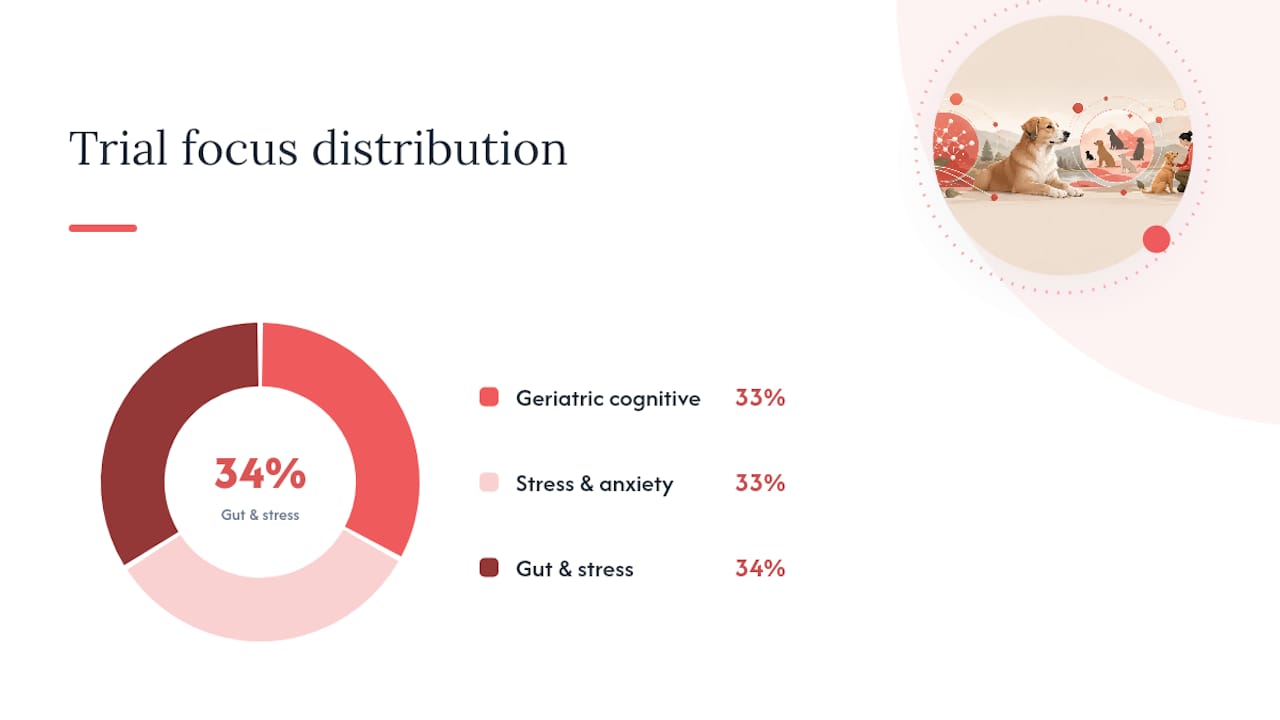
The Frontiers trial took a different angle entirely, looking at gut parameters alongside stress markers. That's a meaningful addition because chronic stress and gut inflammation are linked in dogs the same way they are in people, and it suggests ashwagandha's effects might not be limited to behavior alone.
Where the evidence runs thin. Every one of these trials involves a relatively small number of dogs, typically a few dozen at most. None of them are multi-year studies, which means we don't have solid long-term safety data at these doses. All three used proprietary standardized extracts rather than generic ashwagandha powder, so results may not generalize to whatever bag of root powder you find on a supplement shelf. And the outcome measures, cortisol ratios and cognitive test scores, are useful biomarkers, but they're not identical to a vet directly observing "this dog is measurably less anxious in real-world triggers."
- All three trials used a standardized dosing approach similar to 15 mg/kg, which serves as a practical starting reference point.
- Sample sizes are small enough that results should be considered promising, not definitive.
- Every study relied on a standardized extract, not raw root powder purchased off a shelf.
- None of the trials ran longer than 60 days, so chronic-use safety data in dogs is still limited.
What Benefits Does Ashwagandha Offer Dogs?
The strongest evidence supports two specific outcomes: situational stress reduction and cognitive support in older dogs. Everything past that gets speculative fast.
Moderate to strong evidence:
- Reduced urine cortisol and improved fear/anxiety scores in dogs already showing stress behaviors, based on the 4-week RCT.
- Improved cognitive test performance and increased serotonin and dopamine in geriatric dogs over 60 days, per the aging-dog trial.
Limited but promising evidence:
- Changes in gut parameters alongside stress markers, from the Frontiers trial, though the mechanism connecting gut health and stress hasn't been fully mapped in dogs.
- General anti-inflammatory support, which shows up in some biomarker data but hasn't been tied to clear clinical outcomes yet.
Where the evidence just isn't there: severe anxiety, panic-level fear responses, or aggression. None of the trials enrolled dogs at that severity, and expecting an adaptogen to do the work of a behaviorist or a prescription medication is a setup for disappointment.
The practical sweet spot is a senior dog showing early cognitive slowing, or a dog with mild situational stress, like car rides, vet visits, or moderate noise sensitivity, who isn't a candidate (yet) for prescription medication. It's not a replacement for a trained behaviorist when a dog has a genuine anxiety disorder, and it works best as one piece of a broader plan rather than a stand-alone fix.
Is Ashwagandha Safe for Dogs? Side Effects and Interactions
The short answer: mild gastrointestinal upset and lethargy are the most commonly reported issues, while rarer concerns involve the liver and thyroid, based largely on human safety data extrapolated to dogs since canine long-term safety studies don't yet exist.
None of the three canine RCTs reported serious adverse events at 15 mg/kg over their study periods. That's reassuring, but a 60-day trial with two dozen dogs can't rule out rare or long-term problems the way years of veterinary use eventually would. The ODS fact sheet on human use flags gastrointestinal upset, possible liver enzyme changes, and drowsiness as known effects, and a veterinary clinic resource on the topic specifically warns about thyroid stimulation, since ashwagandha can influence thyroid hormone activity in ways that matter a lot for dogs already being treated for hypothyroidism.
Pets don't metabolize herbs the way people do. A supplement that's well tolerated in a 150-pound adult isn't automatically safe at a proportional dose in a 12-pound terrier, and thyroid or immune-modulating effects that are minor in humans can be more significant in a dog already on medication for those systems.
Drug classes and conditions that warrant a vet conversation first:
- Thyroid medications (levothyroxine and similar), since ashwagandha may affect thyroid hormone levels.
- Immunosuppressants, because of ashwagandha's immune-modulating properties.
- Diabetes medications or insulin, due to potential blood sugar effects.
- Sedatives or anti-anxiety prescriptions, to avoid compounding effects.
Populations that need extra caution or should avoid it entirely:
- Pregnant or nursing dogs, where no safety data exists.
- Dogs with autoimmune disease, given the immune-modulating mechanism.
- Dogs with existing liver disease.
- Puppies, since none of the trials included young, growing dogs.
- Any dog already taking multiple medications, where interaction risk compounds.
If your dog gets into a bottle of ashwagandha, especially a human product with added ingredients, call your vet or the ASPCA Poison Control line right away. Have the product label in hand, your dog's weight, and the approximate time of ingestion. Most incidental exposure causes mild stomach upset, but multi-ingredient human formulas can include xylitol, other herbs, or doses far outside anything a dog's system has been tested against.
How Much Ashwagandha Should You Give a Dog?
The dose used across all three major canine trials was a standardized root extract given once daily, roughly corresponding to 15 mg/kg in those studies. That figure is the closest thing to an evidence-backed reference point available, but it came from clinical research settings with vet oversight and lab monitoring, not a starting point for casual home dosing.
Here's what that dose looks like in practice for different sizes of dog:
- 10 lb dog (about 4.5 kg): roughly 68 mg of standardized extract per day.
- 30 lb dog (about 13.6 kg): roughly 204 mg of standardized extract per day.
- 60 lb dog (about 27.2 kg): roughly 408 mg of standardized extract per day.
These numbers only mean something if the product tells you exactly how much standardized extract, and what withanolide percentage, is in each dose. A "1000 mg proprietary blend" listing on a label is close to useless for this math.
Forms available, and their trade-offs:
- Standardized extract capsules: most consistent with trial data, easiest to dose accurately.
- Whole root powder: cheaper, but potency varies batch to batch, making it hard to know your actual dose.
- Chews or soft treats: convenient and often better accepted, but check the withanolide content per chew rather than assuming it matches capsule potency.
- Tinctures: dosing is flexible but concentration varies widely between brands.
Avoid any human multi-ingredient product, especially gummies formulated with melatonin, valerian, or added sugars. Those combinations haven't been tested in dogs and introduce interaction risks that single-ingredient standardized extracts don't carry.
Start low relative to the trial dose, mix it into food rather than giving it directly, and watch your dog's stool, appetite, and behavior for the first two to eight weeks. That window matches the timeline in the geriatric and anxiety trials, where measurable changes showed up gradually rather than overnight.
Pro Tip: Ask for a certificate of analysis (COA) before you buy. Reputable ashwagandha brands for pets will show you third-party lab results confirming the withanolide percentage on the label actually matches what's in the bottle.
How Do You Choose a Good Ashwagandha Supplement?
Not every bottle labeled "ashwagandha for dogs" is built the same way, and label-reading is the single biggest factor separating a product that matches trial conditions from one that's a shot in the dark.
- Check for a standardized extract, ideally with a named formulation like KSM-66, rather than generic "ashwagandha root powder."
- Look for a stated withanolide percentage. No percentage listed usually means no real quality control behind the claim.
- Confirm it's formulated for pets, not a repackaged human supplement with human-dose capsules.
- Ask for third-party testing or a COA confirming potency and screening for contaminants.
- Avoid proprietary blends with no individual ingredient amounts listed. If you can't calculate mg/kg from the label, you can't dose it responsibly.
Questions worth bringing to your vet appointment:
- Does this interact with anything my dog currently takes?
- What starting dose makes sense for my dog's weight and health history?
- How long should we trial it before deciding if it's working?
- Should we run baseline bloodwork, especially thyroid panels, before starting?
Red flags to walk away from: gummies containing xylitol or other sugar alcohols, added herbs stacked into a "calming blend" with no individual dosing transparency, and any product that won't disclose its withanolide content on request.
For dogs on multiple medications or with a complex health history, a veterinary-formulated or compounded product, dosed and monitored directly by your vet, is often the safer route compared to an over-the-counter supplement aisle pick.
What Are the Alternatives to Ashwagandha for Dog Anxiety?
Ashwagandha isn't the only option, and for a lot of dogs it shouldn't be the first one tried.
- Behavior modification and enrichment are the first-line approach for most anxiety cases, and tools like snuffle mats or lick mats can support that work by giving anxious dogs a constructive outlet.
- L-theanine and other calming nutraceuticals are often preferred by vets for mild situational stress and have their own separate research base.
- Prescription medications like trazodone, fluoxetine, or gabapentin are appropriate for moderate to severe anxiety, panic responses, or aggression, situations where a supplement alone won't cut it.
- Wraps and pressure tools can help specifically with noise phobias like thunderstorms and fireworks.
If your dog's anxiety is severe, chronic, or involves any safety risk, a veterinary behaviorist consultation should come before any supplement conversation. And if you do combine approaches, introduce one new intervention at a time and never stack multiple sedating products without your vet's explicit sign-off.
How Kiblco Vets Ashwagandha Research and Products
Kiblco's approach to supplement guidance starts with the research, not the marketing copy. Before recommending anything, the team looks for:
- Randomized, double-blind, placebo-controlled trials conducted in dogs, not just extrapolated from human studies.
- Clear dosing data (mg/kg) and disclosed extract standardization, since a supplement is only as trustworthy as its transparency.
- Safety signals cross-checked against authoritative sources like ODS and NCCIH, alongside veterinary input on interactions and contraindications.
This guidance draws on real hands-on product evaluation combined with the current canine trial data, and it comes with an honest caveat: canine research on ashwagandha is still young, sample sizes are small, and individual dogs vary. Nothing here replaces a conversation with your own veterinarian about your dog's specific health picture.
Should You Actually Give Your Dog Ashwagandha?
Here's where I land after going through these trials: the data is genuinely more encouraging than I expected going in, but it's also being oversold in a lot of corners of the pet supplement world. Three small randomized trials with consistent 15 mg/kg dosing is a real signal, not noise, and it's more rigor than most "calming" ingredients on pet store shelves can claim. That said, a few dozen dogs over 60 days doesn't tell us what happens after a year of daily use, and I'd treat any brand claiming otherwise with skepticism.
Kiblco would consider recommending ashwagandha for a senior dog showing early cognitive changes, or a dog with mild, situational stress, always alongside a vet's input and a standardized, third-party-tested product. It wouldn't recommend it as a stand-alone fix for severe anxiety or aggression, and neither should you.
Before starting: talk to your vet, choose a pet-specific formula with disclosed withanolide content, and if you're using it long-term, ask about periodic bloodwork to keep an eye on thyroid and liver values.
Shop Vetted Ashwagandha Picks the Smart Way
Sorting through supplement marketing claims to find a product that actually matches the trial conditions, standardized extract, disclosed withanolide percentage, pet-specific formulation, is exactly the kind of legwork Kiblco exists to do.

Every pick Kiblco features gets evaluated against the same criteria used throughout this guide: standardized extract over generic powder, third-party testing or a COA on request, and formulation built for dogs rather than repackaged from a human supplement aisle. If you're also dealing with joint issues alongside anxiety in an older dog, the senior joint supplement guide covers products that get vetted the same way. Head to Kiblco's product picks to see the current lineup and read the full pros-and-cons breakdown on each one, then bring your shortlist to your vet before you start giving anything to your dog.
Frequently Asked Questions
Is ashwagandha safe for dogs? It appears safe in the short term at 15 mg/kg based on three small canine trials with no reported serious adverse events, but long-term safety data doesn't exist yet, and dogs on thyroid, immune, or diabetes medications need veterinary clearance first.
What is the best ashwagandha for dogs? Look for a standardized extract with a disclosed withanolide percentage, ideally a named formulation like KSM-66, formulated specifically for pets rather than a human capsule or gummy.
What is the right ashwagandha dosage for dogs? Canine trials used 15 mg/kg of standardized root extract once daily, which translates to roughly 68 mg for a 10 lb dog, 204 mg for a 30 lb dog, and 408 mg for a 60 lb dog, always under veterinary guidance.
Can ashwagandha help with dog anxiety naturally? Yes, for mild to moderate situational stress. A four-week trial found reduced cortisol and improved owner-rated fear scores, but severe anxiety or aggression typically needs behavior therapy or prescription medication alongside or instead of a supplement.
What side effects should I watch for? Mild gastrointestinal upset and lethargy are most common. Rarer concerns include liver enzyme changes and thyroid hormone effects, which is why bloodwork monitoring matters for long-term use.
Can I just give my dog human ashwagandha supplements? No. Human products often contain doses, added herbs, or sweeteners like xylitol that haven't been tested in dogs and can be dangerous. Choose a pet-specific, standardized product instead.
Sources
- The role of Ashwagandha in modulating gut parameters in dogs—a randomized double-blind placebo-controlled trial
- Ashwagandha - Health Professional Fact Sheet
- Ashwagandha | NCCIH