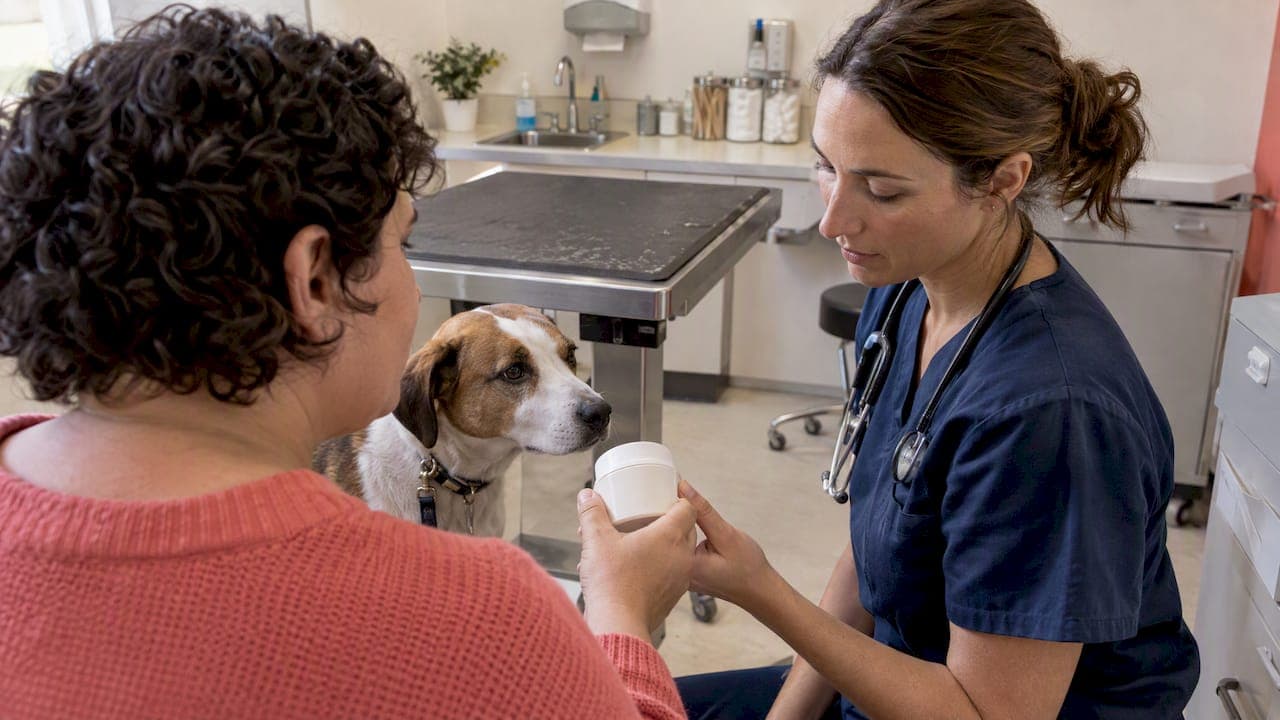
Postbiotics are preparations of inactivated microorganisms and their components, and they may support gut and immune markers in dogs, though the evidence is promising rather than settled. A 2025 systematic review of canine studies found the research base small. We test supplements hands-on with veterinary input, and our advice stays the same: talk with your veterinarian before you start.
TL;DR:
- The 2025 review included only 13 dog studies, and pooled results showed no statistically significant differences because trials were small and varied.
- A Beagle trial lasting 42 days tested one Bifidobacterium animalis preparation at 0.05% and 0.1% of diet, levels that cannot guide dosing for other products.
- Choose products that name the strain or fermentation source, disclose the amount per serving, publish independent testing, and provide full ingredients and storage directions.
- For persistent diarrhea or itching, address diet and seek veterinary evaluation before supplements; consult your veterinarian first for chronic illness, immune problems, or antibiotic use.
Table of Contents
- What are postbiotics, and how do they differ from probiotics and prebiotics?
- How do postbiotics work inside a dog's body?
- What does the research actually show for dogs?
- What benefits might your dog actually notice?
- How do you stay safe and spot a good postbiotic product?
- How to choose and use a postbiotic supplement
- Where do postbiotics fit with prebiotics, probiotics and diet?
- When should you see your veterinarian?
- Why hands-on, vet-informed testing matters for supplements
- Find vetted dog-health picks with us
- FAQ
- Sources
What are postbiotics, and how do they differ from probiotics and prebiotics?
The term sounds like marketing, but it has a formal definition. The 2025 systematic review of postbiotics in dogs uses the ISAPP definition: preparations of inactivated microorganisms and/or their components that confer a health benefit. In plain words, the microbes are no longer alive, but what is left of them still does something useful in the body.
The three terms get mixed up on labels, so here is the cleanest way to separate them:
- Prebiotics are food for the microbes already living in your dog's gut. They are typically fibers, and they work indirectly by feeding the bacteria you want to encourage.
- Probiotics are live microorganisms. They have to survive storage, stomach acid and bile before they can do anything, which is why viability and handling matter so much.
- Postbiotics are inactivated microbes or the things those microbes make, such as short-chain fatty acids, enzymes, peptides and cell wall fragments. They act directly, with nothing left to keep alive.
That last point is the practical appeal. A comprehensive overview of postbiotics notes that they often carry safety and stability advantages over live probiotics, because there is no living culture to protect from heat or shelf time.
On a label, you are likely to meet postbiotics in a few forms:
- Heat-inactivated bacterial cultures, sometimes written as "heat-treated" or "heat-killed"
- Fermentation metabolites, the compounds left behind after microbes ferment a medium
- Yeast-derived products, which are often listed as yeast cell wall or yeast culture ingredients
- Blends of inactivated cells plus their metabolites
Many products never use the word "postbiotic" at all. You may see "fermentation product," "inactivated," "heat-killed" or "paraprobiotic" instead. If the label names a strain and a form, you can trace the claim. If it only says "gut support blend," you cannot. Our guide to a vet-backed prebiotic for dogs covers the first category in the same practical terms, which helps when you are sorting a crowded supplement shelf.
How do postbiotics work inside a dog's body?
It seems odd that dead microbes could do anything. The explanation is that the immune system and the gut lining respond to molecular patterns, not to whether a cell is alive.
A review of postbiotic components lists the active pieces: enzymes, peptides, teichoic acids, peptidoglycan fragments, exopolysaccharides and organic acids. The first group sits in the microbial cell wall. Peptidoglycans and teichoic acids are structural fragments that immune cells recognize through surface receptors. Even when the organism is inactive, those receptors can still register the fragment and adjust the signals that immune cells send out.

The second group is metabolites, the compounds microbes produce. The best known are short-chain fatty acids such as acetate, propionate and butyrate. Colon cells use them as fuel, and they help keep the gut environment slightly acidic, which discourages less friendly bacteria. Other products, such as peptides and bacteriocins, can have direct antimicrobial effects on certain organisms.
Put together, the mechanisms owners hear about usually fall into four buckets:
- Immune modulation. Cell wall fragments interact with immune receptors and can shift the balance of inflammatory and calming signals.
- Gut barrier support. Short-chain fatty acids feed the cells lining the colon, and the tight junctions between those cells help keep unwanted material out of the bloodstream.
- Changes in the microbial environment. More acid production and a shift toward fermenting fiber (saccharolytic fermentation) can favor beneficial bacteria and reduce protein-fermenting, potentially problematic ones.
- Antimicrobial activity. Some metabolites and peptides inhibit specific organisms directly.
A mechanistic review of postbiotics in animal health reports that in dogs, postbiotics can increase saccharolytic fermentation, raise short-chain fatty acid concentrations, increase beneficial bacteria such as Bifidobacterium and modulate immune cell cytokine profiles. Treat that as a map of plausible pathways, not a promise. Whether a given product reaches those targets at a useful dose is the question the dog trials try to answer, and that is where the next section goes.
One practical consequence: because the active ingredient is a particular strain's fragments or metabolites, results from one postbiotic do not automatically transfer to another. A product built on a different organism, a different heat treatment or a different fermentation medium is a different product.
What does the research actually show for dogs?
The honest summary is that the field is young. The 2025 systematic review and meta-analysis found only 13 in vivo dog studies. For the outcomes it could pool, the meta-analyses showed no statistically significant pooled differences. The authors point to small sample sizes, different strains and varied study designs as the reasons. A full text version of the same work is available on PubMed Central, where the authors conclude that more research is needed before therapeutic recommendations can be made for dogs.
"Limited" has a specific meaning here. It does not say postbiotics fail. It says the studies are too few, too small and too different from one another to add up to a firm answer. Individual trials can still be encouraging, and the most detailed recent one is a 42-day randomized controlled trial in adult Beagles using a postbiotic derived from Bifidobacterium animalis. Its authors report, in the Frontiers in Microbiology paper, several measured outcomes:
- Serum antioxidant markers improved: MDA fell, while SOD, GSH-Px and CAT rose
- Bone formation markers (PINP and OC) rose
- Hair quality metrics improved
- Fecal acetic and propionic acids increased
- Gut microbiota shifted, with increases in beneficial genera
- No adverse effects on growth performance, fecal consistency or blood parameters
A PubMed record of the same Beagle trial adds that pro-inflammatory cytokines TNF-α and IL-6 were reduced, and serum IgA, IgM and IgG increased.
The Beagle trial tested the postbiotic at 0.05% and 0.1% of the basal diet for 42 days, and it was safe and well tolerated at both levels, according to the study abstract.
A second line of evidence comes from a 90-day controlled study of live and heat-treated Bifidobacterium animalis subsp. lactis CECT 8145 in adult dogs. Both forms were well tolerated, both increased fecal propionate, and both changed bacterial composition and functional gene pathways, with no adverse clinical effects. It is a useful reminder that the heat-treated version behaved acceptably next to the live one.
How do positive trials sit beside a meta-analysis with no significant pooled effect? Mostly through scale and variety. One well-run Beagle study with one strain, one dose and one diet can show clear changes in its own dogs. When many small studies with different strains and endpoints are pooled, those signals blur. Neither result cancels the other. For you, the sensible reading is that postbiotics are plausible and appear safe at studied doses, while the strength of benefit for any individual dog is not established. Keep these cautions in mind as well:
- Most trials use healthy adult dogs, often of one breed, so results may not carry over to puppies, seniors or sick dogs
- Studies run weeks to a few months, which says little about long-term use
- Product form, strain and dose differ from study to study, so findings do not transfer cleanly between commercial products
What benefits might your dog actually notice?
Trial outcomes are lab values and scores. Owners care about stools, itching, coat and energy. Here is how the two connect, and how strong each signal is.
Gut outcomes
- Stool quality: the Beagle trial reported no adverse effect on fecal consistency, and mechanistic work describes postbiotics stabilizing stool during stress. Treat firmer stools as plausible rather than proven for every dog.
- Short-chain fatty acids: increases in acetic and propionic acids appeared in the Beagle trial, and increased propionate appeared in the CECT 8145 study. This is one of the steadier signals across studies.
- Bacterial balance: increases in beneficial genera, with reductions in proteolytic bacteria described in the mechanistic review.
Immune and skin outcomes
- Lower pro-inflammatory cytokines (TNF-α and IL-6) and higher immunoglobulins in the Beagle trial
- Better hair quality metrics in the same trial
- Antioxidant improvements, including higher SOD and lower MDA
These are measured in blood and on hair samples, not in how a dog feels. A better hair quality score does not guarantee a visibly shinier coat in your living room, and a cytokine change does not by itself mean less itching. The review literature also describes immune modulation in broader terms, so we treat skin and allergy benefits as preliminary.
Stronger versus weaker signals
- Stronger: tolerability at studied doses, and increases in short-chain fatty acids
- Moderate: shifts in microbiota composition and antioxidant markers, seen in individual trials
- Preliminary: coat appearance, allergy-related itching and any bone-related effect, each resting on few studies
If your dog has a specific problem, such as ongoing loose stool or constant itching, a supplement is not the first tool. The later section on integrating gut-health steps explains why diet and diagnostics come first.
How do you stay safe and spot a good postbiotic product?
In the studies we reviewed, postbiotics were generally safe and well tolerated at the doses tested. The Beagle trial found no adverse effects on growth, fecal consistency or blood parameters, and the 90-day study saw no adverse clinical effects. The concern is not the concept but the market. The AAHA guidance on microbiome, prebiotics and postbiotics cautions that product quality and efficacy vary among supplements, and that stool problems often respond to diet changes.
Use this checklist before you buy:
- A named strain or fermentation source. "Bifidobacterium animalis, heat-treated" tells you something. "Proprietary gut blend" does not.
- Third-party testing. Look for a certificate of analysis or independent lab results you can actually open.
- A clear amount per serving. Dosing by dog weight should be stated, not implied.
- A complete ingredient list. Fillers, sweeteners and flavorings matter, especially for dogs with sensitivities.
- Stability information. Heat-inactivated products are often shelf-stable, but the label should say how to store the product and for how long.
- Evidence on the finished form. Trials test specific preparations, so a company should be able to say what its own product has been tested against.
Pro Tip: Photograph the front and back of the label before you open the bag. If your dog has a reaction, your veterinarian will want the exact strain, form and lot number, and labels get lost.
To use a new supplement safely, introduce it alone, not alongside a new food or treat, so you can tell what caused any change. Begin with a small portion, watch stool, appetite and energy for several days, and increase only to the labeled amount. If you see vomiting, diarrhea that persists, itching that gets worse or lethargy, stop and call your veterinarian.
How to choose and use a postbiotic supplement
Start with the shopping list, then move to how to introduce a product and what to watch.
Prefer
- Products that identify the organism and say whether it is heat-inactivated or a fermentation metabolite
- Brands that publish third-party lab results
- A clear serving size matched to body weight
- A stable, easy-to-store format
- Transparent, short ingredient lists
Avoid
- Vague "proprietary blend" claims with no strain or amount
- Health promises that sound like treatment, such as curing allergies or colitis
- Products that borrow results from a different strain than the one inside
- Very sweet or heavily flavored formats if your dog has a sensitive stomach
A word on dosing. The Beagle trial added its postbiotic at 0.05% and 0.1% of the basal diet, as reported in the trial abstract. That is a research feeding level for a specific preparation, not a number you can apply to a different product. A percentage of a trial diet does not translate into scoops or chews for your dog. Ask your veterinarian to confirm a practical amount per kilogram of body weight, using the manufacturer's directions as the starting point.
Here is a simple way to introduce and track a product with an adult dog:
- Choose a day when your dog's routine is normal and no other new foods are planned.
- Give a small portion of the labeled amount for the first few days.
- Move up to the full labeled serving if stools and appetite stay steady.
- Keep the rest of the diet unchanged for at least a few weeks.
- Note stool quality, itch, energy and coat each week.
Expect a timeline that depends on what you are watching. Stool changes, if they happen, tend to show up sooner. Metabolic and coat-related effects are slower, and in the Beagle study the changes were measured after 42 days, so a few weeks of consistent use is the minimum window to judge. If nothing has changed by then, that is useful information to bring to your veterinarian, not a reason to raise the dose.
Pro Tip: Match the form to your routine. A powder mixed into a meal is easy to dose precisely, while a treat or chew works if your dog eats on a schedule you control. Keep a short log with the date, serving and stool score, so you can see a trend instead of relying on memory.
When you want help comparing options, our dog health category collects the supplement reviews we have tested, with the pros and cons written out.
Where do postbiotics fit with prebiotics, probiotics and diet?
Think of the gut as a system with several levers. A single supplement rarely does the whole job.
- Diet sets the baseline. Many stool problems respond to ingredient or fiber changes alone, which is the point AAHA makes in its microbiome guidance.
- Prebiotics feed the beneficial microbes already present. They suit dogs that need gentle, ongoing support for the bacteria they already have.
- Probiotics add live organisms. We compare several in our guide to dog probiotics for sensitive tummies, which helps if you are deciding between live and inactivated options.
- Postbiotics supply the end products or fragments directly, with no need for live organisms to survive and colonize.
Combining a prebiotic with a postbiotic can make sense for maintenance, since one feeds the resident microbes and the other delivers metabolites and signals. That is a reasoning pattern, not a tested recommendation, so confirm it with your veterinarian before stacking products.
For sequencing, we suggest this order. If your dog has persistent symptoms, work on diet and diagnostics first. A dog microbiome test can add data, though it does not replace a vet exam. Fermented foods are another conversation, and our evidence-first kefir guide covers what a food source can and cannot offer. Use supplements as an adjunct for maintenance or when your veterinarian advises them, rather than as a substitute for finding out why a dog is struggling.
When should you see your veterinarian?
Some situations are not a supplement problem. Call your veterinarian promptly if you see any of these:
- Vomiting or diarrhea: seek immediate emergency veterinary care
- Blood in the stool, or black, tarry stool
- Rapid or unexplained weight loss
- Lethargy, a swollen or painful belly, fever or refusal to eat
- Signs that seem systemic, such as pale gums, collapse or breathing changes
Check with your veterinarian before starting any postbiotic if your dog is immunocompromised, takes immunosuppressive medication, has chronic gastrointestinal disease, or is on or just finished a course of antibiotics. The trials we reviewed were done in healthy adult dogs, so they tell us little about these situations.
To make the visit useful, bring the product label or a clear photo, a note of when you started and how much you give, recent stool descriptions or photos, and your dog's medication and medical history. That information lets your veterinarian decide quickly whether the supplement is helping, irrelevant or worth stopping.
Why hands-on, vet-informed testing matters for supplements
A study abstract cannot tell you whether a dog will eat a chew, tolerate a powder or keep a steady stool over time. That is the gap our testing fills. We have pet parents use each product in real homes, then cross-check health picks with veterinary experts, and we write down the downsides as plainly as the upsides.
On a product page, you will find our review of the product, including its pros and cons. We take no payment for coverage, and we disclose our affiliate relationships.
My own stance is that postbiotics sit in an awkward middle: better evidence than most trends, thinner evidence than the marketing implies. The right response is neither hype nor dismissal, but modest expectations, a careful label read and a conversation with your vet.
— Chris
Find vetted dog-health picks with us
If you decide a supplement belongs in your dog's routine, you do not have to sort through the shelf alone. Our dog health roundups list the products we have tested, how each performed in real homes and where it fell short, with veterinary input behind the health picks. Because we show the downsides next to the benefits, you can compare options on what matters to your dog, whether that is palatability, a sensitive stomach or an easy daily routine.

Browse our dog health category to see the current reviews and roundups, then bring your shortlist and the product labels to your veterinarian for the final call.
FAQ
Are postbiotics good for dogs?
They appear to be safe and well tolerated at the doses studied, and early research points to possible gut and immune benefits. The evidence is still limited, so talk with your veterinarian before starting one.
What is the difference between a probiotic and a postbiotic?
A probiotic is a live microorganism, while a postbiotic is a preparation of inactivated microorganisms or their components. Postbiotics do not need to stay alive, which can make them easier to store and handle.
What foods are high in postbiotics?
Fermented foods contain microbial metabolites, and we discuss them in our kefir for dogs guide. Amounts are inconsistent from batch to batch, so check with your veterinarian before adding any fermented food to your dog's diet.
How do I choose a postbiotic for my dog?
Look for a named strain or fermentation source, third-party testing, a clear serving size for your dog's weight and a full ingredient list. The AAHA guidance warns that product quality varies among supplements.