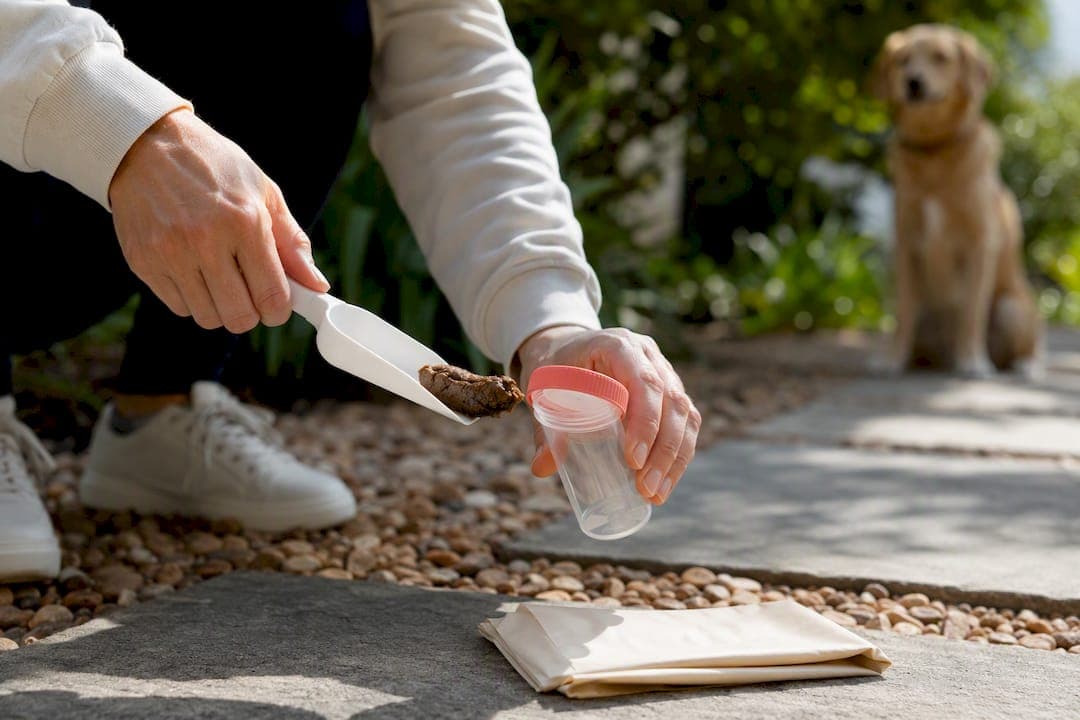
A dog microbiome test reads the bacterial DNA in a stool sample to show which gut bacteria are thriving or missing, and that snapshot can point you toward a smarter diet or supplement choice. It cannot find parasites, diagnose food allergies, or replace a vet visit. Most kits cost an amount typically between one hundred and two hundred dollars, and deliver results within a few weeks.
TL;DR:
- Most dog microbiome tests cost between $100 and $200 and provide results within two to three weeks, including beneficial bacteria levels and pathogen screening.
- Samples must be collected fresh, avoiding contamination and overfilling, and should be mailed the same day with probiotics discontinued 24 hours prior.
- These tests identify bacterial proportions but do not detect parasites, food allergies, or diagnose diseases, making them complementary tools rather than replacements for veterinary clearance.
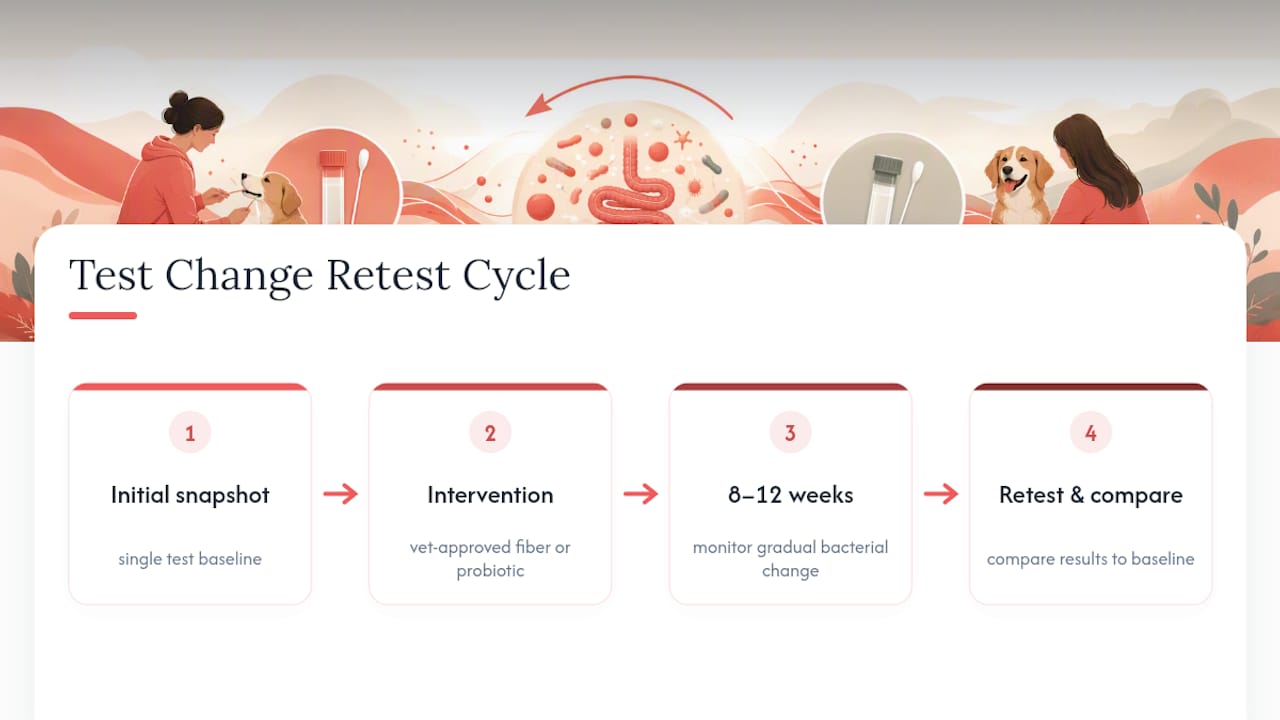
- Interpretation requires caution, with focus on trends over single numbers and retesting after dietary or supplement changes every 8 to 12 weeks for meaningful progress.
- Choose testing kits based on lab transparency, report depth, follow-up support, and privacy policies, prioritizing support and methodology over flashy marketing claims.
Table of Contents
- What's Inside a Dog Gut Microbiome Test Kit
- How Do You Collect a Dog Stool Sample for Testing?
- What Does a Canine Gut Health Test Actually Detect?
- How Much Does a Dog Microbiome Test Cost?
- How Should You Act on Dog Microbiome Test Results?
- What Should You Look for When Choosing a Kit?
- Why Kiblco's Testing Approach Matters Here
- Does a Microbiome Test Reveal Anything Beyond Gut Health?
- Is Your Dog's Microbiome Data Private?
- The Real Value of Testing, and Where It Falls Short
- Sources
What's Inside a Dog Gut Microbiome Test Kit
Crack open a kit and you'll find a small, deliberate set of tools built around one goal: getting a usable bacterial sample into a lab without it degrading in transit. The core pieces show up in nearly every product on the market, even when packaging and branding differ.
- A collection tube pre-filled with a preservative solution
- A swab or collection stick for gathering the stool sample
- A prepaid mailer, usually padded to protect the tube
- A registration card or online code linking your dog's profile to the sample
The science underneath is what separates a real gut health test from a gimmick. Labs run next-generation sequencing (NGS), often targeting the 16S ribosomal RNA gene, a stretch of bacterial DNA that acts like a barcode for identifying species. That process generates relative abundance charts showing which bacterial groups dominate your dog's gut and how that mix stacks up against a healthy reference population.
A solid report covers four things: beneficial taxa levels, a pathogen screen, a comparison against healthy-range benchmarks, and some form of tailored guidance, whether that's written recommendations or a scheduled consult. Skip any kit that only hands you a bar chart with no context, because raw data without interpretation is nearly useless to a non-scientist.
How Do You Collect a Dog Stool Sample for Testing?
Getting a clean sample matters more than most owners expect. Contamination or sloppy timing can skew results enough to muddy the whole report.
- Stop giving probiotics roughly 24 hours before collection, since transient bacterial shifts from supplements can distort the snapshot.
- Catch a small, fresh stool sample, ideally the moment your dog goes, before it touches grass, soil, or litter.
- Use the provided swab or stick to transfer a pea-sized amount into the preservative tube, then seal it tightly.
- Register the sample online using the kit's code so the lab can match results to your dog's profile.
- Drop the sealed mailer in the mail using the prepaid label, ideally the same day you collect.
The preservative inside that tube isn't decorative. It's a chemical stabilizer that halts bacterial DNA degradation, which is why these samples can sit in a mailbox for days without spoiling the results.
The two most common mistakes are easy to avoid once you know them. Scooping up dirt or grass along with the stool introduces environmental bacteria that skews the whole profile. Overfilling the tube is the other one. More sample is not better here; the preservative-to-sample ratio is calibrated, and cramming in extra stool can overwhelm it.
Pro Tip: Collect your sample first thing in the morning and mail it that same day. Overnight sitting, even refrigerated, gives bacteria more time to shift before the preservative fully stabilizes them.
What Does a Canine Gut Health Test Actually Detect?
A microbiome test gives you a bacterial census, not a full medical workup. Reports typically flag beneficial groups like Faecalibacterium and Bifidobacterium, both associated with a well-functioning gut, alongside potentially harmful groups such as Campylobacter, Clostridium, and Salmonella.
That's the useful part. Here's what it won't do:
- Detect intestinal parasites like giardia, roundworms, or whipworms.
- Diagnose a food allergy or intolerance
- Serve as a substitute for a veterinary diagnostic workup
By the Numbers: Results typically land within 2 to 3 weeks of the lab receiving your sample, and vendors are explicit that parasite detection and food allergy diagnosis fall outside what bacterial DNA profiling can do.
This is where a lot of owners get tripped up. A test result showing low Faecalibacterium doesn't mean your dog has a disease. It's a relative abundance measurement, meaning the lab is reporting proportions within the sample, not an absolute count of bacteria in the gut. A "low" reading could reflect an actual deficiency, or it could reflect normal day-to-day variation. That's why these tests work best as a directional signal, something to discuss with a vet, rather than a standalone verdict. Kiblco treats microbiome testing as complementary to, not a replacement for, conventional veterinary stool exams, which still hold the edge for parasite screening.
How Much Does a Dog Microbiome Test Cost?
Most single-kit tests land between $100 and $200, with price climbing based on how deep the sequencing goes and whether a consult is bundled in. Basic kits that just deliver a report tend to sit at the lower end. Kits that add a pathogen panel, a broader reference database, or a follow-up call with a specialist push toward the higher end.
- Turnaround: lab processing alone usually takes one to three weeks after your sample arrives; mailing and registration add extra days on either end.
- Report format: most vendors provide an interactive online dashboard plus a downloadable PDF you can hand to your vet.
- Value-adds: some kits throw in a short complimentary consultation, often 10 to 15 minutes, with a microbiome specialist to walk through your dog's results.
Subscription models exist too, usually pitched for dogs with chronic GI issues who need repeat testing every few months to track trends rather than a single point-in-time snapshot.
How Should You Act on Dog Microbiome Test Results?
The report itself is only half the job. What you do with it determines whether the $150 you spent actually improves your dog's health.
Start by reading the numbers the right way. A "flagged" pathogen doesn't automatically mean illness, and a low beneficial-bacteria reading isn't an emergency. Because these are relative abundance measurements, the smarter move is watching direction, not treating any single number as gospel. If Bifidobacterium is trending low and a harmful group is trending high, that combination is worth discussing with your vet, especially if it lines up with symptoms like loose stool or gas.
From there, a few evidence-backed moves tend to help most dogs:
- Adjusting fiber intake, since both too little and too much can throw off bacterial balance
- Introducing a vet-approved prebiotic or probiotic matched to whatever the report flagged as low
- Revisiting the base diet if a raw-to-kibble or kibble-to-raw shift seems related to the imbalance
Kiblco's own trial of a vet-backed prebiotic showed a 94% acceptance rate among dogs, a reminder that palatability matters just as much as formulation when you're trying to shift gut bacteria through diet. If you're weighing a bigger dietary change, a side-by-side look at raw versus kibble is worth reading before you commit.
Pro Tip: Retest around 8 to 12 weeks after making a change. Bacterial populations shift gradually, and testing too soon just measures noise instead of real progress.
Skip any intervention involving antibiotics or prescription-strength supplements without a vet's input. Gut bacteria are resilient but not infinitely forgiving, and self-directed medication changes based on an at-home report alone can backfire.
What Should You Look for When Choosing a Kit?
Every kit on the market claims to be the most accurate one available. Cut through that noise with a short checklist you can apply to any product, regardless of brand.
- Lab method transparency. The vendor should state its sequencing approach (16S or full NGS) plainly, not bury it in marketing copy.
- Report depth. Look for beneficial taxa breakdowns, a pathogen screen, and a healthy-range comparison, not just a single "gut score."
- Consult availability. A short call or written follow-up with a specialist turns raw data into something actionable.
- Sample stability info. The company should explain how its preservative works and how long a sample stays viable in transit.
- Turnaround clarity. Reasonable kits state a specific window, typically one to three weeks, rather than a vague "soon."
- Price versus need. A baseline wellness check doesn't need the priciest tier; a dog with chronic GI issues might justify the deeper panel.
Watch for a few red flags that separate a credible kit from a weak one:
- Vague claims about "detecting all gut issues" with no mention of what's excluded
- No information about sample preservation or shipping stability
- Marketing language implying the test diagnoses disease rather than profiling bacteria
If your dog is healthy and you're curious, a basic kit answers the question fine. If you're troubleshooting recurring diarrhea or bloating, spend the extra money on a kit with a deeper panel and a consult included, since that combination gives you and your vet more to work with.
Why Kiblco's Testing Approach Matters Here
That same standard applies to how Kiblco evaluates microbiome kits and gut-health products generally: real dogs, real owners, and a vet's input on whether the science behind a claim holds up. When you're reading any review, including this one, ask whether the source actually put hands on the product or just repeated the box copy.
A few next steps worth bookmarking:
- Explore Kiblco's roundup of dog probiotics for sensitive stomachs if your test flags low beneficial bacteria.
- Loop in your vet before adjusting diet or supplements based on test results alone.
Does a Microbiome Test Reveal Anything Beyond Gut Health?
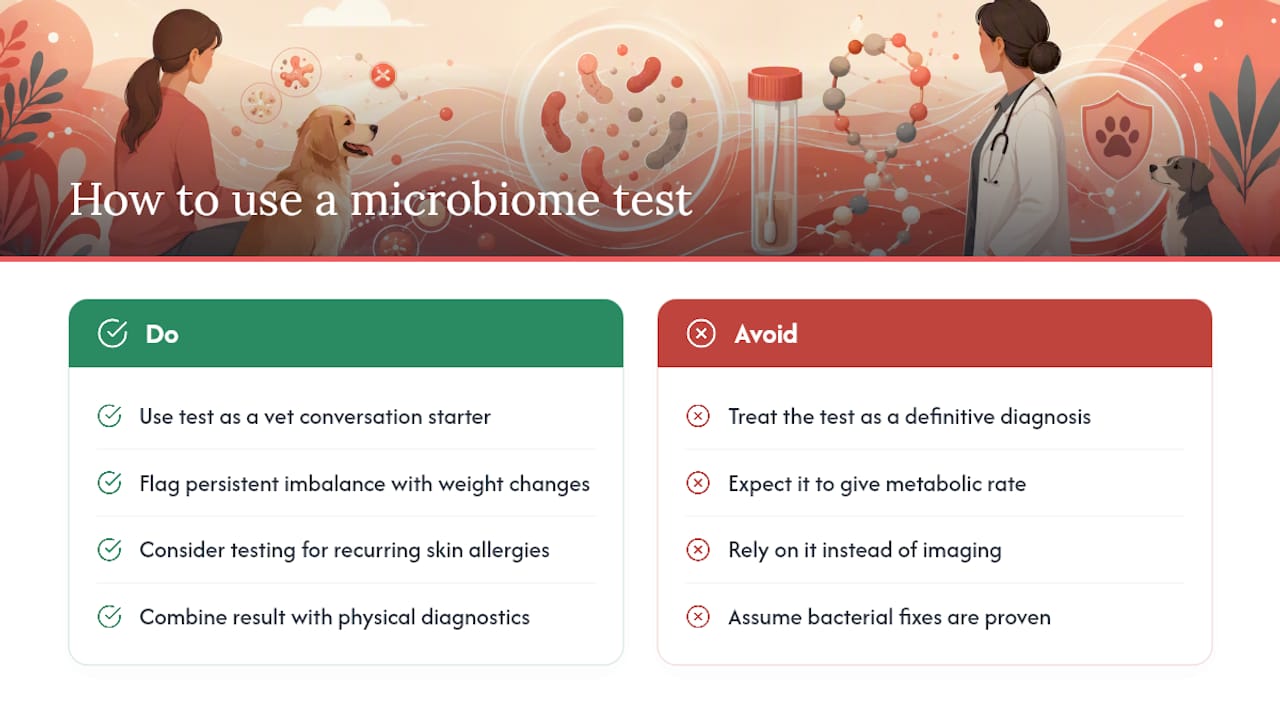
Gut bacteria don't stay confined to digestion, and that's part of why interest in this testing has grown beyond owners with obvious GI symptoms. Research on the gut-immune connection suggests bacterial balance plays a role in inflammation regulation throughout the body, not just in the intestines. A dog with chronically imbalanced gut flora may show that stress elsewhere first, through skin issues, low energy, or a dull coat, before digestive symptoms become obvious.
Some owners use microbiome testing as an early-warning tool for dogs prone to recurring skin allergies, reasoning that gut bacteria influence how the immune system responds to environmental triggers. That's a reasonable hypothesis to explore with a vet, but it's worth being honest about the evidence: the connection between gut bacteria and skin or allergy symptoms in dogs is still an active area of study, not settled science with a bacterial fix.
Weight and metabolism curiosity has also driven interest, since certain bacterial populations are linked to how efficiently animals extract energy from food. A test won't tell you your dog's metabolic rate, but a persistently unbalanced microbiome alongside unexplained weight changes is a reasonable thing to flag for your vet.
The honest takeaway: treat these broader applications as directions for conversation with a veterinarian, not standalone conclusions. A stool bacteria panel is one data point among several a vet would use to evaluate a skin condition, weight issue, or immune complaint. For dogs with actual gut symptoms, imaging and in-clinic diagnostics still play a role vets rely on for a fuller picture, something worth understanding through resources like this overview of veterinary diagnostic imaging.
Is Your Dog's Microbiome Data Private?
Sending your dog's biological sample to a lab raises a fair question: who else sees that data, and what happens to it after your report is generated? This is worth asking before you buy, not after.
Most reputable vendors store sequencing results under an account tied to your registration, meaning the raw genetic data isn't posted publicly or shared with unrelated third parties by default. But policies vary significantly between companies, and few owners actually read the privacy terms before mailing a sample.
A few questions worth asking any vendor before you buy:
- Does the company sell or share aggregated data with third parties, even anonymized?
- How long is your dog's sample and sequencing data retained after the report is delivered?
- Can you request deletion of your data, and is that process actually available?
Unlike human genetic testing, canine microbiome data carries lower stakes around insurance discrimination or identity theft, since it's bacterial DNA from a stool sample, not your dog's own genome. Still, some vendors use aggregated, anonymized data to build out their reference databases, which is a reasonable practice as long as it's disclosed upfront rather than buried in fine print.
Before mailing a sample, skim the vendor's privacy policy for language about third-party data sharing and retention windows. If a company can't clearly explain what happens to your dog's data after testing, that's a reasonable reason to look elsewhere.
The Real Value of Testing, and Where It Falls Short
Most of the hype around dog microbiome testing oversells the "diagnostic" angle and undersells the part that actually matters: pattern recognition over time. A single test is a snapshot, and snapshots are easy to misread. The real value shows up when an owner tests, makes one deliberate change, like a fiber adjustment or a vet-approved probiotic, and retests months later to see if the numbers actually moved in the right direction.
Where conventional advice falls short is treating every flagged bacterial group as a problem requiring intervention. Dogs have naturally variable microbiomes, and chasing every number toward some idealized reference range can lead to unnecessary supplement stacking. Prioritize the pathogen screen and the beneficial taxa most linked to digestive symptoms your dog actually has, not every metric on the page.
If you're buying your first kit, spend your money on transparency and follow-up support over flashy branding. A test with a clear lab methodology and a real consult beats a prettier report with none.
— Chris
Ready to find gut health and supplement products that have actually been put through their paces? Browse Kiblco's hands-on reviews for vetted picks on probiotics, prebiotics, and the gear that helps you act on whatever your dog's next test reveals.
Sources
- Dog Gut Microbiome Test | Analyse 5,000+ Bacteria | EasyDNA
- Gut Microbiome Test for Dogs – AnimalBiome