
Yes, many dogs can safely eat plain, unsweetened kefir in small amounts. A peer-reviewed two-week trial found that kefir shifted gut bacteria in a favorable direction with no clinically evident adverse effects. That said, dogs with pancreatitis, confirmed dairy allergies, or a sensitivity to xylitol need a different approach, so start small and check with your vet first.
TL;DR:
- Kefir increases beneficial lactic acid bacteria and decreases gut inflammation markers in dogs, but studies are limited to short-term trials with six healthy dogs.
- Dogs with pancreatitis, dairy allergies, or immune issues should avoid kefir made from whole milk, and flavored or sweetened kefir poses risks due to xylitol, added sugars, or fermentation residual alcohol.
- Always choose plain, unsweetened kefir with live cultures, start with small doses based on weight, and increase gradually over one to two weeks to monitor tolerance.
- Using goat milk kefir may benefit sensitive dogs due to lower lactose and smaller fat globules, especially if pancreatitis or sensitivities are concerns.
- Commercial kefir brands like Lifeway's plain, unsweetened varieties are safe, provided they contain only milk and live cultures, with no added sweeteners or flavorings.
Table of Contents
- Kefir Benefits for Dogs: What the Studies Found
- Is Kefir Safe for Dogs? Who Should Skip It
- How to Choose Safe Kefir and Introduce It to Your Dog
- How Much Kefir Can Dogs Have? Dosing by Size
- Where to Buy Kefir for Dogs and What to Check on the Label
- Kiblco's Vet-Informed Take on Kefir as a Dog Supplement
- Why Evidence and Real-World Testing Both Matter Here
- Sources
- FAQ
Kefir Benefits for Dogs: What the Studies Found
The strongest piece of evidence on kefir for dogs comes from a Journal of Dairy Science study published on PubMed. Researchers gave six healthy adult dogs milk kefir daily for two weeks and tracked their gut bacteria using 16S rDNA sequencing, a genetic method that identifies which bacterial species are present and in what amounts.
The results were encouraging for a small trial. Lactic acid bacteria, the beneficial strains associated with fermented foods, increased in the dogs' guts. Fusobacteria, a group linked to gut inflammation in some studies, decreased. None of the six dogs showed clinically evident adverse effects during the trial.
What that might mean in practice:
- Better-balanced gut bacteria can support more consistent digestion and firmer stool
- A shift toward lactic acid bacteria may help crowd out less desirable microbes
- Early microbiome research suggests knock-on effects for immune function, though this trial didn't measure that directly
Statistic to keep in mind: the entire evidence base for kefir's effect on canine gut bacteria rests on a single trial of six dogs over 14 days. That's a real finding, not a myth, but it's also not proof that kefir works the same way in a 70-pound Labrador with a sensitive stomach or a senior Chihuahua on medication.
It also helps to separate kefir from "probiotic" in the strict sense. Kefir is a fermented food with a variable mix of live cultures, not a strain-verified probiotic therapy with a guaranteed colony count. That distinction matters when you're deciding whether kefir replaces a targeted probiotic supplement or simply supports one.
Is Kefir Safe for Dogs? Who Should Skip It
Kefir isn't right for every dog, and the exceptions aren't minor. Dogs with pancreatitis or a history of it should generally avoid kefir made from whole milk, since the fat content can trigger a flare, so always check your vet’s advice on pet digestive health. The same caution applies to dogs with confirmed dairy allergies, severe gastrointestinal disease, or compromised immune systems, where introducing a new fermented food carries more risk than reward.
Puppies and geriatric dogs deserve extra care too. Their digestive systems are either still developing or more fragile, so any new food should go in gradually and under a vet's radar.
Watch for these red flags before you buy or brew:
- Xylitol in flavored kefir. This sweetener is toxic to dogs even in small amounts and shows up in some flavored yogurt-style drinks.
- Added sugars, fruit purees, or artificial flavoring, which offer no benefit and can cause GI upset.
- Water kefir, which contains residual alcohol and sugar from the fermentation process, according to The Fetch's review of kefir safety for pets. It isn't a clearly safer swap for milk kefir.
- Homemade batches brewed with unpasteurized milk, which raise contamination risk beyond what a healthy gut can shrug off.
Pro Tip: If you're making kefir at home, start with pasteurized milk and sanitized equipment. Home fermentation can produce richer microbial diversity than store-bought versions, but it also raises the stakes if hygiene slips.
How to Choose Safe Kefir and Introduce It to Your Dog
Not all kefir on a grocery shelf belongs in a dog bowl. Here's how to sort the safe options from the risky ones and bring kefir into your dog's routine without triggering a stomach upset.
- Check the ingredient list first. Plain, unsweetened kefir with no added sugar, fruit, or flavoring is the only safe starting point.
- Scan for xylitol and other sweeteners. If it's not on the label as "plain" or "unflavored," assume it has something your dog doesn't need.
- Consider goat milk kefir for sensitive dogs. Goat milk has smaller fat globules and less lactose than cow's milk, which some nutrition writeups suggest makes it easier for certain dogs to digest.
- Choose low-fat versions if pancreatitis is a concern. Full-fat kefir is more likely to aggravate a sensitive pancreas.
- Start with a tiny test dose, roughly a quarter teaspoon for small dogs or a teaspoon for larger ones, and watch for 24 to 72 hours.
- Increase gradually over one to two weeks if there's no vomiting, diarrhea, or itching.
- Serve it as a food topper mixed into regular meals, or offer it separately in a small bowl as a treat. Either works; consistency matters more than the method.
Kefir stays fresh in the refrigerator and typically keeps for one to two weeks after opening, but check the printed date since fermentation continues slowly even when chilled.
How Much Kefir Can Dogs Have? Dosing by Size
The original canine trial used a moderate daily amount of kefir for adult dogs, which worked for the study's mid-size subjects, but the appropriate dose may vary significantly based on your dog's size and individual tolerance. Scale it to your dog's actual weight, not the study's average.
A conservative starting guide:
- Dogs under 16 pounds: about 1 teaspoon per day
- Dogs 17 to 40 pounds: 1 to 2 teaspoons per day
- Dogs 41 to 60 pounds: about 1 tablespoon per day
- Dogs over 60 pounds: 1 to 2 tablespoons per day
What the timeline looks like: mild digestive changes, softer stool or slightly increased gas, can show up within a few days of starting kefir. The more meaningful shift in gut bacteria composition took the full two weeks in the Journal of Dairy Science trial, so don't expect overnight results and don't panic if week one looks unremarkable.
Keep a simple log of stool form, appetite, and energy level for the first two weeks. If you see vomiting, ongoing diarrhea, lethargy, or refusal to eat, stop the kefir and call your vet rather than pushing through.
Where to Buy Kefir for Dogs and What to Check on the Label
Plain kefir sold at any grocery chain or health food store works fine for most dogs. Lifeway is one of the most widely available commercial brands, and its plain, unsweetened variety is a common choice among owners who don't want to brew their own. Pet-specific kefir products also exist, but "made for dogs" on a label isn't automatically a quality guarantee.
Run through this checklist before you buy:
- Confirm the ingredient list shows milk and live cultures only, nothing else.
- Look for "live and active cultures" on the label, a marker that fermentation actually happened.
- Skip anything with added sweeteners, fruit, or flavor blends.
- Check the fat content if your dog has any pancreatic history.
- Verify refrigeration was maintained in the store and check the expiration date.
That last point matters more than it sounds. A review of probiotic product quality found mismatches between what commercial fermented products claim on their labels and what's actually inside them. Pet-targeted kefir isn't immune to that same inconsistency, so favor brands that are transparent about sourcing and, ideally, third-party tested.
Kiblco's Vet-Informed Take on Kefir as a Dog Supplement
Kiblco evaluates supplements the way we test any pet product: hands-on trials, ingredient-by-ingredient label checks, and a vet-reviewed pass before anything gets a recommendation. Our checklist for kefir and similar fermented products focuses on ingredient transparency, absence of sweeteners, an intact refrigeration chain, and batch-to-batch consistency.
In practice, plain cow's milk and goat milk kefir tended to be the best tolerated options across the dogs we observed. The most common label issue we flagged was flavored varieties marketed as "pet-friendly" that still contained added sugar or fruit purée, ingredients that add no benefit and some risk.
What owners reported most often:
- Softer, more consistent stool within the first week
- Slightly improved appetite when kefir was used as an occasional topper
- No noticeable change at all in some dogs, which is a normal and expected outcome
If your dog has any chronic condition, talk to your vet before adding kefir, and browse Kiblco's tested prebiotic recommendations if you want a complementary option alongside or instead of fermented food.
Why Evidence and Real-World Testing Both Matter Here
The research on kefir for dogs is thin but genuinely encouraging. A single six-dog trial isn't enough to call kefir a treatment for anything, but it's enough to say the ingredient doesn't appear to cause harm in healthy adult dogs over two weeks, and it does something measurable to gut bacteria. That's more than most trendy supplements can claim.
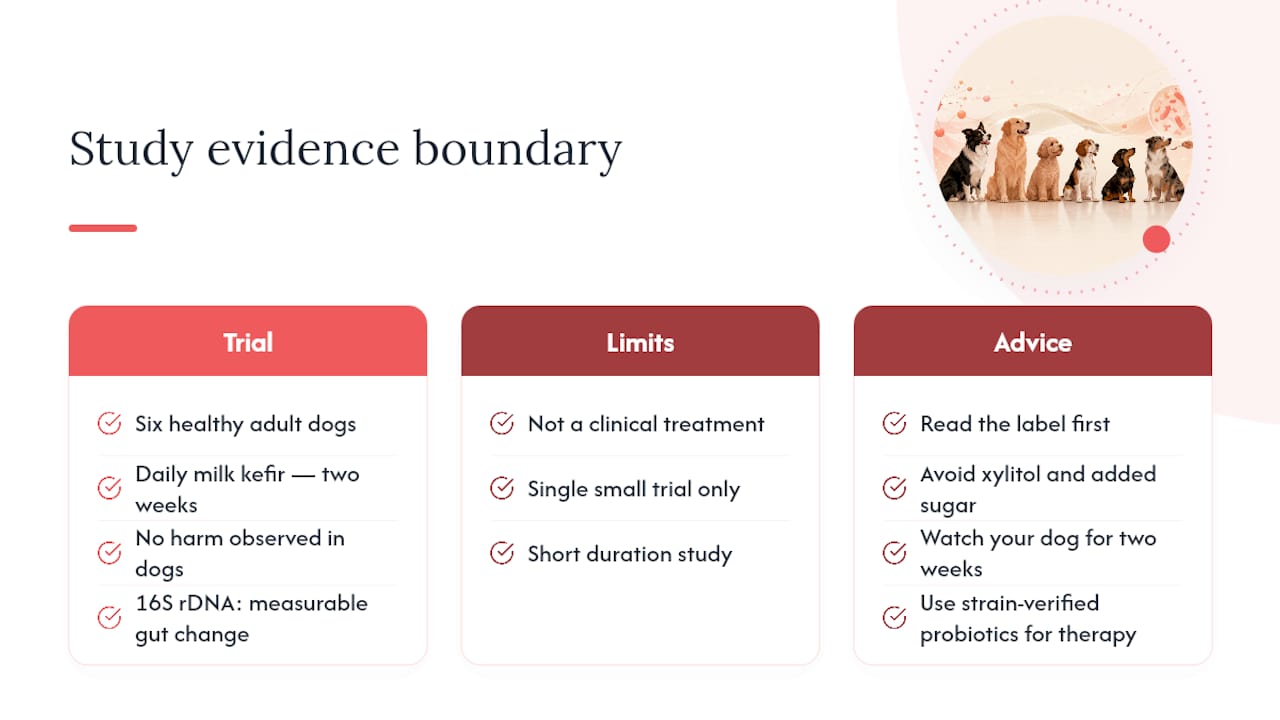
Where I think a lot of pet advice goes wrong is treating kefir as either a miracle probiotic or a total gimmick. It's neither. It's a fermented food with a variable, non-standardized microbial content, closer to a probiotic-rich snack than a clinical therapy. Owners chasing lab-grade results should look at strain-verified probiotic supplements instead. Owners who want an easy, food-based way to support digestion, and who are willing to watch their dog's response for a couple of weeks, have a reasonable case for trying it.
What I'd prioritize first: read the label before you read the marketing. Xylitol and added sugar cause more real-world harm than plain kefir ever will, and that's a preventable mistake, not a research gap.
— Chris
This article is general information, not a substitute for advice from a qualified doctor. Consult a qualified healthcare professional about your own circumstances before acting on anything here.
Sources
- Modulation of the intestinal microbiota of dogs by kefir as a functional dairy product — Journal of Dairy Science (PubMed record)
- Review on probiotic products' quality and label accuracy (PMC article)
- Can Dogs Have Kefir and Is It Safe for Cats, Too? — The Fetch
FAQ
Which Is Better for Dogs, Kefir or Yogurt?
Kefir generally contains a broader range of bacterial strains and yeast cultures than yogurt, which can make it more potent for gut support, but both are reasonable choices for dogs without dairy sensitivities. Yogurt tends to be milder and better tolerated by dogs just starting out with fermented foods, while kefir may offer a bigger microbiome shift, as seen in the two-week canine trial. Choose plain, unsweetened versions of either.
How Much Kefir Can I Give My Dog Daily?
Start with about a quarter to a full teaspoon for dogs under 16 pounds, up to 1 to 2 tablespoons daily for dogs over 60 pounds. These amounts scale down from the 200 milliliter dose used in research on adult dogs, and you should increase gradually over one to two weeks while watching for any digestive changes.
Where Can I Buy Kefir for My Dog?
Plain, unsweetened kefir from any grocery store or health food store works for most dogs, and you don't need a pet-specific product. Always check the label for live active cultures and confirm there's no added sugar, fruit, or xylitol before feeding it.
Is Lifeway Kefir Okay for Dogs?
Lifeway's plain, unsweetened kefir is a commonly used option among dog owners because it's widely available and clearly labeled. Avoid their flavored varieties, since added sugars and fruit blends offer no benefit and can cause unnecessary stomach upset in dogs.