
Yes, commercial plant-based dog food can be safe when it's formulated to be "complete and balanced" for your dog's life stage under AAFCO guidelines and includes added taurine and DHA. Brands like V-dog, Halo Garden of Vegan, Wild Earth, Open Farm Kind Earth, and Rayne Nutrition all make that claim on their labels. The real risk sits with homemade vegetarian recipes made without professional guidance, not with vetted commercial formulas.
TL;DR:
- Most verified commercial plant-based dog foods include added taurine and DHA sourced from marine microalgae, making them safe for most dogs when they follow AAFCO guidelines.
- Checking for an AAFCO statement specifying the correct life stage and confirming the inclusion of added taurine and DHA guarantees nutritional adequacy.
- Foods with vet-tested acceptance rates, such as Wild Earth and V-dog, demonstrate real-world palatability and suitability for active or allergy-prone dogs.
- Transition to a plant-based diet should be gradual over 7 to 10 days, with vet guidance recommended if your dog has preexisting health conditions.
- Homemade vegetarian recipes without professional oversight pose a higher risk of nutrient deficiencies and should be avoided.
Table of Contents
- Which Plant-Based Dog Foods Are Worth Buying?
- How Do You Know a Plant-Based Food Is Actually Safe?
- What Nutrients Should You Watch on a Plant-Based Diet?
- How Does Kiblco Test Plant-Based Dog Foods?
- When Does a Plant-Based Diet Actually Make Sense?
- Where to Find Full Reviews and Buying Links
- Where This Guidance Comes From
- Sources
- FAQ
Which Plant-Based Dog Foods Are Worth Buying?
Not every bag labeled "vegan" or "vegetarian" deserves a spot in your dog's bowl. The five that show up again and again in vet-informed reviews all share one trait: they publish an AAFCO nutrient statement and list exactly where they source taurine and DHA, instead of hiding behind vague "complete nutrition" marketing.
V-dog built its reputation on being formulated by canine nutritionists, and its Kind Kibble line adds both taurine and marine microalgae as a DHA source. It's the closest thing to a legacy brand in this category, with a formulation lineage that predates most of its rivals.
Halo Garden of Vegan leans into holistic branding with a superfoods angle, but underneath the packaging it carries the same AAFCO maintenance statement and includes taurine plus vitamin B12. Owners drawn to sustainability messaging tend to land here first.
Wild Earth targets a different dog entirely. Its Performance Formula pushes 28% protein from plant sources alone, with added taurine and marine microalgae, and positions itself as hypoallergenic for dogs with protein sensitivities. This is the pick for a working dog or a breed that needs real muscle fuel without animal protein.
Open Farm Kind Earth trades on transparency. The brand publishes sourcing details most competitors keep vague, which matters if you're the kind of owner who reads every line on a bag before buying.
Rayne Nutrition rounds out the field with a full plant-based lineup: dry kibble, a Chunky Stew, a Dog Food Roll, the WellStride Good Gravy veggie topper, and treats including Sweet Potato Crunch, Sweet Potato Chew, and Apple & Pumpkin Biscuits. It's less a single product and more an entire plant-based pantry, useful for owners who want variety without switching brands for every meal or treat.
Smaller or newer entrants worth knowing by name include Halo's broader lineup, Open Farm's non-plant offerings, PawCo's LuxBites/GreenBites/InstaBites range, Petaluma, Virtuous Vittles, Amì, and Benevo's vegan kibble line. Coverage and detail on AAFCO claims for these vary more than the five above, so read the bag before you buy.
| Brand | AAFCO statement | Protein highlight | Added taurine/DHA | Best for |
|---|---|---|---|---|
| V-dog Kind Kibble | Formulated for adult maintenance | Plant protein blend | Added taurine, marine microalgae DHA | Established, nutritionist-formulated vegan kibble |
| Halo Garden of Vegan | Formulated for adult maintenance | Plant protein plus superfoods | Added taurine, vitamin B12 | Holistic, sustainability-minded owners |
| Wild Earth Performance Formula | Formulated, plant-only | 28% protein | Added taurine, marine microalgae DHA | Active or athletic dogs |
| Open Farm Kind Earth | Formulated, complete recipe | Plant protein blend | Listed on label | Ingredient transparency and sustainability |
| Rayne Nutrition Plant-Based line | Formulated across dry, stew, and roll formats | Varies by product | Varies by product | Owners wanting variety across meals and treats |
A few quick takeaways if you're short on time: best for allergy management is Wild Earth, given its hypoallergenic positioning; best for sustainability-focused owners is Open Farm; best for a long track record is V-dog; best for variety across meals, gravies, and treats is Rayne Nutrition.
How Do You Know a Plant-Based Food Is Actually Safe?
Run every bag through the same six-step check before it goes in the cart.
- Find the AAFCO statement. No statement, no purchase. It should specify a life stage (growth, maintenance, or all life stages).
- Match the life stage to your dog. A maintenance formula isn't built for a growing puppy's needs.
- Confirm added taurine. Plant proteins don't naturally supply it the way meat does.
- Check the DHA source. Look for "marine microalgae" specifically, not a vague "omega source" claim.
- Read the guaranteed analysis. Protein percentage alone tells you little; compare it against your dog's activity level.
- See whether the claim is "formulated to meet" or backed by an actual feeding trial. Feeding-trial data is the stronger of the two, since it reflects real dogs eating the food, not just a lab nutrient calculation.
Call the brand or ask your vet these questions before switching: Who formulated this recipe, and what credentials do they hold? Is there feeding-trial data or only a formulation statement? Where exactly does the DHA come from?
Once you've settled on a product, switch gradually over 7 to 10 days, mixing in more of the new food each day while watching stool consistency, appetite, and energy level.
Pro Tip: If you're transitioning a dog with any preexisting health condition, ask your vet to run baseline bloodwork first, including a taurine level and a complete metabolic panel, so you have something to compare against if symptoms show up later.

What Nutrients Should You Watch on a Plant-Based Diet?
Seven nutrients are the ones veterinary sources flag most often in plant-based formulations, and each plays a distinct role dogs can't easily get from vegetables and grains alone.
- Taurine supports heart muscle function; deficiency has been linked to dilated cardiomyopathy in dogs.
- Methionine and lysine are amino acids concentrated in meat that plant proteins often lack in sufficient amounts.
- DHA supports brain and eye development, typically sourced from fish in traditional diets.
- Vitamins B12, D, and A are far more bioavailable from animal sources, so plant formulas need fortification.
- Calcium and zinc absorb less efficiently from plant matter and require careful balancing.
FEDIAF's fact sheet on vegetarian diets found deficiency rates exceeding 50% in some surveyed samples of dogs on unmonitored vegetarian diets. That's the number that should worry you about a homemade recipe, not a properly formulated commercial one. Reputable brands close these gaps with synthetic taurine, algae-derived DHA, and fortified vitamin blends listed right on the ingredient panel. If your dog develops dull coat, lethargy, or digestive changes after a switch, those are the first signs worth mentioning to your vet.
How Does Kiblco Test Plant-Based Dog Foods?
A vet-informed process is used to review plant-based foods before recommendations are made.
- Label and ingredient review against AAFCO nutrient profiles for the stated life stage
- Verification of added taurine and the specific DHA source (marine microalgae versus vague claims)
- Palatability trials with real dogs, reporting the actual acceptance rate rather than a marketing estimate
- A follow-up vet consultation to flag anything the ingredient panel alone wouldn't catch
One recent palatability trial on a vet-backed prebiotic supplement recorded a 94% acceptance rate among test dogs, the same kind of real-world metric applied when evaluating plant-based kibble and treats.
Reviews track coat and skin reactions, stool quality, and digestibility alongside a straightforward list of pros and cons, the same framework used in Kiblco's AAFCO standards breakdown and its prebiotic trial writeup.
When Does a Plant-Based Diet Actually Make Sense?
Plant-based commercial diets earn their place when a dog has a diagnosed protein allergy, supported by guidance like our Elimination Diet for Dogs: A Vet-Backed, Step-by-Step Guide, when an owner's ethics genuinely can't square with feeding meat, or when sustainability drives the household's buying decisions. Caution is warranted with young puppies, pregnant or nursing dogs, and any dog with an existing medical condition, where a vet needs to sign off first. The practical rule: let your goals as an owner guide the choice, but let verified nutritional adequacy make the final call.
— Chris
Where to Find Full Reviews and Buying Links
Brands are evaluated with hands-on label checks against AAFCO claims, palatability results, and clear lists of their strengths and weaknesses.
Kiblco is the alternative to guessing your way through a pet store aisle. Instead of decoding ingredient panels alone at midnight, you get vet-informed acceptance rates, coat and stool notes from real test dogs, and direct retailer links so you can buy the moment you decide. Full reviews also flag current coupon codes when retailers offer them. Head to Kiblco's review hub to pull up the complete test results before your next bag runs out.
Where This Guidance Comes From
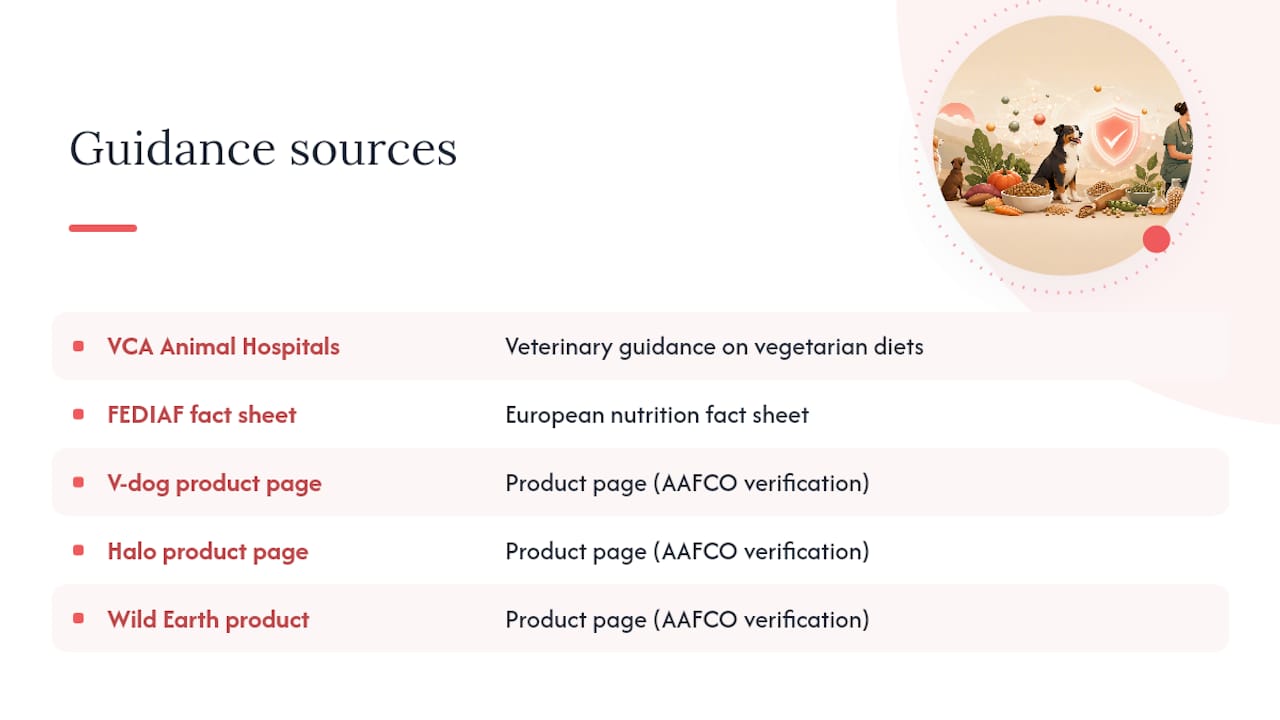
This guide draws on VCA Animal Hospitals' veterinary guidance on vegetarian diets, FEDIAF's European nutrition fact sheet, and product pages from V-dog, Halo, and Wild Earth used to verify their AAFCO claims. Each source is either a veterinary authority or a primary product listing, not a third-party summary.
FAQ
Is plant-based dog food nutritionally complete?
It can be, but only when the label carries an AAFCO "complete and balanced" statement for your dog's life stage and lists added taurine and a DHA source like marine microalgae.
Can puppies eat plant-based dog food?
Only if the formula is specifically labeled for growth or all life stages under AAFCO; a maintenance-only formula isn't built for puppy nutrient demands, and a vet should weigh in first.
What's the difference between vegan and vegetarian dog food?
Vegan dog food contains no animal-derived ingredients at all, while some "vegetarian" formulas may still include egg or dairy derivatives, so check the ingredient list rather than relying on the label term alone.
How do I switch my dog to a plant-based diet safely?
Transition gradually over 7 to 10 days, increasing the new food's ratio daily while watching stool quality, appetite, and energy, and get baseline bloodwork first if your dog has any existing condition.
Where can I read detailed reviews of these brands?
Kiblco's review hub covers acceptance-rate testing, coat and stool observations, and pros and cons for the leading plant-based brands, alongside direct buying links.