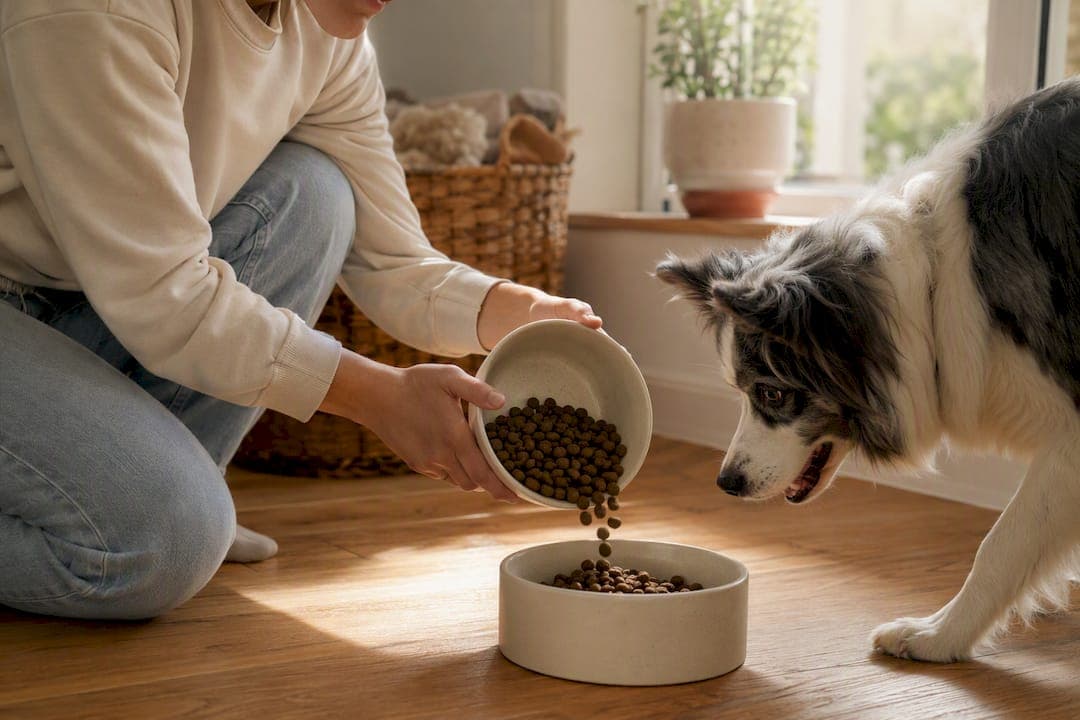
Cold-pressed dog food is dry food made by pressing raw ingredients at low temperatures instead of cooking them at the high heat of extrusion, which tends to preserve more nutrients and flavor in the finished pellet. Dogs with sensitive stomachs, picky eaters, and owners chasing better digestibility are the ones most likely to notice a difference. Before switching, talk to your veterinarian, especially if your dog has an existing health condition or a therapeutic diet already in place.
TL;DR:
- Cold-pressed dog food retains more nutrients and flavor because it is processed at lower temperatures than extruded kibble, but ingredients may still be heat-treated beforehand.
- Its denser, firmer pellets usually contain around 26% crude protein and roughly 423 calories per cup, requiring smaller portions due to nutrient concentration.
- Transition to cold-pressed food should be gradual over at least ten days to prevent digestive upset, with close monitoring for stool consistency, appetite, and overall health.
- Label evaluation should prioritize named protein sources, AAFCO compliance, and transparent ingredient lists, especially fiber and probiotic sources, for better quality assurance.
- Cold-pressed formulas are most suitable for dogs with mild digestive issues, picky eaters, and owners seeking natural, less processed options, but are more expensive per pound than standard kibble.
Table of Contents
- What Cold-Pressed Dog Food Actually Is
- Benefits and Limits: Digestion, Nutrients, and Portions
- What To Check on a Cold-Pressed Label
- How To Transition Your Dog Safely
- Is Cold-Pressed Right for Your Dog?
- What Kiblco Looks for When We Evaluate Cold-Pressed Formulas
- Our Take on Cold-Pressed Dog Food
- Find Vet-Informed Cold-Pressed Picks on Kiblco
- Sources
What Cold-Pressed Dog Food Actually Is
Cold-pressed food is made by combining ingredients, applying gentle heat, and pressing the mixture into dense pellets at low temperatures. That's a very different process from extrusion, where a mash is cooked under high heat and pressure and then puffed into the light, airy kibble shape most dog owners grew up feeding. The lower temperature during cold pressing preserves more of the raw ingredient's original characteristics compared with extruded kibble.
One nuance gets glossed over in marketing: "cold-pressed" describes the final pressing step, not necessarily the entire supply chain. Some ingredients, particularly animal by-products, may already be heat-treated before they ever reach the press. That doesn't erase the benefit of the process, but it means "cold-pressed" isn't shorthand for "raw" or "unheated."
What you'll actually notice in the bowl:
- Pellets feel denser and heavier than fluffy extruded kibble
- The bite is firmer and slightly chewier
- The scent is often stronger, since fewer volatile compounds cook off
Benefits and Limits: Digestion, Nutrients, and Portions
Lower processing heat means fewer vitamins, fatty acids, and natural flavor compounds get degraded before the food reaches your dog's bowl. That's the core appeal, and it lines up with why many pet parents report their dogs seem to eat with more enthusiasm on cold-pressed diets.
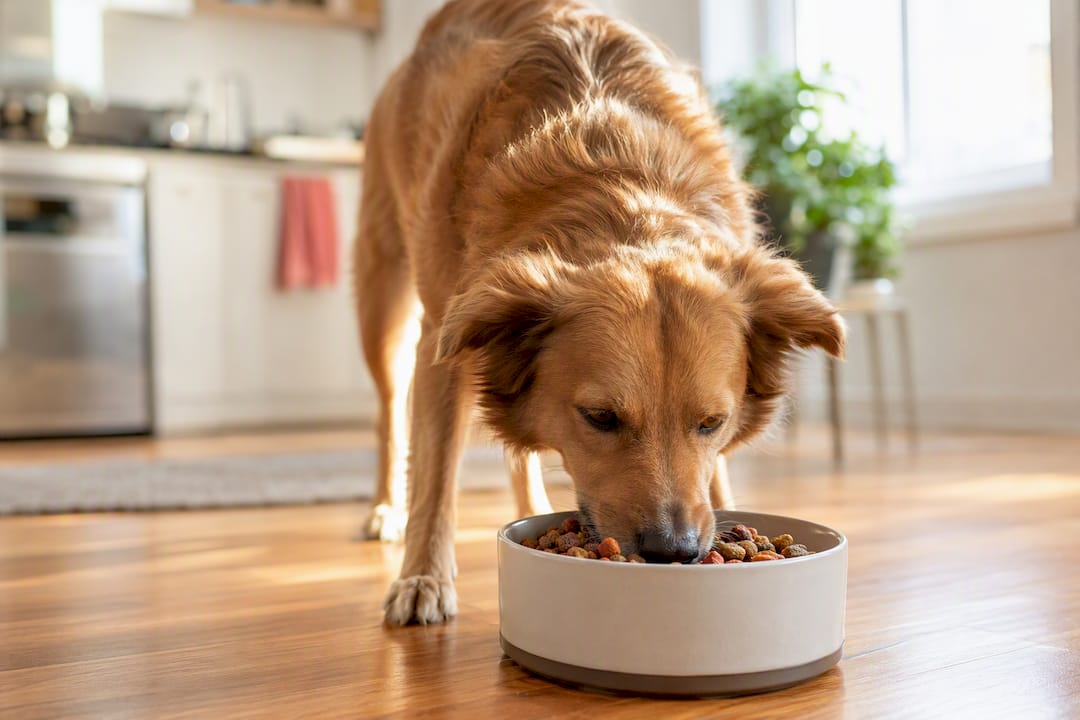
Digestibility often improves when the formula backs it up. A cold-pressed label alone doesn't guarantee better gut health. It's the added prebiotics, probiotics, and quality protein sources that do the real work, and many cold-pressed recipes are formulated by veterinary nutritionists with those ingredients built in.
Portions often shrink, too. Because the pellets are denser and more nutrient-concentrated, dogs frequently need a smaller scoop than they would with standard kibble.
- Nutrient retention: less degradation of vitamins and fats from lower heat
- Digestion support: depends on added pre/probiotics, not the process alone
- Portion size: denser formulas usually mean less food by volume, so weigh your dog periodically to confirm you're not overfeeding
Sample retail listings for grain-free cold-pressed clusters show around 26% crude protein and roughly 423 calories per cup, which is a useful benchmark when comparing labels side by side. Keep in mind there's no large body of clinical trials directly comparing long-term outcomes between cold-pressed and extruded diets, so treat digestibility and health claims as reasonable, not guaranteed, and loop in your vet for any pre-existing condition.
What To Check on a Cold-Pressed Label
Reading a bag of cold-pressed food isn't that different from reading any quality dry food, but a few details matter more here because the category leans heavily on "natural" and "minimally processed" marketing.
- Look for a named whole protein first on the ingredient list, like chicken, turkey, or lamb, rather than a vague "meat meal" or "animal by-product"
- Confirm an AAFCO nutritional adequacy statement is present, since retail cold-pressed products commonly carry AAFCO compliance even when marketed as premium or minimally processed
- Check the guaranteed analysis for protein, fat, and calorie content, and compare it against your dog's current food
- Favor formulas listing named fiber sources (pumpkin, beet pulp) and omega-3s over generic "plant fiber"
- Treat artificial colors or unnamed by-products as a red flag, regardless of how the front of the bag is marketed
Grain-free and novel-protein claims can help dogs with true food allergies, but they're not a fix for every sensitivity issue, and swapping proteins without a plan rarely solves the problem on its own.
Pro Tip: Photograph the guaranteed analysis panel before you buy your first bag. It makes comparing brands later, or explaining your dog's diet to a vet, a lot faster than digging through a recycling bin.
How To Transition Your Dog Safely
Switching too fast is the single biggest reason dogs get loose stools or refuse a new food outright. A gradual mix over several days gives the gut microbiome time to adjust and gives you a chance to catch any reaction before it becomes a full-blown problem.
- Days 1 to 2: Mix roughly 90% old food with 10% new cold-pressed food.
- Days 3 to 4: Move to about 75% old food and 25% new food.
- Days 5 to 6: Split it evenly, 50/50.
- Days 7 to 8: Shift the ratio to 25% old food and 75% new food.
- Days 9 to 10: Feed 100% cold-pressed food, watching stool quality and appetite closely.
This mirrors the gradual approach most manufacturer feeding guides recommend, and it's worth pairing with a dog food topper if your dog is hesitant about the new texture during the first few days.
| Stage | What to watch | Action if a problem shows up |
|---|---|---|
| Days 1–4 | Stool consistency, gas | Slow the ratio increase; hold at current mix an extra day |
| Days 5–8 | Appetite, energy level | Reduce portion slightly if weight climbs too fast |
| Days 9–10+ | Coat, skin, ongoing digestion | Call your vet if symptoms persist for several days |
Store cold-pressed food in a cool, dry, airtight container. Its lower processing heat means it can be more prone to going rancid than heavily preserved extruded kibble, so buy bag sizes you'll finish within a few weeks rather than stockpiling a large bag.
Is Cold-Pressed Right for Your Dog?
Dogs with sensitive digestion, picky eaters who've gone lukewarm on regular kibble, and owners simply looking for a less processed dry option tend to get the most out of this format. If your dog has a diagnosed medical condition like kidney disease, pancreatitis, or a confirmed food allergy, a veterinary-prescribed therapeutic diet should come first, not a commercial cold-pressed formula, however well-marketed.
Cost is the honest tradeoff here. Cold-pressed food usually runs more per pound than standard kibble, though smaller portion sizes offset some of that difference over time.
- Best fit: dogs with mild digestive sensitivity, fussy eaters, owners prioritizing ingredient transparency
- Better handled elsewhere: diagnosed medical conditions requiring a prescription diet
- Before switching for suspected allergies: get your vet to confirm it's a true food sensitivity, since vets caution against choosing a diet based on grain-free or minimally processed labeling alone, without an actual diagnosis behind it
What Kiblco Looks for When We Evaluate Cold-Pressed Formulas
Kiblco's reviews combine veterinary input with feedback from real pet parents feeding these formulas at home, not just a read of the bag. We watch palatability over the first two weeks, how transparent the ingredient list actually is once you look past the marketing copy, whether the feeding guide matches real-world portion needs, and how a dog's stool holds up through a full transition.
Across the cold-pressed formulas we've evaluated, the pattern repeats: dogs eat these pellets more eagerly than plain extruded kibble, but that enthusiasm comes at a real per-pound price premium, and ingredient transparency varies more than the "natural" branding suggests.
Pro Tip: If two cold-pressed bags look similar in marketing, compare their guaranteed analysis and first three ingredients side by side. That's where the real differences show up, not in the packaging.
Our Take on Cold-Pressed Dog Food
The research here supports a narrower claim than most marketing suggests: cold-pressing preserves nutrients better than high-heat extrusion, but that alone doesn't make a formula good. The ingredient list and the added probiotics do the heavy lifting on digestibility, not the pressing method by itself.
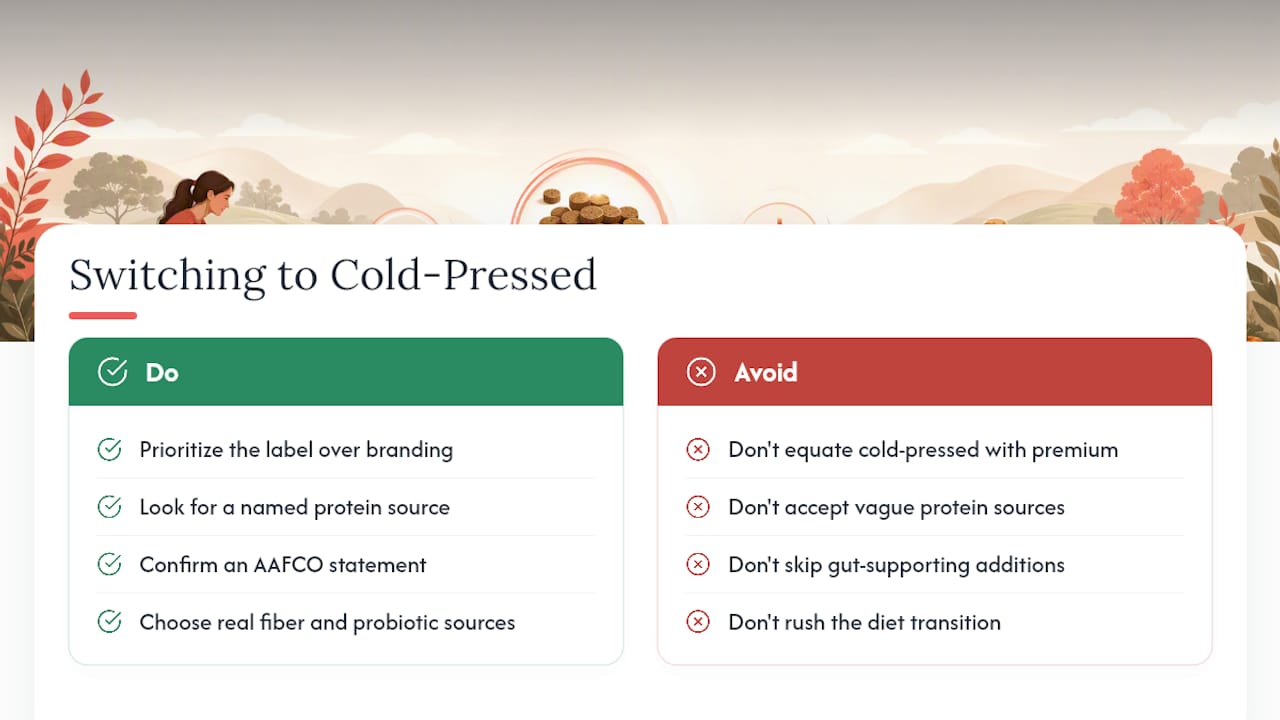
Where conventional advice falls short is treating "cold-pressed" and "premium" as synonyms. Plenty of cold-pressed bags still lean on vague protein sources or skip the gut-supporting additions that actually move the needle for a sensitive dog. The process is a starting point, not a guarantee.
If you're considering the switch, prioritize the label over the branding. Check for a named protein, an AAFCO statement, and real fiber and probiotic sources before you check the price tag. A slower transition schedule than you think you need will save you a week of cleanup either way, and a quick call to your vet before switching costs nothing compared to what a bad reaction does to your dog's week.
— Chris
Find Vet-Informed Cold-Pressed Picks on Kiblco
Kiblco's reviews cut through the "natural" marketing language and tell you what actually held up: palatability over two weeks, real ingredient transparency, and whether the feeding guide matches what dogs need in practice. Every review comes with straightforward pros and cons, not just a highlight reel.
If you're mid-transition and your dog needs a little encouragement with the new texture, our roundup of dog food toppers covers options that won't undo the nutritional benefit you switched for. For dogs whose gut needs extra support alongside a new formula, our guide to dog probiotics breaks down which strains actually show up in credible products. Start by browsing Kiblco's full lineup of vet-informed pet product reviews to find the cold-pressed formula that fits your dog's needs and your budget.
Sources
- Best Grain-Free Dog Foods 2026 — Forbes
- Different pet food processing methods — UK Pet Food
- Cold Pressed Lamb Natural Dry Dog Food | Forthglade