Use a fragrance-free enzyme cleaner or a diluted plant-based formula, applied per the label, and skip anything with bleach, ammonia, or strong essential oils. Cats are more sensitive than dogs because they lick their paws and fur, so unscented enzymatic sprays are among the safest options for accidents. The next sections cover ready-made picks, DIY recipes, and which method fits your flooring.
TL;DR:
- Enzymatic cleaners are best for stain removal and odor neutralization, particularly after accidents, and should be used directly on the spot for several days.
- Avoid products containing bleach, ammonia, phenols, quats, synthetic fragrances, and certain essential oils, especially around cats, due to health risks.
- DIY solutions like vinegar and water or diluted castile soap work effectively on sealed floors but are unsuitable for natural stone and unsealed surfaces.
- Steam cleaning provides chemical-free deep cleaning for sealed hard floors without risking pet health or floor damage when used properly.
- Always perform patch tests and check labels for EPA Safer Choice or unscented marks to ensure household cleaners are safe for pets and specific floor types.
Table of Contents
- Pet Safe Floor Cleaner Options: Enzymes, Plants, and Steam
- Ingredients That Put Pets at Risk
- DIY Pet-Safe Floor Cleaner Recipes That Actually Work
- Matching the Cleaner to Your Floor Type
- How to Treat Pet Accidents Without Leaving a Trace
- Kiblco's Quick Safety Checklist for Any Floor Cleaner
- What I Actually Use at Home
- Find Vetted, Pet-Safe Picks Without the Guesswork
- Where to Read More
- Sources
Pet Safe Floor Cleaner Options: Enzymes, Plants, and Steam
Most pet-safe floor cleaner choices fall into four camps, and picking the right one depends on what you're actually cleaning up.
Enzymatic spot cleaners break down the proteins in urine, vomit, and drool at the molecular level instead of just masking the smell. Bona's Pet Enzymatic Multi-Surface Floor Cleaner is unscented, ammonia-free, and uses enzyme technology designed to help neutralize odor for several days after application. That's your go-to for accidents, not everyday mopping.
Pet-formulated ready sprays are built for routine floor cleaning rather than stain removal. BISSELL's Pet Multi-Surface formula is designed for sealed hard floors and area rugs and is marketed as safe around kids and pets when used as directed.
Plant-based concentrates work well when you want fewer synthetic ingredients on the label. Dr. Bronner's Pure-Castile Liquid Soap, Branch Basics' multipurpose concentrate, and Biokleen's Bac-Out (a bio-enzymatic cleaner) all show up repeatedly in vet-recommended lists for their simple ingredient panels. Aunt Fannie's vinegar-based floor cleaner is another solid entry point if you want something premixed rather than measuring vinegar yourself.
Steam and hot water round out the list. No chemicals, no residue, and it works on sealed hard floors without leaving anything for a curious tongue to find.
- Routine tidying: pet-formulated spray or diluted plant-based concentrate
- Odor and stain removal: enzymatic cleaner, applied directly to the spot
- Deep cleaning: steam, followed by a plant-based rinse if needed
Ingredients That Put Pets at Risk
Read the back label before the front. Several common cleaning ingredients cause real harm to dogs and cats, and the ASPCA's poison control resources list many standard household cleaners among the products that send pets to the vet.
Bleach and ammonia top the list of what to avoid. Both irritate paw pads and respiratory tissue, and combining them (even accidentally, from two separate products) produces toxic fumes. Phenols, found in some disinfectants, are particularly dangerous for cats, whose livers process certain compounds far more slowly than a dog's. Quaternary ammonium compounds (quats), common in "disinfecting" sprays, can cause chemical burns on paws and mouths. Strong synthetic fragrances and some essential oils, especially tea tree, pine, and citrus oils, are linked to respiratory and neurological symptoms in cats.
Why cats face higher risk: Cats groom constantly, which means anything on the floor eventually ends up on their tongue. A cleaner that's merely irritating to a dog's paw can become an ingestion hazard for a cat within the hour.
Watch for these words on a label:
- "Fragrance" or "parfum" (an umbrella term that can hide dozens of undisclosed chemicals)
- "Quaternary ammonium" or "quats"
- "Phthalates"
- "Ammonia" or "sodium hypochlorite" (bleach)
Look instead for EPA Safer Choice certification or a plain "unscented" label, both of which signal a lower-hazard formula according to EWG's cleaner guidance.
DIY Pet-Safe Floor Cleaner Recipes That Actually Work
Two homemade formulas cover most routine cleaning without risking your pet's health or your flooring.
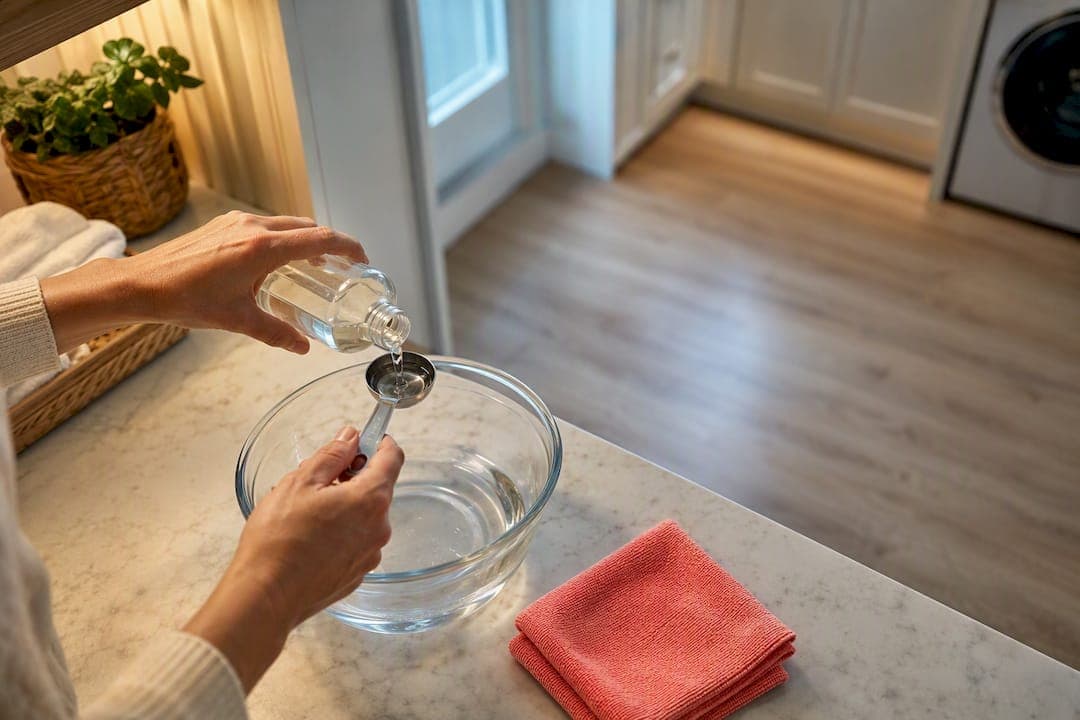
- Vinegar and water, 1:4 ratio. Mix one part white vinegar to four parts water for tile, vinyl, or linoleum. This ratio cuts grease and light grime without leaving a strong residue once it dries.
- Diluted castile soap. Add about a quarter teaspoon of liquid castile soap per gallon of warm water for sealed hardwood or laminate. More soap doesn't mean cleaner floors. It means a sticky film that attracts more dirt and leaves a residue pets can walk through and lick off later.
Never use vinegar on marble, granite, or other natural stone. The acid etches the surface over time, dulling the finish permanently. Never mix either recipe with bleach or hydrogen peroxide. Combining acids and oxidizers releases fumes that are dangerous for both you and your pet to breathe.
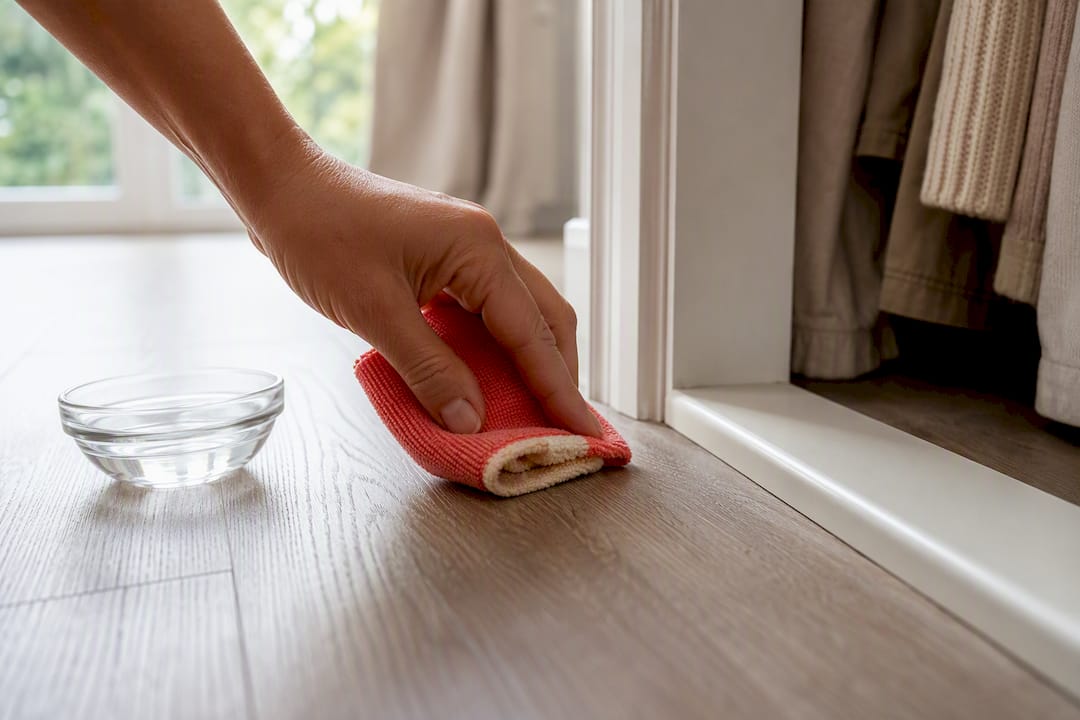
Mop with a well-wrung cloth or mop head. Excess water pools in seams and baseboards, which warps wood and breeds mold nobody wants a dog nosing into. For spot messes, skip the mop entirely and treat the area directly, then blot dry rather than letting it air dry on its own.
Pro Tip: Test any DIY mix on a hidden patch of flooring first, like inside a closet threshold, and wait 24 hours. Some sealants react to vinegar even on floors labeled "sealed," and you'll want to know before you've mopped the whole living room.
Matching the Cleaner to Your Floor Type
A cleaner that's gentle on your dog's paws can still ruin your floor if it's the wrong match for the surface.
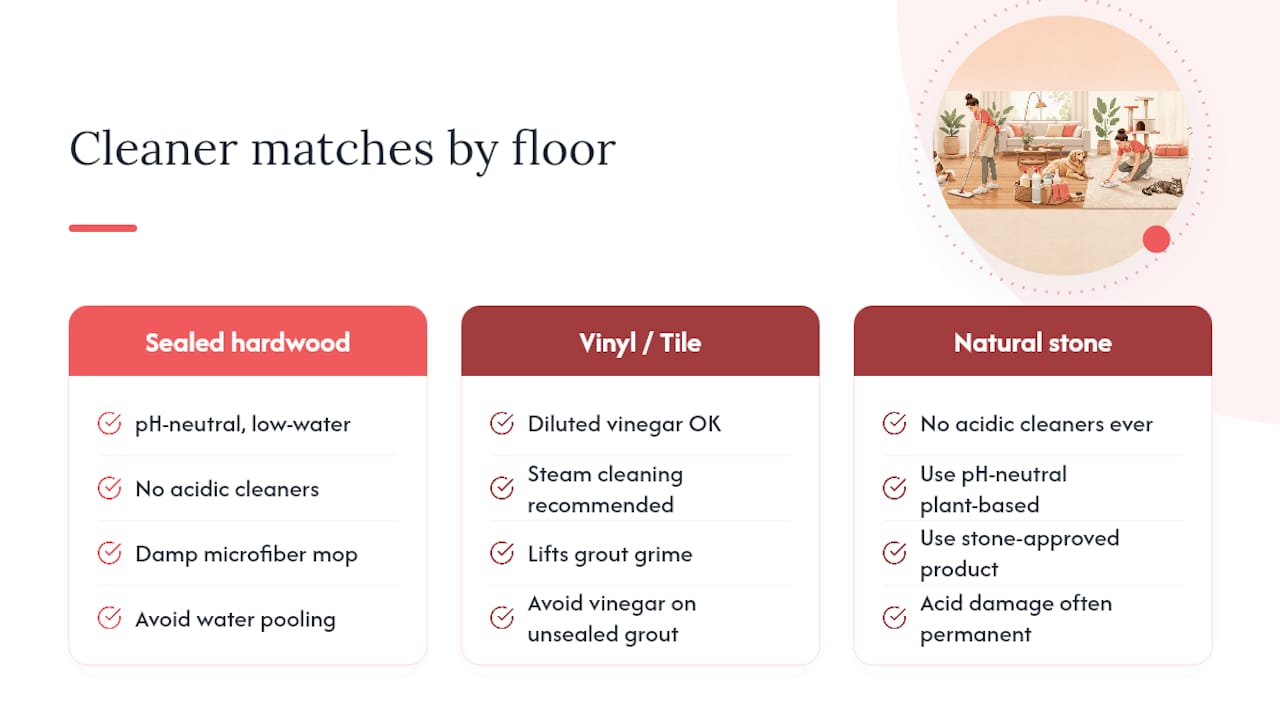
Sealed hardwood and laminate need pH-neutral, low-water cleaning. Skip acidic DIY mixes here, and never let water pool. A damp microfiber mop with a diluted castile soap solution works better than a wet one.
Vinyl and tile tolerate diluted vinegar and steam cleaning without much fuss. Steam is especially good here because it lifts grime from grout lines without soaking the subfloor. Just don't let vinegar sit on unsealed grout for extended periods.
Natural stone and marble are the exception to almost every DIY rule. Skip vinegar and any acidic cleaner entirely. Stick to pH-neutral, plant-based cleaners or a product the stone manufacturer specifically approves. One acidic mishap on marble is often permanent, unlike hardwood, which can sometimes be refinished.
How to Treat Pet Accidents Without Leaving a Trace
Enzymatic cleaners outperform standard soap and water on urine, vomit, and feces because they target the actual organic compounds causing the odor, not just the surface smell. Enzymatic formulas like Bona's keep working on the residue for days after you apply them, which matters because dogs and cats often remark spots they can still smell, even after a visual clean.
Follow this sequence for any accident:
- Remove solid waste first, then blot up as much liquid as possible with paper towels.
- Apply the enzymatic cleaner generously enough to soak into the same depth the accident did.
- Let it dwell per the label instructions, usually 5 to 10 minutes, without wiping it away early.
- Blot dry, and repeat the application if any odor remains once it's dry.
- Rinse with plain water on hard floors to prevent residue buildup, then dry fully before pets walk through.
If the smell or staining persists after two or three treatment rounds, especially on porous flooring like unsealed wood, the material has likely absorbed the mess below the surface. At that point, a professional cleaning service or a flooring specialist is worth the call, since repeated enzymatic treatment won't fix what's already soaked into the subfloor.
Kiblco's Quick Safety Checklist for Any Floor Cleaner
Before recommending a cleaner in any review, a short checklist is used: simple ingredient panel, "unscented" or fragrance-free labeling, manufacturer confirmation it's safe for the specific floor type you have, and either an EPA Safer Choice mark or a clear absence of bleach, ammonia, quats, and phenols.
You can run a version of this check at home in about ten minutes. Do a small patch test on a hidden section of floor first. Once it dries, do a smell test close to the floor. If it's still sharp or chemical-smelling after drying, ventilate the room longer before letting pets back in. Watch your dog or cat for the next hour for paw licking, sneezing, or avoidance of the cleaned area. That reaction, more than anything on the label, tells you whether the product agrees with your specific pet.
What I Actually Use at Home
My daily routine is diluted castile soap or a steam mop, with an enzymatic spray kept under the sink strictly for accidents. It's not complicated, and it doesn't need to be. Always patch-test a new product first, and keep anything scented away from cats specifically. Their tolerance for fragrance is lower than most labels assume.
— Chris
Find Vetted, Pet-Safe Picks Without the Guesswork
Reading ingredient labels is one thing. Knowing which bottle actually performs once it's on your floor is another. Every featured product is checked against vet-informed safety standards and tested hands-on by real pet owners, not just pulled from a manufacturer's marketing copy.

If you'd rather skip the trial-and-error phase entirely, Kiblco's product picks walk through what actually held up in real homes with real dogs and cats underfoot, alongside the honest tradeoffs for each one. Browse the current recommendations and find a cleaner that fits your specific floor and your pet's sensitivities before you buy.
Where to Read More
For deeper ingredient research, check EWG's cleaner guide for label-reading help, the ASPCA's poisonous household products list for hazard specifics, and NBC Select's vet-sourced roundup for additional product comparisons.
Sources
- Bona Pet Enzymatic Multi-Surface Floor Cleaner and Cat Stain & Odor Remover - 22 fl oz: Ammonia-Free, Paraben-Free, Unscented : Target
- The Best Pet-Safe Floor Cleaners | NBC Select
- EWG: Cleaners guide