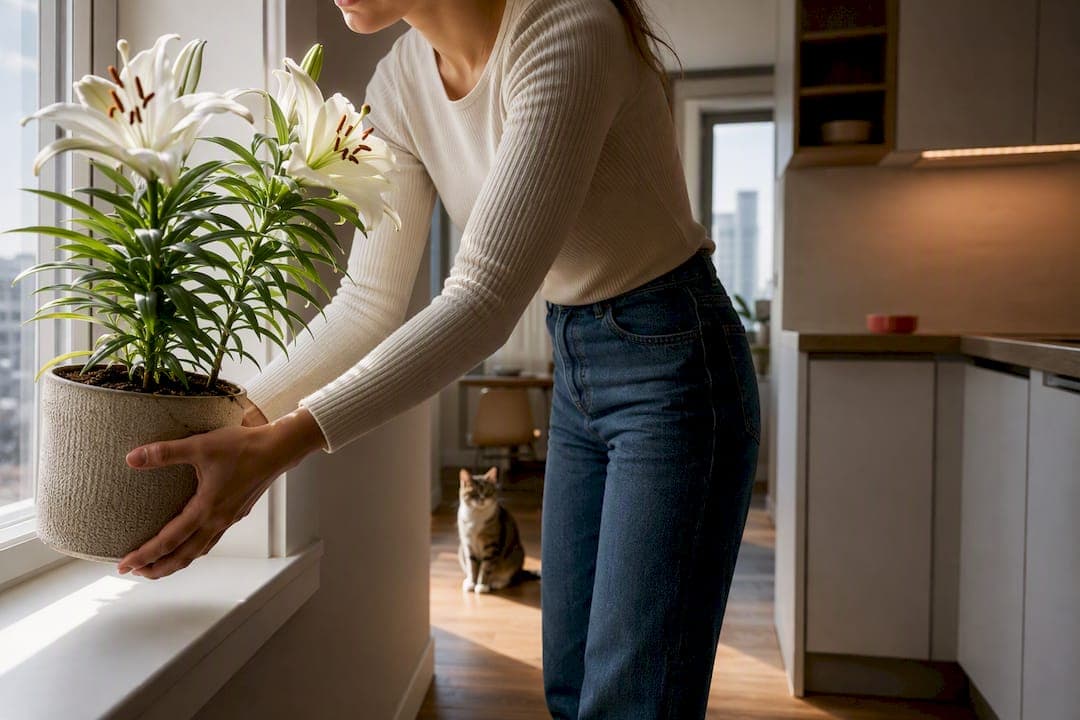
Cat-proofing an apartment comes down to four fixes done in this order: pull toxic plants and unsecured cords, lock down windows and balconies, then anchor furniture and stock enrichment before your cat sets foot inside. Run a floor-level walkthrough room by room before adoption day, because a curious cat sees your apartment at a completely different height and angle than you do. Testing renter-safe gear helps you avoid guessing which latch or screen actually holds.
TL;DR:
- Toxic plants like lilies, azaleas, and lily of the valley pose immediate poisoning risks and should be removed entirely if owned.
- Securing windows, balconies, and cords is critical, with tension-mounted screens, adhesive restrictors, and breakaway tassels being renter-safe solutions.
- Furniture should be solid, with rounded edges, and free from loose upholstery or small parts to prevent tipping, entrapment, or ingestion hazards.
- The most urgent hazards, such as poisons, unsecured windows, and dangling cords, must be addressed before adding enrichment features.
- Regular routine checks for small hazards and a monthly deep audit keep the apartment safe, especially for poison risks and structural stability.
Table of Contents
- How to Cat Proof an Apartment Room by Room
- Toxic Plants, Poisons, and Small Hazards
- Cords, Blind Strings, and Electrical Risks
- Windows, Balconies, and Fall Prevention
- Scratching, Vertical Space, and Litter Placement
- Preventing Door-Dashing and Emergency Prep
- The Five-Minute Daily Reset
- Kiblco's Take on Renter-Safe Hardware
- Safe Cat-Friendly Furniture Choices
- Cat-Safe Cleaning Products and Chemicals
- Noise and Stress Reduction Strategies
- Indoor Air Quality and Ventilation in a Cat Apartment
- Why the Standard Cat-Proofing Advice Falls Short
- Sources
How to Cat Proof an Apartment Room by Room
Get on your knees and look at each room from cat height. Cords look like toys, gaps under cabinets look like tunnels, and a half-open drawer looks like a nap spot. PetMD's cat-proofing guide recommends this exact perspective shift as the fastest way to spot hazards you'd otherwise miss standing up. Apartment-specific checklists suggest budgeting about 30 to 45 minutes per room for a first pass, based on guidance from IndoorLivingCat's apartment checklist.
Fix hazards in this order, because not every risk carries the same stakes:
- Toxic plants and open trash (highest priority, can cause poisoning within hours)
- Blind cords and unsecured windows/balconies (fall and strangulation risk)
- Unanchored furniture and appliances (crushing and entrapment risk)
- Enrichment gaps (lower urgency, but prevents destructive substitutes)
Here's what that looks like room by room:
- Living room: Anchor bookshelves and TV stands to the wall with furniture straps, tuck lamp and charger cords behind furniture, and check for small decor items a cat could knock down or swallow.
- Kitchen: Keep the trash can lidded or behind a latched cabinet, store rubber bands and twist ties out of reach, and close oven and dishwasher doors the second you step away from them, a habit PetMD flags as one of the most overlooked hazards in the home.
- Bathroom: Keep the toilet lid down, store medications in a closed cabinet rather than on the counter, and secure any hanging towel or shower cords.
- Bedroom: Move charging cables off the floor, check under the bed for gaps a kitten could get stuck in, and keep closet doors closed if you store mothballs or cedar products inside.
- Balcony: Treat this as off-limits until you've installed cat-rated netting or a tension screen. This is not a room to improvise in.
Handle the plants, cords, and balcony first. Enrichment additions like scratchers and window perches can wait until week two.
Toxic Plants, Poisons, and Small Hazards
Lilies cause acute kidney failure in cats, and even small amounts of pollen brushed off a petal onto fur can be fatal once a cat grooms it off. The ASPCA's cat plant list names lilies as one of the most dangerous common houseplants, alongside sago palm, azalea, and lily of the valley. If you already own any of these, remove them entirely rather than moving them "out of reach." Cats climb.
Statistic to know: the ASPCA maintains one of the most complete toxic and non-toxic plant databases available to pet owners, and checking any new plant against it before bringing it home takes less time than returning it later.
Beyond plants, watch for:
- Human medications, especially acetaminophen and NSAIDs, stored on nightstands or in purses.
- Onion, garlic, chocolate, and grapes, all of which sit on most kitchen counters at some point during the week.
- Rubber bands, hair ties, and dental floss, which cause intestinal blockages that often require surgery.
- Cleaning tablets and laundry pods, which cats sometimes bite into out of curiosity.
Safer plant alternatives include spider plants, Boston ferns, and cat grass, all of which appear on the ASPCA's non-toxic list. If you're building a plant collection anyway, a resource like Noble Abode's non-toxic decor guide is worth a look before you buy anything new for the apartment.
Cords, Blind Strings, and Electrical Risks
Dangling cords move like prey, which is exactly why cats chew and paw at them. A cat that bites through a live cable risks burns, oral injuries, and in rare cases, fatal electrocution. Blind and curtain cords carry a separate danger: strangulation, particularly for cats that jump up to bat at a dangling loop.
Renter-safe fixes that don't require drilling or damaging walls:
- Spiral cord wraps to bundle loose cables along a wall or desk leg.
- Adhesive cord channels that route wires flat against baseboards.
- Bitter-tasting sprays applied to cords a cat has already shown interest in chewing.
- Cord shorteners or cleats to pull excess slack up and out of paw's reach.
- Blind cord cleats or breakaway tassels, which convert a dangling loop into a fixed, unreachable line.
Pro Tip: Hide your phone and laptop charging station somewhere you won't see it. If it's out of sight for you, it's out of mind for your cat too, and that's one less thing to check every night.
Make the cord check part of your routine rather than a one-time fix. A cat that's bored will find a new cord to test even after you've secured the obvious ones, so a five-second scan of each room before you leave for the day catches problems before they become vet visits.
Windows, Balconies, and Fall Prevention
Cats fall from windows and balconies often enough that veterinarians have a name for the resulting injuries: high-rise syndrome. It happens more than most owners expect, partly because cats misjudge distance when chasing a bird or an insect, and partly because standard window screens are built to keep bugs out, not to hold a 10-pound animal that's leaning into it.
Renter-safe options that actually hold:
- Tension-mounted window screens or adhesive window restrictors, which install without drilling and are recommended in guides like BusyPetParent's apartment tips.
- Cat-rated balcony netting, not general-purpose garden netting, since ordinary mesh can tear or stretch under a cat's weight.
- Railing gap checks, keeping any opening under 4 inches wide so a cat can't slip through or get stuck.
Never leave a cat unsupervised on a balcony, even a screened one. Hardware fails; supervision doesn't.
Scratching, Vertical Space, and Litter Placement
Cats scratch to mark territory and stretch, and if you don't give them a legal spot for it, they'll pick your couch arm instead. Watch where your cat already scratches during the first week and put a post or scratcher right there rather than where it looks best in the room.
- Anchor tall cat trees or shelves to the wall with a strap, especially in apartments with hardwood or laminate floors where a top-heavy tower can tip.
- Use window perches and staggered shelving to build a vertical path your cat can use without needing floor space you don't have. Kiblco's roundup of cat window perches covers mounting options that won't damage rental walls.
- Place the litter box in a low-traffic corner away from food and water, and scoop at least once daily. A box that smells bad or sits too close to a loud appliance is one of the fastest ways to trigger inappropriate elimination.
A stable, wall-anchored cat tree, like the options in Kiblco's best cat trees for small apartments guide, solves two problems at once: enrichment and floor space.
Preventing Door-Dashing and Emergency Prep
Door-dashing usually starts as curiosity and turns into a habit fast. Break it before it forms:
- Create a buffer zone by keeping a baby gate or barrier a few feet inside the front door.
- Train an alternative behavior, like tossing a treat away from the door the moment you walk in, so your cat learns to look elsewhere.
- Keep a carrier accessible near the entry so you're never scrambling for one during a real emergency.
Pro Tip: Microchip your cat and double-check the registered contact info every few months, since a chip with an old phone number is nearly as useless as no chip at all.
Pair the chip with a breakaway collar and ID tag, and let your building's front desk or management know a cat lives in the unit. That single notification means maintenance staff and emergency responders know to check for a cat during fire drills, pest treatments, or building-wide incidents.
The Five-Minute Daily Reset
Cat-proofing isn't a one-time project. Run this before bed or before you leave:
- Collect loose items off floors and counters (rubber bands, hair ties, small decor).
- Tuck any exposed charging or appliance cords back into their channels.
- Close appliance doors: oven, dishwasher, washer, dryer.
- Confirm the balcony door is locked and window screens are seated.
- Check the litter box and top off water.
Do a deeper plant audit monthly and a screen or netting inspection quarterly, since adhesive mounts and tension screens can loosen over time. If a new behavior problem shows up, change one variable at a time so you can actually tell what fixed it.
Kiblco's Take on Renter-Safe Hardware
Testing cat gear simulates actual renter use: checking if mounts hold without drilling, materials resist chewing, and frames stay stable on wood floors. When shopping for scratchers, perches, or balcony netting, look for tension or adhesive mounting systems, removable frames your landlord won't flag, and materials free of loose fibers or toxic coatings. Kiblco's wand toy roundup is a good example of gear picked for safety first, not just looks.
Safe Cat-Friendly Furniture Choices
Furniture safety in a cat apartment isn't about buying "cat furniture." It's about auditing what you already own. Look for pieces with rounded edges over sharp corners, since a startled cat leaping off a couch can misjudge a landing. Avoid furniture with exposed foam or loose upholstery threads that invite chewing and ingestion, and skip anything with small magnetic closures on cushions or covers.
Solid wood and metal-framed furniture tend to hold up better than particleboard when a cat uses it as a launch pad. Recliners and sofa beds deserve extra caution: the mechanisms underneath create a crush hazard if a cat crawls inside while it's open, a risk PetMD specifically calls out in its cat-proofing guidance.
If you're furnishing from scratch, prioritize pieces with washable or leather-like covers over delicate fabrics that snag claws and eventually get shredded. A washable slipcover saves you from replacing a couch every time your cat has an accident or a scratching lapse. For shelving and bookcases, choose units with a wide base relative to height, since top-heavy furniture is the most common tipping hazard in small apartments where cats jump between surfaces to conserve floor space.
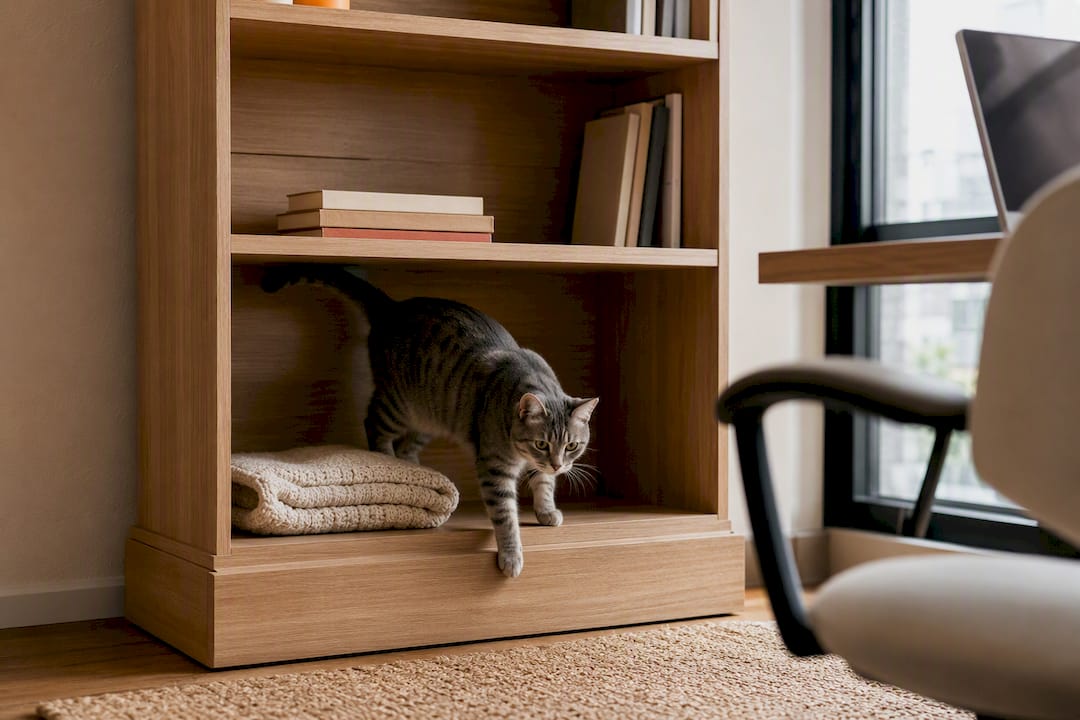
Skip furniture with exposed screws, staples, or particleboard edges along the bottom, since these catch claws and splinter over time. A quick monthly check of your furniture's stability costs a few minutes and prevents the kind of tipping accident that sends a cat to the emergency vet.
Cat-Safe Cleaning Products and Chemicals
Most conventional cleaners aren't formulated with paws and noses in mind, and cats absorb chemicals two ways humans don't worry about as much: through paw pads on freshly mopped floors, and through grooming residue off their fur.
Avoid cleaners containing phenols (common in some pine-scented and multi-surface cleaners) and concentrated bleach fumes in enclosed rooms, since both can cause respiratory or gastrointestinal distress. Essential oil diffusers, particularly tea tree, eucalyptus, and citrus oils, pose a real risk in small apartments where ventilation is limited and a cat can't simply leave the room.
Look for cleaners labeled safe for pets, or simpler options like diluted white vinegar and enzymatic cleaners for accidents, since enzymatic formulas break down odor-causing compounds rather than masking them with fragrance. Let floors fully dry before your cat walks on them, and rinse litter box surfaces thoroughly if you use anything beyond plain soap and water. If you're weighing odor-control products near the litter area specifically, Kiblco's breakdown of litter deodorizer safety covers which additives are worth avoiding. Store all concentrated cleaning products in a latched cabinet, the same rule that applies to medications.
Noise and Stress Reduction Strategies
Apartment living means shared walls, hallway noise, and the occasional slammed door from a neighbor, all of which register louder to a cat than to you. Cats have a hearing range roughly double the upper limit of human hearing, so sounds you barely notice can genuinely stress a cat out over time.
Give your cat a low-stimulation retreat, a covered bed or a quiet closet shelf, away from the loudest wall or the front door. Running a fan or white noise machine during peak building noise hours (move-ins, hallway traffic, elevator chimes) softens sudden startles. Vertical space helps here too: a cat perched above eye level often feels less threatened by unfamiliar sounds than one stuck at floor level.
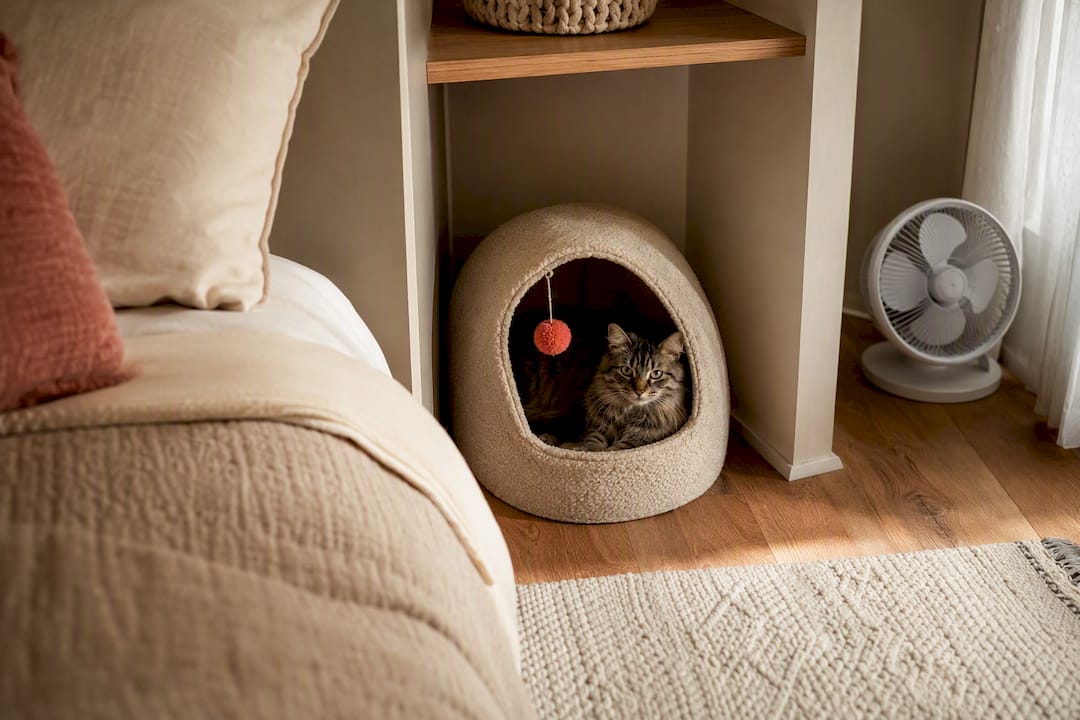
Watch for stress signals specific to apartment cats: over-grooming, hiding for hours instead of minutes, or sudden litter box avoidance right after a loud event in the building. These usually resolve once the cat has a reliable safe spot and a predictable routine. Feeding, play, and lights-out at consistent times matter more in an apartment than in a house, simply because there's less space to absorb unpredictability.
Indoor Air Quality and Ventilation in a Cat Apartment
Cats spend nearly their entire lives breathing whatever air is inside your apartment, which makes ventilation a bigger deal than most owners realize. Litter box dust, especially from clay-based litters, is the most common air quality complaint in small units, and it settles on surfaces a cat later grooms off its paws.
Crack a window near the litter area when weather allows, or run an air purifier with a true HEPA filter in the main room your cat uses most. Avoid scented candles and plug-in air fresheners entirely; they mask litter odor instead of removing it, and the fragrance chemicals aren't something a cat can opt out of breathing. Low-dust litter formulas reduce airborne particles significantly compared to traditional clay litter, cutting down on the fine dust that clay tracks can kick into the air with every scoop.
If your apartment doesn't have great natural airflow, rotate which rooms you keep doors open to during the day so stale air doesn't concentrate in one space, particularly the bedroom or any room with the litter box.
Why the Standard Cat-Proofing Advice Falls Short
Most cat-proofing lists treat every hazard as equally urgent, and that's where they fail renters. A loose hair tie under the couch is not the same emergency as a lily on the kitchen table, but generic checklists present them side by side with the same bullet weight. That flattens the advice into something you skim instead of act on.
The order matters more than the list. Fix what can kill your cat this week (toxic plants, unsecured windows, dangling cords) before you spend a Saturday afternoon arranging window perches. Enrichment prevents behavior problems, but it doesn't prevent emergency vet visits the way the first four fixes do.
The other gap: most guides talk about hazards and stop, without addressing what a renter can actually install. Tension screens, adhesive latches, and removable cord channels exist precisely because drilling into a rental wall isn't an option for most people. Prioritize the fixes that protect against poisoning and falls first, then build the enrichment layer once you know your apartment is actually secure.
— Chris
Ready to shop smarter for your cat's setup? Kiblco's hands-on reviews and buying guides cover the renter-safe gear worth your money, from anchored cat trees to window perches, so you're not guessing which product actually holds up in a small apartment.
Sources
Keep a short list of go-to references for anything you're unsure about:
- ASPCA - Cats: Plant list
- PetMD - How To Cat-Proof Your Home
- BusyPetParent - 15 tips to cat-proof apartment