Yes, psyllium can help dogs with certain types of diarrhea and constipation, but it isn't a fix for every stomach issue. It works best for large-bowel diarrhea, mild constipation, and anal gland trouble, and a peer-reviewed trial found firmer stools within a month for most dogs given it daily. Always keep fresh water available, since psyllium without enough fluid can worsen constipation, and rule out an obstruction with your veterinarian before starting.
TL;DR:
- Psyllium is most effective for large-bowel diarrhea, mild constipation, and anal gland issues, with clinical trials showing firmer stools within one month.
- Typical dosing ranges from 0.2 grams per kilogram of body weight daily, or about 2 to 4 tablespoons for larger dogs, starting with a lower dose and increasing gradually.
- Psyllium absorption of water forms a gel that can both slow transit in loose stools and speed it in constipation, but dehydration risk increases if your dog does not drink enough water.
- Avoid giving psyllium to dogs with obstructions, difficulty swallowing, or known allergies, and watch for side effects like gas, bloating, or worsening constipation.
- Use only pure, unsweetened, and xylitol-free psyllium products, and track stool changes over two to four weeks to assess effectiveness before making adjustments.
Table of Contents
- How Much Psyllium Should You Give a Dog?
- What the Research Actually Shows
- Is Psyllium Safe for Every Dog?
- Human Psyllium vs. Dog-Formulated Products
- Introducing Psyllium and Tracking Your Dog's Response
- Kiblco's Take on Psyllium for Everyday Gut Trouble
- Where to Find Vetted Gut-Health Products
- Sources
- FAQ
How Much Psyllium Should You Give a Dog?
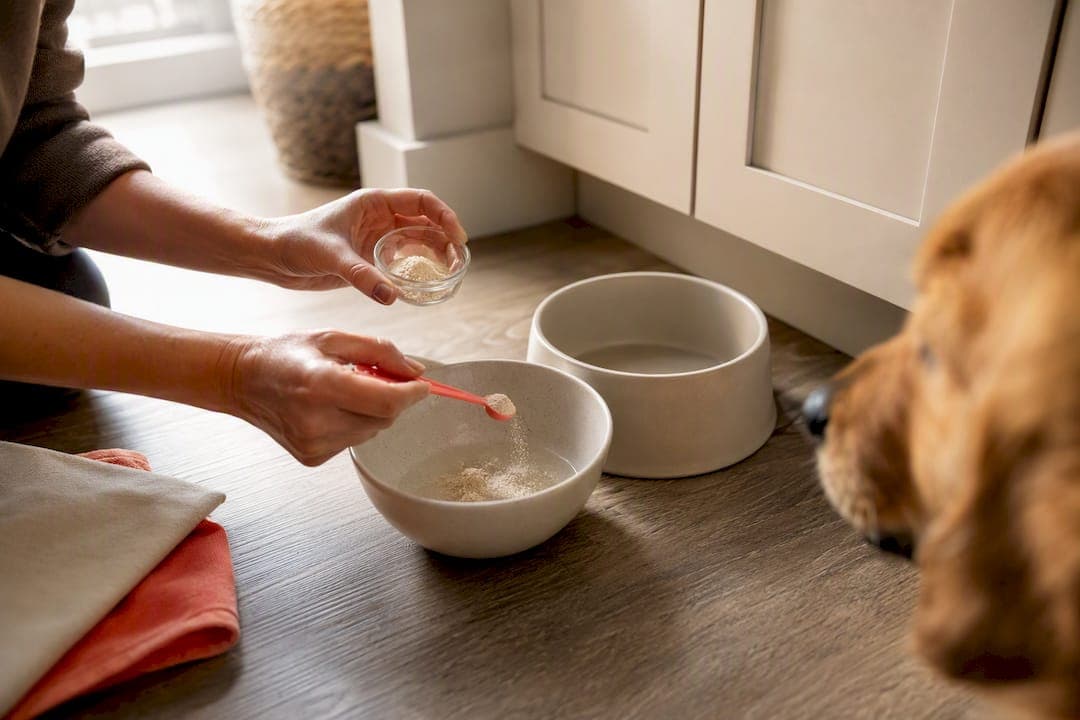
Most vets anchor dosing to body weight: roughly 0.2 grams per kilogram of body weight per day, split into one or two servings. That works out to about half a teaspoon for a 10-pound dog and closer to two teaspoons for a 50-pound dog, though individual products vary in concentration, so check the label.
Clinical reports also use a simpler, weight-agnostic approach: dosing strategies documented in veterinary practice range from about 2 to 4 tablespoons a day, a measure that shows up often in real-world trials on larger working dogs. That's a lot of fiber for a small dog, so treat the tablespoon range as a ceiling for bigger breeds, not a universal starting point.
Forms you'll encounter:
- Plain psyllium husk powder, mixed into water or wet food
- Capsules, which can be swallowed whole or opened and stirred into a meal
- Dog-formulated fiber powders, often paired with probiotics
A simple starter plan:
- Start at roughly a quarter to half the target dose for the first two to three days.
- Mix the powder thoroughly into water or food so it doesn't clump.
- Increase toward the full weight-based or tablespoon dose if stools haven't firmed up.
- Give psyllium at least two hours apart from other oral medications, since fiber can slow how much of a drug gets absorbed.
Pro Tip: Weigh your dog on a home scale or ask your vet for the last recorded weight before calculating a dose. Guessing weight by eye is one of the most common reasons dosing runs too high or too low.
What the Research Actually Shows
Psyllium's soluble fiber absorbs water and forms a gel in the gut. That gel adds bulk to stool, slows down transit time in dogs with loose stools, and speeds it up in dogs that are constipated. The fermentation process also produces short-chain fatty acids that feed the cells lining the colon, which is part of why fiber therapy is often the first line of defense for chronic large-bowel diarrhea.
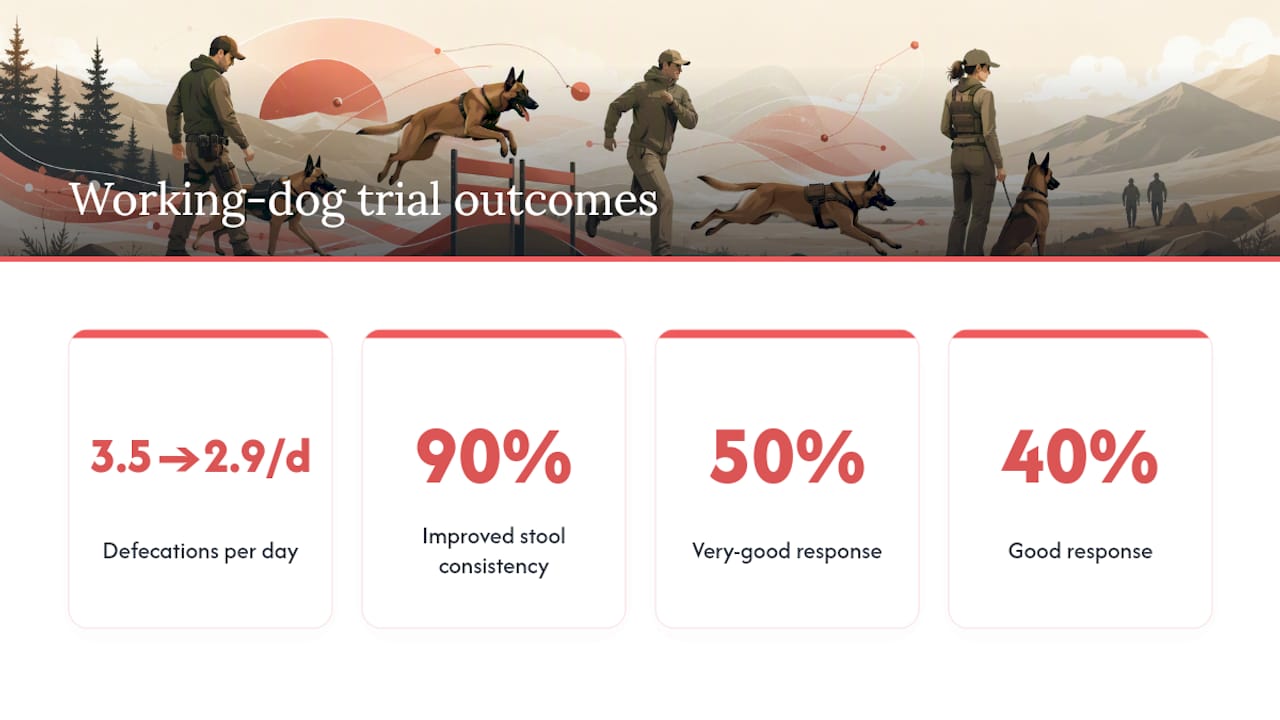
The strongest evidence comes from a trial of 22 police working dogs with chronic diarrhea, given about 4 tablespoons of psyllium husk daily for a month. Defecation frequency dropped from 3.5 to 2.9 times per day, and 90% of the dogs showed improved stool consistency, with some dogs gaining weight as digestion normalized. Half the dogs had a "very good" response and 40% a "good" one.
Owners typically see change within 24 to 48 hours of starting, though the trial ran a full month before measuring outcomes, and benefits sometimes lasted for weeks after the dogs came off psyllium. That said, working dogs on a controlled diet aren't a perfect stand-in for a couch companion with a sensitive stomach, and persistent diarrhea always deserves a vet visit to rule out parasites, infection, or inflammatory bowel disease before you lean on fiber alone.
Is Psyllium Safe for Every Dog?
Psyllium is generally well tolerated, but it isn't risk-free. Skip it entirely if your dog has a suspected intestinal blockage, difficulty swallowing, megacolon, or a known allergy to psyllium.
- Gas and bloating are the most common mild side effects, usually solved by starting at a lower dose and increasing gradually.
- Dehydration risk rises if your dog doesn't drink enough water, since psyllium pulls fluid into the gut and can worsen constipation instead of relieving it.
- Drug interactions are possible, since fiber can bind to and reduce absorption of some oral medications.
- Choking hazard exists with thickened liquids. VCA Animal Hospitals warns against mixing psyllium into anything that becomes gel-like before swallowing, which can catch in the throat.
Watch for vomiting, worsening constipation, straining without producing stool, or a bloated abdomen. Any of those signs means stop the psyllium and call your vet.
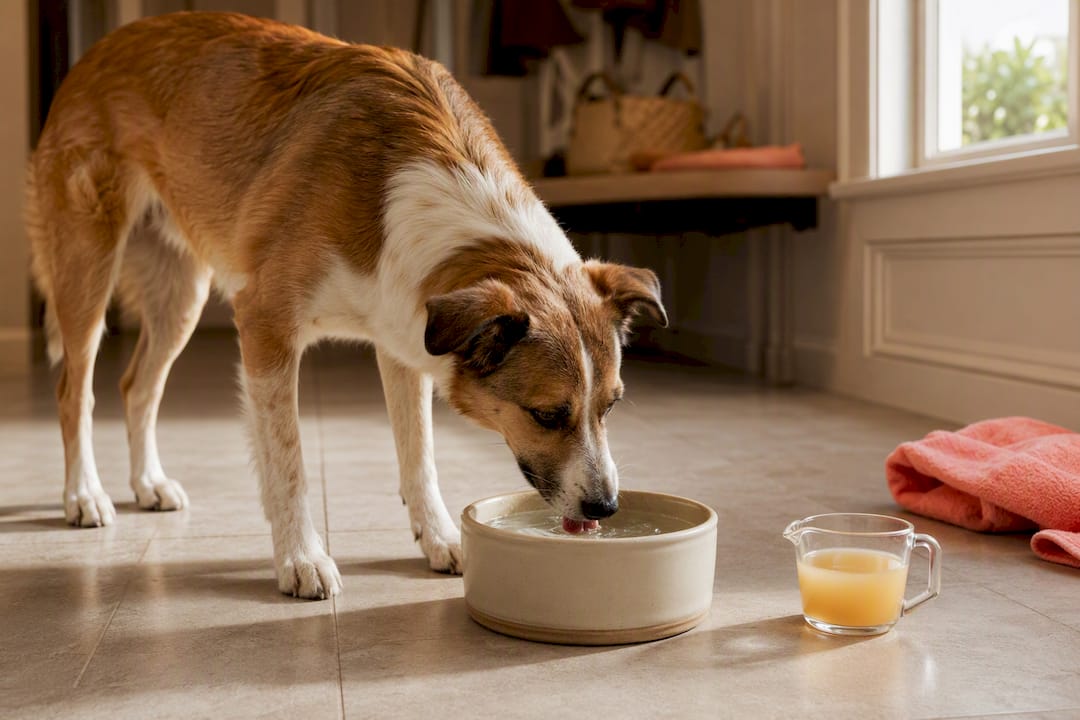
Pro Tip: If your dog seems less interested in water after starting psyllium, add a splash of low-sodium broth to their bowl. Dogs that won't drink enough plain water often drink more readily when it's flavored.
Human Psyllium vs. Dog-Formulated Products
You don't strictly need a pet-specific product, but the label matters more than the brand. Flavored or sweetened human psyllium powders often contain xylitol, an artificial sweetener that's toxic to dogs even in small amounts, so orange- or berry-flavored fiber supplements marketed to people are off the table.
Before buying anything, check the label for:
- 100% psyllium husk with no added sugar, flavoring, or sweetener
- No xylitol, sorbitol, or other sugar alcohols listed anywhere in the ingredients
- A clear serving size in grams or teaspoons, not just "one scoop"
- No artificial dyes or preservatives, especially in powders marketed for smoothies
Dog-formulated capsules and powders, including veterinary options like Vetasyl, skip the flavoring problem entirely and often come with clearer per-pound dosing charts.
Introducing Psyllium and Tracking Your Dog's Response
Give it two to four weeks before deciding whether psyllium is actually working, since a single good or bad day doesn't tell you much.
- Days 1 to 3: Start at a quarter to half the target dose, watching for gas or loose stool that signals you're going too fast.
- Days 4 to 7: Move to the full dose if things look stable, and expect visible changes in stool firmness within 24 to 48 hours of reaching it.
- Ongoing: Track stool score (loose, formed, or hard), frequency, appetite, and energy daily in a notes app or on paper.
- At 2 to 4 weeks: If symptoms haven't improved, taper off and call your vet for bloodwork or imaging instead of increasing the dose further.
Pro Tip: Snap a quick photo of your dog's stool each morning for the first week. It sounds unpleasant, but a photo log makes it far easier to describe changes accurately to your vet than trying to remember from memory.
Kiblco's Take on Psyllium for Everyday Gut Trouble
Fiber therapy works best as a supporting tool, not a cure. An important approach to evaluating gut-health supplements is to ask: is this product pure, clearly dosed, and something your dog will actually eat? A plain, unflavored psyllium product, approved by your vet and paired with real hydration habits, beats any fiber blend padded with additives. Run a short trial, track results, and adjust with your vet rather than guessing.
— Chris
Where to Find Vetted Gut-Health Products
Picking the right fiber supplement gets a lot easier once you know what to check on a label, but reading ingredient lists for every product on a shelf is nobody's idea of a good afternoon. Kiblco's review hub breaks down trending pet products with vet-informed testing, covering purity, dosing clarity, and whether dogs actually tolerate the taste, so you're not the only one deciding if a fiber powder is worth the money.

If you're building out a broader gut-health routine, Kiblco's guide to a vet-backed prebiotic for dogs covers how prebiotic fiber compares to psyllium for chronic diarrhea, and the roundup of dog probiotics for sensitive tummies is a natural next stop if you're pairing fiber with live cultures. Read the reviews before you buy, and loop your veterinarian in on any new supplement, especially if your dog has an existing condition.
This article is general information, not a substitute for advice from a qualified doctor. Consult a qualified healthcare professional about your own circumstances before acting on anything here.
Sources
- The use of soluble fibre for the management of chronic idiopathic large-bowel diarrhoea in police working dogs
- Psyllium fiber capsules | VCA Animal Hospitals
- What is the recommended dosage of psyllium for dogs
- Metamucil For Dogs - Whole Dog Journal
FAQ
How much psyllium husk can I give my dog a day?
A common weight-based guideline is about 0.2 grams per kilogram of body weight per day, while clinical trials on larger dogs have used 2 to 4 tablespoons daily; start low and increase gradually with your vet's input.
What does psyllium husk do for dogs?
It forms a gel in the gut that bulks stool and normalizes transit time, easing both mild constipation and large-bowel diarrhea, and a trial in police working dogs found firmer stools in 90% of cases after a month of daily use.
Is psyllium husk or pumpkin better for dogs?
Both add soluble fiber, but psyllium delivers a more concentrated, measurable dose backed by clinical trial data, while canned pumpkin is milder and easier to use for occasional, mild digestive upset.
Can you use human psyllium husk powder for dogs?
Plain, unsweetened human psyllium is generally acceptable, but flavored or sugar-free versions often contain xylitol, which is toxic to dogs, so always check the ingredient label before using a human product.
How long does it take for psyllium to work in dogs?
Most owners notice changes in stool consistency within 24 to 48 hours, though a full therapeutic trial of two to four weeks gives a clearer picture of whether it's actually helping.