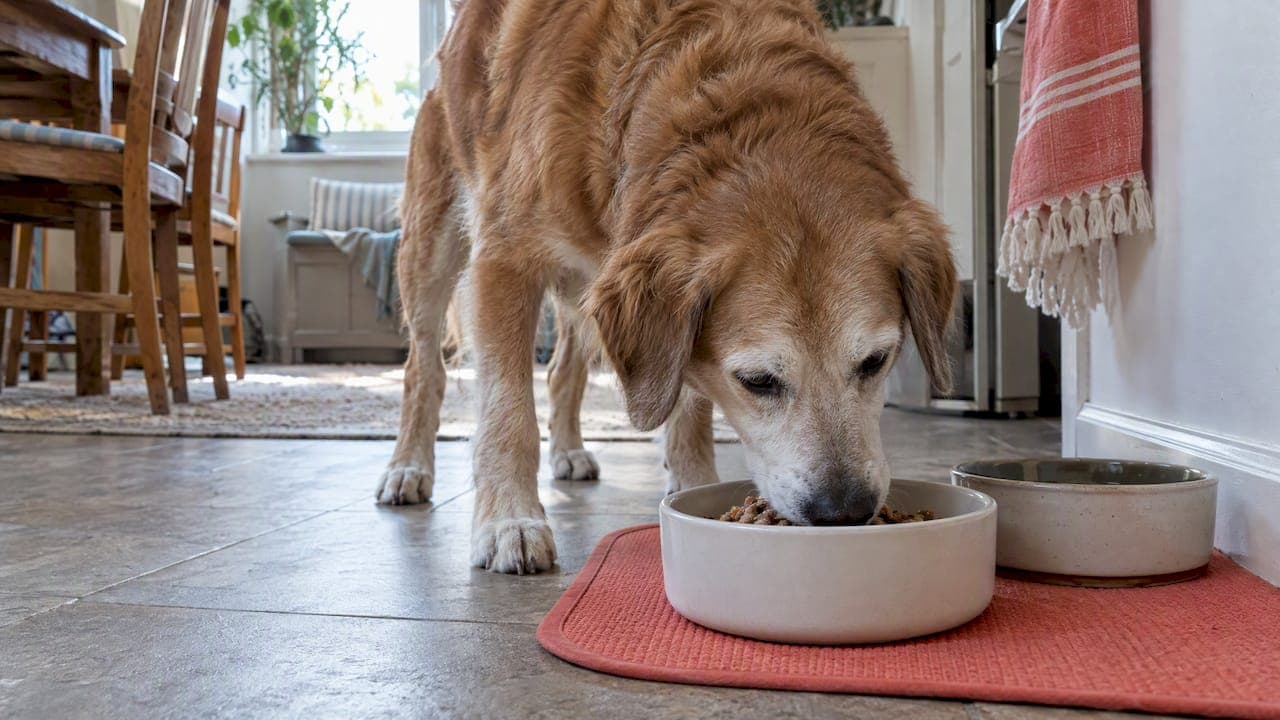
If your dog has chronic kidney disease, a prescription renal diet is the single most effective thing you control, and it should be your starting point once your vet confirms IRIS stage 2 or higher. If your dog refuses it, vet-guided low phosphorus alternatives, toppers, and nutritional support are reasonable compromises while you work toward an eating plan that sticks. Phosphate binders come next, only if diet alone does not bring phosphorus down.
TL;DR:
- Compare foods by phosphorus per 1,000 kcal, and ask manufacturers whether figures come from finished product testing or formulation estimates and feeding trials.
- If your dog rejects prescription food, a lower phosphorus commercial diet can serve as a temporary bridge, though disease specific trial evidence is lacking.
- Transition gradually over 7 to 10 days, pause if appetite or stool worsens, and recheck phosphorus and related labs 4 to 6 weeks later.
- Keep treats below 10% of daily calories, avoid jerky and dehydrated sweet potato chews, and check phosphorus before offering dental chews or rawhide substitutes.
- Ask your vet to add a phosphate binder only when diet fails to control blood phosphorus; dosing requires repeat lab monitoring.
Table of Contents
- What "Low Phosphorus" Means on a Dog Food Label
- Why Phosphorus Control Matters: IRIS Targets and Feeding Outcomes
- Prescription Renal Diets vs. Over-the-Counter "Kidney Friendly" Foods
- Choosing and Transitioning to a Low Phosphorus Food
- Treats, Toppers, and Phosphate Binders: What's Safe to Add
- Monitoring After You Start a Renal Diet
- Kiblco Testing Notes: What Actually Gets Eaten at Home
- Causes and Symptoms of High Phosphorus in Dogs
- Health Risks of Excess Phosphorus in Dogs
- Nutrient Balancing in Low Phosphorus Dog Foods
- Ingredients Commonly Used in Low Phosphorus Dog Foods
- Realistic Goals for Owners Managing a Kidney Diet
- Kiblco Resources for Feeding Aids and Topper Reviews
- FAQ
- Sources
What "Low Phosphorus" Means on a Dog Food Label
Phosphorus content listed as a percentage on a bag tells you less than it seems to. A food's percentage is calculated on an "as fed" or dry matter basis, and it does not account for how calorie-dense the food is, so two foods with similar percentages can deliver very different phosphorus loads per meal. The more useful number is phosphorus per 1,000 kilocalories, because it lets you compare foods regardless of how much you feed or how energy-dense they are.
Most mainstream labels do not print this figure, so you often have to ask. The WSAVA Global Nutrition Toolkit recommends contacting manufacturers directly for a nutrient analysis rather than relying on marketing claims like "holistic" or "premium," which carry no regulatory meaning.
When you call or email a manufacturer, a few questions get you comparable data:
- Ask for phosphorus per 1,000 kcal, not just the guaranteed analysis percentage.
- Ask whether the figure is an average analysis of the finished product or a calculated formulation estimate.
- Ask for kilocalories per 100 grams so you can normalize phosphorus across brands and formats.
- Ask whether the diet passed an AAFCO feeding trial or only meets AAFCO's formulation method, since a feeding trial tests the food in live animals over time while a formulation claim is a calculation on paper. Our guide to AAFCO dog food standards breaks down that distinction in more detail.
Why Phosphorus Control Matters: IRIS Targets and Feeding Outcomes
Phosphorus restriction, not protein restriction, is the main mechanism behind the benefits seen in renal diets. Excess phosphorus accelerates kidney damage and drives secondary complications, so bringing it down slows the disease's progression more directly than cutting protein alone.
The IRIS treatment recommendations lay out a sequential approach: restrict dietary phosphate first, and only add enteric phosphate binders if serum phosphorus stays elevated after the diet has had time to work. IRIS sets numeric targets that shift by disease stage, with a commonly cited goal of under 4.6 mg/dL, while later-stage dogs often have more modest, individualized targets because full normalization is not always realistic once kidney function has declined substantially.

A retrospective study of 116 dogs with CKD found that nutritional factors, including diet type and serum phosphorus, were linked to survival. That finding supports what vets have observed clinically for years: dogs that stay on an appropriate renal diet and maintain controlled phosphorus tend to do better over time than dogs left on standard maintenance food.
Separately, controlled feeding studies summarized by VetLens found that therapeutic renal diets reduced uremic crises and extended survival compared with regular maintenance diets. The combination of lower phosphorus, adjusted protein quality, and added omega-3 fatty acids in most therapeutic formulas appears to work together rather than through any single nutrient change.
Prescription Renal Diets vs. Over-the-Counter "Kidney Friendly" Foods
Prescription renal diets are the recommended first-line option for dogs at IRIS stage 2 or beyond because they are formulated to hit specific phosphorus, protein, and sodium targets and have outcome data behind them. Over-the-counter "kidney support" foods are not held to the same formulation standards, and most lack feeding-trial evidence specific to kidney disease.
That does not make OTC options useless. They have a real place in two situations:
- When a dog flatly refuses every prescription option your vet has available and some nutrition is better than none while you keep troubleshooting.
- When you are using a lower-phosphorus OTC food as a bridge during a slow transition onto a prescription diet.
Home-cooked diets fall into a different category entirely. They can work, but only when a board-certified veterinary nutritionist formulates the recipe, because DIY renal diets assembled from general advice are frequently deficient in calcium, vitamin D, or other nutrients that matter enormously for a kidney patient. A nutritionist-formulated recipe can match a commercial renal diet's phosphorus control while working around a dog's specific preferences or food sensitivities.
Pro Tip: Ask your vet for a written referral to a board-certified veterinary nutritionist (through a service like a veterinary teaching hospital) before attempting a home-cooked renal diet, rather than adapting a recipe you found online.
Choosing and Transitioning to a Low Phosphorus Food
Picking the right food is only half the job. Getting your dog to actually eat it, consistently, is the part that determines whether the diet helps at all.
Before you buy, run through a short checklist:
- Confirm the phosphorus per 1,000 kcal rather than relying on the percentage alone.
- Check the calorie density so you can calculate a realistic daily portion for your dog's weight and activity level.
- Look at protein quality, since renal diets moderate protein without starving your dog of the amino acids it needs to maintain muscle.
- Check which formats (dry, wet, semi-moist) the line offers, since format often determines whether a dog will eat it at all.
Once you have a diet to try, a gradual transition protects both appetite and gut tolerance. A common approach spreads the switch over 7 to 10 days: start with roughly 75% old food and 25% new food, shift the ratio by about 25% every two to three days, and hold at any ratio longer if your dog's stool or appetite wavers. Warming wet food slightly, or adding a small amount of low-phosphorus topper, can make a reluctant eater more willing to try it.
Pro Tip: If your dog turns away from a new renal food outright, do not force it. Go back to the last ratio that worked, give it a few more days, and ask your vet about a short-term appetite stimulant if refusal continues.
Weigh your dog weekly during the transition and watch body condition score, not just the scale number, since fluid shifts common in CKD can mask muscle loss. If your dog is eating less than roughly 75% of its target calories for more than two or three days, or loses weight unexpectedly, call your vet rather than waiting it out.

Treats, Toppers, and Phosphate Binders: What's Safe to Add
Treats should stay small relative to the rest of the diet. The Tufts Cummings School's Petfoodology blog recommends keeping treats to no more than 10% of daily calories for dogs on a kidney-support feeding plan, since anything more starts to dilute the benefit of the controlled main diet.
Some popular treats work against the plan entirely:
- Avoid jerky treats and dehydrated sweet potato chews, both commonly flagged as high in phosphorus.
- Favor small amounts of plain, low-phosphorus options like a few pieces of plain cooked green beans or a small portion of the dog's own renal food used as a treat.
- Skip anything marketed as a "dental chew" or "rawhide alternative" without checking its phosphorus content first, since these categories vary widely.
When diet alone does not bring serum phosphorus down to target, the sequential approach outlined by veterinary nephrology guidance calls for adding an enteric phosphate binder rather than restricting the diet further. Binders need their own monitoring, since dosing is adjusted based on follow-up labs rather than a single fixed amount.
Some adjunct supplements have supporting trial data, though evidence is still limited. A trial of calcium carbonate and chitosan based supplementation reported reduced serum phosphorus when added to a renal diet, though that trial was conducted in cats, so results should be discussed with your vet before extrapolating to dogs. Never add a binder or supplement without veterinary guidance, since dosing errors can cause their own complications.
Monitoring After You Start a Renal Diet
IRIS recommends rechecking serum phosphorus and related labs 4 to 6 weeks after any diet change, since that is roughly how long dietary phosphorus restriction takes to show up in bloodwork. Once your dog's numbers stabilize at target, your vet will likely space out rechecks, though the exact interval depends on CKD stage and overall stability.
Watch for red flags between visits: sustained weight loss, a drop in appetite that lasts more than a couple of days, vomiting, or visible muscle wasting over the shoulders and spine. Any of these warrants a call to your vet rather than waiting for the next scheduled recheck, since early intervention tends to produce better outcomes than reactive care.
Kiblco Testing Notes: What Actually Gets Eaten at Home
Lab targets only matter if your dog eats the food. In our home testing, a vet-backed prebiotic we reviewed was accepted in 94% of trials, a useful example of how a well-chosen adjunct can support intake when a dog is picky about a new diet.
Across the renal and senior-dog foods we have tested, wet formats and small variety packs consistently increased how much dogs actually ate compared with committing to one dry formula. Sample packs in particular reduce the risk of buying a full bag a dog refuses after the first bowl. Owners who found success most often made texture changes slowly and kept feeding times consistent, two low-cost habits that made a bigger difference than the specific brand chosen.
Causes and Symptoms of High Phosphorus in Dogs
Phosphorus builds up in the blood mainly because failing kidneys lose the ability to filter and excrete it efficiently, a problem that worsens as CKD advances through its stages. Diets that are naturally high in phosphorus, particularly those heavy in organ meat, bone meal, or certain plant proteins, add to that burden in dogs whose kidneys can no longer keep pace.
Early elevated phosphorus often causes no obvious symptoms, which is part of why routine bloodwork matters more than waiting for visible signs. As levels climb and secondary complications like elevated parathyroid hormone develop, owners may start to notice decreased appetite, lethargy, bad breath with a chemical or ammonia-like odor, increased thirst and urination, and occasional vomiting.
These symptoms overlap heavily with general CKD symptoms, since elevated phosphorus is both a marker of declining kidney function and a contributor to how fast that decline continues. That overlap is exactly why a low phosphorus diet addresses two problems at once: it reduces the kidneys' workload and helps control the downstream hormonal imbalances that make a dog feel sick. Dogs on standard, non-renal commercial diets are especially at risk of phosphorus creeping upward unnoticed, since typical maintenance foods are not formulated with kidney patients in mind.
Health Risks of Excess Phosphorus in Dogs
Chronically high phosphorus does measurable damage beyond what shows up on a single blood panel. Sustained elevation is associated with faster progression of kidney disease, since the kidneys must work harder to excrete phosphorus they can no longer process efficiently, creating a cycle where declining function and rising phosphorus reinforce each other.
High phosphorus also drives secondary renal hyperparathyroidism, a condition where the parathyroid glands release more hormone to try to compensate for calcium and phosphorus imbalances. Over time, that hormonal response can pull calcium out of bone and contribute to soft tissue mineralization, where calcium and phosphate deposits build up in places like blood vessels and organs rather than bone.
Dogs with poorly controlled phosphorus are also more prone to uremic crises, the acute episodes of illness (vomiting, severe lethargy, loss of appetite) that often prompt emergency vet visits in CKD patients. The feeding-trial evidence discussed earlier links controlled phosphorus intake with fewer of these crises and longer survival, which is the clinical reasoning behind making diet the first-line intervention rather than an afterthought.
Left unaddressed, the combination of accelerated kidney decline, hormonal disruption, and soft tissue changes compounds over months, which is why vets prefer to intervene with diet early rather than waiting for labs to reach crisis levels.
Nutrient Balancing in Low Phosphorus Dog Foods
Lowering phosphorus is not as simple as removing an ingredient. Formulators have to rebalance the whole diet so the dog still gets adequate calcium, high-quality protein, and the right calorie density, since cutting one nutrient without adjusting others can create new deficiencies.
Renal diets typically moderate protein slightly, not to starve the dog of amino acids but to reduce the phosphorus that tends to travel with protein sources like meat and bone meal. High-quality protein sources are chosen specifically because they deliver more usable amino acids per gram of phosphorus than lower-quality sources do. Calcium levels are also adjusted carefully, since the calcium-to-phosphorus ratio affects how the body handles both minerals, and getting that ratio wrong can undo the benefit of lowering phosphorus in the first place.
Many therapeutic renal formulas also add omega-3 fatty acids, since there is clinical interest in their role supporting kidney function alongside phosphorus restriction, and they are a standard part of most commercial renal diets' formulation rather than an optional add-on.
This is the core reason WSAVA guidance steers owners toward nutrient analysis and manufacturer transparency rather than ingredient lists. A food can look "clean" on its ingredient panel and still be poorly balanced for a kidney patient, while a less photogenic formula can be precisely tuned for the job.
Ingredients Commonly Used in Low Phosphorus Dog Foods
Formulators lean on a recognizable set of ingredients to hit low phosphorus targets without sacrificing calorie density or palatability. Egg product and certain muscle meats are common protein sources because they offer high-quality amino acids relative to their phosphorus content, compared with ingredients like organ meat or bone meal, which pack a much heavier phosphorus load per gram of protein.
Carbohydrate sources such as rice, corn, or potato typically make up a larger share of renal formulas than in standard maintenance foods, partly because they help maintain calorie density while naturally contributing less phosphorus than animal-based proteins. Added fats, often fish oil or other omega-3 sources, boost palatability and calorie density at the same time, which matters for dogs whose appetite is already compromised by CKD.
Phosphorus binders like calcium carbonate occasionally appear as formulation ingredients in some therapeutic diets, working alongside dietary restriction rather than replacing it. Ingredients flagged for avoidance in homemade or OTC low-phosphorus cooking include bone meal, organ meats like liver and kidney, and certain dairy products, all of which carry disproportionately high phosphorus relative to their calorie contribution. Comparing ingredient panels side by side is less useful than comparing the resulting phosphorus per 1,000 kcal, since the same ingredient can appear in very different concentrations between brands.
Realistic Goals for Owners Managing a Kidney Diet
The evidence keeps pointing to the same conclusion: diet first, binders only if needed, and appetite and weight matter as much as hitting a specific phosphorus number on paper. A dog that eats 80% of a renal diet reliably usually does better than one that eats 100% of it sporadically.
If your dog is losing weight, refusing food for more than a couple of days, or you are tempted to formulate meals yourself, bring in a board-certified veterinary nutritionist rather than guessing. Most of this is manageable at home with patience and a good relationship with your vet.
— Chris
Kiblco Resources for Feeding Aids and Topper Reviews
Finding a topper or adjunct that a kidney-diet dog will actually eat usually takes trial and error, and we built our reviews to cut down on that guesswork. Each review we publish includes real acceptance notes from home testing, along with clear pros and cons and veterinary input on anything marketed as health-supportive.

Before buying a topper, probiotic, or feeding aid for a dog on a renal diet, check our Dog Health and Dog Treats hub for acceptance rates and retailer links we have tested firsthand. Some of our links are affiliate links, and our reviews stay vet-informed and based on genuine home testing regardless of where you choose to buy.
FAQ
How can I lower my dog's phosphorus levels?
Start with a vet-prescribed renal diet formulated to restrict dietary phosphorus, since diet change is the first-line approach before any supplement or medication is added. If phosphorus stays elevated after a few weeks on the new diet, your vet may add an enteric phosphate binder and recheck labs to adjust the dose.
What kind of dog food is best for kidney patients?
A prescription renal diet formulated specifically for kidney support is the recommended option for dogs at IRIS stage 2 or beyond, since these diets are designed around controlled phosphorus and protein levels. Over-the-counter "kidney support" foods can serve as a bridge when a dog refuses prescription options, but they lack the same formulation standards and trial data.
What dog food do vets recommend for kidney disease?
Vets generally recommend a therapeutic prescription renal diet over standard maintenance food once a dog reaches IRIS stage 2 or higher, since controlled feeding studies have linked these diets to fewer uremic crises and longer survival. The specific brand and format matter less than confirming the diet meets phosphorus and nutrient targets your vet sets for your dog's stage.
What foods should dogs with kidney disease avoid?
Avoid high-phosphorus treats like jerky and dehydrated sweet potato chews, along with ingredients such as organ meats, bone meal, and some dairy products that carry a heavy phosphorus load. Treats overall should stay under about 10% of daily calories so they do not undercut the benefit of the main renal diet.
Sources
- Best Dog Food for Kidney Disease: What to Feed a Dog With CKD
- IRIS dog treatment recommendations (May 2026)
- Nutritional and laboratory parameters affect the survival of dogs with chronic kidney disease (PLOS ONE)
- What treats can I give my dog with kidney disease? (Tufts Petfoodology)
- Selecting a pet food for your pet (WSAVA Global Nutrition Toolkit)