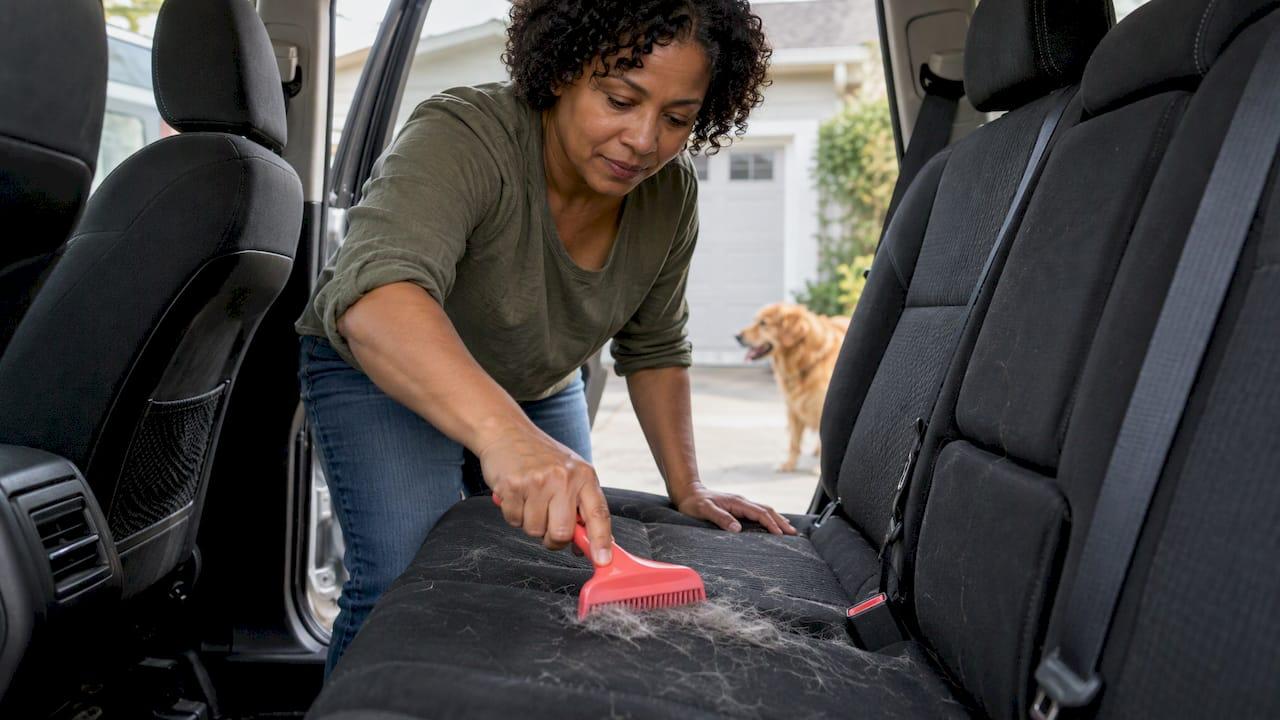
The fastest way to get dog hair out of a car is a two-step routine: loosen the hair with a damp rubber tool, then vacuum up the pile you made. A vacuum alone only picks up hair that is already loose, and most of the hair woven into car carpet and seat fabric is not. The same loosen-first logic works on clothes and sofas, with small changes for each surface. Below you get the full routine for each one, a tool-by-surface table, and the habits that keep the hair from building up again.
TL;DR
- Loosen first, vacuum second. A rubber-toothed brush, squeegee or slightly damp rubber glove pulls hair out of the weave, and then the vacuum collects it.
- In a car, work in sections: vacuum, mist lightly with plain water, scrape in one direction, vacuum again, and finish with a lint roller.
- For laundry, tumble hairy clothes in the dryer on no heat before washing, and never use hot water, which sets hair deeper into fabric.
- On furniture, match the tool to the fabric: damp rubber glove or squeegee for upholstery, and gentle pressure everywhere.
- A washable seat cover or cargo liner stops most hair before it ever reaches the upholstery.
Table of Contents
- Why a vacuum alone leaves dog hair behind
- How to get dog hair out of car seats and carpet
- Which tool works on which surface
- How to get dog hair off clothes
- How to remove pet hair from upholstery and furniture
- Does a pet hair removal glove really work?
- What vacuum helps most
- Keep the hair from coming back
- Which fabrics hold the least dog hair
- Our take: pick the tool for the job, not the gimmick
- Find the right dog gear
- FAQ
- Sources
Why a vacuum alone leaves dog hair behind
Dog hair, especially short and stiff hair, works its way between fibers instead of lying on top. Hagerty's hands-on test found that even a good shop vacuum left most of the hair in coarse car carpet after four minutes of vacuuming. A lint roller took off roughly 70 percent. The takeaway from that test is simple: suction removes loose hair, so you need a gathering tool that frees the rest.
Rubber does that job well. Dragged across fabric, it grips tangled hair through friction and lifts it, and the strokes pile hair into a line you can vacuum in one pass. That is why nearly every detailing guide pairs a rubber tool with a vacuum, and why the routines below all start by loosening.

How to get dog hair out of car seats and carpet
This is the routine Family Handyman lays out, with a few details from detailers added to each step.
What you need
- A vacuum with an upholstery nozzle and a crevice tool (a shop vacuum or a household canister both work)
- A rubber-toothed pet hair brush, a squeegee, or a rubber glove
- A spray bottle of plain water
- A lint roller
- A flashlight
Step by step
- Do a first vacuum pass. Take out the loose hair so you are not pushing it around. Auto Cleaned suggests an order that keeps you from missing spots: headrests, seat backs, cushions, side bolsters, seat gaps, footwells, then under the seats. Use the upholstery tool on flat areas and the crevice tool in seams.
- Mist, do not soak. Spray plain water on a small section using the widest spray pattern. A light mist makes hair clump instead of scatter. Soaked foam takes a long time to dry and can leave a damp smell, so keep it to a fine dampness.
- Scrape in one direction. Pull the rubber tool toward you in short strokes. Back-and-forth scrubbing just redistributes hair. In Hagerty's test, a $14.95 rubber brush (the 2023 price) pulled all the hair off the back of a seat in about 30 seconds.
- Pile it up, then vacuum it. Work one section at a time so the hair does not dry and drift back into the fabric. Vacuum each pile before moving on.
- Check with a flashlight. Hold it parallel to the surface. Hidden strands show up as shadows. Heavy shedders can take two to three loosen-and-vacuum cycles.
- Finish with a lint roller and open the doors. Roll over the seats to catch what is left, then let the car air out so the mist dries completely.
Match the tool to the seat
Check the material before you scrape. Kärcher's interior guide recommends a hard-bristle brush for fabric seats and a soft-bristle brush for leather so it does not scratch. On leather, a damp rubber glove or a soft brush is the gentler choice, and hair usually wipes off in a pass or two because the surface is non-porous.
Do not forget the cargo area and floor mats
The rear footwells and cargo area collect the most hair because that is where dogs ride. Pull the floor mats out and shake or vacuum them outside the car. Then work the carpet in two vacuum directions after you have loosened it with a rubber rake or brush. Overlapping slow passes pick up far more than one quick pass.
Once the hair is out, the surfaces are easier to clean for everything else dogs leave behind. An automotive interior cleaner takes care of the dust and grime on dashboards and door panels in the same session.
Which tool works on which surface
A tool that is perfect on a seat can damage a sofa. This table pulls together what JAS Cleaning and Shine Doctor's detailers recommend.
| Surface | Best loosening tool | Then | Watch out for |
|---|---|---|---|
| Car fabric seats | Rubber-toothed brush or squeegee | Vacuum the pile | Soaking the foam |
| Car leather | Soft brush or damp rubber glove | Wipe, light vacuum | Hard bristles that scratch |
| Car carpet | Carpet rake or rubber brush | Slow vacuum in two directions | Rushing the vacuum pass |
| Sofa and chair upholstery | Damp rubber glove or squeegee | Lint roller | Pressing hard on delicate weaves |
| Clothes | Dampened rubber glove, or the dryer | Lint brush or roller | Hot water, snag-prone knits |
| Coarse carpet or rugs | Pumice or hair stone, gently | Vacuum | Fraying the fabric |
Shine Doctor rates a damp rubber glove as very good on surface hair and useful on embedded hair, and a pumice-style stone as good, with a warning that it can fray fabric. Use a stone only on durable carpet and with gentle pressure.
How to get dog hair off clothes
Clothes are where most of us lose the battle, because the hair is the same but the stakes are higher: you are about to walk out the door.
The quick fix before you leave
A slightly dampened rubber glove works on clothes. The Spruce's cleaning pros explain that the rubber attracts hair and pulls it off in long strokes. A dryer sheet brushed in one direction also helps loosen hair through its anti-static action. Check the care label before adding water.

On a lint roller versus a reusable brush: the Steamery co-founder quoted in the same Spruce piece prefers a reusable lint brush, because disposable tape rollers are wasteful and can leave glue residue. Skip lint brushes on delicate garments and woven knits, since they can snag and pull yarn.
The laundry routine
Washing first is the common mistake. JAS Cleaning explains that water works like glue: wet hair mats against fabric and the washer spreads it across the load. Their order:
- Tumble the hairy items in the dryer for 10 minutes on air fluff with a dryer sheet or wool balls.
- Empty the lint trap.
- Wash with half a cup of white vinegar in the rinse.
The Spruce's laundry guide adds a few more habits: shake or lint-roll items beforehand, use the pre-rinse cycle, wash hairy items in their own load, avoid hot water because heat sets hair deeper, and finish with a brief no-heat dryer cycle with pet-hair dryer balls or sheets.
If the dog's hair is on your work clothes all week, keep one rubber glove or reusable brush by the door and one in the car. Ninety seconds before you leave beats a rushed roll in the parking lot.
How to remove pet hair from upholstery and furniture
The loosen-then-gather logic holds. Vacuum first with the upholstery tool and spend extra time on seams and between cushions, where hair collects. Then run a damp rubber glove or a rubber squeegee over the fabric in one direction. JAS Cleaning's rule of thumb is a squeegee or damp glove for upholstery and a lint roller to finish.
Two cautions keep the fabric safe. First, test any water or tool on a hidden spot, especially on velvet, chenille or anything with a care tag that says "dry clean only." Second, avoid abrasive stones on furniture, since they are for durable carpet.
If a sofa smells like dog as well as looking furry, hair removal is only half the job. Our guide to odor-eliminating sprays for pet homes covers the other half, and the HEPA filter guide for pets helps with the airborne dander and fur that settle back on surfaces.
Does a pet hair removal glove really work?
Yes, with a caveat about what you ask it to do. A slightly dampened rubber glove pulls hair off clothes, and detailers consider it the best do-it-yourself option between full cleanings. Shine Doctor's rating puts it as very good for surface hair and helpful, though less so, for hair that is deeply embedded. For a heavily matted carpet, pair it with a rake and a vacuum.
Its big advantage is that it costs very little, fits in a glove box and works on seats, sofas and sweaters alike. Dampen it lightly and stroke in one direction.
What vacuum helps most
Since the vacuum handles the final collection, the useful features are a motorized brush for floors and rugs, hose attachments for seats and a crevice tool for seams. In Popular Mechanics' June 2026 test of one pet-hair upright, the crevice tool pulled months of stuck-on dog hair from car carpet in minutes, and built-in headlights showed the thinnest hairs in dark corners. Lighting matters in cars too, which is why the flashlight check in step five of the car routine is worth the ten seconds.
A vacuum cannot replace a rubber tool, but a good attachment kit makes the second half of the job faster.
Keep the hair from coming back
Cleaning is easier when less hair gets in. Shine Doctor's detailers call a removable, washable seat cover or cargo liner the highest-impact prevention habit and say it catches about 90 percent of hair before it reaches the upholstery. They also report that misting fabric lightly before rolling breaks the static bond and doubles what a lint roller picks up.
Other habits that help:
- Give the dog a defined spot. A fitted bed or hammock keeps hair in one washable place. Our roundup of dog car beds for long road trips is a good place to start.
- Brush before the ride. A few minutes with a bathing or grooming brush takes loose coat off before it ends up on the seat. See our dog bathing brushes and steam brushes for dogs and cats for options.
- Wipe paws and coat after muddy walks. Dog grooming wipes make this a 30-second job.
- Vacuum a little each week. Light, regular passes beat a monthly marathon.
Cat owners can use the same tactics. Our cat grooming gloves guide covers brushing that cuts shedding before it hits the sofa.
Which fabrics hold the least dog hair
If you are choosing a new sofa or seat covers, fabric matters. No fabric is completely dog-hair-proof, but smooth, tightly woven fabrics hold the least, while flannel, fleece, velvet, chenille and chunky knits trap the most. Leather and faux leather are non-porous, so hair does not embed and usually wipes off. Tightly woven microfiber is a practical middle ground. Browse pet-friendly upholstery fabrics before you commit to a sofa, and look closely at the weave rather than the color alone, because a tight weave is what keeps hair on the surface where a rubber tool can reach it.
Our take: pick the tool for the job, not the gimmick
Most pet hair advice online comes down to a handful of tools that cost less than a tank of gas, and a routine that takes thirty minutes. The part that trips people up is buying a gadget that promises everything and then discovering it only works on one surface.
That is why we review pet gear the way a pet parent uses it. Products are bought and tested in real homes, health picks are cross-checked by veterinary experts, and every review states its downsides clearly. We take no payment for coverage.
For dog hair, our advice is to keep it simple. Get one good rubber tool, learn to loosen before you vacuum, and add prevention gear such as a car bed or seat cover so the problem never gets big. When you want to compare options, we do that legwork and show you the pros and cons.
Chris
Find the right dog gear
If your cleanup routine tells you it is time for gear that keeps hair under control, such as a car bed, a grooming tool or a travel setup, our Dog Gear reviews put the options side by side. Each review lists the pros and cons, how durable the product is and how easy it is to use, so you can pick one and get back to the road.

For wider picks, from supplements to tech, start on the Kiblco homepage.
FAQ
How do I get stubborn dog hair out of my car?
Vacuum first, mist the area lightly with plain water, then scrape with a rubber-toothed brush in one direction so the hair piles up. Vacuum the pile and repeat. Heavy shedding can take two or three cycles, and a lint roller handles the last strands.
What is the best way to get dog hair off clothes?
Use a slightly dampened rubber glove in long strokes, or tumble the clothes in the dryer on no heat for about 10 minutes before washing. Skip hot water, which sets hair deeper into the fabric, and check care labels before adding water to delicate items.
What fabric will dog hair not stick to?
Smooth, tightly woven fabrics. Leather and faux leather are the easiest to wipe clean, and tightly woven microfiber, canvas, denim and smooth polyester also resist embedded hair. Velvet, fleece, chenille and chunky knits hold the most.
Is a lint roller enough for car seats?
Usually not on its own. Hagerty's test found a lint roller removed about 70 percent of car hair. A rubber brush followed by a vacuum gets more of the embedded hair, and the lint roller works well as the final pass.
Can I use the same method on my sofa?
Yes. Vacuum, then use a damp rubber glove or squeegee in one direction, then finish with a lint roller. Test any water on a hidden spot first, and keep abrasive stones for durable carpet only.
Sources
- How to Get Dog Hair Out of a Car, Family Handyman
- Sweating the Details: How to remove pet hair from your car, Hagerty
- How to Remove Pet Hair from Car Seats, Carpet, and Crevices, Auto Cleaned
- Car interior cleaning at home, Kärcher
- Pet Hair Removal from Cars: Pro Detailer Tips, Shine Doctor
- Getting Pet Hair Off Furniture, Carpet and Clothes, JAS Cleaning
- How to Remove Pet Hair From Clothes, The Spruce
- How to Get Pet Hair Out of Your Laundry for Good, The Spruce
- Bissell Pet Hair Eraser DualBrush Vacuum review, Popular Mechanics