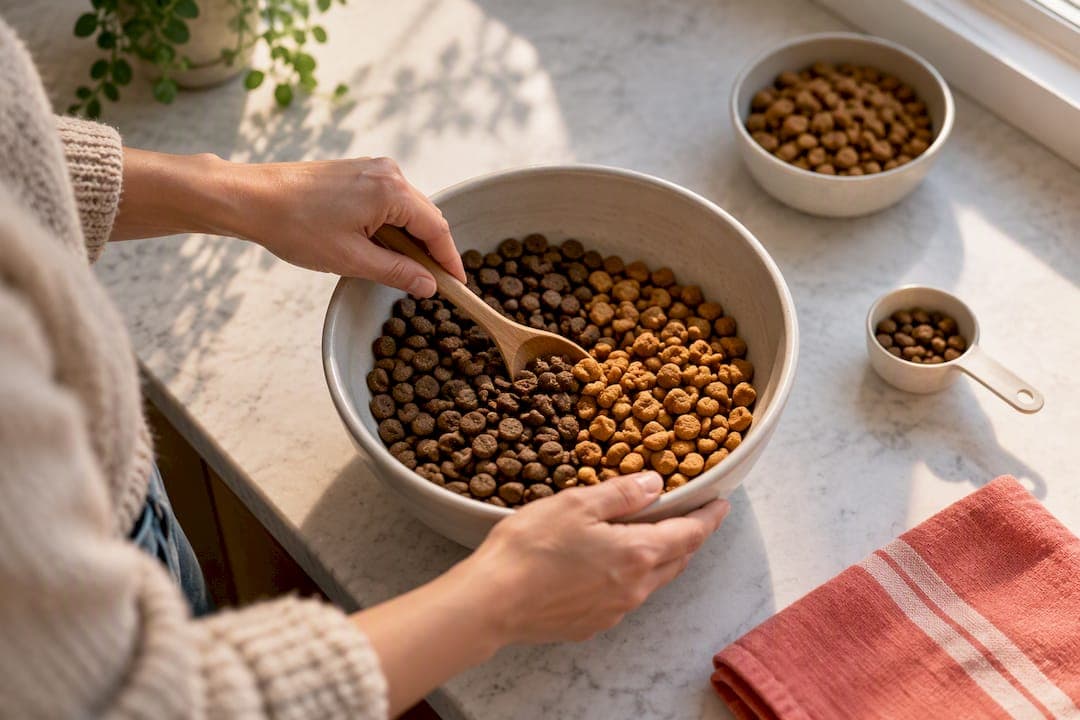
Switch your dog's food gradually, mixing the new formula into the old one over 7 to 10 days, and slow that pace even further for sensitive dogs or major diet changes. Puppies, seniors, and dogs with existing health conditions may need a vet-guided plan instead of the standard schedule. Watch stool quality and appetite throughout, and if a recall is involved, stop feeding the product immediately rather than trying to transition off it slowly.
TL;DR:
- A gradual 7 to 10 day transition works for most healthy dogs, but sensitive dogs and major diet changes may require up to 14 days.
- Major recalls or veterinary prescriptions call for immediate or faster switching, bypassing the usual slow schedule.
- Matching the new food's format, protein, and nutrient profile to the old one reduces the risk of digestive upset during switching.
- Owners should avoid changing multiple variables at once, sticking to one change with a consistent routine to better monitor their dog's response.
- Signs of serious issues include persistent vomiting, blood in stool, or refusal to eat beyond 24 to 48 hours, prompting immediate vet consultation.
Table of Contents
- Why you're switching food changes how fast you should move
- The 7 to 10 day transition schedule, step by step
- What normal adjustment looks like versus when to call the vet
- Matching the new formula to minimize digestive upset
- Supportive tools that help dogs through a rough transition
- How Kiblco tests and reviews transition products
- The one thing most owners get wrong about switching food
- Where this guidance comes from
- Sources
- FAQ
Why you're switching food changes how fast you should move
Not every food switch carries the same risk, and the reason behind your change should set the pace. A puppy graduating to adult food or a dog whose current bag is simply hard to find locally can follow a routine, unhurried transition. A veterinary prescription diet or a confirmed recall calls for immediate action instead.
- Life-stage or weight changes: moving from puppy to adult food, or switching to a weight-management formula, usually fits the standard gradual schedule.
- Availability or discontinued product: a routine transition works fine, though it helps to have a backup bag on hand before you run out.
- Palatability or picky eating: slow transitions give you room to test acceptance without triggering a refusal cycle.
- Vet-prescribed diets or recalls: these require faster or immediate changes, sometimes overriding the usual mixing schedule entirely.
Some owners also practice rotational feeding, cycling between a few trusted formulas every few months rather than settling on one permanent food. That approach still benefits from a gradual introduction each time a new rotation begins, since a dog's gut adjusts to whatever it's been eating recently.
The 7 to 10 day transition schedule, step by step
Most healthy adult dogs handle a straightforward mix-and-monitor approach. The WSAVA/Global Nutrition Committee notes that label claims like "premium" or "holistic" aren't regulated, so the transition matters more than the marketing on the bag.
The AAHA transition guidance recommends a percentage-based approach:
- Days 1 to 2: feed 75% old food, 25% new food.
- Days 3 to 4: move to 50% old food, 50% new food.
- Days 5 to 6: shift to 25% old food, 75% new food.
- Day 7 and beyond: feed 100% new food, assuming stool and appetite look normal.
For sensitive dogs, seniors, or any switch involving a different food type (kibble to canned, or kibble to a fresh diet), stretch that same sequence over 10 to 14 days instead of 7. Fresh diets in particular tend to be richer and more bioavailable than kibble, and transitioning too quickly to a fresh formula is a common cause of loose stool. Add an extra 2 to 3 days at each ratio rather than jumping ahead on a fixed calendar.
A quick-switch protocol exists for genuine emergencies, such as a recall or a vet instructing an immediate diet change for a medical reason. This approach isn't appropriate for a routine preference switch, only for situations where continuing the old food isn't an option.
A few practical habits make any schedule work better. Mix the new food thoroughly into the old rather than layering it on top, keep feeding times and locations consistent, and buy a small bag or sample size of the new food first so you're not committed to a large bag if your dog rejects it.
Pro Tip: Write your mix ratios on a sticky note by the food bin so you don't have to remember which day you're on.

What normal adjustment looks like versus when to call the vet
A little softness in stool or a day of reduced appetite during a transition is common and usually resolves on its own. If you see mild signs, hold the current ratio for an extra day or two instead of advancing, and consider a short bland bridge before moving forward again.
- Mild and expected: slightly soft stool, mild gas, or one skipped meal in the first few days of a new ratio.
- Pause and monitor: hold your current mix ratio for 24 to 48 hours before advancing if stool doesn't firm up.
- Escalate to your vet: repeated vomiting, visible blood in stool, or refusing food for more than 24 to 48 hours are signs that need veterinary attention, not more patience.
- Recall in progress: stop feeding the product immediately, check the FDA recall database for your exact lot number, and call your vet if your dog has already shown symptoms.
One recent example: Purina recalled specific lots of a veterinary elemental dry dog food for elevated vitamin D, instructing owners to stop feeding affected lots and contact a veterinarian if symptoms like vomiting or increased thirst appeared. That's the standard pattern for any confirmed recall: stop first, ask questions second.
Matching the new formula to minimize digestive upset
The closer the new food resembles the old one in structure, the smoother the transition tends to go. Before buying, check a few things on the label and compare them to what your dog is currently eating.
- AAFCO statement: confirm the new food is labeled "complete and balanced" for your dog's correct life stage, not just adult maintenance if you have a puppy or senior.
- Format match: kibble to kibble, canned to canned, or fresh to fresh transitions smoother than crossing formats.
- Protein and macronutrients: a similar primary protein source and comparable fat and fiber content reduces the odds of GI upset.
- Caloric density: compare calories per cup or per can so you can adjust portion size rather than accidentally over or underfeeding.
Hydrolyzed protein or novel-protein diets, and other prescription formulas, are typically reserved for dogs with diagnosed food allergies, intolerances, or chronic GI disease under veterinary direction, not for a routine brand switch. For more detail on what "complete and balanced" actually requires, see AAFCO's nutrient standards.
Supportive tools that help dogs through a rough transition
A few backup measures can steady a dog's stomach when a switch doesn't go smoothly. Keep them ready before symptoms start rather than scrambling once your dog is already refusing food.
- Bland bridge: boiled plain chicken and rice for 2 to 3 days can settle a dog's stomach if the old food isn't available or a reaction has already started.
- Probiotics: vet-approved probiotics can reduce transition-related diarrhea, and clinical guidance generally favors dietary management and probiotics over routine antibiotics for many acute cases.
- Toppers: a modest topper can improve acceptance of a new food, but count its calories against the day's total and avoid high-fat table scraps.
- Routine: feeding at the same times, in the same place, with measured portions, reduces stress on top of a dietary change.
Pro Tip: Keep a small stash of plain boiled chicken in the freezer specifically for transition weeks, not just emergencies.
How Kiblco tests and reviews transition products
Products like toppers, probiotics, and other transition aids are evaluated in real homes, with health-related picks cross-checked by veterinary input before publication. Reviews include stated downsides alongside the positives, and coverage is unpaid. Vet-informed reviews of products such as prebiotics and toppers used during food switches apply a hands-on testing standard. Affiliate links to retailers help fund testing but do not influence product evaluations.

The one thing most owners get wrong about switching food
Owners tend to rush the transition or change too many variables at once, new food, new treats, new feeding schedule, all in the same week. That makes it nearly impossible to tell which change caused a reaction if one shows up. A single, slow change with a consistent routine around it gives you a clear read on how your dog is actually responding. If a switch isn't going well after a couple of days on the standard schedule, don't push through it. Buy a small trial bag, follow the 7 to 10 day plan, and call your vet if you see real red flags rather than mild adjustment.
— Chris
Where this guidance comes from
The FDA recall database tracks active pet food safety alerts and lot numbers. AAHA's transition timelines provide the percentage-based mixing schedule used above. The WSAVA nutrition committee explains what label claims actually mean. AVMA reporting covers when dietary management and probiotics are preferable to antibiotics for acute diarrhea. For chronic GI cases, specialist guidance on diet trials explains why a 2 to 4 week window matters before judging a new diet's effectiveness. Owners without a nearby emergency backup plan may also find emergency pet care planning useful during a recall or sudden vet visit.
Sources
- WSAVA / Global Nutrition Committee (PMC article)
- AAHA tips and timelines for transitioning your pet to a new food (PDF)
- FDA recall: Nestlé Purina Petcare Company voluntarily recalls Purina Pro Plan Veterinary Diets EL Elemental dry dog food
- AVMA: Pet diarrhea — maybe hold antibiotics
FAQ
How long does it take to switch dog food safely?
Most healthy adult dogs adjust over 7 to 10 days using a gradual mix schedule, while sensitive dogs or major diet type changes often need 10 to 14 days. Chronic GI cases may take 2 to 4 weeks before a vet can judge whether the new diet is actually working.
Why does switching dog food cause diarrhea?
A sudden change in ingredients, protein source, or fat content can disrupt a dog's gut bacteria faster than it can adjust. Mixing the new food in gradually, rather than swapping all at once, is the main way to avoid this.
When should I contact a vet during a food transition?
Contact your vet if your dog refuses food for more than 24 to 48 hours, vomits repeatedly, shows blood in stool, or seems dehydrated. These signs go beyond normal adjustment and need evaluation rather than more time.
What should I do if my dog's food gets recalled?
Stop feeding the product immediately and check the FDA recall database for the specific lot number affected. Call your vet right away if your dog has already shown symptoms like vomiting or increased thirst.
Can probiotics help during a dog food switch?
Vet-approved probiotics can reduce transition-related diarrhea in many dogs when recommended by a veterinarian. They're generally considered a preferable first step compared to routine antibiotic use for acute digestive upset.