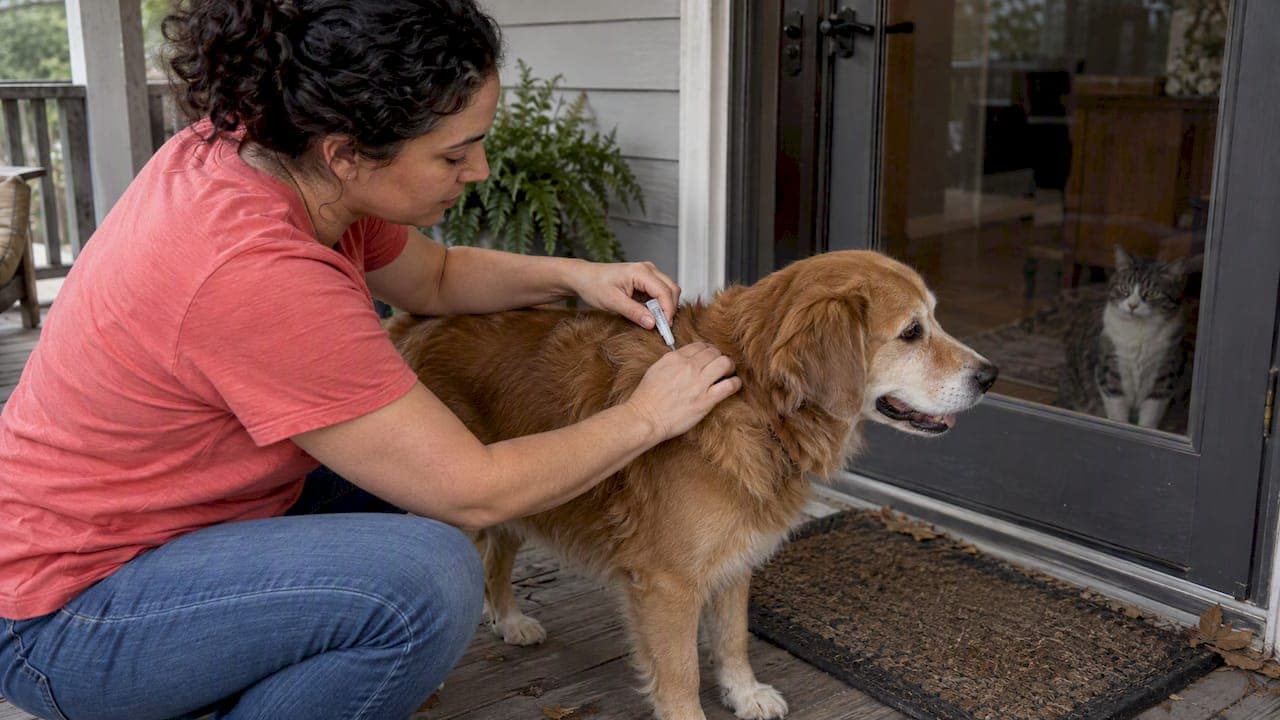
The safest way to repel mosquitoes from your dog is to use a vet-recommended, EPA-registered repellent labeled specifically for dogs, never human DEET, while keeping your dog on an FDA-approved heartworm preventive. Permethrin-based products work well on dogs but are highly toxic to cats, so households with both pets need extra caution. Below, we cover product types, safe application, natural alternatives, and how repellents fit into a complete prevention plan.
TL;DR:
- Choose a product with an EPA registration number and a label specifically for dogs, then check its age and weight limits before applying.
- Never use human DEET on dogs; permethrin products can poison cats through contact, so separate treated dogs from cats until the coat is completely dry.
- Studies found near complete heartworm protection when repellents registered with the EPA accompanied macrocyclic lactone preventives, even against resistant isolates; repellents alone cannot replace prevention.
- Homemade sprays and essential oil blends lack proven mosquito protection and can irritate skin or cause illness; use fans or yard plantings instead.
Table of Contents
- Safe product types and what to look for
- How to apply mosquito repellent to your dog correctly
- Natural and homemade repellent options: what works and what's risky
- How repellents fit into your dog's heartworm prevention plan
- A vet-informed approach to picking mosquito protection
- What dog owners get wrong about mosquito protection
- Where to find vetted mosquito protection for your dog
- FAQ
- Sources
Safe product types and what to look for
Before buying anything labeled "mosquito repellent," check the fine print. An EPA-registered product carries an EPA registration number and a label that explicitly says "for dogs," which means it has gone through testing for safety and effectiveness in that specific use. A product without that registration number is not vetted for pets at all, regardless of what the packaging implies.
Once you confirm registration, look at the active ingredients and the warnings:
- Safe for dogs when labeled accordingly: permethrin-based spot-ons (never for cats), certain pyrethroid formulas, and EPA-registered picaridin products.
- Avoid entirely: DEET, which is toxic to dogs and can cause tremors or seizures.
- Handle with caution: permethrin products in multi-pet households, since they're dangerous to cats through secondary contact.
Repellents that pair a topical product with a macrocyclic lactone preventive can provide near-complete protection against heartworm infection in laboratory studies, including against resistant isolates. That single data point explains why vets rarely recommend a repellent alone.
Form factor matters too. Spot-on treatments absorb into the skin's oil layer and typically last several weeks, but they lose some effectiveness with frequent bathing or swimming. Sprays offer faster, more flexible coverage for a single outing but wear off sooner and need reapplication. Collars provide continuous low-dose protection over months, which suits dogs that resist handling, though they protect mainly the head and neck area unless the active ingredient spreads through the coat's oils.
When comparing specific products, check age and weight cutoffs on the label, review the full ingredient list rather than a marketing summary, and favor products with veterinary endorsement or documented testing, the same standard we apply when reviewing flea and tick collars for durability and real-world performance.
How to apply mosquito repellent to your dog correctly
Correct application matters as much as product choice. Misuse, even with a safe product, can cause skin irritation or reduce effectiveness.
For sprays:
- Test a small patch of skin first and watch for redness over the next hour.
- Spray into your hand or a cloth, then rub it onto the coat, avoiding the face, eyes, and any open wounds.
- Let the coat dry fully before letting your dog back inside or near other pets.
For spot-on treatments:
- Part the fur at the base of the neck or along the shoulder blades, exactly where the label indicates.
- Apply the full dose directly to the skin, not just the fur, in one or two spots per label directions.
- Avoid bathing your dog for the window specified on the label, often 24 to 48 hours, so the product can bind to the skin's oils.
A few rules apply across every product type. Never combine two pesticide products (say, a permethrin spot-on and a separate flea collar) without checking for ingredient overlap, since doubling up on the same active ingredient raises toxicity risk. Puppies under the label's minimum age or weight should never receive adult-strength formulas. Keep treated dogs separated from cats until the product is fully dry, wash your hands after application, and store any leftover product out of reach of children and pets.
Pro Tip: Apply spot-on treatments in the evening, after your dog's last outdoor outing, so the product has all night to dry undisturbed.

If you notice excessive scratching, drooling, or lethargy after application, call your veterinarian before applying another dose.
Natural and homemade repellent options: what works and what's risky
Plenty of dog owners search for a "natural" route before reaching for anything labeled pesticide, and the appeal makes sense. The problem is that most homemade recipes, whether vinegar sprays, diluted lemon juice, or essential oil blends, lack the testing that EPA-registered products go through, so their real-world effectiveness against mosquitoes is largely unproven.
Essential oils carry their own risks. The ASPCA warns that essential oils vary widely in quality and concentration, and can cause skin irritation, gastrointestinal upset, or neurological signs in pets. A recipe that uses a safe-sounding oil at the wrong dilution can still send a dog to the emergency vet.
If you still want a lower-chemical approach, safer options include:
- Citronella or cedar plantings in the yard, kept separate from direct skin contact.
- Fans positioned near outdoor seating areas, since mosquitoes struggle to fly in moving air.
- Collar diffusers designed to stay off the skin rather than sprayed-on oil blends.
Skip DIY sprays entirely on puppies, dogs with sensitive skin, or dogs on other medications, and check with your veterinarian before trying any homemade recipe, even one that seems mild.
How repellents fit into your dog's heartworm prevention plan
Mosquito repellents work alongside heartworm prevention, not instead of it. The American Heartworm Society recommends using EPA-registered repellents as an adjunct to year-round, FDA-approved heartworm preventives, since no repellent blocks every mosquito bite.
Laboratory studies indicate that an EPA-registered repellent used alongside a macrocyclic lactone preventive can provide near-complete protection against heartworm infection, including resistant isolates. That combination outperforms either product used alone.
Environmental measures round out the plan:
- Remove standing water around the yard, since it's where mosquitoes breed.
- Keep dogs indoors during dawn and dusk, peak mosquito feeding times.
- Use fans or mosquito traps on patios and porches where dogs spend time outside.
In regions with high heartworm incidence, or for dogs whose owners have missed preventive doses, veterinarians sometimes recommend adding a topical repellent-ectoparasiticide for extra seasonal protection. That decision should come from your vet, not a product label alone, since it depends on your dog's health history and your local mosquito pressure.
A vet-informed approach to picking mosquito protection
We built our review process around products that are tested in real homes and cross-checked against veterinary guidance, not just marketing claims. Chris, who leads our pet-gear coverage, works from that same standard: EPA registration first, then real-world usability, then whether a vet would actually recommend it. When we evaluate a category, we look at label clarity, age and weight restrictions, and how a product performs outside a lab setting. Every review discloses our affiliate relationships, and no brand pays for placement or a better score.
What dog owners get wrong about mosquito protection
The biggest mistake we see is treating mosquito repellent as a stand-alone defense instead of one layer in a broader plan. A spot-on or collar reduces bites, but it doesn't replace a heartworm preventive, and no label claims it does. Owners who skip the preventive because "the dog is protected" are taking on real risk.
The second mistake is reaching for human bug spray in a pinch. DEET causes documented neurological harm in dogs, and the few minutes saved by grabbing what's already in the bag isn't worth it.
Our honest take: the product itself matters less than the habit around it. A mid-tier EPA-registered spot-on, applied correctly and paired with a heartworm preventive, beats a premium repellent used inconsistently. Read the label every time, even on a product you've bought before, since formulations change.
— Chris
Where to find vetted mosquito protection for your dog
We know how confusing it gets standing in the pet aisle trying to decode ingredient lists and registration numbers. Our Dog Health and Dog Gear category pages list repellents, collars, and sprays with pros and cons to help you make informed decisions.

On those pages you'll find:
- Which EPA-registered products are recommended based on testing and review.
- Notes on typical protection duration according to product information and testing.
- Callouts on potential product limitations and cat safety considerations.
Before you buy anything, check the label for an EPA registration number and a weight range that fits your dog, and confirm the plan with your veterinarian. Browse our Dog Health picks to start comparing options that fit your dog's needs.
This article is general information, not a substitute for advice from a qualified doctor. Consult a qualified healthcare professional about your own circumstances before acting on anything here.
FAQ
What can I spray on my dog to deter mosquitoes?
Use an EPA-registered spray labeled specifically for dogs, applied to the coat while avoiding the face and eyes. Never substitute human insect repellent, since those formulas aren't tested or labeled for pets.
Does dish soap get rid of mosquitoes?
Dish soap isn't a registered mosquito repellent for dogs and has no tested effectiveness against mosquito bites. It's sometimes used to break the surface tension of standing water and drown larvae in a yard, which is a breeding-control step, not a repellent you'd put on a dog's coat.
Is DEET safe for cats?
No. DEET is not labeled or tested for safe use on cats, and like dogs, cats can experience toxic reactions including drooling, tremors, and neurological signs from exposure. Stick to products with an EPA registration that explicitly lists cats, and keep DEET products away from them entirely.
What smell do mosquitoes dislike most?
Mosquitoes tend to avoid citronella, cedar, and certain pyrethroid-based scents, which is why those ingredients show up in many registered repellents. Effectiveness still depends on concentration and formulation, so a scent alone, like a candle or plant, offers far less protection than an EPA-registered product applied directly to your dog.
How often do I need to reapply mosquito repellent on my dog?
Reapplication intervals vary by product, so always follow the specific timing on the EPA label. Sprays typically need reapplication every few hours outdoors, while spot-on treatments and collars are designed for weeks to months of continuous protection.
Sources
- The mighty mosquito: the role of control in heartworm prevention — American Heartworm Society
- Toxicology brief: DEET toxicosis — VetFolio
- Essentials: essential oils around pets — ASPCA