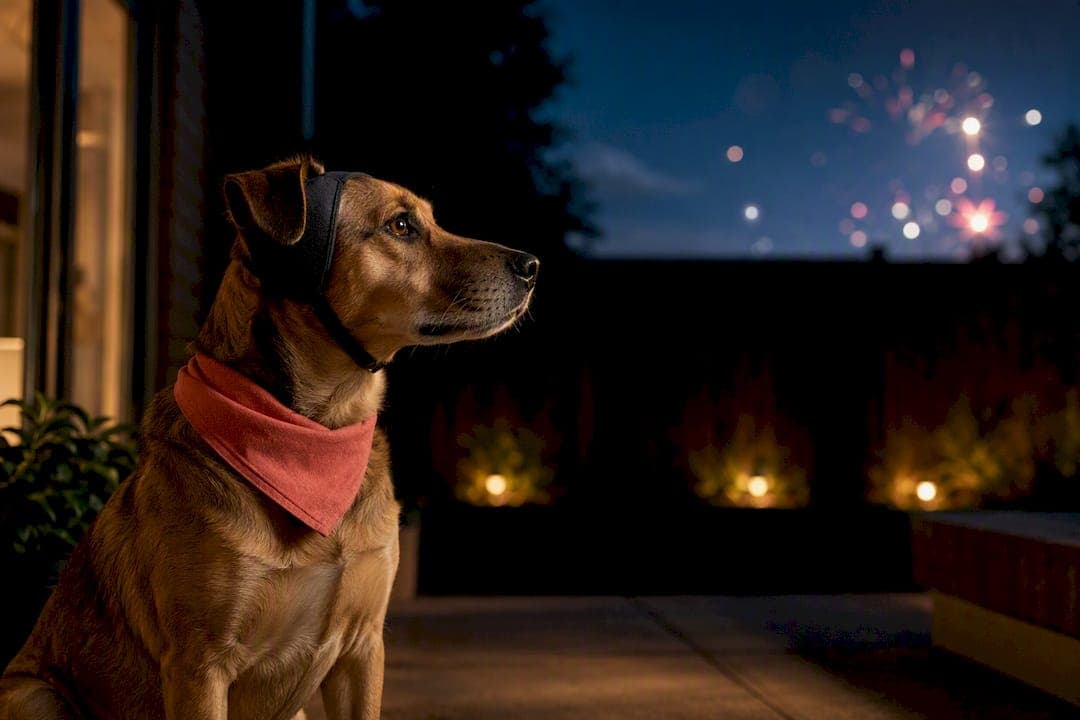
Properly fitted ear muffs or hoods can dull sharp, damaging noise and calm plenty of dogs during fireworks, storms, or a bumpy flight. They work best for short, loud events, not chronic ear pain or infection, which needs a vet. Fit and slow acclimation matter more than any advertised number on the box.
TL;DR:
- Properly fitted ear protection can reduce sharp, sudden sounds like fireworks and thunderstorms, lowering stress behaviors without guaranteeing silence.
- Ear muffs with tight seals provide the strongest attenuation, ideal for single loud events, while soft hoods are better tolerated for prolonged wear during storms or travel.
- Accurate sizing based on actual head measurements and adjustable straps ensure comfort and effectiveness, with loose fitting often preferable to tight, stress-inducing gear.
- Gradual acclimation, starting days or weeks before loud events, helps dogs tolerate ear protection without distress, especially when paired with positive reinforcement.
- Regular cleaning, skin checks, and avoiding continuous wear prevent mask signs of ear pain or infection, which ear protection alone cannot treat.
Table of Contents
- How Dog Ear Protection Works and What the Evidence Shows
- What Types of Dog Ear Muffs and Covers Are Available?
- How Do You Pick the Right Size and Fit for Your Dog?
- How Do You Get a Dog Used to Wearing Ear Protection?
- When Should You Avoid Relying on Ear Protection Alone?
- What Kiblco Prioritizes in Ear Protection Testing
- What Owners Get Wrong About Ear Protection
- Where to Find Kiblco's Vet-Informed Ear Protection Picks
- Sources
- FAQ
How Dog Ear Protection Works and What the Evidence Shows
Passive ear protection works the same way earplugs work for people: dense foam or layered fabric physically blocks sound waves before they reach the eardrum. It doesn't cancel noise electronically. It just muffles it, the way a pillow over your head dulls a neighbor's music.
Dogs pick up higher frequencies than humans do, and their ears are wired to be more reactive to sudden, sharp sounds. Repeated exposure to very loud noise can damage hearing over time, which is exactly why attenuation, the amount of sound a material actually blocks, matters more than marketing copy.
Trembling, hiding, and excessive vocalizing are the most common signs of noise distress, and these behaviors tend to ease as noise intensity drops. That's the practical case for ear protection: not silence, but a lower baseline of stress.
Realistic expectations look like this:
- Ear protection softens sharp, sudden sounds like firework pops and thunderclaps.
- It reduces (not removes) the startle response in many dogs.
- It does not treat anxiety disorders or medical ear conditions.
- Results vary by dog, fit, and how gradually the gear was introduced.
Pro Tip: A slightly loose fit still muffles sound reasonably well. A tight, uncomfortable fit that a dog fights to remove does more harm than good, because the stress of wearing it can outweigh the benefit of the noise reduction.
What Types of Dog Ear Muffs and Covers Are Available?
Three main categories dominate the market, and each one solves a different problem.
Ear muffs and headphone-style protection clamp over the ears using a padded headband, similar to shooting range muffs scaled down for a dog's skull. These offer the most consistent attenuation because the padding creates a tighter seal around the ear canal opening. They're the strongest pick for one-off loud events: fireworks displays, hunting or shooting ranges, and airport tarmacs.
Soft hoods and wraps cover the whole head and ears in stretchy, snug fabric, closer to a compression cap than a muff. They don't block sound as effectively as foam-padded muffs, but they're far better tolerated over long stretches, which makes them a better match for chronic thunderstorm anxiety or dogs who need to wear something during a multi-hour car ride or flight.
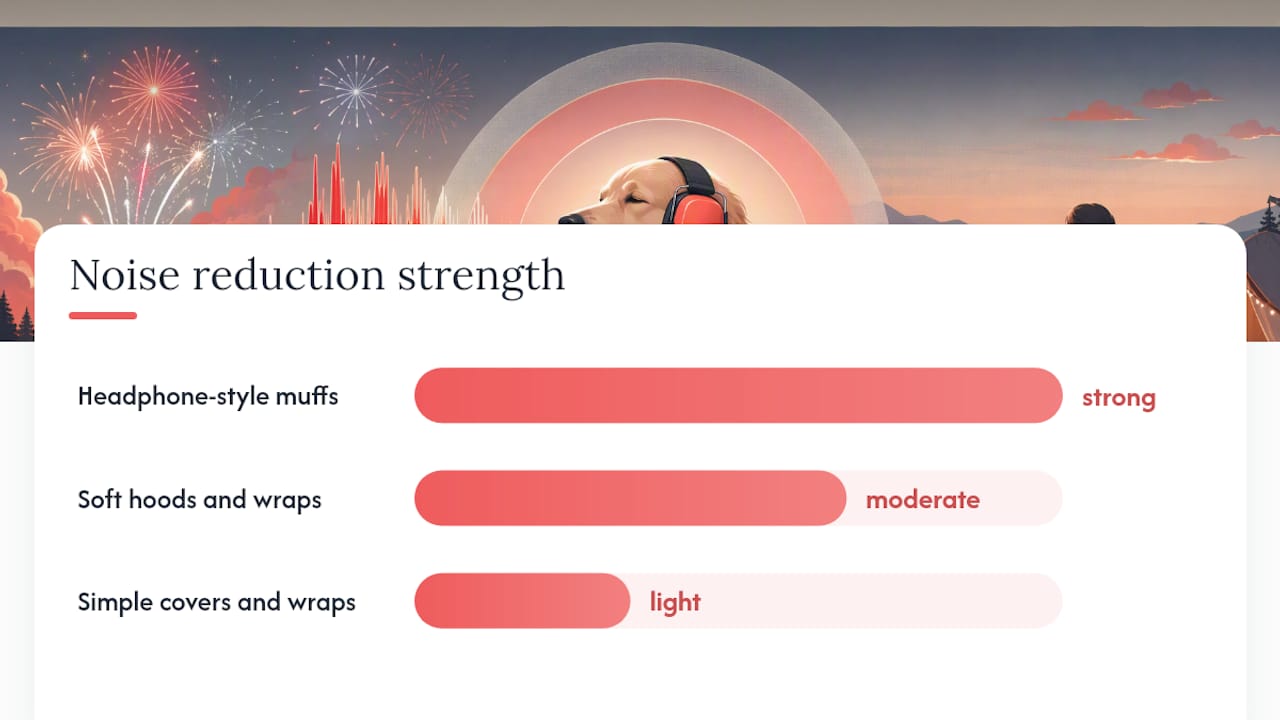
Simple ear covers, wraps, and light bandaging offer the least noise reduction of the three, but they're useful for a narrower job: keeping ears still and protected during grooming, preventing a dog from scratching at irritated skin, or adding a light barrier during short errands.
A quick way to match type to situation:
- Fireworks or gunfire: headphone-style muffs, for the strongest sound blocking.
- Thunderstorms or travel anxiety: soft hoods, for comfort over hours.
- Grooming or scratch prevention: basic covers or wraps, for light coverage.
- Flights with cabin noise: soft hoods, since muffs can be bulky in a carrier.
How Do You Pick the Right Size and Fit for Your Dog?
Sizing is where most ear protection purchases go wrong, and it's almost always fixable with a tape measure before you buy anything.
- Measure head circumference by wrapping a soft tape measure over the top of the head, just behind the ears, and down under the chin. Write down the number in inches.
- Measure ear length and shape separately if the product has individual ear cups. Floppy-eared breeds like Basset Hounds need a different cup depth than upright-eared breeds like German Shepherds.
- Compare against the brand's size chart, not a generic "small, medium, large" guess. Charts tied to actual head circumference ranges are far more reliable than breed-based sizing, since two dogs of the same breed can differ by inches.
- Check strap adjustability before committing. A strap with only two or three notches won't fine-tune the way a fully adjustable Velcro or buckle system will.
On attenuation numbers: some products list a decibel reduction or an NRR-style rating borrowed from human hearing protection standards. Treat these as rough guidance, not guarantees. A muff rated to reduce noise by a certain amount under lab conditions rarely performs identically on a moving, panting dog in a living room.
Prioritize these comfort and safety features over any single spec:
- Multi-layer padding that contacts skin without pinching cartilage
- Adjustable straps that don't require a tight chin buckle to stay on
- Lightweight materials that won't overheat a dog during long wear
- Breathable fabric around the ear canal opening
Watch for red flags before buying: vague or missing size charts, straps that only cinch tight with no gradual adjustment, marketing language promising "complete silence," and no return policy if the fit is wrong. Any of these should make you keep shopping.
Pro Tip: If a product's return window is under 30 days, skip it. Most dogs need at least a week of gradual introduction before you know if the fit and coverage actually work for their temperament.
How Do You Get a Dog Used to Wearing Ear Protection?
Skipping acclimation is the number one reason ear protection ends up shoved in a drawer after one bad experience. Dogs need time to associate the gear with something good, not something forced.
- Let your dog sniff and investigate the gear with no pressure to wear it. Set it on the floor near their bed for a day or two.
- Touch the ears briefly with the material and reward immediately with a high-value treat, then remove it. Repeat this for a few short sessions.
- Put it on for 10 to 15 seconds, treat, then take it off. The goal is to end the session before your dog wants to.
- Extend wear time gradually over several days, adding a minute or two per session as your dog stays relaxed.
- Practice in a calm environment first, then introduce mild background noise like a TV or vacuum before testing it during an actual loud event.
Short, reward-based sessions consistently work better than long forced ones, and research on desensitization backs this up: dogs acclimate faster when sessions stay brief and positive rather than dragged out until they tolerate it through sheer exposure.
Progress looks like a loose body, normal ear position, and willingness to take treats. Distress looks like frozen posture, pinned ears, lip licking, or trying to back away from the gear. If you see distress signs, shorten the session rather than pushing through.
If fit seems to be the problem, adjust straps before assuming your dog "just won't tolerate it." If treats aren't motivating enough, try a smear of peanut butter on a lick mat during wear time instead of tossed kibble. For dogs with severe noise phobia that don't respond to gradual training, a certified trainer or veterinary behaviorist can help build a broader plan alongside the gear.
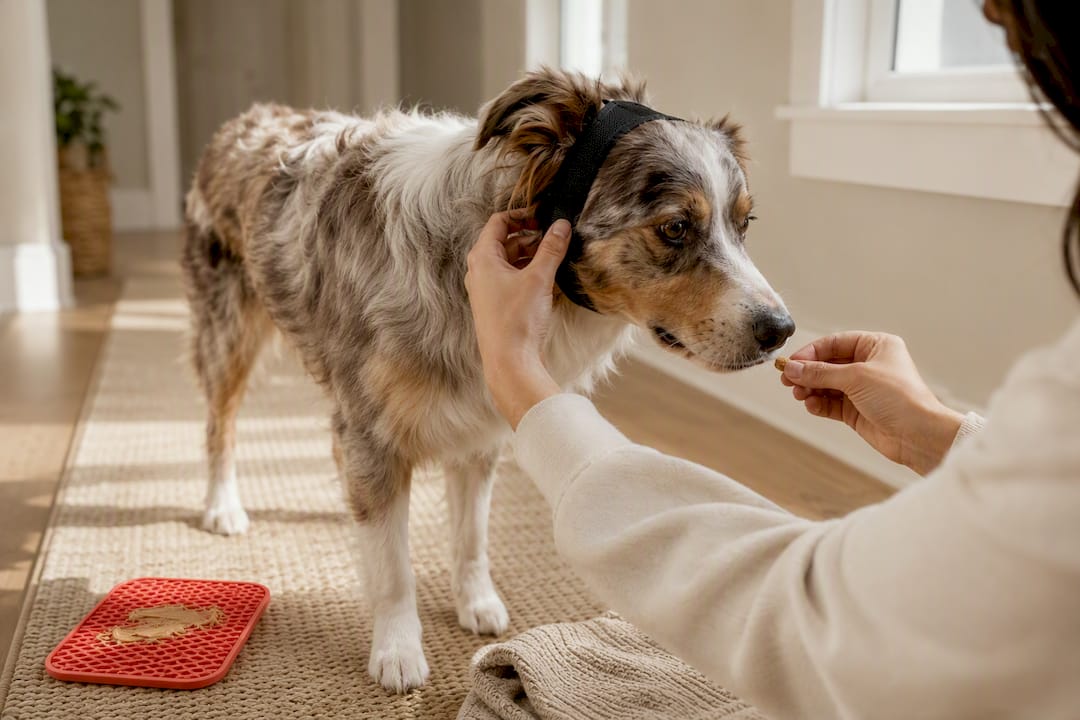
Pro Tip: Start acclimation weeks before fireworks season or a planned flight, not the night before. Rushed introductions are the most common reason dogs reject ear protection entirely.
When Should You Avoid Relying on Ear Protection Alone?
Ear protection is a tool, not a cure, and it comes with maintenance responsibilities most owners overlook.
- Clean fabric covers and padding regularly with a mild, pet-safe detergent, and let them air dry fully before the next use to avoid trapping moisture against the skin.
- Check skin under the ears and around the strap line after each use for redness, matting, or pressure marks.
- Avoid continuous wear beyond a few hours at a stretch. Build in breaks so ears can breathe and skin doesn't overheat, especially in warm weather.
- Watch for signs your dog is uncomfortable for reasons unrelated to noise, like head shaking or ear scratching, which can point to an underlying issue rather than gear irritation.
Here's the part vendors rarely mention: protective wear can mask signs of ear pain or infection, since a dog already reluctant to have its ears touched may seem "fine" once the gear muffles sound and reduces obvious stress signals. If your dog rubs at its ears frequently, tilts its head, or has a history of ear infections, get a vet check before making protective gear part of a regular routine.
Mitigating noise exposure works best alongside behavioral strategies, not as a standalone fix. A quiet, enclosed safe room, an anxiety wrap, and, in more severe cases, vet-prescribed medication for noise phobia often do more together than any single product alone.
What Kiblco Prioritizes in Ear Protection Testing
Kiblco's approach to ear protection starts with the same question every owner asks: will this actually stay on, and will my dog tolerate it? Testing focuses on realistic attenuation rather than lab-only numbers, fit comfort over multiple wear sessions rather than a single fitting, clear sizing guidance that matches real head measurements, and materials that hold up after repeated cleaning.
Features that consistently earn a recommendation include:
- Multi-layer acoustic foam that maintains its shape after washing
- Adjustable straps with enough range to fit growing puppies or seasonal coat changes
- Washable, breathable covers that don't trap heat against the skin
- Size charts tied to actual head circumference measurements, not vague breed guesses
Success in home testing gets measured through behavior, not decibels on paper: less trembling during a storm, quieter panting, and a dog that can settle down and rest rather than pace or hide. Those markers line up with what the research on noise-related stress responses points to as the real goal.
Kiblco earns a commission when readers buy through links to retailers like Amazon, Chewy, and Petco. That relationship never changes which products get a positive writeup, and every review includes honest downsides alongside what worked.
What Owners Get Wrong About Ear Protection
Most owners chase the highest advertised decibel number instead of asking whether their dog will actually keep the thing on. Fit and patience beat specs almost every time.
A few things that consistently helped during hands-on testing: measure before ordering, start acclimation weeks ahead of a known noisy event, and check skin under the straps after each use for redness or matting.
If your dog rubs at its ears constantly or seems in pain, that's a vet visit, not a gear problem.
— Chris
Where to Find Kiblco's Vet-Informed Ear Protection Picks
Kiblco's Dog Health category is built for exactly this kind of decision: vet-informed picks, real size guidance, and direct links to buy from retailers you already trust, instead of guessing between a dozen near-identical listings.

Every listing there is evaluated for attenuation expectations, sizing information, and material durability after washing. If you're shopping ahead of fireworks season or a flight with your dog, the smartest order of operations is simple: measure your dog's head circumference first, read the size guide on the product page, then order with enough lead time to practice wearing it before the actual event. Waiting until the night before a thunderstorm rarely ends well.
The site earns commissions on qualifying purchases made through these links, without affecting the recommendations or disclosure of downsides. For dogs who need extra support beyond ear protection, the Dog Gear category also carries calming tools worth pairing with a properly fitted muff or hood. Start with your dog's measurements, then browse from there.
Sources
For deeper reading, canine noise sensitivity and hearing risk, behavioral responses to loud noise, and noise mitigation strategy research cover the clinical basis behind the guidance above. The University of Illinois Veterinary Medicine program offers additional clinical context on ear health.
- Noise exposure and hearing in animals (PMC8606548)
- Behavioral responses to noise in domestic animals (PMC10705068)
FAQ
Does Ear Protection for Dogs Actually Work?
Yes, properly fitted passive ear protection reduces the intensity of loud, sharp sounds reaching a dog's ear canal, and lower noise intensity is linked to fewer stress behaviors like trembling and hiding. It works best for short, loud events like fireworks or storms, not for treating an underlying medical or anxiety condition on its own.
Do Vets Recommend Dog Ear Muffs?
Many vets support using ear muffs or hoods as part of a broader noise management plan, especially for dogs with diagnosed noise phobia or a history of firework or storm panic. Veterinary guidance also stresses checking for ear pain or infection first, since protective gear can mask a medical issue that needs separate treatment.
Which Dog Breeds Get the Most Ear Infections?
Breeds with floppy, low-hanging ears, including Cocker Spaniels, Basset Hounds, and Labrador Retrievers, tend to develop ear infections more often because reduced airflow keeps the ear canal warm and moist. Regular cleaning and drying after baths or swimming matters more for these breeds than for upright-eared dogs.
How Can I Stop My Dog From Scratching at Its Ears?
Frequent ear scratching usually signals irritation, infection, or discomfort rather than a behavior to simply block. Check for redness, odor, or discharge, and see a vet before assuming a protective cover or wrap alone will solve it, since scratching often points to something that needs treatment underneath.
What's the Difference Between Ear Muffs and Soft Hoods for Dogs?
Ear muffs use padded cups over a headband and generally block more sound, making them a better fit for a single loud event like a fireworks show. Soft hoods wrap the whole head in stretchy fabric, offer less sound blocking, but tend to be more comfortable for hours-long wear during storms or travel.