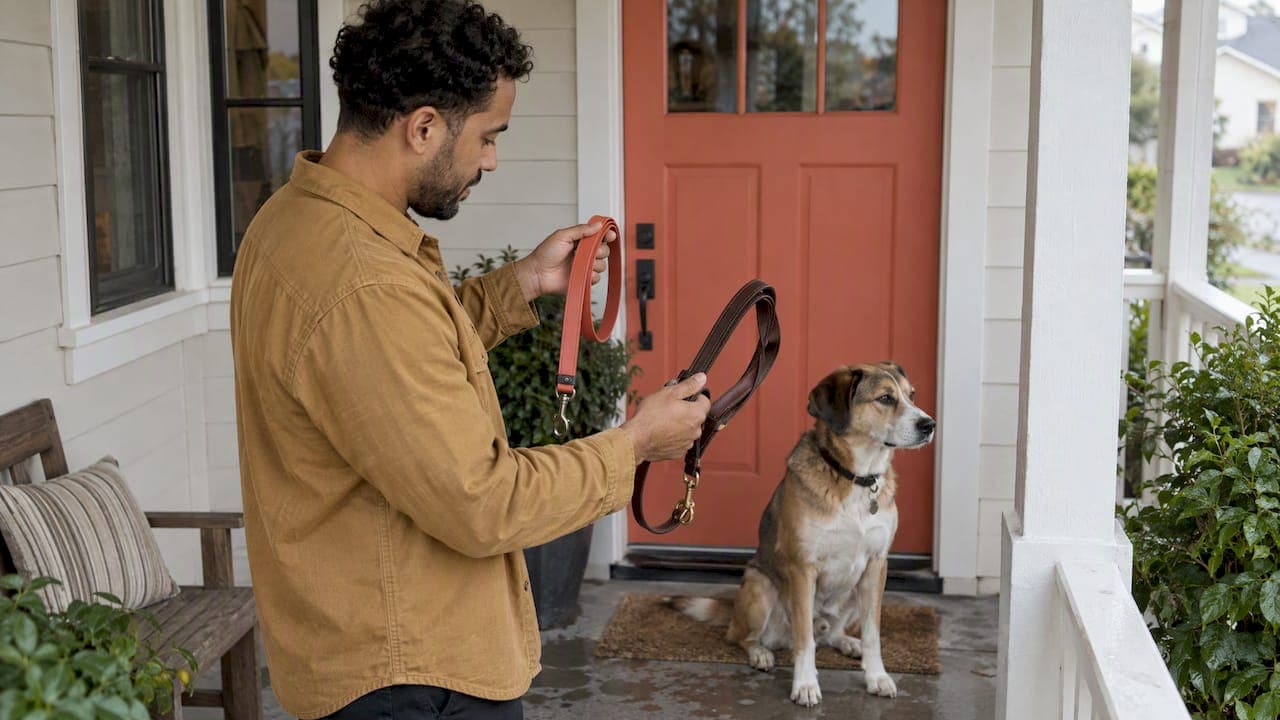
Choose BioThane if you walk in rain, mud or water and want a leash you can wipe clean and forget. Choose leather if hand feel matters most and you don't mind a little upkeep. Both work well for most dogs. The right pick depends on your weather, your dog's strength and how much care you want to give the gear.
TL;DR
- BioThane is coated webbing that is waterproof, wipes clean and needs almost no maintenance, but it never softens the way leather does.
- Leather feels better in the hand once broken in and has a classic look, but it handles soaking poorly and needs occasional conditioning.
- Neither material is chew-proof. A dog that gnaws its leash needs training and supervision, not just a different material.
- Match width and weight to your dog. Large or untrained pullers generally do better with a thicker, wider leash and a padded handle.
- Wet climate or muddy trails: BioThane. Daily neighborhood walks and a love of natural materials: leather.
Table of Contents
- What each material actually is
- BioThane vs leather at a glance
- Grip, feel and control
- Rain, mud and water
- Durability and wear
- Cleaning and care
- Safety, sizing and the dog on the other end
- Which one fits you
- Our perspective
- Ready to shop? Start with our dog gear picks
- FAQ
- Sources
What each material actually is
BioThane is a brand name that many owners use for any coated webbing. According to the maker, BioThane is polyester webbing with a TPU or PVC coating that makes it more durable, waterproof, easy to clean and weldable. Because the coating is welded and not stitched in every spot, you often see clean, smooth edges and rounded profiles. It looks a bit like leather from across the street, but it is a synthetic and feels like one.
Zoetis Petcare's U.S. leash guide describes it the same way: a coating, typically over nylon, lightweight, sturdy enough for large and strong dogs, waterproof and the easiest leash material to clean.
Leather is the traditional choice. The same Zoetis guide notes it is sturdy and can become very soft and pliable after use and oiling, but it is not easy to clean. That one trade, comfort that develops over time against cleanup that takes effort, runs through the whole comparison.
BioThane vs leather at a glance
| Factor | BioThane | Leather |
|---|---|---|
| Feel in hand | Smooth, a little rubbery, slightly stiffer | Stiff at first, then soft and supple |
| Wet weather | Doesn't absorb water, wipes clean | Absorbs water, can turn slimy and stiff |
| Cleaning | Warm water and soap | Damp sponge, conditioner occasionally |
| Aging | Stays consistent, doesn't soften | Softens, stretches, develops a patina |
| Smell | Resists odor | Natural leather scent, can hold smells when wet |
| Chewing | Not chew-proof | Not chew-proof |
| Best for | Mud, rain, swimming, low-maintenance owners | Daily walks, hand comfort, natural look |
Grip, feel and control
This is where people split. Trainers who have handled both tend to say the same thing: leather is lovely once it has been worked in, and BioThane is good but different.
Palo Alto Dog Training says BioThane feels nice in the hand, is somewhat stiffer than the best leather, and does not tangle easily. The same page notes that leather softens with age, but soaked leather can become slimy and unpleasant to hold. In other words, dry leather wins on feel, and wet leather loses badly.
Three practical points follow from that:
- New leather is stiff. Expect a break-in period of regular walks before it becomes comfortable. If you buy leather, buy it before you need it.
- BioThane is consistent from day one. What you feel in the store or out of the package is what you will feel a year later. Some walkers don't love the slightly rubbery texture, so if you can, hold one before committing.
- Thickness changes the feel more than material does. A thin BioThane leash feels light and streamlined, while a thicker one feels more substantial and cushioned. Choose width for your dog's size and your hands first, then material.
Both materials can burn skin if a strong dog lunges and the leash runs through your palm. That is a width and handle question more than a material one, which we cover below. If your dog pulls hard, a better harness setup may help more than any leash swap, and our guide to no-pull dog harnesses that actually work covers that side of the problem.
Rain, mud and water
If you live somewhere wet, or your dog loves puddles, this section probably decides it.
BioThane's maker describes it as waterproof and stinkproof, and says warm water and soap will clean it. In practice that means a muddy walk ends with a rinse at the hose or a wipe-down, and the leash is ready for tomorrow.

Leather behaves differently. It absorbs water, and repeated soaking followed by poor drying shortens its life. A leather leash that gets wet should dry naturally, away from heat sources like radiators or hair dryers, which can leave it brittle. You then condition it only after it is dry.
Swimming, lake days and beach trips are the clearest case for BioThane. If your dog's gear list already includes safety items for the water, our roundup of dog life jackets for swimming and boating pairs well with a waterproof leash. For rainy-day walks, our picks of dog raincoats for small and medium breeds keep the dog dry while the leash takes care of itself.
One chemical caution: BioThane's maker notes that DEET can make it sticky or tacky. If you use insect repellent on hikes, keep it off the leash and wash your hands before handling it.
Durability and wear
The manufacturer's own position is that BioThane is more durable than leather and easier to maintain. That is a maker's claim, so read it as a reasonable expectation and not a guarantee. Stitching, hardware and your dog's habits matter as much as the strap.
Here is what changes over time:
- Leather softens and stretches with use and develops a patina. Many owners love that. Others find a stretched, soft leash less reassuring on a strong dog.
- BioThane doesn't stretch or soften with age, so it stays the same until something damages it.
- Hardware is usually the first failure on either material. Check the clip, the stitching or welds and the handle loop regularly.
Chewing is the weak spot for both
No leash material is immune to a dedicated chewer. Vivid Canine's guidance on its own product is that BioThane is not chew-proof and determined chewing can still damage it. Leather can be shredded too. If your puppy treats the leash as a toy, work on redirecting the habit with a chew toy or treat, and replace any leash with frayed or cut edges before it fails mid-walk. Rewarding good leash manners with a small treat helps, and our list of jerky treats for training and rewards is a good place to start.
Cleaning and care
BioThane is the lower-effort option. Wash it with warm water and soap, rinse and let it air dry. That's it.
Leather needs a little more attention:
- Wipe, don't soak. The American Kennel Club advises cleaning leather with a damp, soft sponge rather than a water bath.
- Condition sparingly. The same AKC page says a dog-safe leather cream can be used to soften it. Choose one that is safe for dogs, since the leash will spend time near their mouths.
- Dry it naturally. After a soaking, let it dry away from concentrated heat, then condition it once it is fully dry.
- Don't skip conditioning after repeated wetting. Leather exposed to water repeatedly can dry out, crack or turn brittle if never conditioned.
A dirty dog usually means a dirty leash. For after-walk cleanups, our guide to dog grooming wipes for quick cleanups and paws can cut down on what ends up on the handle.
Safety, sizing and the dog on the other end
Material is only one part of a safe leash. Fit to your dog matters more.
The AKC says large dogs and dogs that haven't learned leash manners generally need a thicker, wider, heavier leash with a padded handle to reduce handler injuries such as leash burn. It also notes that some handlers consider leather the most comfortable material, while others prefer padded nylon or neoprene grips. So there's no single winner on comfort. Choose what feels good in your hand over a full walk.
Length is the other variable. Zoetis says standard leashes are generally 4 to 6 feet, while traffic leashes are commonly 1 to 3 feet for closer control in crowded areas. A short traffic lead in BioThane or leather is a good city tool. We'd steer you away from retractable leashes for most everyday walking, and we explain why in our piece on whether retractable dog leashes are safe.

If your dog is reactive, the leash material is not what will change the walk. Handling, distance and training do. Thinking about matching leash material to use is a small piece of a bigger plan, and a qualified trainer can help with the rest. A leash you can hold securely in any weather is a quiet safety feature. For dusk and dark mornings, a reflective option may matter more than the base material, so see our picks of reflective collars and leashes for night walks.
Which one fits you
Here is how we'd sort it, based on how people actually walk:
- You walk in rain, snow or mud, or hit lakes and creeks. BioThane. It doesn't absorb water, and it cleans in a minute.
- You want the least maintenance possible. BioThane. The maker says it suits owners who want an easy-to-clean, easy-to-maintain leash.
- You love a natural look and feel and mostly walk in dry weather. Leather. Break it in, condition it now and then, and it can be a pleasure to hold.
- Your dog is a strong puller. Either material, but choose a wide, heavy leash with a padded handle and think about the harness too.
- You share the leash among family members. BioThane's consistent feel means nobody gets a stiff surprise, though some hands will prefer leather. Let the main walker decide.
- You own more than one dog or take trips. Many owners keep both: leather for daily walks, BioThane for the beach, the trail and the car.
One honest caveat: most of the detailed comparisons you'll find online come from people who sell or train with one material or the other. Treat any claim of "lasts forever" with caution, and judge a specific leash by its hardware, stitching or welds and the way it feels in your hand.
Our perspective
We don't think there is a universal winner, and we'd be wary of any review that says otherwise. At Kiblco, we buy and test pet gear in real homes and share the downsides as clearly as the upsides. Leashes are a good example of why that matters: a strap that looks great in a product photo can feel wrong after a forty-minute walk in the rain.
Here is how we think about it. A leash is a tool you hold every day, so comfort in your hand counts as much as strength on paper. Leather earns its reputation when it is dry, broken in and cared for. BioThane earns its reputation the moment the weather turns. Since most dog owners walk in all kinds of weather, we lean toward BioThane as the practical everyday choice, and toward leather for owners who enjoy the ritual of caring for it and mostly walk in dry conditions.
We'd also remind you that the leash is the cheapest part of leash safety. A good fit, sound hardware, a harness that suits the dog and some training will do more for your walks than the material alone. When you shop, check the clip, the width and the handle first.
— Chris
Ready to shop? Start with our dog gear picks
If you've settled on a material and want to see what we've tested, our dog gear category collects our hands-on reviews of leashes, harnesses and other walking essentials, each with plain pros and cons.
We earn a commission if you buy through our links, but we never take payment for coverage, and every review lists the downsides.
FAQ
Is BioThane stronger than leather?
The manufacturer says BioThane is more durable than leather and easier to maintain. Real-world strength still depends on the hardware, how the leash is built and how your dog behaves. Neither material is chew-proof, so inspect any leash for fraying or cuts.
Does BioThane feel as good as leather in your hand?
It depends on who is holding it. BioThane is smooth and consistent but somewhat stiffer than the best leather, and some people dislike its rubbery texture. Leather is stiff when new, then softens and feels more personal over time. Holding both is the best test.
Can I use a leather leash in the rain?
Yes, but it won't love it. Water can leave leather slimy and unpleasant to grip, and repeated soaking shortens its life. Let it dry naturally away from heat, then condition it once dry. For regular wet walks, BioThane is the easier option.
How do I clean a BioThane leash?
Warm water and soap are enough, according to the manufacturer. Rinse it, let it air dry and keep insect repellent with DEET away from it, since DEET can make the coating sticky.
What leash length should I get?
Most everyday walking uses a leash of 4 to 6 feet, and shorter 1 to 3 foot traffic leashes give tighter control in crowded areas, per Zoetis. Large dogs and untrained pullers generally do better with a wider, heavier leash with a padded handle.
Sources
- Frequently Asked Questions about BioThane, Biothane Coated Webbing
- Dog Leashes: Which Type is Right for Your Dog? Zoetis Petcare
- Leashes and Long-Lines, Palo Alto Dog Training
- How Strong are Biothane Leashes, Vivid Canine
- Dog Leashes 101: Choosing the Right Dog Leash for Your Dog, American Kennel Club