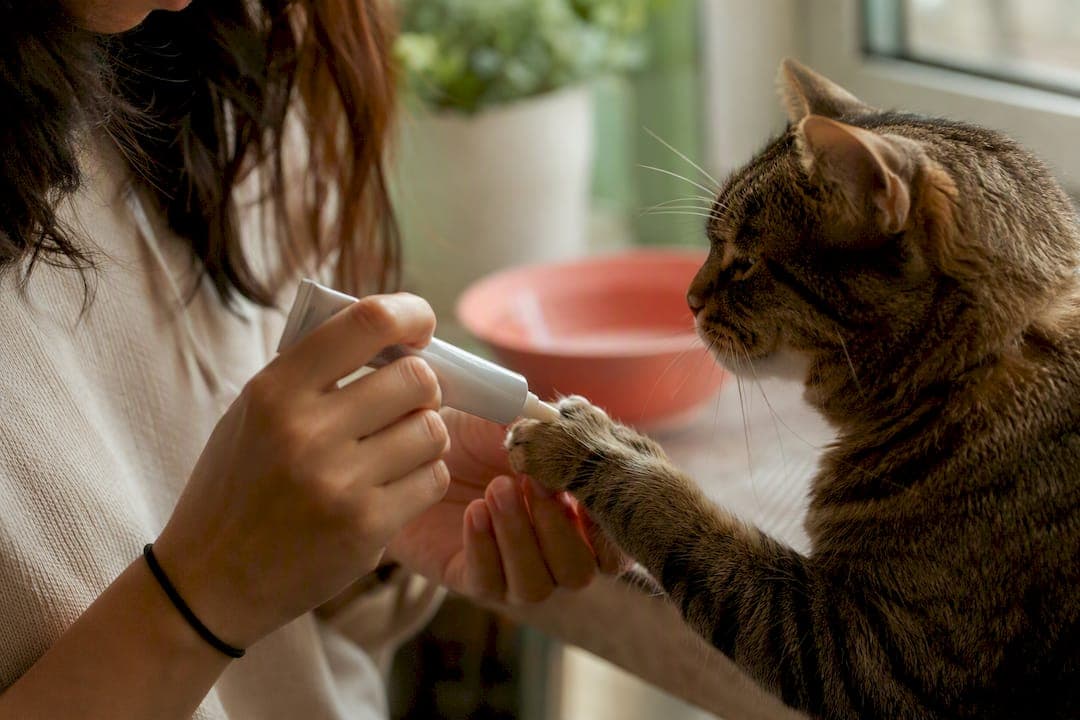
High-quality clinical evidence shows lysine supplements do not reliably prevent or treat feline herpesvirus symptoms. A 2015 systematic review found no proof that lysine stops or treats FHV-1 infection, and a randomized shelter trial of 291 cats found no measurable difference in upper respiratory infections between treated and untreated animals. If your cat has runny eyes, sneezing, or nasal discharge right now, that's a job for your veterinarian, not a supplement aisle.
Lysine is not a substitute for antibiotics, antiviral eye treatment, or fluid support when a cat is genuinely sick. It won't hurt to ask your vet about it as a secondary measure, but it shouldn't delay a real diagnosis.
If you've talked to your vet and still want to try lysine, here's the practical starting point:
- Kittens: around 250 mg per day
- Adult cats: up to 500 mg per day
- Safety check: confirm with your vet first, especially for cats with kidney or liver disease
Quick fact: In the largest randomized trial on the subject, a large randomized trial found no difference in outcomes between lysine-treated and untreated cats.
Key Takeaways
Lysine supplements lack reliable clinical evidence for preventing or treating feline herpesvirus, so any use should happen as a vet-approved trial, not a substitute for medical care.
| Point | Details |
|---|---|
| Evidence is weak | A systematic review and a 291-cat shelter trial both found no reliable benefit from lysine. |
| Don't skip the vet | Active URI or eye symptoms need veterinary evaluation, not just a supplement. |
| Dosing if you try it | Roughly 250 mg for kittens and up to 500 mg for adults, often split into two doses. |
| Watch for organ disease | Cats with kidney or liver disease need vet clearance before starting lysine. |
| Stress control works better | Environmental enrichment and infection control outperform lysine in shelter research. |
| Kiblco can help you choose | Kiblco's vet-informed reviews compare lysine gels, powders, and chews for real-world palatability and labeling accuracy. |
Table of Contents
- Is Lysine For Cats Backed By Real Research?
- Why Was Lysine Ever Thought To Help Cats?
- What Are The Best Lysine Forms And Doses For Cats?
- Are There Any Side Effects Or Risks With Lysine Supplements?
- How Do You Give Lysine To A Cat The Right Way?
- What Actually Works Better Than Lysine For Cat URIs?
- How Kiblco Evaluates Cat Supplements Like Lysine
- Frequently Asked Questions
- Sources
Is Lysine For Cats Backed By Real Research?
The short answer is no, not at the level most product labels imply. Two pieces of research carry the most weight here and both point in the same direction.
The first is a systematic review published in BMC Veterinary Research, which pooled the available controlled studies on lysine and FHV-1. The reviewers found no consistent evidence that lysine reduces viral shedding, shortens the duration of symptoms, or prevents flare-ups. More surprising: a few of the pooled trials actually hinted at enhanced viral replication in lysine-treated cats, though the effect wasn't strong enough to call definitive. The review's authors recommended veterinarians stop routinely prescribing lysine for FHV-1 given the lack of benefit.
The second key study is a randomized trial run in a shelter population, the kind of setting where respiratory viruses spread fastest and where a real preventive effect should show up clearly if it exists. Researchers split 291 cats into two groups: 144 got oral lysine, 147 didn't. They tracked upper respiratory infections and conjunctivitis over the following weeks. The result: no statistically meaningful difference between the groups. Cats getting lysine got sick at roughly the same rate as cats that didn't.
That's a fairly damning result for a supplement that's been a mainstay of cat first-aid kits for two decades.
Why did earlier studies suggest lysine worked?
Some smaller trials from the early 2000s, including work referenced in the systematic review's data, reported modest reductions in viral shedding or slightly delayed onset of symptoms. Those results got baked into conventional veterinary advice fast. But small trials with loose controls tend to produce noisier, more optimistic results than large randomized ones. When bigger, better-designed studies came along, including the 291-cat shelter trial, the earlier positive signals didn't hold up.
- Small early studies: modest positive signals, limited sample sizes, weaker controls
- Larger controlled trials: no measurable benefit, in some cases a possible negative signal
- Systematic review conclusion: insufficient evidence to recommend routine use
What "no effect at the population level" actually means for your cat
Population-level null results don't guarantee your specific cat gets zero benefit or zero harm. Averages hide individual variation. Shelter medicine researchers at the University of Wisconsin point out that infection control and stress reduction consistently do more for group health outcomes than lysine ever has, which is why many shelters have quietly phased it out of standard protocols. For an individual house cat, the research doesn't prove lysine can't help you personally. It proves you shouldn't count on it, and you definitely shouldn't use it as your only line of defense.
Why Was Lysine Ever Thought To Help Cats?
The theory behind lysine sounds reasonable on paper, which is exactly why it spread so widely before the data caught up to it.
Feline herpesvirus, like other herpesviruses, needs the amino acid arginine to replicate efficiently inside cells. Lysine and arginine compete for the same transport pathways into cells. The hypothesis: flood a cat's system with lysine, crowd out arginine, and starve the virus of what it needs to copy itself. This "lysine-arginine antagonism" model worked reasonably well in some human herpesvirus research decades ago, which is where the idea for cats originally came from.
The problem is that cats aren't a simple copy-paste of that human model. VCA Animal Hospitals notes that feline metabolism doesn't respond to lysine loading the same way, and there's limited evidence that oral lysine supplementation meaningfully lowers intracellular arginine levels in cats at all. If the mechanism doesn't actually shift the arginine-lysine ratio inside feline cells, there's no biological reason to expect an antiviral effect, which lines up with what the clinical trials found.
There's also a safety angle buried in this mechanism that's worth pausing on. Arginine isn't some minor nutrient cats can spare. It's essential for cats specifically, more so than in most other mammals, because they lack an efficient pathway to make it on their own. Cats deprived of arginine can develop serious metabolic problems, including dangerous ammonia buildup. So even the theoretical mechanism behind lysine, if it worked as originally imagined, would be nudging a cat's body in a direction that could cause harm.
- The antiviral theory relies on lysine displacing arginine in cells
- Evidence that this actually happens in cats is thin
- Deliberately lowering arginine would be risky given how essential it is to feline metabolism
That combination, a mechanism that probably doesn't work and would carry some risk if it did, is part of why veterinary opinion has cooled on lysine over the past decade.
What Are The Best Lysine Forms And Doses For Cats?
If you and your vet decide a trial makes sense, you'll run into three main product formats, each with different practical trade-offs.
Powder is the cheapest option per dose and mixes into wet food fairly easily. The downside: cats notice texture changes, and a cat that only half-finishes a bowl only gets a fraction of the dose.
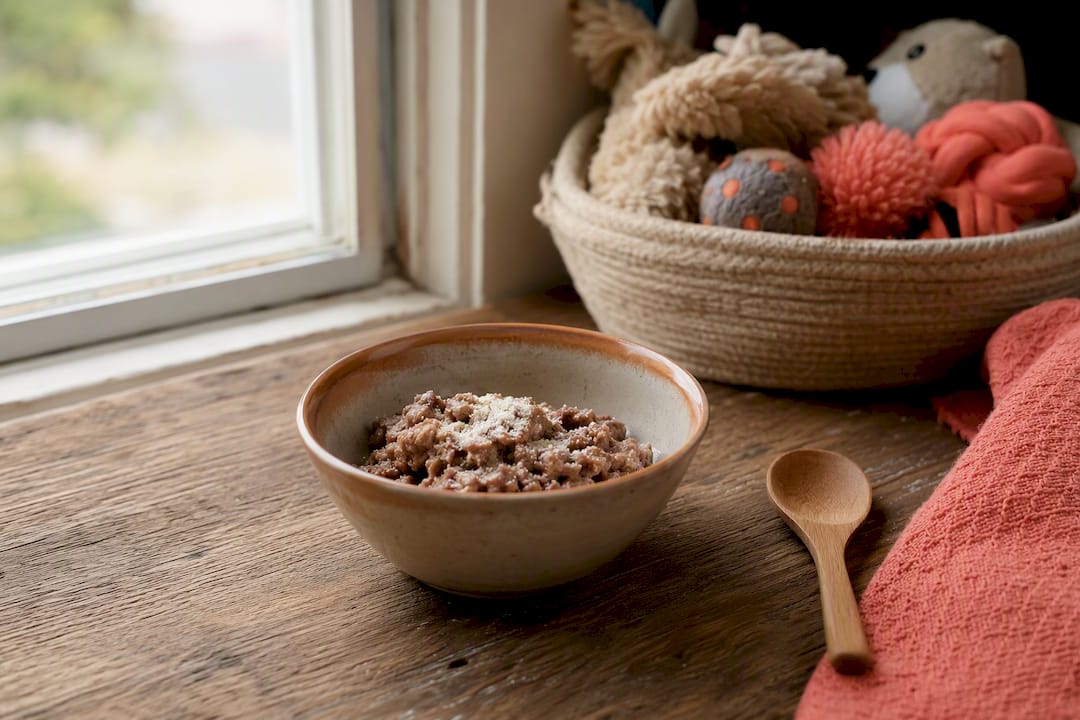
Gel or paste products go directly onto the gums or a paw for licking, which sidesteps the "will they actually eat it" problem. They tend to cost more per dose than powder.
Chews and treats work well for cats that take treats reliably, but picky eaters may reject the flavor, and dosing precision is looser than with a paste or powder.
On amounts, labeling guidance is fairly consistent across products. Viralys, a lysine hydrochloride powder listed with the FDA's DailyMed database, lists dosing around 250 mg for kittens and up to 500 mg for adult cats, generally split into two doses per day rather than one large dose. Consumer guides from sites like Cats echo similar 250 to 500 mg ranges depending on the cat's size and the product's concentration.
- Kittens: roughly 250 mg per day
- Adult cats: up to 500 mg per day, often split into two doses
- Split dosing may be gentler on digestion than one large dose
One regulatory point worth knowing: no lysine supplement is approved by the FDA as an antiviral drug for cats. These products are sold as nutritional supplements, not medications, which is a meaningful distinction if a retailer or product listing implies otherwise. Some, like Viralys, are labeled specifically for veterinary use and distributed through veterinary channels, but that's a distribution and labeling choice, not proof of drug-level efficacy.
Pro Tip: If your cat is a picky eater, start with a small amount of gel or paste on a paw before committing to a full powder regimen. Watching them refuse a bowl of doctored wet food for three days straight wastes both time and product.
Are There Any Side Effects Or Risks With Lysine Supplements?
At labeled doses, lysine is generally well tolerated. The most common issues owners report are mild: occasional soft stool, temporary appetite changes, or a cat turning up its nose at food that's been mixed with powder. Severe toxicity at normal doses is rare.
The more theoretical concern circles back to that arginine relationship discussed earlier. Long-term, high-dose lysine use could, in principle, disturb the natural amino-acid balance cats depend on. Arginine deficiency in cats has been linked to serious problems, including ammonia buildup in the bloodstream (hyperammonemia), because cats process protein waste differently than most mammals. This is why cats with existing kidney or liver disease need a veterinarian's clearance before starting any lysine regimen. Their bodies already have a harder time managing metabolic byproducts, and adding a variable that could shift amino acid ratios isn't something to guess your way through.
- Mild GI upset and appetite changes: the most commonly reported issues
- Severe toxicity: rare at labeled doses
- Cats with kidney or liver disease: need veterinary clearance before starting
- Hyperammonemia risk: theoretical but real enough to warrant caution in vulnerable cats
If you notice vomiting, diarrhea that doesn't resolve within a day or two, or a cat that stops eating entirely after starting lysine, stop the supplement and call your vet. Those aren't symptoms to wait out.
How Do You Give Lysine To A Cat The Right Way?
Getting a cat to actually swallow a supplement, day after day, is often the harder problem than picking the right dose.
- Powder: Mix it thoroughly into a small amount of strong-smelling wet food rather than a full meal, so you know it's fully consumed rather than left behind in leftovers.
- Gel or paste: Apply directly to a front paw or the gum line. Most cats will lick it off within a minute or two out of grooming instinct.
- Chews: Offer as a standalone treat at a consistent time each day, ideally when the cat is already a bit hungry, to improve acceptance.
- Track consistency: Log doses for at least three to four weeks. That's the minimum window most veterinary sources suggest before you can reasonably judge whether it's doing anything.
During that trial window, watch for changes in how often flare-ups happen, how severe eye or nasal symptoms get, and whether recovery from a flare-up seems faster. Keep in mind the clinical trial evidence: even cats that seem to improve on lysine may simply be experiencing a symptom cycle that would have resolved on its own.
Pro Tip: Keep a simple notes app log with three columns: date, symptom severity (scale of 1 to 5), and whether the dose was given. After a month, you'll have actual data instead of a gut feeling, which matters given how unreliable anecdotal improvement can be with a virus that naturally flares and fades.
Stop immediately and call your vet if you see labored breathing, eyes swollen shut, refusal to eat for more than 24 hours, or lethargy that doesn't lift. Those signs point to something that needs medical treatment, not more time on a supplement.
What Actually Works Better Than Lysine For Cat URIs?
If the goal is fewer respiratory flare-ups, the evidence points toward environmental and medical strategies well ahead of any supplement.
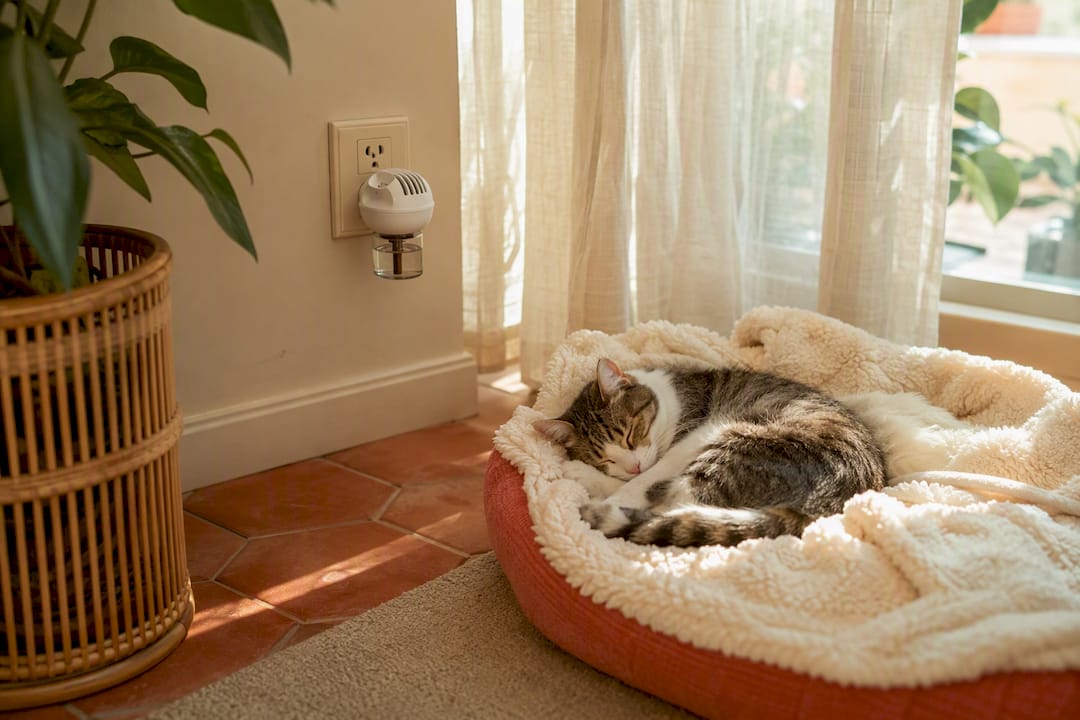
Stress reduction ranks near the top of what actually moves the needle. FHV-1 tends to reactivate during stressful periods, new pets, moving homes, loud construction, a crowded shelter ward. Reducing that stress load through consistent routines, hiding spots, and calming aids can lower flare-up frequency more reliably than anything you'd pour over food. Products like Feliway pheromone diffusers and other calming tools give owners a concrete lever to pull here.
Vaccination and infection control matter enormously in multi-cat households and shelters. The FHV-1 vaccine doesn't prevent infection outright, but it typically reduces severity. In shelter settings, isolating symptomatic cats and improving airflow and sanitation protocols does more for population-level infection rates than lysine ever demonstrated in trials.
Medical treatment is non-negotiable once symptoms cross a certain line. Bacterial secondary infections, common with prolonged URIs, need antibiotics. Ocular symptoms like corneal ulcers need prescription eye treatment, sometimes antiviral eye drops, not an oral supplement. PetMD's clinical summary is direct about this: lysine should never replace an actual veterinary workup when a cat is showing real illness.
- Mild sniffle, otherwise acting normal: monitor at home, reduce stress triggers
- Recurring flare-ups, no fever: reasonable time to call your vet for a broader plan
- Eye discharge, lethargy, not eating: same-day veterinary visit
- Labored breathing at any point: emergency care, immediately
How Kiblco Evaluates Cat Supplements Like Lysine
Kiblco tests pet products the way a genuinely careful pet parent would, then checks that hands-on impression against what the veterinary literature actually says. For a supplement category as debated as lysine, that combination matters more than a shiny label or a five-star average.
Here's what we weigh before a lysine product makes it into a recommendation:
- Does the label match the actual dosing shown on independent sources like DailyMed?
- Are the ingredients and concentrations transparent, with no vague "proprietary blend" language?
- Will most cats actually eat or accept it, based on real feeding trials?
- Has the product's marketing been checked against actual clinical evidence, not just tradition?
- Is dosing guidance clear enough for an average owner to follow without guesswork?
A supplement that's easy to give but doesn't do anything is a waste of money. A supplement with real research behind it but no cat will touch is just as useless. We look for the overlap between those two, and we're upfront when a product doesn't earn a place in either category.
This is why our reviews lean on both real-world feeding tests and a straight read of the clinical data, and why we still tell readers plainly: a lysine trial should happen alongside your vet, not instead of one.
A Practical Note From Chris
Here's where I land after going through this research: lysine isn't dangerous at normal doses, but it's also not the safety net a lot of cat owners think it is. I'd never talk someone out of a short, vet-approved trial for a healthy cat with recurring mild flare-ups. That's low-risk, and if it gives an owner some peace of mind while they also fix the actual stress triggers, fine.
Where I'd push back hard is on using lysine as a first response to a sick cat, or as a long-term crutch for a cat with kidney or liver issues without bloodwork and vet sign-off first. The data just doesn't support that level of confidence, and the arginine question deserves more caution than it usually gets.
Where To Find Vetted Lysine Products And Supplement Reviews
Kiblco built its supplement reviews specifically for moments like this, when the clinical evidence is mixed and you need someone who's actually read the labels, checked the dosing against sources like DailyMed, and tested whether cats will realistically eat the stuff. That's the gap between a five-star Amazon listing and a product that actually holds up.

Every review we publish for cat supplements walks through label accuracy, ingredient sourcing, and real feeding results from cats in different households, not a single test cat that happens to be food-motivated. We're upfront that Kiblco earns a commission when readers buy through our links to retailers like Chewy or Amazon, and that relationship never decides which products get a good review. If you're weighing a lysine gel against a powder, or wondering whether a chew form is worth the markup, start at Kiblco's product review hub and compare options before you buy. It's a faster way to a safe choice than scrolling through conflicting Amazon reviews at midnight.
Frequently Asked Questions
Is lysine good for cats with herpesvirus? The strongest available research, including a systematic review and a large shelter trial, found no reliable benefit for preventing or treating FHV-1 symptoms.
What is the right lysine dosage for cats? Labeling and veterinary sources generally cite around 250 mg for kittens and up to 500 mg for adult cats, often split into two daily doses, but confirm any dose with your vet first.
Can lysine supplements cause side effects in cats? Mild issues like soft stool or reduced appetite are the most commonly reported effects; severe toxicity is rare at labeled doses, though cats with kidney or liver disease need veterinary clearance first.
How long does it take to see if lysine capsules for cats are working? Most veterinary sources suggest at least three to four weeks before judging whether a trial is making any measurable difference in flare-up frequency or severity.
Are there better alternatives to a lysine cat supplement? Stress reduction, vaccination, and infection control have stronger evidence behind them for reducing URI flare-ups than lysine supplementation does on its own.
Sources
- Lysine supplementation is not effective for the prevention or treatment of feline herpesvirus 1 infection in cats: a systematic review
- Lysine
- VIRALYS® L-Lysine Hydrochloride powder (DailyMed)