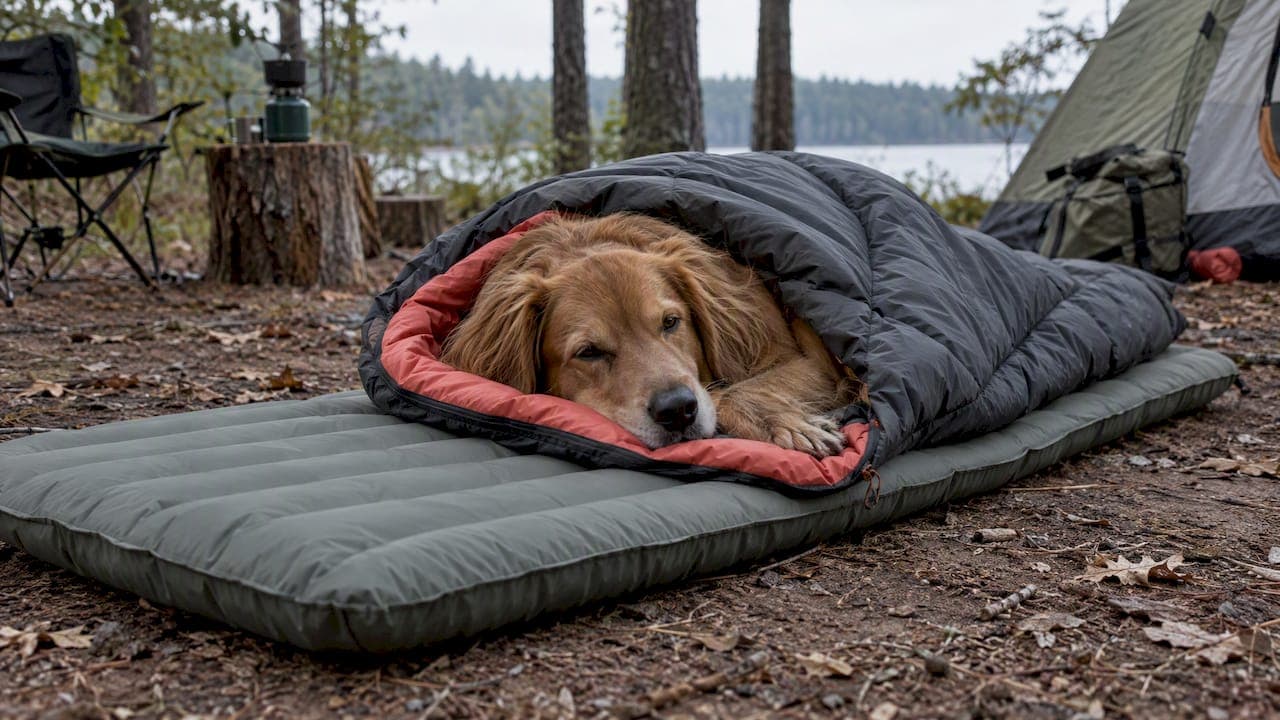
Yes, a dog sleeping bag is worth it for cold camping and for cold-sensitive dogs, but only as part of a sleep system with a pad under it. Skip the bag in warm weather or for dogs that overheat easily. Ground insulation protects against hypothermia first, so read the checklist below before you shop.
TL;DR:
- A closed cell pad matters more than extra top insulation; below about 45°F, prioritize ground protection and add a bag as temperatures approach 35°F.
- Down offers more warmth for its weight on backpacking trips, while synthetic insulation costs less and handles damp conditions better for car camping.
- Dogs with flat faces or excess weight face greater overheating risk; skip bags in warm weather and check ears and paws at bedtime and midnight.
- Shivering, weakness, or unresponsiveness warrants emergency veterinary care; mild hypothermia falls between 90°F and 99°F, while severe cases occur below 82°F.
- Measure nose to tail base and body height, choose a close fit with room to curl, and introduce the open bag gradually using rewards.
Table of Contents
- When does a dog sleeping bag actually help?
- What features should you check before buying?
- Why does ground insulation matter more than the bag?
- Which setup fits backpacking, car camping, or home?
- How do you size a bag and introduce it?
- How do you care for and repair a dog sleeping bag?
- What does vet-informed testing show us?
- Our editorial take: buy the pad before the bag
- Where can you find vetted dog sleep-system picks?
- FAQ
- Sources
When does a dog sleeping bag actually help?
A bag earns its place in a few situations: cold-weather camping, hotel or RV travel, recovery after surgery, and life with a senior or short-coated dog. Experts say the decision depends on the trip and the dog, so assess breed, age, and health first. A bag may be unnecessary for mild car camping, but for cold-weather backpacking or senior dogs an insulated system can be vital.
Know when to skip it. Dogs can overheat in a bag in warm weather, and double coats are no excuse to ignore breed-specific heat tolerance. Flat-faced breeds and overweight dogs are the most likely to struggle.
Vets stage hypothermia by rectal temperature. Mild cases run 90–99°F, moderate 82–90°F, and severe below 82°F. Mild cases call for dry, passive warming, moderate cases need immediate veterinary care, and severe cases are emergencies. If your dog is shivering, weak, or unresponsive, seek immediate emergency veterinary care.

What features should you check before buying?
You can judge almost any bag without knowing the brand. Work through this list:
- Insulation: Down is lighter and warmer for its weight. Synthetic handles moisture better and costs less, which matters on damp tent floors.
- Shell durability: Look for ripstop fabric and reinforced seams if your dog digs or scratches. One field-tested bag uses a ripstop polyester shell that resists digging.
- Water resistance: A water-resistant shell and a waterproof base keep condensation and wet ground away from the fill.
- Zipper design: A partial zip lets your dog slip in and out and vent heat. A full zip opens flat to double as a blanket.
- Weight and packed size: The same field test found a synthetic car-camping bag performs well but is heavy for backpacking, around 29 ounces.
- Cleaning: Machine-washable linings make travel far easier.
Pro Tip: Pick a bag rated colder than the forecast low, then check your dog's ears and paws at bedtime and again at midnight.
Weights vary a lot. Expert testing lists the Ruffwear Highlands at 1.6 to 2.2 lbs, while the Happy Trails PNW Tahoma uses duck down and is lightweight. The Tahoma is also available in a larger size. Tested roundups agree that the best choice depends on coat and activity.
Why does ground insulation matter more than the bag?
Cold ground pulls heat out of your dog by direct contact, called conduction. A dog on bare earth loses warmth fast no matter how warm the top layer is, and a thick bag compresses under body weight, so it insulates the underside poorly.
Field experts say insulation off the ground matters more overnight than an extra coat or blanket.
A closed-cell foam pad or dedicated canine sleeping mat creates the thermal break your dog needs. Technical reviews call a high-R-value pad the most critical piece of gear, with R-value guidance becoming important below about 45°F. One lightweight insulated pad with a waterproof base is reported to block cold ground down to roughly 35°F.
Build the system in layers:
- Barrier first: a closed-cell foam pad, insulated dog pad, or cot.
- Comfort next: a lofted bed or pillow on top of the barrier.
- Top insulation last: a topper or sleeping bag when temperatures call for it.
This stack often beats a dedicated dog bag on warmth per dollar and doubles as shared gear. Below roughly 35–45°F, plan on pad plus bag together.
Which setup fits backpacking, car camping, or home?
Match the system to how you travel:
- Backpacking: Weight rules. Choose a down bag or topper and a minimal insulated pad. The pad solves the biggest heat loss problem, so protect that weight allowance before anything else.
- Car camping or overlanding: Comfort and durability beat weight. A synthetic bag with a sturdy shell works well, and you can layer a thick lofted bed over a barrier pad without worrying about pack size.
- Home and travel: Washability and convenience come first. A soft, machine-washable bag can serve as a couch blanket at home, then become a travel bed for hotels and vehicles. For road trips, our guide to cozy dog car beds covers the complementary options.
Whatever the setup, keep dogs dry before bed. A good outer layer helps, and our rundown of dog raincoats for small and medium breeds can help with that. Campsite water matters too, and a collapsible travel pet bowl packs flat in any kit. Compared with plain blankets, a bag stays put when your dog turns, and compared with a bare dog bed, it adds a top layer.
How do you size a bag and introduce it?
Measure your dog from nose to base of the tail, plus body height, and compare both to the maker's chart. Think about sleeping posture too. A dog that curls tight needs less length than one that sprawls.
- Skip oversized bags. Empty space is cold space your dog must heat. Leave a little room to curl, not a cavern.
- Add scent first. Rub the bag with a worn shirt or favorite blanket.
- Practice at home. Leave the bag open on the floor and reward calm sniffing and stepping in.
- Zip gradually. Close it only after your dog enters willingly.
- Supervise the first nights. Check for panting, restlessness, or trying to escape.
How do you care for and repair a dog sleeping bag?
Follow the label. Many synthetic bags can go in the washing machine, while down needs a gentle cycle and air drying. Make sure the fill is fully dry before storing it to prevent mildew.
Store down loosely and lofted when you can, since long-term compression flattens the fill. Pack a fabric tape strip and a small sewing kit in the field. Patch small tears with tape, then sew them properly at home. Retire the bag once the fill clumps and stops lofting or the shell no longer holds seams.
What does vet-informed testing show us?
At Kiblco, we test products in real homes and on field trips, then check safety questions against veterinary guidance. Our takeaways are consistent. Start with ground insulation, choose a bag rated colder than the forecast low, and favor water-resistant shells with easy-care linings for travel. If you want curated options, browse our Dog Gear category, where every pick lists its pros and cons openly.
Our editorial take: buy the pad before the bag
Most advice on this topic starts with the bag, and I think that is backward. The evidence from field experts, technical reviews, and tested roundups points the same way: a dog's belly meets the ground all night, and nothing on top fixes that. Shoppers get dazzled by fill ratings and zipper tricks while their dog lies on a thin mat over frozen dirt.

What deserves more attention is monitoring. A bag rated for the forecast low means little if you never check your dog. Learn the early cold signs, know the hypothermia stages, and set a rule for yourself to get up and check ears and paws. If your dog runs hot or the nights are mild, spend your money on cooling gear instead. Our guides to cooling mats and cooling vests cover that side.
My order of priorities: barrier pad, dry shell, right-sized bag, then extras. Gadgets come last.
— Chris
Where can you find vetted dog sleep-system picks?

We publish hands-on, vet-informed reviews with honest pros and cons, so you can compare sleep-system gear without guessing. Head to our Dog Gear category to see what we have tested.
- Picks focus on durability, warmth, and washability.
- Every review states its downsides plainly.
- We use affiliate links, and we never accept payment for coverage.
Start with the Dog Gear page and build your dog's sleep system from the ground up.
FAQ
What can I give my dog to sleep on outdoors?
Start with an insulated pad or closed-cell foam mat, then add a bed or sleeping bag if temperatures drop. Keeping your dog off the bare ground matters most, since ground insulation is the critical factor for warmth.
Do dogs really need sleeping bags?
Not always. It depends on breed, age, health, and the trip, and down packs lighter while synthetic handles moisture better. Short-coated, senior, and cold-sensitive dogs benefit most.
How do I warm up a cold dog?
Move your dog somewhere warm and dry, towel-dry the coat, and wrap the dog in dry blankets, warming the chest and trunk first. Call a vet while warming and avoid heating too fast, which can cause rewarming shock.
What is a good cooling option for dogs in warm weather?
Skip the bag and use a cooling mat. Advanced fabrics with Q-Max ratings above 0.45 can lower surface temperature by up to 9°F (5°C), though gel types may leak or need freezing.