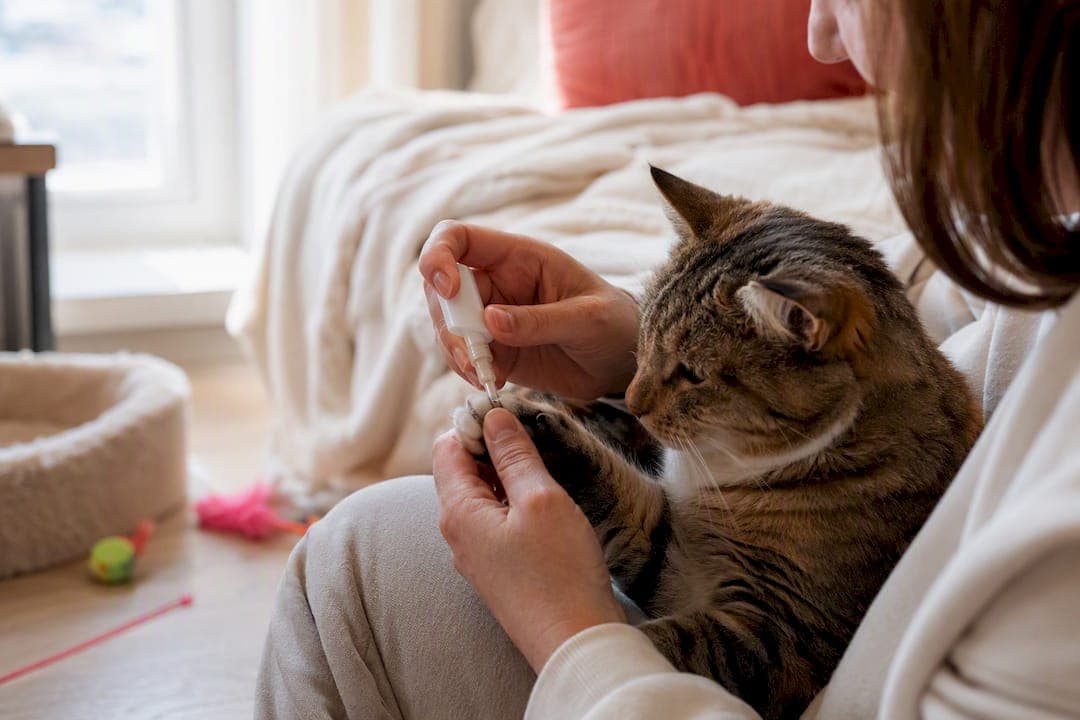
Yes, cat nail caps are a safe, humane alternative to declawing when they're sized correctly, applied properly, and used only on indoor cats. They're soft vinyl sheaths glued over the natural nail, and they typically last 4 to 6 weeks before shedding with normal claw growth. Many vets recommend them over declawing surgery, though caps work best alongside behavioral fixes, not as a standalone fix for aggressive scratching. The one hard rule: indoor cats only, since caps dull a cat's main defense mechanism.
- Core benefit: Stops furniture damage without surgery or nerve loss.
- Core risk: Cats can chew or swallow a loose cap if it isn't seated right.
- Next step: Talk to your vet before your first application, especially for kittens or anxious cats.
Key Takeaways
Cat nail caps work as a humane alternative to declawing only when sized correctly, applied with vet-approved glue, and limited to strictly indoor cats.
| Point | Details |
|---|---|
| Verdict on safety | Nail caps are safe and humane when properly sized, applied, and limited to indoor cats. |
| Expect a 4 to 6 week cycle | Caps shed naturally with claw growth; reapply on a similar schedule. |
| Indoor-only is non-negotiable | Never use caps on cats with outdoor access since caps blunt their defense. |
| Pair caps with behavior fixes | Combine caps with scratching posts and enrichment rather than relying on caps alone. |
| Kiblco tests picks hands-on | Kiblco's vet-informed reviews help you choose sizing and brands like Soft Paws with confidence. |
Table of Contents
- What Are Cat Nail Caps and How Do They Work?
- Are Nail Caps Safe? What Vets and Groomers Actually Say
- How to Choose the Right Nail Caps (Sizing, Fit, and Soft Paws)
- How to Apply Cat Nail Caps Step by Step
- How Long Do Cat Nail Caps Last?
- Alternatives to Nail Caps Worth Trying First
- Vet-Informed Checklist Before You Try Nail Caps
- Where to Find Vetted Nail Cap Picks
- Frequently Asked Questions
- Sources
What Are Cat Nail Caps and How Do They Work?
Cat nail caps are small, curved vinyl or soft plastic sheaths designed to fit over the tip of your cat's natural claw. A dab of pet-safe adhesive holds each cap in place, and most kits come with a plastic applicator tube that helps you push the glue in without getting it on fur or skin. The cap doesn't replace the claw or interfere with the bone underneath. Your cat can still extend and retract the claw normally underneath the covering; the cap just blunts the sharp tip so scratching does not shred fabric or skin.
A typical box includes:
- 20 to 40 caps in a range of sizes (kitten through extra-large)
- One or two tubes of adhesive
- An application guide with a sizing chart based on paw width
Sizing runs by claw width, not cat weight, though weight gives you a rough starting point for a first guess.
Are Nail Caps Safe? What Vets and Groomers Actually Say
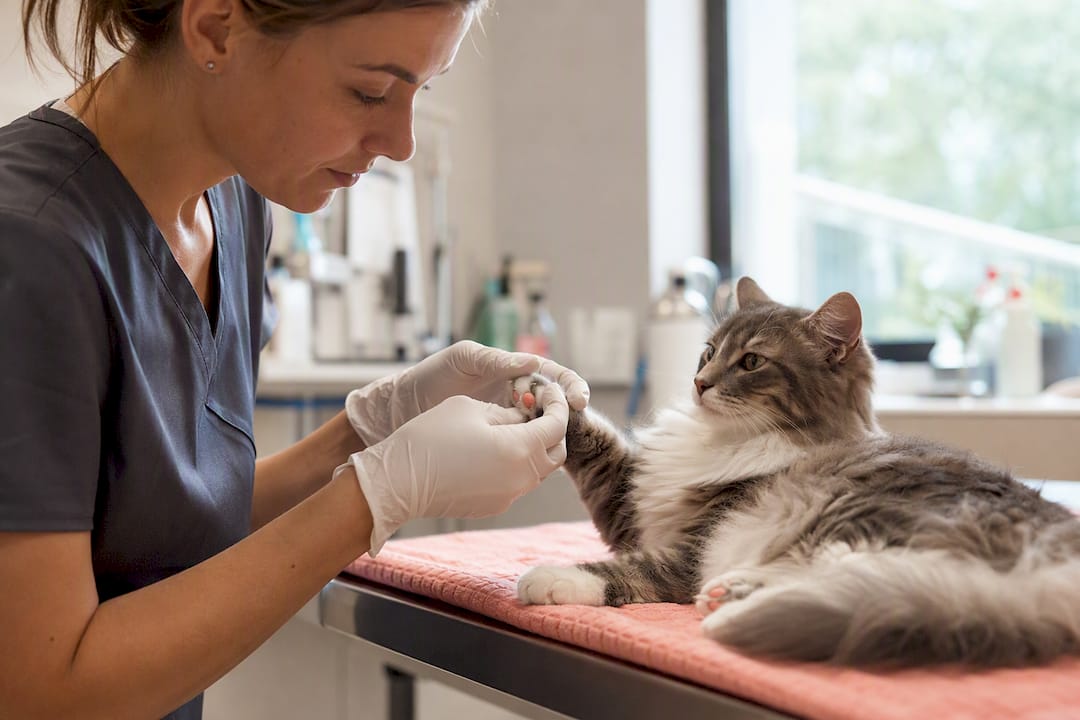
Cat nail caps carry real benefits and real risks, and the balance tips toward "safe" only when a few conditions are met.
What works in their favor:
- No surgery, no anesthesia, no recovery period
- Reversible; a bad experience just means removing the caps
- Protects furniture, skin, and other pets from scratches
- Costs far less than a vet visit for declaw surgery
What can go wrong:
- A cat can chew off and swallow a cap, especially in the first few days
- Improper sizing traps the quick or pinches the nail bed
- Excess glue can irritate skin between the toes
- Caps do nothing to address the root cause of destructive scratching
Veterinary guidance on this is more nuanced than a flat yes or no. Many vets frame nail caps as a more humane option than declawing, but they're clear that caps shouldn't substitute for addressing why a cat scratches in the first place. One survey found that 83% of cat owners report their cats scratching inappropriate items at least occasionally, which is exactly the behavior caps are meant to manage, not cure.
Vets consistently note that nail caps applied with the wrong size or excess glue create more problems than they solve, and that any cat showing signs of paw pain, swelling, or an existing nail injury should skip caps until that issue is treated.
If your cat has a cracked nail, an ingrown claw, or a paw infection, hold off on nail caps until your vet clears it.
How to Choose the Right Nail Caps (Sizing, Fit, and Soft Paws)
Getting size right matters more than picking a brand. Look at the actual width of your cat's claw, not just their overall weight, since a stocky kitten and a lean adult can need the same size cap.
A quick sizing checklist:
- Measure claw width against the manufacturer's chart, not a guess
- Kittens usually need extra-small or small; adjust every few weeks as claws grow
- Adult cats commonly fall into medium or large
- If a cap spins loosely on the claw, size down; if it pinches, size up
On adhesive, stick with what's included in the kit rather than substituting a household glue. It's formulated to be non-toxic if a small amount is licked or chewed.
Soft Paws® is the brand most veterinary clinics reference by name, and many clinics offer in-office application for a modest fee if you'd rather not do it yourself the first time. If your cat squirms, bites, or panics during nail trims, a groomer or vet tech applying the first set is worth the cost. For cats who tolerate a nail clipper calmly, DIY application at home is usually fine.
How to Apply Cat Nail Caps Step by Step
Application takes 15 to 30 minutes for a full set of claws, longer if your cat needs breaks. Here's the sequence that keeps stress and slip-ups to a minimum:
- Pick a quiet room, away from other pets, and have treats within reach.
- Trim each nail to a normal length, avoiding the pink quick.
- Test-fit a cap on one claw without glue to confirm the size.
- Fill the cap about a third full with adhesive using the applicator tip.
- Slide the cap onto the claw and hold for 5 to 10 seconds until it sets.
- Repeat on each claw, checking that no cap sits crooked or too far down.
- Watch your cat closely for the next five minutes for chewing or discomfort.
Keep nail clippers, the manufacturer's glue, the applicator tube, treats, and a towel for wrapping a squirmy cat within arm's reach before you start.
If your cat fights hard during handling, a vet or professional groomer application is the safer route. Some clinics use light sedation for cats who can't tolerate paw handling at all, and that's a reasonable option rather than a failure on your part.
Pro Tip: Start touching and gently pressing your cat's paws days before the first application, rewarding calm behavior with a treat each time. A cat used to paw handling sits still far more easily than one experiencing it for the first time mid-glue.
How Long Do Cat Nail Caps Last?
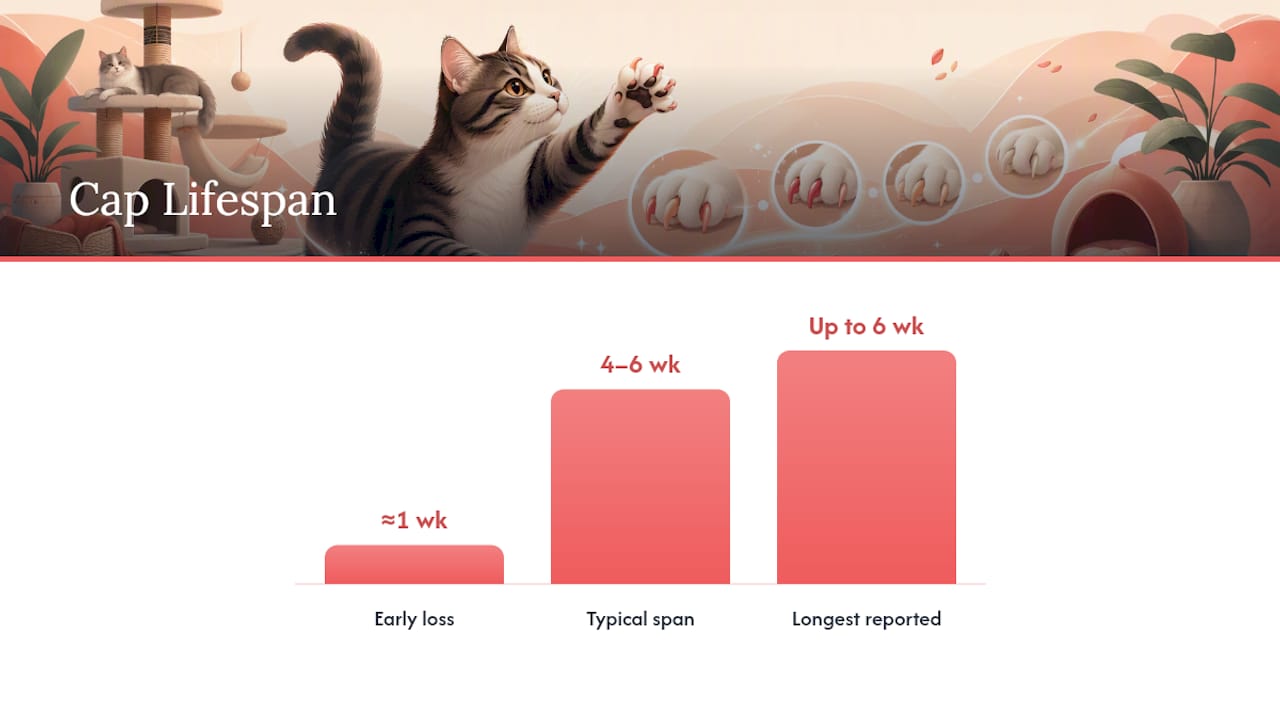
Most caps stay on for 4 to 6 weeks, matching your cat's natural claw growth cycle, though real-world reports range from as short as one week to as long as six.
| Timeframe | What to Expect |
|---|---|
| Week 1 | Check daily; this is when a loose or poorly sized cap is most likely to pop off. |
| Weeks 2 to 4 | Caps should sit snugly; do a weekly paw check for chewing or irritation. |
| Weeks 4 to 6 | Caps loosen naturally as the claw grows; expect gradual shedding. |
| Past 6 weeks | Remove any remaining caps and reapply on fresh nail growth. |
- Cap fell off in week 1? Check sizing before reapplying; it likely didn't fit snugly enough.
- Cat is chewing at caps constantly? That can signal a poor fit, skin irritation underneath, or general stress.
- A cap stuck past six weeks can trap moisture against the nail; remove it and let the claw breathe.
- Contact your vet if you suspect a swallowed cap, notice swelling, discharge, or your cat is favoring a paw.
Alternatives to Nail Caps Worth Trying First
Nail caps work best as one piece of a broader plan, not the only tool in your kit.
- Regular nail trims every 2 to 3 weeks blunt claws naturally if you're comfortable handling your cat's paws.
- Scratching posts and vertical space redirect the instinct to scratch onto something appropriate; a sturdy scratching post placed near favorite furniture spots often solves the problem outright.
- Enrichment and play, like wand toys, reduce attention-seeking or boredom-driven scratching.
- Double-sided tape or foil on furniture discourages scratching in specific spots while you retrain habits.
Nail caps make sense once trimming and enrichment alone aren't cutting it, particularly for households with young kids, immunocompromised family members, or delicate upholstery. If scratching is sudden, aggressive, or paired with other behavior changes, talk with your vet since pain or anxiety can drive the behavior.
Vet-Informed Checklist Before You Try Nail Caps
Run through this before your first purchase:
- Is your cat strictly indoor, with no outdoor access for defense needs?
- Are the paws and nails free of injury, infection, or recent trauma?
- Can you correctly measure and fit caps by claw width?
- Can you commit to weekly paw checks and reapplication every 4 to 6 weeks?
- Are you pairing caps with a scratching post or behavioral plan, not using them alone?
Ask your vet or groomer: Do you offer in-office application? Is sedation ever needed for nervous cats? What glue do you use, and how often should we follow up?
Red flags that rule out caps: an outdoor or indoor-outdoor lifestyle, chronic paw infections, or anxiety severe enough to cause self-injury. Any of those call for a vet consult first.
A practical take on nail caps
Nail caps get dismissed by some owners as a gimmick and oversold by others as a cure-all, and both takes miss the point. Used correctly, on the right cat, they're a legitimate bridge between "do nothing" and "surgical declaw," which is a false choice too many people still believe they're stuck with. Kiblco's approach leans on vet-informed criteria and hands-on testing rather than marketing copy, and that shows in how we evaluate fit, adhesive safety, and real shedding timelines.
Where to Find Vetted Nail Cap Picks
Sorting through nail cap brands, sizes, and glue formulas on your own eats up an evening you don't have. Kiblco tests pet products hands-on with real cats and folds in veterinary input before anything makes our picks list, so you're not gambling $15 on a box that turns out too rigid or poorly glued.

Our reviews break down sizing accuracy, adhesive performance, and how cats actually tolerated wearing caps over a full shedding cycle, not just what the packaging claims. If you're ready to skip the trial-and-error, visit Kiblco for our current nail cap picks and buying guidance before you check out.
Frequently Asked Questions
Are cat nail caps safe for long-term use? Yes, as long as you reapply every 4 to 6 weeks, keep sizing correct, and monitor for chewing or irritation between applications.
Do nail caps stop a cat's claws from retracting? No. Applied correctly, caps sit over the nail tip and don't interfere with normal extension and retraction.
How long do cat nail caps last before falling off? Most last 4 to 6 weeks, though some fall off within a week if sized or glued incorrectly.
Can I apply nail caps myself, or do I need a vet? Many owners apply caps at home successfully; nervous or squirmy cats often do better with a vet or groomer handling the first set.
What's the best-known brand of cat nail caps? Soft Paws® is the most widely referenced brand, and many veterinary clinics offer it for in-office application.
Sources
- Nail Caps – RVO Vet Corner Files
- Are nail caps safe for cats? Vet-reviewed pros & cons | The Vet Desk
- Cat Nail Caps: Pros, Cons and Alternatives | Great Pet Care
- Soft Paws Nail Caps | The Family Pet Veterinary Hospital