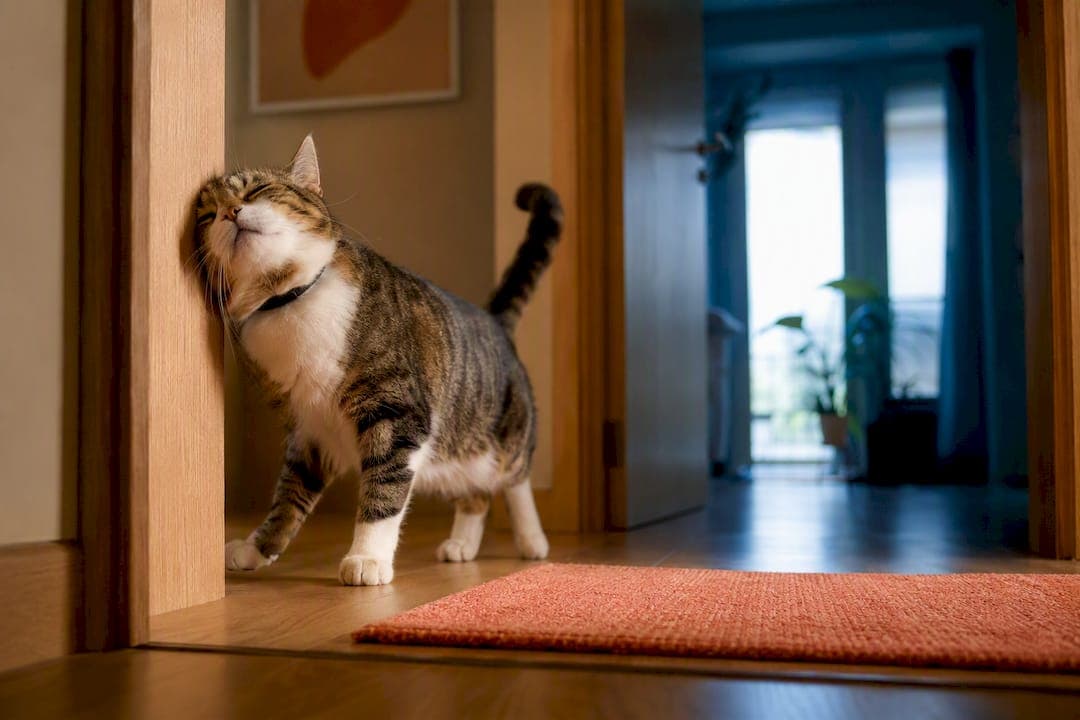
Yes, pheromone calming collars are worth trying for cats dealing with urine marking, scratching, or tension between housemates, and a large randomized trial backs that up. Start with a pheromone-impregnated collar like FELIWAY Optimum for evidence-backed results, or a scent-free option like Comfort Zone if your cat is sensitive to fragrance. Skip heavily scented fragrance collars for anxious cats, and always check for a breakaway safety feature before buying. If your cat has skin issues or a serious behavior problem, talk to your vet first.
TL;DR:
- The strongest scientific evidence supports FELIWAY Optimum, which was tested in a randomized trial involving 624 cats and shows significant behavioral improvements.
- Pheromone collars work by releasing a synthetic facial pheromone that signals safety, but collar fit, retention, and individual response heavily influence effectiveness.
- Heavy scent-based collars with lavender or chamomile lack strong scientific backing and can cause skin or respiratory irritation in sensitive cats.
- Expect gradual results over one to two weeks, with full effects typically appearing after a month of continuous, proper fitting use.
- Combining collars with environmental enrichment and consulting a veterinarian is essential for addressing complex or generalized feline anxiety.
Table of Contents
- Best Cat Calming Collars: A Shortlist Worth Trusting
- How Do Cat Calming Collars Work, and Does the Science Hold Up?
- How Do You Pick the Right Calming Collar for Your Cat?
- How Do You Introduce and Fit a Calming Collar Without Stressing Your Cat Out?
- What Kiblco's Testing Turned Up That Product Pages Don't Mention
- What Are Real Cat Owners Saying About Calming Collars?
- What Does a Calming Collar Actually Cost Over Time?
- Where Should You Buy a Cat Calming Collar?
- When Are Calming Collars Enough, and When Do You Need More?
- Where Kiblco's Reviews Fit Into Your Next Purchase
- Sources
Best Cat Calming Collars: A Shortlist Worth Trusting
Not every calming collar on the shelf deserves your money. Some rely on real pheromone science backed by controlled trials. Others lean on lavender and chamomile scents with far less evidence behind them. Here's what actually stands out among the pheromone-based and fragrance-based collars sold in the United States right now, ranked by evidence strength and safety design rather than by star ratings alone.
FELIWAY Optimum is the collar with the strongest research behind it. It uses a pheromone complex studied in a randomized, placebo-controlled trial of 624 cats, the kind of study most pet products never get. The collar releases pheromone continuously for approximately a month and is built around a polymer delivery system designed to mimic the calming facial pheromones cats naturally produce. It's the collar to reach for first if your cat is marking territory, scratching furniture, or squabbling with another cat in the house.
Sentry Calming Collar takes a different approach. It's a widely available retail pheromone collar, often priced lower than veterinary-brand options, and it comes in scented and unscented versions depending on the listing. If you're testing whether pheromone collars help your specific cat before committing to a pricier brand, this is a low-risk way to find out.
Comfort Zone Calming Collar is the manufacturer-backed pick for owners who want clear, written usage instructions. Comfort Zone's own product page spells out a continuous pheromone release, a 30-day replacement cycle, and a breakaway safety mechanism designed to release under pressure if the collar snags. The company states most cats show noticeable improvement within one to two weeks, which lines up with what vets generally tell owners to expect from pheromone products.
Comfort Zone Cat Calming Collar rounds out the Comfort Zone lineup as the brand's core feline-specific formula, built on the same synthetic pheromone technology and worn continuously rather than activated by heat or motion. It suits owners who already trust the Comfort Zone diffuser line and want a portable version of the same calming signal for cats who travel, visit the vet, or spend time outside the room where a plug-in diffuser reaches.
Here's how the main options stack up side by side:
A few things jump out from that table. Every serious contender uses roughly the same monthly duration and a breakaway safety mechanism, which tells you those two features are now the baseline, not a premium extra. The real differentiator is evidence: FELIWAY Optimum is the only one of these with a published randomized trial behind it, which matters if you want more than a manufacturer's word that the product does something.
A quick note on what to avoid: fragrance-only collars that lean on lavender or chamomile oils instead of feline pheromones. They may smell pleasant to you, but there's far less research showing they calm cats, and heavy essential-oil content can irritate sensitive skin or trigger respiratory discomfort in some cats.
How Do Cat Calming Collars Work, and Does the Science Hold Up?
Pheromone collars work by releasing a synthetic version of the facial pheromone cats produce when they rub against furniture, people, or each other, a chemical signal that tells a cat its territory is safe and familiar. That's different from fragrance or aromatherapy collars, which rely on scents like lavender that humans associate with calm but that cats don't naturally produce or recognize as a safety cue. The distinction matters more than most product listings let on.
Pro Tip: If a collar's packaging emphasizes a pleasant scent for you rather than a pheromone percentage or active compound, it's likely an aromatherapy product, not a pheromone one, and the evidence behind it is thinner.
The strongest evidence for pheromone collars comes from a randomized, placebo-controlled trial involving 624 cats. The fourth behavior, generalized fear, showed a weaker response, which suggests pheromone collars are better suited to territorial and social friction than to broad anxiety.
That same trial reported something buying guides rarely mention: caregiver loss and removal of collars occurred in both the treatment and control groups, and adverse events were reported at similar rates across both. In plain terms, some cats lost or had their collars taken off mid-study, and mild side effects showed up whether the collar contained active pheromone or not. That's a meaningful caveat. It means part of what looks like "the collar didn't work" in real households is often "the collar didn't stay on."
Three practical failure modes explain most disappointing results:
- Collar loss or removal. A cat that scratches at a new collar and gets it off within a day never gets a fair trial of the product.
- Poor fit. Too loose and the pheromone reservoir sits away from the skin; too tight and the cat fights the collar constantly.
- Individual variation and placebo effects. Not every cat responds to the same pheromone blend, and some improvement in any study group can reflect natural behavior swings rather than the product itself.
A certified cat behavior consultant's guidance frames this well: calming collars work best as one piece of a stress-reduction plan, not a stand-alone fix. Pair the collar with enrichment, and you're testing the product under conditions where it actually has a chance to help.
None of this means pheromone collars are a placebo dressed up as science. A controlled trial with over 600 cats showing statistically significant improvement is a real signal, rare in the pet product space. It means the collar has to stay on the cat, fit correctly, and get paired with reasonable expectations to show what it can do.
How Do You Pick the Right Calming Collar for Your Cat?
Start with the behavior you're trying to fix, not the cheapest option on the shelf. A collar chosen to match your cat's actual problem, fitted correctly, and swapped out on schedule will outperform a random pick from the pet store aisle almost every time.
- Match the collar type to the problem. Pheromone-impregnated collars like FELIWAY Optimum or Comfort Zone have trial-backed results for urine marking, scratching, and inter-cat tension. Fragrance-heavy collars have weaker evidence and aren't the first choice for these specific issues.
- Prioritize breakaway or slip-away safety. Every collar you consider should release under pressure if it catches on furniture, a branch, or another cat's claw. This isn't optional. A collar without this feature is a strangulation risk.
- Check the duration and factor in replacement cost. Most pheromone collars last about a month before the reservoir runs dry, according to Comfort Zone's product guidance. Budget for monthly replacement if you want continuous coverage rather than a one-time trial.
- Skip essential-oil-heavy collars for sensitive cats. Lavender and chamomile additives show up in some fragrance collars, and product reviews and vet-facing sources flag concerns about skin and respiratory sensitivity in cats with a history of allergies or reactive skin.
- Ask about age and health restrictions before buying. Most pheromone collars are labeled for kittens over a certain age, typically several months old, and manufacturers generally advise against use on cats with open wounds, active skin conditions, or recent surgical sites near the neck.
- Think about how it fits with existing gear. A calming collar worn under a harness or alongside an ID collar needs enough neck room for both without doubling up tightly. If your cat already wears an ID tag collar, measure with both in place before ordering a size.
There's also a decision point that trips up a lot of owners: collar versus diffuser versus behavior consultation. A diffuser can outperform a collar in multi-cat homes where the pheromone needs to cover a shared space rather than travel with one cat. A collar makes more sense for single-cat targeting, travel, or vet visits where a room diffuser isn't practical. And if you've tried a well-fitted, correctly introduced collar for several weeks with no change, or if the behavior involves aggression, self-injury, or sudden onset, that's the point to loop in a vet or a certified behavior consultant rather than trying a third collar brand.
Pro Tip: Keep the receipt and packaging until you've tested the collar for at least two weeks. Most retailers won't accept a return on a worn pet product, but a documented trial period helps you make the call on whether to switch types.
How Do You Introduce and Fit a Calming Collar Without Stressing Your Cat Out?
Putting a new collar straight onto a cat's neck without warning is one of the fastest ways to sabotage the whole experiment. Cats notice new objects near their face and body immediately, and a startled reaction to the collar itself can look like the product is causing anxiety when really it's just a bad introduction.
- Let your cat sniff the collar first. Set it on the floor or near their bed for a day before putting it on. Cat-care guidance recommends pairing this first exposure with treats so the collar becomes associated with something good.
- Do a short supervised trial wear. Put the collar on for 10 to 15 minutes while your cat is distracted with play or food, then remove it. Repeat this over a few days before leaving it on full time.
- Use the two-finger rule for fit. You should be able to slide two fingers comfortably between the collar and your cat's neck. Tighter risks discomfort and skin irritation; looser risks the collar catching on something or slipping off entirely.
- Check the breakaway mechanism weekly. Gently tug the collar to confirm it still releases as designed. Buckles can weaken or shift over weeks of wear.
- Trim excess length carefully. If the collar has extra strap hanging past the buckle, trim it with scissors so it can't get caught, but never cut so close that you compromise the breakaway point.
- Know when to remove it. Take the collar off before bathing, and check the skin underneath periodically for redness, hair loss, or irritation. Stop use and call your vet if you see any of those signs.
Expect gradual results, not overnight change. Most manufacturer guidance and vet sources point to noticeable improvement within one to two weeks of continuous wear, with full effect building over the full 30-day cycle before replacement. If you see zero change after a full cycle and the collar has stayed on consistently, that's useful information, not a wasted purchase, and it's the point to consider a different pheromone brand or a conversation with your vet.
What Kiblco's Testing Turned Up That Product Pages Don't Mention
Kiblco's review process pairs vet input with hands-on testing from real pet parents, tracking fit, tolerance, behavior change, and scent reaction over several weeks of actual wear rather than a quick unboxing. That distinction matters because a lot of what determines whether a calming collar works has nothing to do with the pheromone formula and everything to do with how the collar behaves on a moving, scratching, grooming cat.
A few patterns showed up consistently across tester households:
- Fit problems were the number one complaint, not scent or effectiveness. Cats with narrow heads or long fur had collars ride too loose within days, undermining the constant skin contact pheromone collars need to work.
- Scent sensitivity varied widely. Some testers' cats tolerated scented fragrance collars fine; others scratched at their neck within hours, a sign worth taking seriously rather than pushing through.
- Pairing a collar with a diffuser or enrichment boosted results. Households running a pheromone diffuser alongside the collar in multi-cat homes reported steadier improvement than collar-only households, which lines up with the "multimodal plan" advice from certified behavior consultants.
- Cats introduced gradually, off their body first, adapted faster than cats who had the collar put on cold. This tracked closely with how quickly owners saw any behavior change at all.
Pro Tip: Keep a spare collar in the house once you've found one that works. Losing the current collar mid-cycle and going a week without replacement is one of the most common reasons owners think a product "stopped working" when really it just came off.
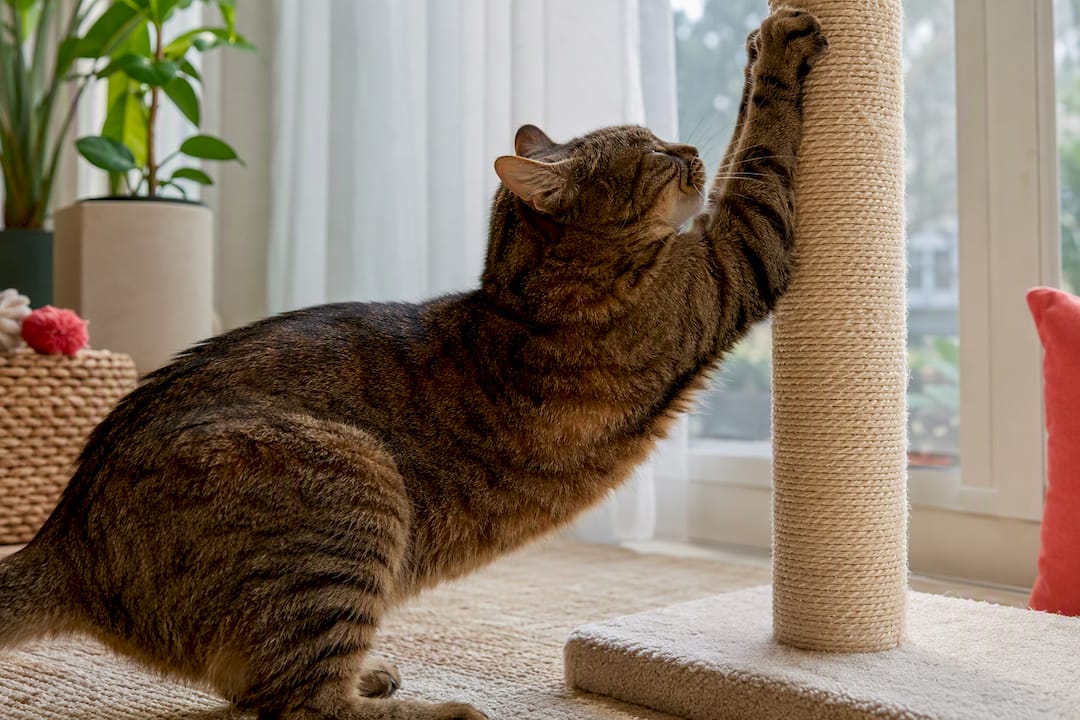
Testers also noted that combining a collar with scratching posts and other enrichment tools made scratching-related behavior easier to manage than the collar alone, which matches the research on treating collars as one part of a broader plan rather than a single fix.
What Are Real Cat Owners Saying About Calming Collars?
User feedback on pheromone collars tends to split along a predictable line: owners who saw a fit and introduction routine through report meaningful improvement, while owners who slapped the collar on and expected instant results are often disappointed within days. Reviews for FELIWAY Optimum frequently mention reduced spraying and fewer scratching incidents within the first two weeks, consistent with the trial data behind it. Comfort Zone reviewers commonly praise the clear instructions and breakaway design, though a subset note the collar's smell, faint as it is meant to be, bothers a small number of cats initially.
Sentry Calming Collar reviews are more mixed, with some buyers happy with the lower price point and others flagging inconsistent scent strength or a buckle that felt less secure than pricier alternatives, a pattern also noted in The Vet Desk's product review. A recurring theme across brands: owners who paired the collar with a calmer introduction period and consistent wear reported better results than owners expecting an immediate shift in behavior. That lines up with what the trial data and vet guidance both suggest: this is a product that needs weeks, not days, and a bit of owner patience to fairly judge.
What Does a Calming Collar Actually Cost Over Time?
A single pheromone calming collar typically runs somewhere in the range most pet retailers price impulse-buy pet gear at, generally landing in the teens to low twenties per collar depending on brand and retailer promotions. Since most last around 30 days before the pheromone reservoir depletes, the real cost to consider isn't the sticker price. It's the monthly replacement habit.
If you're using one collar per cat continuously, that adds up to roughly 12 replacements a year for a single cat, and multi-cat households multiply that cost per animal wearing one. Some owners cut costs by buying multi-packs when brands offer them, which usually brings the per-collar price down compared to single purchases. Comfort Zone and FELIWAY both sell in the same general price bracket, while Sentry positions itself as the lower-cost entry point in the category.
Weigh that ongoing cost against the alternative: a pheromone diffuser, which has a higher upfront cost for the plug-in unit but cheaper refill cartridges over time, especially in multi-cat homes where one diffuser covers a whole room instead of buying a collar per cat. For a single cat with a specific, targeted behavior problem, though, the collar's portability, it travels with the cat to the vet, to a new home, into a carrier, often justifies the recurring cost that a stationary diffuser can't match.
Where Should You Buy a Cat Calming Collar?
Major online retailers like Amazon, Chewy, and Petco carry every collar mentioned here, often with subscription discounts for repeat monthly orders, which suits a product you're replacing every 30 days anyway. Buying directly from a brand's own site, like Comfort Zone's, guarantees you're getting current packaging and full instructions, though prices are rarely lower than third-party retailers running a sale.
In-store purchases at pet specialty retailers or your veterinary clinic carry one advantage online shopping doesn't: you can ask a vet tech or trained staff member fitting questions on the spot, and clinic-sold collars are guaranteed authentic since they come direct from the manufacturer's veterinary channel.
Authenticity is worth a moment's caution. Third-party marketplace sellers on sites like Amazon occasionally list pheromone products at suspiciously low prices, and counterfeit or expired pheromone collars won't deliver the reservoir concentration the trials were based on. Buy from the brand's official storefront on the retailer, check for a recent manufacture date on the packaging, and be wary of any listing with no brand name attached to the seller account. When in doubt, a clinic or the manufacturer's own site removes that risk entirely.
When Are Calming Collars Enough, and When Do You Need More?
Calming collars earn their place in a cat owner's toolkit, but they're not a fix for every anxious or destructive cat. Based on the trial data and what shows up consistently in tester feedback, pheromone collars do their best work on specific, identifiable triggers: territorial marking, scratching around doorways or furniture, and friction between two cats who share a household. Those are the exact behaviors the randomized trial measured improvement in, and it's not a coincidence that they're also the behaviors owners report the clearest results on.
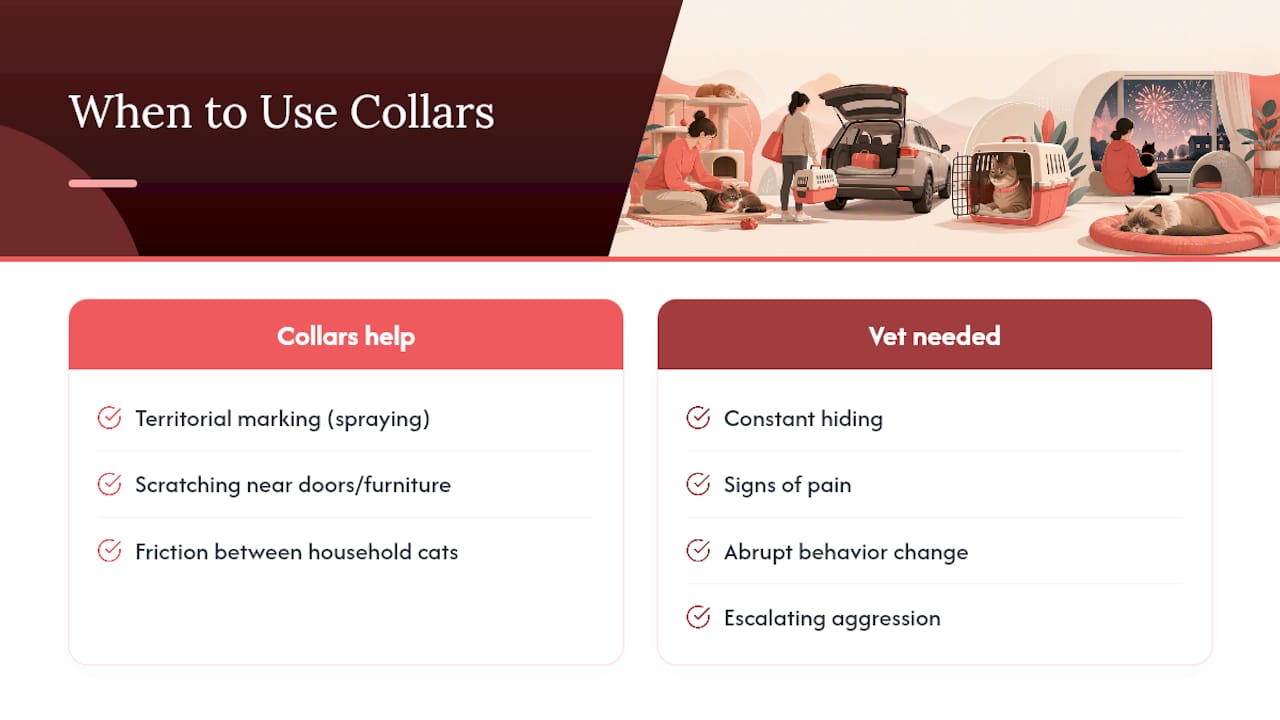
Where collars fall short is generalized fear, sudden behavior changes, or aggression that escalates rather than settles. If your cat is hiding constantly, showing signs of pain, or the behavior started abruptly rather than building over weeks, a collar isn't the first move. That's a vet visit, both to rule out a medical cause and to get a referral to a certified behavior consultant if needed. Anxiety and stress in cats often have layers, and a collar addresses one layer, the pheromone signal, not the environmental stressors, litter box setup, or social dynamics that might be feeding the problem underneath.
The owners who get the most out of these collars are the ones who treat them as a supporting tool, not the whole plan. Pair the collar with vertical space, scratching options, and predictable play, and you're stacking the odds in your cat's favor rather than asking one small polymer strip to do all the work.
If you're still deciding which collar fits your situation, product reviews that break down the pros and cons in more depth than a single buying guide can cover are worth a look before you commit to a monthly replacement habit.
— Chris
Where Kiblco's Reviews Fit Into Your Next Purchase
Some pet product testing approaches combine vet input with observations from real cat owners over weeks of actual use. This thorough testing can catch details a manufacturer's product page won't mention, such as which buckle style holds up, which scent profiles cats tolerate, and which collars are worth the monthly reorder.

Kiblco's full reviews go deeper into the pheromone diffuser category too, useful if you're weighing a diffuser for a multi-cat household against a collar for one specific cat, and into enrichment tools like scratching posts that pair well with a calming collar rather than compete with it. For households managing broader environmental stress, resources like Litter Room cover the litter box and space setup side of feline anxiety that a collar alone can't fix. Browse Kiblco's full product reviews to see the complete pros-and-cons breakdown on the collars mentioned here before you buy, and check current pricing and availability so you know exactly what you're getting before it ships.
Sources
The randomized placebo-controlled collar trial is the single most important source in this guide, covering 624 cats and the strongest evidence available for pheromone collar efficacy. PetMD's guidance on calming products offers vet-facing context on gradual introduction and realistic expectations. Comfort Zone's own product page lays out manufacturer instructions on duration, safety, and fitting. The Vet Desk's Sentry Calming Collar review covers real-world scent and design concerns worth knowing before you buy. And Frontiers in Veterinary Science's multimodal stress guidance explains why a collar works best alongside enrichment, not in place of it.
- Efficacy of a pheromone-impregnated collar in controlling feline problem behaviors, and an assessment of adverse events associated with collar use
- Frontiers in Veterinary Science — expert guidance on multimodal stress reduction
- Comfort Zone Calming Collar | Comfort Zone